


Shopping App Development And Play Store Launch Techniques Powerpoint Presentation Slides




Try Before you Buy Download Free Sample Product
 Impress Your
 Audience
 100%
100% Editable
 Save Hours
 of Time


Here is a competently designed shopping app development and play store launch techniques Promotion PowerPoint presentation to help you evaluate app ideas through different aspects and develop a user case scenario for the app development process. At first, it provides an introduction for an app development and marketing solution company along with its major clients from various industries. Next, the deck covers details about the project, such as project goals, proposed solutions, results, site mapping, app promotion strategies, etc. The PPT also helps analyze competitors applications based on design, price, performance, and quality. Additionally, our e commerce application development module represents the app development process, including app specifications, selling of application concept flow, potential requirements, and technologies used for app development. It also describes UX UI visual designs, app store strategies, and an overview of the beta program. Furthermore, investments needed for app development, post production support services, app development project execution roadmap, and various app promotional activities are also covered. At last, the presentation highlights the timeline for the app development and marketing process and app performance tracking dashboards. Customize this 100 percentage editable template through assistance from our highly skilled research or design team. Get access now.
People who downloaded this PowerPoint presentation also viewed the following :
Content of this Powerpoint Presentation
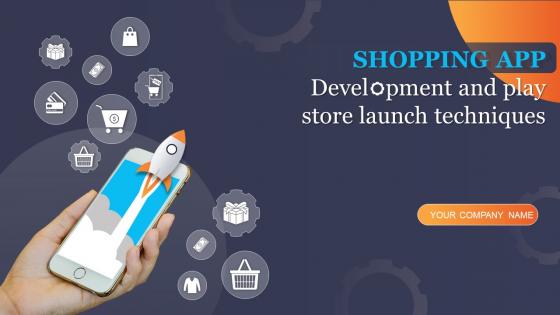
Slide 1: This slide displays the title SHOPPING APP Devel pment and play store launch techniques.
Slide 2: This slide displays the title AGENDA.
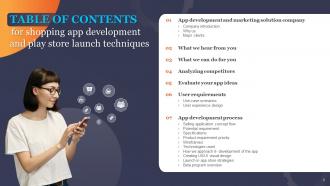
Slide 3: This slide exhibit table of content.
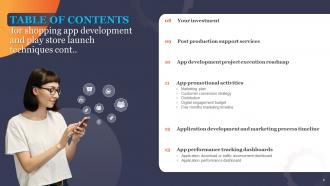
Slide 4: This slide exhibit table of content.
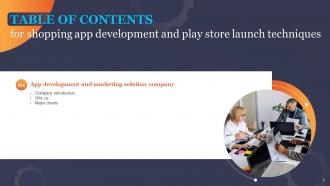
Slide 5: This slide exhibit table of content- App development and marketing solution company.
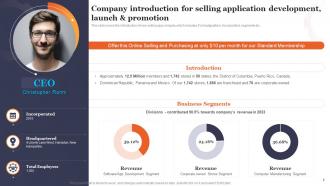
Slide 6: This slide covers the introduction of new selling app company which includes it’s headquarters, Incorporated, segments etc.
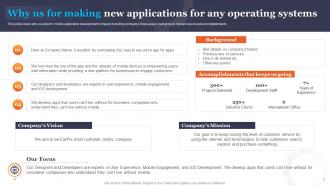
Slide 7: This slide covers why us slide for mobile application development company including company's focus areas, background, mission vision and accomplishments
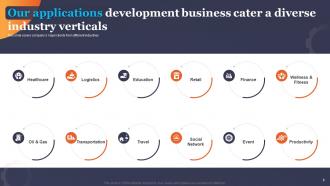
Slide 8: This slide covers company’s major clients from different industries
Slide 9: This slide showcase table of content that are to be discussed further.
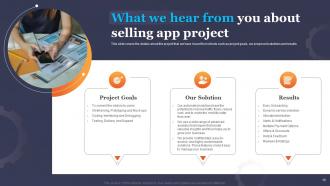
Slide 10: This slide covers the details about the project that we have heard from clients such as project goals, our proposed solutions and results.
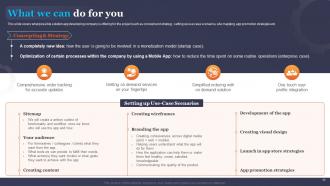
Slide 11: This slide covers what possible solution app developing company is offering for the project.
Slide 12: This slide showcase table of content that are to be discussed further.
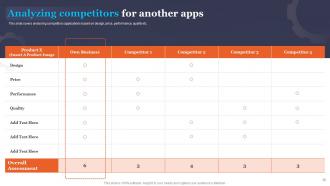
Slide 13: This slide covers analysing competitors applications based on design, price, performance, quality etc.
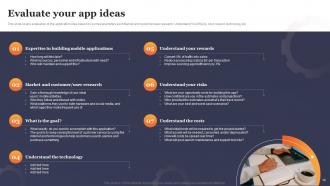
Slide 14: This slide covers evaluation of the application idea based on some parameters.
Slide 15: This slide exhibit table of content- User requirements.
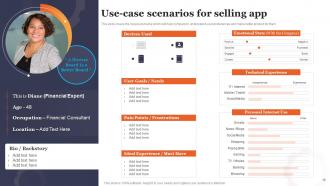
Slide 16: This slide covers the buyers persona which will help company to understand user preferences and make better product for them
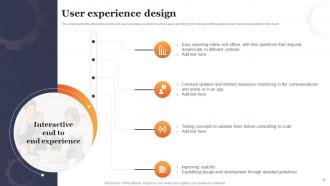
Slide 17: This slide covers the interactive end to end user experience solution.
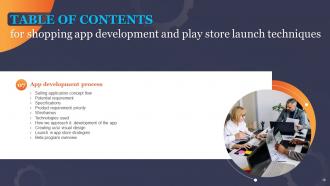
Slide 18: This slide exhibit table of content- App development process.
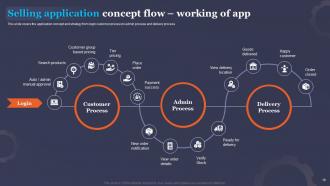
Slide 19: This slide covers the application concept and strategy from login customer process to admin process and delivery process.
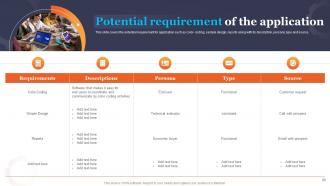
Slide 20: This slide covers the potential requirement for application such as color- coding, sample design, reports along with its description, persona, type and source.
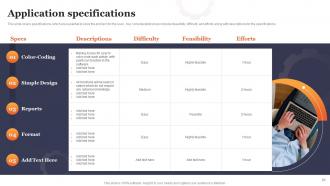
Slide 21: This slide covers specifications, which are essential to solve the problem for the user.
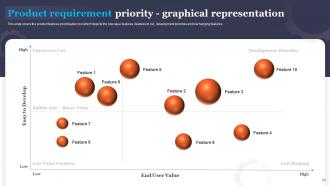
Slide 22: This slide covers the product features prioritization tool which depicts the low value features, features to cut, development priorities and low hanging features.
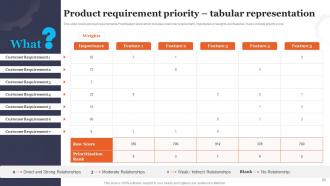
Slide 23: This slide covers product requirements Prioritization table which includes customer requirement, importance or weights and features.
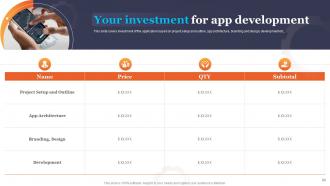
Slide 24: This slide covers investment of the application based on project setup and outline, app architecture, branding and design, development etc.,
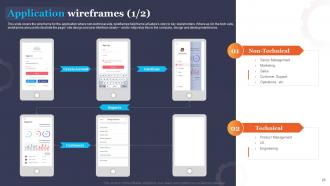
Slide 25: This slide covers the wire frame for the application where non-technical side, wireframes help frame a feature's story to key stakeholders.
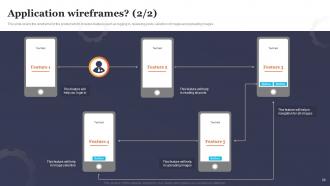
Slide 26: This slide covers the wireframe for the product which includes features such as logging in, reviewing posts, selection of images and uploading images.
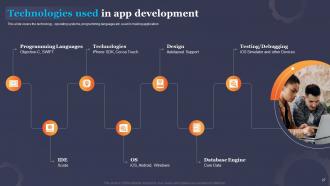
Slide 27: This slide covers the technology , operating systems, programming languages etc.
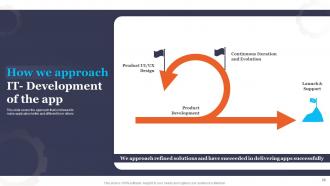
Slide 28: This slide covers the approach that is followed to make application better and different from others.
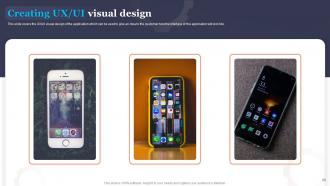
Slide 29: This slide covers the UX/UI visual design of the application which can be used to give an idea to the customer how the interface of the application will look like.
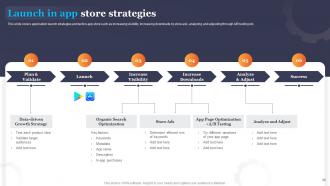
Slide 30: This slide covers application launch strategies and tactics app store.
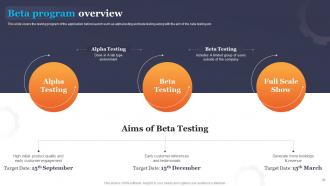
Slide 31: This slide covers the testing program of the application before launch such as alpha testing and beta testing along with the aim of the beta testing etc.
Slide 32: This slide shpowcase table of content that are to be discussed further.
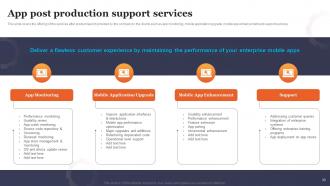
Slide 33: This slide covers the offering of the services after product launch provided by the company to the clients.
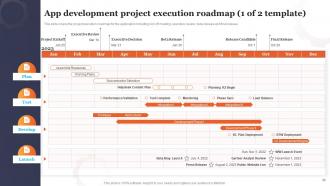
Slide 34: This slide covers the project execution roadmap for the application including kick off meeting, executive review, beta release and final release
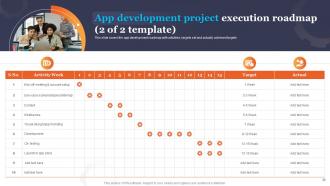
Slide 35: This slide covers the app development roadmap with activities, targets set and actually achieved targets
Slide 36: This slide exhibit table of content- App promotional activities.
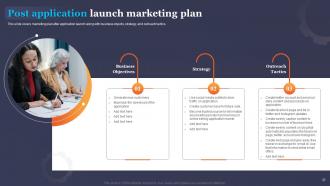
Slide 37: This slide covers marketing plan after application launch along with business objects, strategy, and outreach tactics.
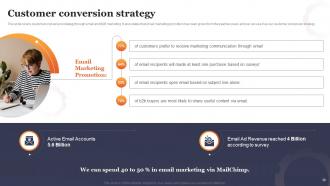
Slide 38: This slide covers customers conversion strategy through email and B2B marketing.
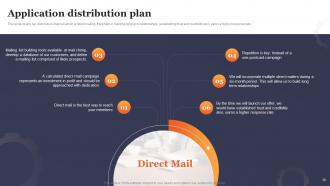
Slide 39: This slide covers our distribution channel which is direct mailing.
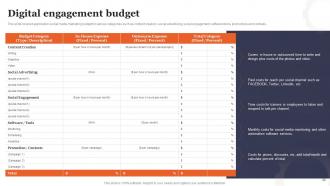
Slide 40: This slide covered application social media marketing budget for various categories.
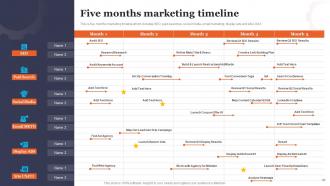
Slide 41: This slide showcase the title Five months marketing timeline.
Slide 42: This slide showcase table of content that are to be discussed further.
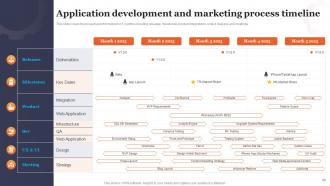
Slide 43: This slide covers the project launch timeline for 5 months including releases, milestones, product integrations, UX&UI designs and meetings.
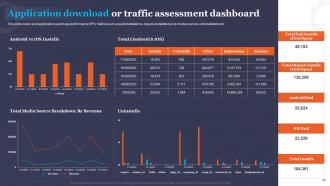
Slide 44: This slide covers post application launch app performance KPI’s metrics such as paid installations, organic installations, top media sources, uninstallations etc.
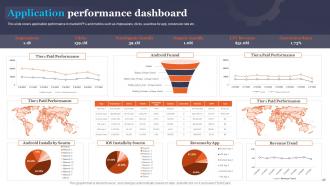
Slide 45: This slide covers application performance in market KPI’s and metrics such as impressions, clicks, searches for app, conversion rate etc.,
Slide 46: This is the icons slide.
Slide 47: This slide presents title for additional slides.
Slide 48: This slide presents your company's vision, mission and goals.
Slide 49: This slide displays Venn.
Slide 50: This slide exhibits ideas generated.
Slide 51: This slide showcase the Target.
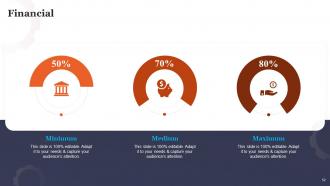
Slide 52: This slide showcase the Financial.
Slide 53: This slide depicts 30-60-90 days plan for projects.
Slide 54: This slide shows puzzle for displaying elements of company.
Slide 55: This is thank you slide & contains contact details of company like office address, phone no., etc.
Shopping App Development And Play Store Launch Techniques Powerpoint Presentation Slides with all 60 slides:
Use our Shopping App Development And Play Store Launch Techniques Powerpoint Presentation Slides to effectively help you save your valuable time. They are readymade to fit into any presentation structure.








FAQs for Shopping App Development And Play Store Launch Techniques
Essential shopping app features include intuitive navigation, secure payment gateways, personalized recommendations, real-time inventory tracking, and streamlined checkout processes. These features enhance user engagement by reducing cart abandonment, enabling faster transactions, and delivering personalized experiences, with many retail businesses finding that comprehensive functionality ultimately drives higher conversion rates and customer loyalty.
Personalization techniques enhance user engagement by delivering tailored product recommendations, customized content feeds, dynamic pricing offers, and personalized search results based on browsing history and preferences. Through AI-driven algorithms and machine learning, retail apps create individualized shopping experiences that increase conversion rates, extend session duration, and build customer loyalty, with many e-commerce platforms finding that personalized experiences drive significantly higher revenue per user.
Artificial intelligence powers personalized product recommendations, predictive search functionality, dynamic pricing optimization, chatbot customer support, and fraud detection systems in modern shopping apps. Through machine learning algorithms, retailers can analyze user behavior patterns, automate inventory management, and deliver targeted marketing campaigns, with many e-commerce platforms finding that AI-driven personalization increases conversion rates and customer satisfaction significantly.
Shopping apps integrate payment gateways effectively through tokenization, SSL encryption, PCI DSS compliance, multi-factor authentication, and fraud detection systems. These security measures streamline checkout processes by protecting customer data, enabling faster transactions, and building consumer trust, with many retail businesses finding that robust payment security ultimately reduces cart abandonment while enhancing customer loyalty.
Best practices for designing intuitive shopping app interfaces include clear navigation structures, streamlined checkout processes, robust search functionality, personalized product recommendations, and responsive design elements. These approaches enhance user experience by reducing friction during purchases, minimizing cart abandonment rates, and improving customer retention, with many retail businesses finding that intuitive interfaces significantly boost conversion rates and overall sales performance.
Shopping apps utilize customer feedback by analyzing reviews, ratings, surveys, and usage patterns to identify pain points, enhance features, and optimize user interfaces. Through AI-powered sentiment analysis and data integration, retailers can streamline checkout processes, personalize recommendations, and improve product catalogs, with many e-commerce platforms finding that responsive feedback implementation ultimately delivers higher customer satisfaction and increased conversion rates.
Cross-platform optimization strategies include responsive design frameworks, native API integration, platform-specific UI guidelines adherence, performance testing across devices, and unified backend architecture. These approaches streamline development by ensuring consistent functionality, optimizing load times, and delivering seamless user experiences, with many retailers finding that strategic platform optimization increases customer engagement and ultimately drives higher conversion rates.
Mobile optimization significantly enhances shopping app performance through faster loading times, intuitive navigation, responsive design, and streamlined checkout processes, directly boosting conversion rates by reducing cart abandonment. Retailers like Target and Walmart find that optimized mobile experiences deliver 15-30% higher conversions, improved customer retention, and increased average order values, ultimately providing competitive advantage in today's mobile-first marketplace.
Augmented reality enhances shopping apps by enabling virtual try-ons, interactive product visualization, size estimation tools, and immersive showroom experiences that bridge online and physical retail. These AR technologies streamline purchasing decisions by reducing return rates, increasing customer confidence, and delivering personalized shopping journeys, with fashion retailers and furniture companies finding significantly improved conversion rates and customer satisfaction.
Scaling shopping app challenges include server capacity limitations, database performance bottlenecks, payment processing complexities, inventory synchronization issues, and user experience consistency across platforms. These obstacles can be addressed through cloud infrastructure adoption, microservices architecture implementation, and robust API integration, with many e-commerce companies finding that strategic scaling ultimately delivers enhanced customer experiences and competitive market advantage.
Data analytics and tracking significantly influence shopping app development decisions by providing insights into user behavior, purchase patterns, feature performance, and conversion optimization opportunities. Through comprehensive analytics platforms, developers can identify which app sections drive engagement, which payment methods users prefer, and where customers abandon their carts, ultimately enabling data-driven improvements that enhance user experience and boost sales.
B2B shopping apps require complex user hierarchies, bulk ordering systems, custom pricing models, approval workflows, and integration with procurement software, while B2C apps focus on individual user experiences, streamlined checkout processes, and personalized recommendations. B2B platforms typically serve manufacturing, healthcare, and wholesale sectors with extended sales cycles, whereas B2C apps prioritize immediate conversions, ultimately delivering different engagement strategies and purchasing behaviors.
Social media integration enhances shopping app engagement by enabling social sharing, user-generated content, social login, personalized recommendations, and influencer partnerships. These features streamline authentication processes, build community trust through peer reviews, and leverage social proof to drive purchasing decisions, with retail brands finding that social connectivity increases conversion rates and customer lifetime value.
Legal considerations for shopping app development include data privacy compliance, payment security regulations, consumer protection laws, terms of service agreements, and intellectual property rights. These requirements vary significantly across jurisdictions, with many retail companies finding that early legal consultation streamlines regulatory compliance, minimizes liability risks, and ultimately delivers stronger consumer trust and competitive advantage.
Effective marketing strategies integrate into app development through user-centric design, social sharing features, referral systems, push notification frameworks, and analytics integration from the initial build phase. These elements enable seamless campaign execution, personalized user experiences, and viral growth mechanisms, with many retail apps finding that built-in marketing tools significantly reduce acquisition costs while enhancing user engagement and retention rates.
-
One-stop solution for all presentation needs. Great products with easy customization.
-
Their templates are super easy to edit and use even for the one like me who is not familiar with PowerPoint. Great customer support.