


Six Months Sales Plan Powerpoint Ppt Template Bundles





Try Before you Buy Download Free Sample Product
 Impress Your
 Audience
 100%
100% Editable
 Save Hours
 of Time


Our Six Months Sales Plan Powerpoint Ppt Template Bundles are topically designed to provide an attractive backdrop to any subject. Use them to look like a presentation pro.
People who downloaded this PowerPoint presentation also viewed the following :
Six Months Sales Plan Powerpoint Ppt Template Bundles with all 23 slides:
Use our Six Months Sales Plan Powerpoint Ppt Template Bundles to effectively help you save your valuable time. They are readymade to fit into any presentation structure.

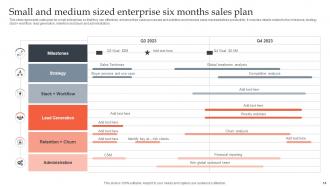






FAQs for Six Months Sales Plan Powerpoint
Key components of an effective six-month sales plan include clear revenue targets, market analysis, customer segmentation, sales strategies, resource allocation, and performance metrics. These elements work together by establishing measurable goals, identifying high-value prospects, and streamlining sales processes, with many organizations finding that structured planning delivers improved conversion rates and competitive advantage.
Market research informs six-month sales plans by identifying customer preferences, competitive positioning, pricing strategies, market trends, and emerging opportunities within target segments. Through comprehensive data analysis, organizations can prioritize high-potential prospects, refine messaging approaches, and allocate resources strategically, ultimately delivering more targeted campaigns and improved conversion rates across diverse market conditions.
Key metrics include revenue growth, conversion rates, customer acquisition costs, sales cycle length, and pipeline velocity. These indicators enable organizations to track performance by measuring deal closure efficiency, lead quality effectiveness, and resource allocation optimization, with many sales teams finding that comprehensive metric tracking ultimately delivers improved forecasting accuracy and competitive advantage.
A six-month sales plan focuses on tactical execution, specific quarterly targets, detailed activity metrics, and immediate market responses, while annual sales strategies emphasize broader market positioning, long-term relationship building, and strategic resource allocation. The shorter timeframe enables more agile adjustments to market conditions, with many organizations finding that quarterly reviews and tactical pivots ultimately deliver faster responsiveness and enhanced competitive advantage.
Team collaboration drives six-month sales plan execution by aligning individual efforts with collective targets, enabling knowledge sharing across territories, and creating accountability structures for consistent performance tracking. Through coordinated outreach strategies and shared customer insights, sales teams streamline lead qualification, accelerate deal closure timelines, and ultimately deliver enhanced revenue outcomes while maintaining strategic focus throughout the planning period.
Businesses can set realistic six-month sales targets by analyzing historical performance data, assessing market conditions, evaluating team capacity, and considering seasonal trends or economic factors. This strategic approach enables organizations to establish achievable benchmarks through data-driven forecasting, resource allocation planning, and competitive analysis, ultimately delivering sustainable growth while maintaining team motivation and operational efficiency.
Best practices for adjusting a sales plan mid-cycle include conducting thorough performance analysis, reassessing market conditions, realigning resource allocation, updating revenue targets, and enhancing team training programs. These adjustments streamline operations by identifying underperforming segments, redirecting efforts toward high-opportunity areas, and implementing corrective strategies, with many organizations finding that flexible mid-cycle pivots ultimately deliver improved conversion rates and stronger competitive positioning.
Customer feedback integration involves analyzing customer insights through surveys, reviews, support interactions, and sales conversations to identify pain points, preferences, and emerging needs. This feedback enables sales teams to refine messaging, adjust product positioning, prioritize high-value prospects, and develop targeted solutions, with many organizations finding that customer-driven adjustments ultimately deliver higher conversion rates and stronger client relationships.
CRM platforms like Salesforce, sales automation tools such as HubSpot, analytics software like Tableau, forecasting applications, and pipeline management systems can significantly enhance six-month sales plan execution. These technologies streamline lead tracking, automate follow-ups, and provide real-time performance insights, with many organizations finding that integrated sales tech stacks ultimately deliver faster deal closure and improved revenue predictability.
Companies should approach lead generation through multi-channel strategies including content marketing, social media engagement, email campaigns, webinars, and targeted advertising across digital platforms. These methods work by attracting qualified prospects, nurturing relationships through consistent touchpoints, and converting interest into actionable sales opportunities, with many organizations finding that diversified lead generation ultimately delivers higher conversion rates and sustainable pipeline growth.
Common pitfalls include setting unrealistic targets, neglecting market research, inadequate resource allocation, poor lead qualification processes, and insufficient performance tracking mechanisms. These oversights often result from rushing the planning phase, with many organizations finding that thorough competitor analysis, realistic pipeline assessments, and flexible milestone adjustments ultimately deliver more sustainable revenue growth and team accountability.
Training and development can be incorporated through structured onboarding programs, monthly skill-building workshops, product knowledge sessions, and performance coaching cycles aligned with quarterly goals. These initiatives enhance sales techniques, product expertise, and customer relationship management, with many organizations finding that consistent training delivers improved conversion rates, shorter sales cycles, and ultimately stronger revenue performance.
Competitor analysis provides critical insights into market positioning, pricing strategies, product gaps, customer acquisition tactics, and emerging opportunities that directly influence sales forecasting and resource allocation. Through comprehensive competitive research, sales teams can identify underserved market segments, adjust pricing models, and develop differentiated value propositions, ultimately enabling more accurate revenue projections and strategic positioning for sustainable competitive advantage.
Sales forecasting significantly impacts six-month planning by predicting revenue trends, identifying seasonal patterns, highlighting potential market shifts, and revealing resource allocation needs. Through accurate forecasting, organizations can adjust territories, reallocate budgets, modify product focus, and strategically time campaigns, with many sales teams finding that data-driven predictions ultimately enhance target achievement and competitive positioning.
Effective tactics include setting clear monthly milestones, implementing peer recognition programs, providing regular coaching sessions, celebrating incremental wins, and offering professional development opportunities. These approaches enhance team morale by creating accountability, fostering healthy competition, and maintaining momentum, with many sales organizations finding that consistent feedback and achievement recognition ultimately delivers higher performance and sustained engagement throughout extended planning cycles.
-
No second thoughts when I’m looking for excellent templates. SlideTeam is definitely my go-to website for well-designed slides.
-
The templates you provide are great! They have saved me tons of time and made my presentations come alive. Thank you for this awesome product. Keep up the good work!