

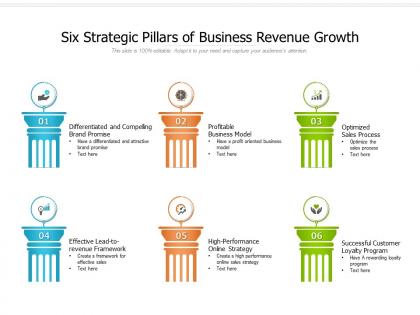
Six strategic pillars of business revenue growth




Try Before you Buy Download Free Sample Product
 Impress Your
Audience
 100%
Editable
 Save Hours
of Time


Elaborate on the huge benefits to be had with our Six Strategic Pillars Of Business Revenue Growth. It helps inculcate good habits.
People who downloaded this PowerPoint presentation also viewed the following :
Six strategic pillars of business revenue growth with all 2 slides:
Increase the chances of agreement with our Six Strategic Pillars Of Business Revenue Growth.It helps identify grounds for consensus.


FAQs for Six strategic pillars of
Look, most companies are still doing cost-plus pricing which is honestly just lazy - you're missing out on so much revenue. Value-based pricing works way better because you're charging what customers actually think it's worth. Tiered pricing helps too since you can hit different segments. Dynamic pricing is smart if you can swing it, adjusting based on demand and all that. For new stuff, penetration pricing gets you in the door. Premium works if you've got something truly different. Oh and survey your current customers about what they'd pay at different feature levels - that data is gold. It's really about understanding what people value, not just your costs.
Look, subscription models are honestly genius because you get that steady cash flow instead of constantly chasing new sales. Your customers stick around longer too since they're already invested in paying monthly. Way easier to sell more stuff to people who already trust you than starting from zero with strangers. The trick is making sure your product actually gives them ongoing value - like, nobody's gonna keep paying for something they touched once six months ago. Think about what parts of your business could become a monthly service instead of just one-and-done purchases. That's where the real money is.
Look, your customers are basically handing you a money-making blueprint every time they give feedback. Instead of guessing what they want, just listen to what they're actually telling you. Fix the annoying stuff that's killing your deals. Build features people are begging for, not random crap that sounds cool in meetings. Honestly, half the companies I know could double their revenue just by acting on feedback they already have. Your customers will literally tell you how to get more money out of them - better retention, upsell opportunities, you name it. Set up those feedback systems and don't let responses sit in some forgotten spreadsheet.
Honestly, diving into your customer data is where the magic happens. Check out buying patterns and see which products people grab together - perfect for bundles. Seasonal trends are huge too, plus geographic stuff shows you blind spots. The companies that really nail this? They track where customers bail out of the buying process. Customer churn data is like a goldmine if you actually dig into why people left. Don't just hoard data though - you've gotta ask smart questions. Map out that whole customer journey and spot the drop-off points. That's where you're bleeding money.
Look at Netflix - they went from mailing DVDs to streaming and their revenue exploded from $1.4B to $29B in ten years. Spotify flipped music from buying albums to monthly subscriptions, now they're pulling in $11B yearly. Then there's Amazon who basically said "hey, we built all this server stuff for ourselves, why not sell it?" and AWS became huge. Here's the thing though - you probably already have something valuable sitting right there. Maybe it's a process you've perfected, or skills you don't even think about anymore. The trick is figuring out how to package what you've got for a different audience. Your next big move might literally be staring you in the face.
Honestly, timing is everything with cross-selling. Look at your customer data to figure out when people actually buy stuff together - like when someone's checking out, that's perfect for suggesting accessories. Your team shouldn't sound like used car salespeople though! Frame it as helping solve real problems. I'd start by checking what your best customers bought together most often, then work those combos into your sales process. Bundle deals work great too since people love feeling like they're getting a discount. Oh, and if someone hits their usage limit on a feature? Perfect time to offer the premium version.
Oh man, dynamic pricing is a total game changer for boosting revenue. Basically you're adjusting prices in real-time based on demand and what competitors are doing - way smarter than just keeping prices fixed. Most companies see 2-5% revenue bumps, though some lucky ones hit 15%+ when everything aligns. You can react instantly when demand spikes or competitors shift their prices. Honestly, it's like having someone constantly watching the market for you. My advice? Start with just one product category first to see how it goes before going all-in everywhere.
Honestly, don't get stuck on just age and location stuff—that barely tells you anything useful. Pull your customer data and sort by how often people buy plus their average order size. Those two things alone will show you who your real segments are. You've got your repeat buyers who want exclusive access, bargain hunters chasing discounts, and those random big spenders. Each group needs totally different messaging. I learned this the hard way after wasting time on demographic targeting that went nowhere. Focus on actual behavior patterns instead. Way more effective than guessing based on where someone lives.
Dude, aggressive growth can totally backfire if you're not careful. You'll burn cash way too fast and your team gets stretched thin. Quality takes a hit when you're rushing everything, which honestly just pisses off customers later. I've seen people chase any customer just to hit their numbers - big mistake. Watch your cash flow like a hawk and don't hire faster than you can afford to pay people. Set milestones that actually make sense, not some crazy timeline you pulled out of nowhere. Also keep tracking if customers are happy, not just revenue numbers. Oh, and test your systems first before going full throttle. Nothing worse than everything breaking when you finally get traction.
B2B partnerships are like combining superpowers, honestly. You pool customer bases and resources to hit numbers neither could solo. Cross-selling becomes way easier. Plus you can co-develop stuff that sells for more money, or use their distribution to break into markets faster. The real win? When a software company teams up with consultants and suddenly they're both closing bigger deals because clients want the full package. Oh, and definitely hash out who gets what percentage before you start – I've seen partnerships get messy over money splits later.
Honestly, stop obsessing over follower counts - they don't pay the bills. Focus on the customers who actually spend money and track what matters: conversion rates, lifetime value, cost per acquisition. Email marketing is seriously underrated but it'll give you the best bang for your buck, along with retargeting campaigns. Look at your data to see which channels bring in profitable customers, then throw more budget at those. Oh, and set up proper tracking so you can follow someone's entire journey from clicking your ad to buying. That's where the real insights are hiding.
Honestly, just track the stuff that matters - MRR growth, customer acquisition cost, and lifetime value. Those three will tell you everything. Your CAC to CLV ratio should be at least 3:1, that's like the golden rule. Also watch conversion rates through your funnel and average deal size. Don't get distracted by vanity metrics (looking at you, website traffic) unless people are actually buying. Pick maybe 3-4 metrics tops and check them weekly - any more and you'll drive yourself crazy. When something's off, you'll spot it fast and can adjust. Trust me, keeping it simple beats drowning in data every time.
Look, happy customers just spend more - it's that simple. They don't bail on you every few months, they actually buy your new stuff, and they tell their friends about you (which is honestly the best marketing you can get). Customer lifetime value goes way up when people actually enjoy dealing with your company. I'd start by figuring out where your customers get most frustrated in their journey with you. Fix those headaches first and you'll see the difference pretty quick. It's probably the most reliable way to grow without constantly hunting for new customers.
So here's the thing - you need three stages that actually work together. Start by getting the right people's attention through content or ads that don't suck. The middle part is where everyone screws up though - you've got to earn their trust with helpful emails, demos, stuff that actually matters to them. Oh and make buying stupid easy with clear prices and checkout that works. Short sentences, long ones, whatever keeps them reading. Most important thing? Track where people bail out so you can fix those spots. I swear, half the battle is just knowing which part of your funnel is broken.
Dude, AI can seriously bump up your revenue. Start with lead scoring and personalized marketing - that stuff actually works. Automation takes care of boring tasks like follow-ups so your team can focus on real sales work. Chatbots are pretty clutch too, they're basically working while you sleep capturing leads. Honestly, the predictive analytics thing is huge for spotting opportunities before your competition catches on. I'd say pick one thing in your sales process first, maybe automated follow-ups? See how it goes before you go crazy with it.
No Reviews