

Social Media Crisis Plan Powerpoint Ppt Template Bundles




Try Before you Buy Download Free Sample Product
 Impress Your
 Audience
 100%
100% Editable
 Save Hours
 of Time


Our Social Media Crisis Plan Powerpoint Ppt Template Bundles are topically designed to provide an attractive backdrop to any subject. Use them to look like a presentation pro.
People who downloaded this PowerPoint presentation also viewed the following :
Social Media Crisis Plan Powerpoint Ppt Template Bundles with all 25 slides:
Use our Social Media Crisis Plan Powerpoint Ppt Template Bundles to effectively help you save your valuable time. They are readymade to fit into any presentation structure.
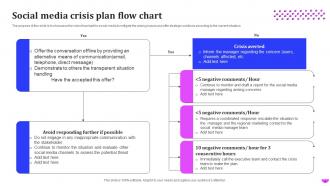
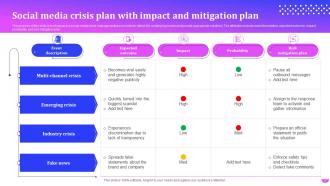
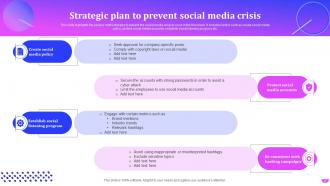
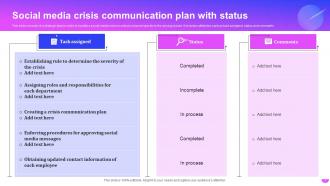





FAQs for Social Media Crisis Plan Powerpoint
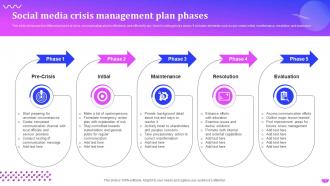
A comprehensive social media crisis plan involves establishing clear escalation protocols, designating response teams with defined roles, creating pre-approved messaging templates, and implementing real-time monitoring systems across all platforms. These strategic components work together by enabling rapid response coordination, maintaining consistent brand voice during turbulent periods, and minimizing reputational damage, with many organizations finding that proactive planning significantly reduces crisis resolution time.
A comprehensive social media crisis plan should include rapid response protocols, designated crisis team roles, pre-approved messaging templates, escalation procedures, and stakeholder communication guidelines. These components work together by enabling immediate containment, ensuring consistent messaging across platforms, and maintaining brand reputation, with many organizations finding that structured crisis frameworks reduce response time and minimize reputational damage.
Organizations can identify potential social media crises through continuous social listening, monitoring engagement patterns, tracking sentiment analysis, establishing keyword alerts, and implementing escalation protocols. These proactive measures enable businesses to detect negative trends, unusual activity spikes, and emerging reputation threats across platforms, while many companies find that early detection systems significantly reduce response times and minimize potential damage to brand credibility.
Monitoring and analytics serve as the early warning system and strategic compass in social media crisis management, enabling real-time threat detection, sentiment tracking, reach assessment, and stakeholder response measurement. Through continuous monitoring tools, organizations can identify emerging issues before they escalate, measure crisis impact across platforms, and adjust response strategies based on audience engagement data, ultimately minimizing reputational damage and accelerating recovery.
A social media crisis management team should include communications managers, legal counsel, customer service representatives, senior executives, and IT security personnel. These cross-functional stakeholders streamline response coordination by managing public messaging, ensuring regulatory compliance, and addressing customer concerns, with many organizations finding that diverse expertise ultimately delivers faster resolution and enhanced brand protection.
Pre-approved messaging ensures rapid, consistent response during social media crises by eliminating approval delays, maintaining brand voice, and preventing miscommunication across all channels. This strategic preparation enables organizations to address issues within critical first hours while legal, PR, and leadership teams coordinate behind scenes, ultimately protecting brand reputation and customer trust when swift, unified communication proves essential.
Brands should communicate transparently and promptly during social media crises through direct acknowledgment, regular updates, empathy-driven messaging, and proactive monitoring across all platforms. By establishing clear response protocols, designating crisis teams, and maintaining authentic dialogue with stakeholders, companies can preserve customer trust, minimize reputation damage, and often emerge stronger with enhanced credibility and loyal community support.
Evaluation methods include response time analysis, sentiment monitoring, engagement metrics assessment, media coverage tracking, and stakeholder feedback collection. These approaches enable organizations to measure crisis containment speed, audience perception shifts, and communication effectiveness across platforms, with many companies finding that comprehensive post-crisis analysis ultimately delivers improved preparedness and enhanced reputation management strategies.
Social media policies prevent crises by establishing clear content guidelines, approval processes, employee training protocols, and response procedures before issues arise. These proactive frameworks enable organizations to maintain consistent brand messaging, minimize human error, and respond swiftly to emerging situations, with many companies finding that comprehensive policies reduce crisis incidents by up to 70%.
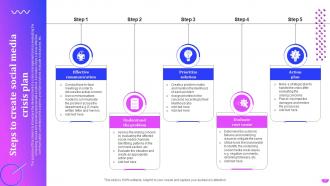
Immediate steps include halting scheduled content, assessing the situation's scope, activating your crisis team, crafting an initial response acknowledging the issue, and monitoring mentions across all platforms. These actions help contain the crisis by demonstrating transparency, controlling messaging flow, and gathering real-time feedback, with many organizations finding that swift acknowledgment significantly reduces negative sentiment spread.
Brands can recover their reputation through transparent communication, swift response protocols, authentic apologies when warranted, consistent messaging across platforms, and proactive community engagement. Many companies in retail, hospitality, and financial services find that implementing comprehensive monitoring systems, partnering with influencers for credibility rebuilding, and demonstrating concrete corrective actions ultimately restores consumer trust and competitive positioning.
Essential training includes crisis communication protocols, social media platform management, brand voice consistency, legal compliance guidelines, and escalation procedures. Through comprehensive training programs, organizations enable staff to respond quickly, maintain professional messaging, and minimize reputational damage, with many companies finding that well-trained teams significantly reduce crisis resolution time and preserve customer trust.
Response time significantly impacts public perception during social media crises, with delayed responses often amplifying negative sentiment, eroding trust, and allowing misinformation to spread unchecked across platforms. Companies responding within the first hour typically maintain better brand credibility and customer loyalty, while those delaying beyond 24 hours frequently face intensified backlash, with many organizations finding that swift, transparent communication ultimately preserves reputation and demonstrates accountability.
Social listening enables organizations to identify potential crisis triggers, monitor sentiment shifts, and track conversation velocity across platforms in real-time. Through continuous monitoring tools, companies can refine response protocols, adjust messaging strategies, and anticipate escalation patterns, with many brands finding that proactive listening reduces crisis response time by 60-70% while enhancing reputation management effectiveness.
Post-crisis analysis reveals audience sentiment patterns, response effectiveness metrics, and communication gaps that directly inform strategic improvements. Organizations can identify which messaging resonated, optimize response protocols, and strengthen stakeholder relationships, with many companies finding that thorough post-crisis evaluation ultimately enhances brand resilience and competitive positioning.
-
Easy to use and customize templates. Helped me give a last minute presentation.
-
The ease of modifying templates is just superb! Also, the vast collection offers plenty of options to choose from.