Software Design And Development Project Buyers Persona Software Engineering Playbook

Rating:
90%
Software Design And Development Project Buyers Persona Software Engineering Playbook
Slide 1 of 6
Favourites Favourites

Try Before you Buy Download Free Sample Product

Audience Impress Your
Audience
Editable 100%
Editable
Time Save Hours
of Time
The Biggest Sale is ending soon in
0
0
:
0
0
:
0
0
Rating:
90%
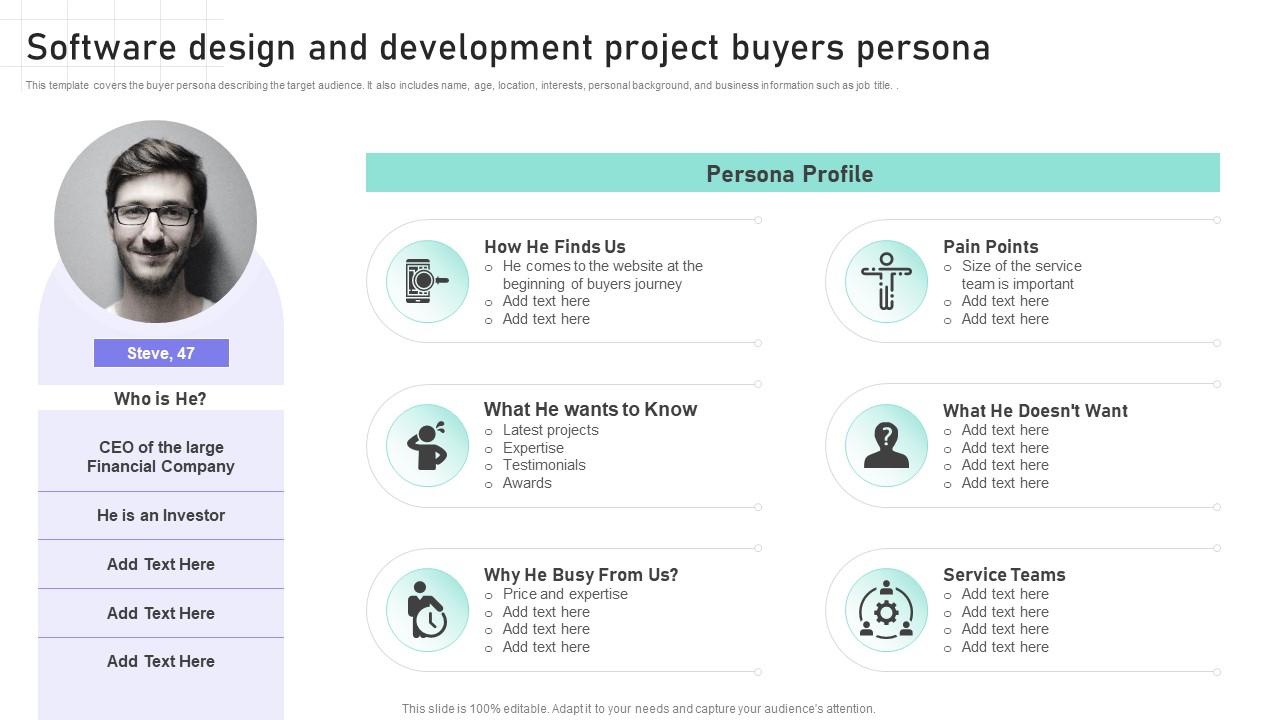
This template covers the buyer persona describing the target audience. It also includes name, age, location, interests, personal background, and business information such as job title.Increase audience engagement and knowledge by dispensing information using Software Design And Development Project Buyers Persona Software Engineering Playbook. This template helps you present information on one stage. You can also present information on Financial Company, Beginning Buyers, Team Important using this PPT design. This layout is completely editable so personaize it now to meet your audiences expectations.

FAQs for Software Design And Development Project Buyers Persona

Agile emphasizes iterative development, continuous feedback, and adaptive planning, while Waterfall follows sequential phases with comprehensive documentation and fixed requirements. Agile enables faster delivery through sprints and regular stakeholder collaboration, whereas Waterfall provides structured timelines and clear milestones, with many organizations finding that hybrid approaches ultimately deliver enhanced project flexibility and predictable outcomes.

Version control systems enhance collaboration by enabling multiple developers to work simultaneously on shared codebases, tracking changes comprehensively, and managing merge conflicts systematically. Through platforms like Git, engineering teams streamline code integration, maintain detailed project histories, and coordinate releases efficiently, with many organizations finding that these systems ultimately deliver faster development cycles and reduced deployment errors.

Test-driven development significantly enhances software quality by requiring developers to write tests before code, ensuring comprehensive coverage, reducing bugs, and promoting cleaner design patterns. This methodology streamlines debugging processes, accelerates development cycles, and delivers more reliable applications, with many software teams finding that TDD ultimately reduces long-term maintenance costs while improving overall code reliability.

CI/CD streamlines software delivery by automating code integration, testing, and deployment processes, reducing manual errors and accelerating release cycles. Through automated pipelines, development teams can detect issues earlier, maintain consistent code quality, and deploy updates seamlessly, with many organizations finding that CI/CD ultimately delivers faster time-to-market and enhanced operational efficiency.

Best practices for writing maintainable and scalable code include modular design, comprehensive documentation, consistent coding standards, automated testing, and efficient version control. These methodologies streamline development by reducing technical debt, enabling faster debugging, and facilitating team collaboration, with many software organizations finding that structured approaches ultimately deliver enhanced productivity and long-term competitive advantage.

Software engineers prioritize technical debt by assessing impact on system performance, development velocity, and maintenance costs, while balancing immediate project deliverables against long-term code quality. Many development teams allocate 15-20% of sprint capacity to technical debt remediation, with financial services and healthcare organizations finding that strategic debt management ultimately reduces deployment risks and accelerates feature delivery timelines.

Emerging DevOps trends include GitOps for declarative infrastructure management, AI-driven automation for predictive monitoring, platform engineering for self-service developer experiences, and security-first DevSecOps integration. These approaches streamline deployment cycles, enhance operational efficiency, and minimize security vulnerabilities, with many organizations finding that strategic adoption ultimately delivers faster time-to-market and improved system reliability.

Software engineering teams manage remote collaboration challenges through standardized communication protocols, collaborative development platforms, regular video standups, shared documentation systems, and clear code review processes. These approaches streamline workflow coordination, minimize miscommunication, and maintain project visibility, with many distributed teams finding that structured daily check-ins and real-time collaboration tools ultimately deliver faster development cycles and enhanced productivity.

Common security vulnerabilities include SQL injection, cross-site scripting (XSS), authentication flaws, insecure data storage, and broken access controls. These risks can be mitigated through secure coding practices, regular penetration testing, input validation, and automated security scanning, with many organizations finding that implementing comprehensive security frameworks ultimately delivers enhanced customer trust and regulatory compliance.

User experience design is critically important throughout the software development lifecycle, directly impacting user adoption, customer satisfaction, revenue generation, and long-term product success. By integrating UX design from initial planning through deployment, development teams streamline user workflows, reduce support costs, and minimize costly post-launch revisions, with many organizations finding that early UX investment delivers significantly higher ROI and competitive advantage.

Using open-source software in commercial projects presents both significant opportunities and important considerations, including cost reduction, accelerated development cycles, community support, licensing compliance requirements, and security management responsibilities. While many organizations find that open-source solutions enhance innovation and competitive advantage through faster deployment, they must also navigate intellectual property concerns and maintain robust governance frameworks, ultimately delivering operational efficiency when strategically implemented.

Cloud computing transforms software engineering through scalable infrastructure, containerization, microservices architecture, DevOps integration, and automated deployment pipelines. These technologies streamline development by enabling rapid scaling, continuous integration, and distributed team collaboration, with organizations in finance, healthcare, and retail finding significantly faster time-to-market, reduced operational costs, and enhanced system reliability.

Ethical considerations include algorithmic bias prevention, data privacy protection, transparency in decision-making processes, accountability for automated outcomes, and ensuring equitable access across diverse user groups. These principles guide developers in creating responsible AI systems by implementing fairness audits, robust data governance, and clear user consent mechanisms, with many technology companies finding that ethical frameworks ultimately deliver stronger user trust and regulatory compliance.

Software engineering education adapts to technological changes by integrating agile curriculum design, industry partnerships, continuous faculty development, hands-on project-based learning, and emerging technology modules. Universities increasingly collaborate with tech companies to update coursework, incorporate real-world scenarios, and provide internship opportunities, ultimately delivering graduates equipped with current skills and adaptive mindsets for evolving markets.

Software teams should track metrics including code quality measures, deployment frequency, lead time for changes, mean time to recovery, and customer satisfaction scores. These metrics enhance productivity by identifying bottlenecks, streamlining development cycles, and improving code reliability, with many organizations finding that combining technical and business metrics ultimately delivers faster releases and better user experiences.

Ratings and Reviews

90% of 100
Review Form
Write a review
Most Relevant Reviews
  1. 100%

    by Darrel Burns

    Enough space for editing and adding your own content.
  2. 80%

    by Brown Baker

    Happy to found you SlideTeam. You guys are value for money. Amazing slides.

2 Item(s)

per page: