

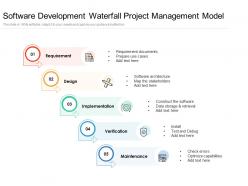
Software Development Waterfall Project Management Model





Try Before you Buy Download Free Sample Product
 Impress Your
Audience
 100%
Editable
 Save Hours
of Time


Crash through with our Software Development Waterfall Project Management Model. Burst onto the scene with your ideas.
People who downloaded this PowerPoint presentation also viewed the following :
Software Development Waterfall Project Management Model with all 2 slides:
Do not let anything cramp your style. Get loose with our Software Development Waterfall Project Management Model.

FAQs for Software Development Waterfall
So the Waterfall Model breaks down into five phases that happen one after another: Requirements, Design, Implementation, Testing, and Maintenance. It's literally like a waterfall - once you move to the next step, you can't really go back up easily. Requirements feed into your design phase, then design specs guide the actual coding, code gets tested, and finally you're maintaining the finished product. Going backwards is a total pain and costs way more than you'd think. Honestly, I've seen teams get burned when they rush through early phases. You really gotta nail each one before moving forward or you'll regret it later.
So here's the deal with Waterfall - you're basically stuck finishing everything before moving forward. Can't skip ahead without your docs being 100% done and signed off. Requirements, design specs, test plans, the whole nine yards has to get approved first. Pretty inflexible if you ask me, but that's kinda the whole idea. Teams end up spending forever on documentation upfront since there's no going back later. Each phase needs stakeholder approval before you continue. Actually works decent for regulated stuff though - like if you need bulletproof documentation for compliance reasons, nothing slips through the cracks.
Waterfall's great when you know exactly what you want upfront - no changes, no surprises. The structure is super clear with defined phases and deliverables, so nobody's confused about what comes next. Documentation is thorough (maybe too thorough sometimes lol), but that's actually perfect for regulated industries or when new people join the team. Honestly, it's kind of old school but still works well for certain projects. Just don't expect flexibility once you start. The planning phase better be rock solid because there's no going back to fix requirements later.
Waterfall's good when requirements are totally locked down and won't change. Government stuff, regulatory projects, construction software - basically anything where the specs are set in stone. Works well with less experienced teams too, or external vendors who need everything documented upfront. Your stakeholders have to be okay with zero scope changes though, which is... optimistic lol. Honestly it's pretty rare now, but if you're 100% sure what you're building and the client won't flip-flop, it can save you from constant revisions. Just don't fool yourself about knowing everything from day one.
Yeah, requirement changes will totally mess up your Waterfall timeline and budget. You're doing everything in sequence, so any changes mean backtracking through earlier phases and redoing all the work that comes after. Picture building a house - you don't want to change the foundation specs when you're already putting up the walls, right? Waterfall assumes you've got everything figured out from day one. Late changes become these expensive change orders instead of just normal tweaks. Honestly, if you think requirements might shift a lot, maybe look at Agile instead? Or at least pad your timeline and budget for the inevitable changes.
Waterfall's biggest problem? You're locked into this step-by-step thing where backing up costs a fortune. Requirements, then design, then coding - no flexibility. The worst part is you don't hear from customers until everything's done, so you might build something nobody wants (learned this the hard way). Agile's way better for most stuff. You can pivot when things change, ship pieces as you go, and actually get feedback that matters. If your project's gonna evolve or you need to check in with people regularly, skip waterfall. Trust me on this one.
So in Waterfall, you literally can't touch testing until all the coding's wrapped up - which is kind of a pain tbh. Once you do start though, there's this set order: unit tests first, then integration, system, and finally user acceptance testing. Everything gets checked against those requirements from way earlier in the project. Here's the thing - if something major breaks during testing, you might have to backtrack through the whole damn process again. Super tedious. Make sure you document everything when you're testing because any fixes will ripple back through all the previous stages.
Yeah, totally doable but you'll need to mix things up a bit. Try adding review checkpoints within each phase instead of waiting forever to get feedback. Continuous testing helps too - don't save it all for the end like traditional waterfall does. Some teams I know break big projects into smaller waterfall chunks, which honestly works pretty well. Regular stakeholder check-ins are huge. The structure stays the same but you're sneaking in agile stuff like early testing. If you're stuck with waterfall because of compliance or whatever, just introduce these tweaks slowly and see what sticks.
Waterfall works great when you're dealing with super regulated stuff - healthcare, aerospace, defense, that kind of thing. Medical device software? Bridge construction? Yeah, you can't just change your mind halfway through those projects. Government contracts eat this approach up because they want all that paperwork and predictable schedules. Manufacturing loves it too since they're already following set processes anyway. Honestly, if your requirements are rock solid and won't budge, plus you need tons of documentation for compliance, Waterfall's perfect. Just make sure you actually know what you're building from day one.
Waterfall makes budgeting way easier since you map out everything upfront. Each phase gets its own timeline and cost estimate before any coding happens - kinda like planning a house renovation where you know exactly what each room will cost. Problem is, requirements always shift mid-project and suddenly your numbers are trash. But if you're lucky enough to work on something with rock-solid requirements that won't change? Waterfall's honestly your best bet for predictable costs. Oh, and definitely pad those estimates. Scope creep will bite you otherwise.
So the Waterfall Model actually does push for stakeholder communication, just in a really structured way. Everyone has to hash out requirements upfront - no vague "make it look nice" requests allowed. Then there's these formal checkpoints where stakeholders review deliverables and sign off before moving to the next phase. Honestly, some people hate how rigid it is, but that rigidity forces the important conversations. The catch is you're not talking continuously like in Agile. Communication happens in big chunks at milestone reviews, which can feel clunky but does cover the critical stuff.
Yeah, Waterfall is pretty terrible with surprises. Once you lock in those requirements at the start, you're stuck with them even when things go sideways. The rigid phase structure means you won't catch major problems until testing - way too late to fix anything without massive headaches. Most devs I know won't touch it for risky projects anymore, and honestly I don't blame them. If you have to use it though, go overboard on the planning phase. Map out every possible disaster and pad your timeline like crazy.
Ugh, Waterfall feedback is brutal - you literally don't hear from customers until the very end when you hand over the finished product. Pretty terrifying if they end up hating it! You collect all the requirements upfront, then basically go dark for months while building. No continuous input like Agile gives you. The moment of truth hits during final testing or delivery, which is why Waterfall's so risky when requirements might shift. Honestly though, if you're forced into Waterfall? Really nail those initial requirements and maybe do some sneaky informal check-ins with stakeholders. Trust me on this one.
Honestly, add some review checkpoints between each phase - sounds weird for Waterfall but trust me on this one. Let stakeholders catch big problems before you're too far down the rabbit hole. Spend way more time upfront really nailing down requirements and maybe do some prototyping. The better your initial planning, the fewer surprises later. Oh, and definitely set up proper change control processes so small tweaks don't completely wreck your timeline. It's still linear but you're not flying totally blind between phases.
For Waterfall projects, you'll want Microsoft Project or Gantt charts to map everything out. DOORS and Jira work great for requirements tracking. Since documentation is basically your lifeline in Waterfall, grab something like Confluence or SharePoint for all your specs. TestRail's solid for the QA phase too. Honestly though? The specific tools don't matter as much as you'd think. What counts is having clean phase gates and rock-solid documentation workflows. I'd say map out your phases first, then pick whatever tools actually support that sequential flow instead of fighting against it.
No Reviews