

Software Release Plan Powerpoint Ppt Template Bundles





Try Before you Buy Download Free Sample Product
 Impress Your
Audience
 100%
Editable
 Save Hours
of Time


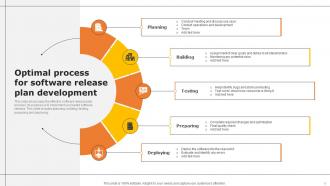
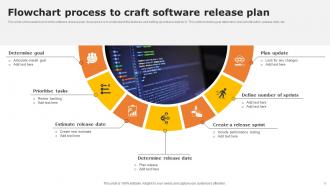
Introducing our comprehensive Software Release Plan PowerPoint PPT presentation. This dynamic tool is your ultimate guide to crafting a successful software release strategy. With a clear focus on precision and efficiency, our PPT highlights the essential components of a well-structured software release plan framework. Uncover the step-by-step process of creating a robust software release plan, from setting realistic timelines and milestones to conducting thorough testing and deployment. Seamlessly navigate the complexities of development cycles and resource allocation with our visually appealing slides and expert insights. Stay ahead in the competitive market by adopting an agile and data-driven approach. Empower your team to collaborate effectively and deliver exceptional software products on time. Optimize your software release plan and achieve unprecedented success with our Software Release Plan PPT today.
People who downloaded this PowerPoint presentation also viewed the following :
Software Release Plan Powerpoint Ppt Template Bundles with all 22 slides:
Use our Software Release Plan Powerpoint Ppt Template Bundles to effectively help you save your valuable time. They are readymade to fit into any presentation structure.










FAQs for Software Release Plan Powerpoint
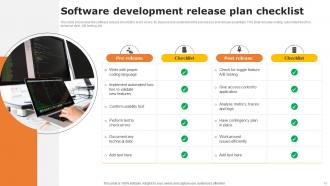
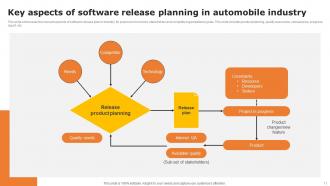
Key components of an effective software release plan include feature specifications, timeline milestones, resource allocation, risk assessment, testing protocols, and rollback procedures. These elements work together by ensuring coordinated development phases, minimizing deployment risks, and enabling seamless user transitions, with many software organizations finding that comprehensive planning ultimately delivers faster releases and enhanced product quality.
Teams ensure testing integration by embedding quality assurance throughout the development lifecycle, establishing automated testing pipelines, conducting parallel testing with development phases, and implementing continuous integration practices. Through strategic test planning, organizations streamline code validation, reduce deployment risks, and accelerate release cycles, with many software companies finding that integrated testing approaches ultimately deliver faster time-to-market and enhanced product reliability.
Stakeholder feedback significantly shapes software release plans by identifying critical feature priorities, revealing user pain points, and highlighting market timing requirements. Through regular input from customers, internal teams, and business partners, organizations can adjust development schedules, refine feature specifications, and optimize release sequences, ultimately delivering products that better align with market demands and user expectations.
Version control systems significantly streamline release planning by enabling precise change tracking, branch management for parallel development, and automated integration workflows. Through Git-based platforms, development teams coordinate feature releases, manage rollback procedures, and maintain deployment histories across environments, while facilitating collaborative planning sessions that ultimately deliver predictable release cycles and reduced deployment risks.
Common software release planning pitfalls include unrealistic timelines, inadequate testing phases, poor stakeholder communication, insufficient rollback procedures, and lacking dependency mapping. These challenges can be avoided by implementing buffer time for unexpected issues, establishing comprehensive testing protocols, maintaining regular cross-team updates, and creating detailed contingency plans, ultimately delivering more reliable releases and enhanced customer satisfaction.
A release plan accommodates emerging technologies through flexible architecture, regular technology assessments, modular development approaches, and dedicated innovation sprints. This strategic framework enables organizations to evaluate, pilot, and integrate new tools seamlessly, with many software teams finding that maintaining adaptable roadmaps and cross-functional collaboration ultimately delivers competitive advantage and faster market responsiveness.
Feature prioritization strategies include user impact assessment, business value analysis, technical debt evaluation, customer feedback integration, and competitive positioning requirements. These approaches enable development teams to balance immediate user needs with long-term product goals, while many organizations find that combining data-driven metrics with stakeholder input delivers more strategic releases and enhanced market competitiveness.
Agile release pipelines feature continuous integration, frequent deployments, automated testing, and iterative feedback loops, while waterfall pipelines follow sequential phases with milestone-based releases and comprehensive documentation gates. Through agile methodologies, development teams streamline delivery cycles, enhance responsiveness to market changes, and reduce deployment risks, with many software organizations finding that continuous delivery ultimately delivers faster time-to-market and improved customer satisfaction.
Software release success metrics include user adoption rates, system performance indicators, defect density, customer satisfaction scores, and business impact measurements like revenue or conversion rates. These metrics enable development teams to assess technical stability, user experience quality, and commercial viability, with many organizations finding that combining leading indicators like deployment frequency with lagging indicators ultimately delivers comprehensive insights for optimizing future releases.
Organizations ensure compliance and security by integrating automated testing, vulnerability assessments, regulatory checks, and audit trails directly into their release workflows. Through continuous security scanning and compliance validation, companies in healthcare, finance, and government sectors streamline approvals while maintaining strict standards, ultimately delivering faster, secure releases without compromising regulatory requirements.
Best practices for communicating release schedules include establishing regular update cadences, providing clear timelines with buffer periods, using multiple communication channels, offering detailed feature descriptions, and maintaining transparency about potential delays. Organizations across industries find that combining automated notifications with personalized dashboards and proactive customer success outreach significantly enhances user adoption rates, reduces support inquiries, and ultimately strengthens customer relationships while minimizing disruption to business operations.
Software release plans should be adjusted by analyzing user feedback patterns, prioritizing critical bug fixes and high-impact feature requests, and implementing iterative sprints that address user pain points. Through agile methodologies and feedback loops, development teams can reallocate resources toward user-validated improvements, enhance product-market fit, and accelerate feature development cycles, ultimately delivering better user experiences and stronger competitive positioning.
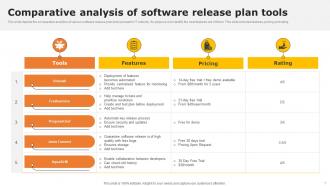
Effective release planning documentation tools include Jira, Azure DevOps, Confluence, Notion, and GitLab, each offering project tracking, collaboration features, and documentation capabilities. These platforms streamline communication by centralizing requirements, timelines, and stakeholder feedback, while enabling real-time updates and version control, ultimately delivering enhanced project visibility and faster release cycles across development teams.
Teams should review software release plans bi-weekly during active development cycles, with comprehensive quarterly assessments for long-term strategic alignment. This cadence enables organizations to adapt to changing market conditions, incorporate user feedback, and adjust resource allocation effectively. Many development teams find that regular reviews streamline delivery timelines while maintaining quality standards, ultimately delivering more responsive products and competitive advantage.
Cross-functional collaboration ensures diverse expertise shapes release planning through coordinated input from development, QA, marketing, operations, and customer support teams. This strategic alignment enables organizations to identify potential bottlenecks early, streamline resource allocation, and deliver more robust releases, with many companies finding that collaborative planning reduces deployment risks while accelerating time-to-market outcomes.
-
It saves your time and decrease your efforts in half.
-
One-stop solution for all presentation needs. Great products with easy customization.