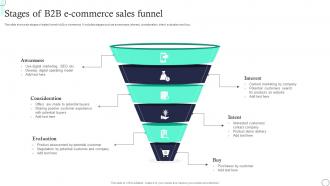
Stages Of B2B E Commerce Sales Funnel
Try Before you Buy Download Free Sample Product
Audience
Editable
of Time
This slide shows six stages of sales funnel in b2b e commerce. It includes stages such as awareness, interest, consideration, intent, evaluation and buy.
People who downloaded this PowerPoint presentation also viewed the following :
Stages Of B2B E Commerce Sales Funnel with all 6 slides:
Use our Stages Of B2B E Commerce Sales Funnel to effectively help you save your valuable time. They are readymade to fit into any presentation structure.
FAQs for Stages Of B2B E
Look, B2B funnels have these main stages: awareness, interest, consideration, intent, evaluation, and purchase. But real talk - they're way messier than those clean diagrams we love drawing. People bounce around constantly. Awareness is when they realize there's actually a problem. Interest means they're digging into solutions. Consideration involves comparing vendors and building requirements (this stage drags forever, btw). Intent shows they're ready to move. Evaluation brings demos and proposals. Purchase closes it. Here's what matters though - map your content to each stage so you're hitting them with the right stuff at the right time.
Focus on content that actually solves problems before people are ready to buy. Blog posts, whitepapers, webinars - stuff that helps with real issues they're facing. LinkedIn's honestly where it's at for B2B. Share insights, jump into discussions, build actual relationships with decision-makers. Trade publications work too if that's where your people hang out. Never be salesy upfront - just helpful. Map out their biggest headaches first, then create content around those. I know it sounds basic but most companies skip this step and wonder why their content doesn't convert.
So content marketing is like your best wingman throughout the whole sales process. It educates people and keeps them interested as they go from "what's this?" to actually buying. Early on, you want lighter stuff - blog posts, basic guides. Then as they get more serious, hit them with the heavy hitters: case studies, ROI calculators, detailed how-to content. Honestly, I think of it as having a sales rep who never sleeps or takes lunch breaks. Map out what content you have for each stage and see where people might be dropping off. That's usually where you're missing something they need.
Focus on lead-to-opportunity conversion first - that's where you'll see if leads are actually talking to sales. Cart abandonment matters way more in B2B since people need approvals from like three different managers. Track your opportunity-to-customer rates and overall visitor-to-customer too. B2B cycles drag on forever, so measure conversions at 30/60/90 days instead of expecting quick wins. Email-to-demo conversion is clutch if demos are your thing. Honestly, just start with the big funnel stages and then get granular once you know what's working.
Three things'll make the biggest difference: clear headlines, short forms, and trust signals. Your headline should solve whatever problem brought them there - skip the marketing fluff. Forms are the worst, so keep them to 3-5 fields tops. Nobody's filling out a novel for your PDF. Throw some testimonials or company logos near your call-to-action button too. Oh, and here's something people mess up constantly - make sure your landing page matches whatever ad they clicked. If your Facebook ad says "free guide" but your page says "download our resource," you're confusing people for no reason. Consistency's huge for conversions.
Honestly, the biggest pain is that B2B buyers are paranoid as hell - their job's on the line if your product sucks, so they'll research forever. You're not just convincing one person either, you've got like 5 different stakeholders all wanting different things. Sales cycles drag on for months (I've seen 6+ easily). The price tags are huge too, so they'll shop around and want you to prove every penny of ROI. My advice? Don't push for quick wins. Focus on building actual relationships and keep feeding them useful content. It's a marathon, not a sprint.
Honestly, personalized emails are where the magic happens with lead nurturing. You can actually talk to people about stuff they care about instead of sending the same boring blast to everyone. I usually segment my lists by industry or where someone is in their buying journey - makes a huge difference. Track what pages they visit or what they download, then follow up with something that actually matters to them. Nobody has time for "Dear Valued Customer" garbage anymore. Start with maybe 3 different email sequences based on your main customer types. Your open rates will thank you later, trust me.
Honestly, get a decent CRM first - HubSpot's free tier is solid, Salesforce if you're feeling fancy. LinkedIn Sales Navigator is worth every penny for prospecting (seriously, where was this tool 10 years ago?). ZoomInfo's great too but pricey. Once you've got leads flowing, Marketo or Pardot can automate your nurture sequences. Google Analytics plus your CRM reports will show you exactly where people bail - the data's always more brutal than you expect. Outreach and SalesLoft handle email sequences pretty well. The trick is making sure everything talks to each other. Start simple with CRM, then add tools as you grow.
So CRMs are kind of like the central hub for your whole B2B funnel. They track leads from when they first show up all the way to closing deals. You can spot where people are getting stuck and set up automatic follow-ups. The best part? Modern ones connect with your marketing tools so nothing gets dropped between teams. Your sales people can see what content prospects looked at, email opens, all that engagement stuff. Honestly, just start by matching your funnel stages to the CRM pipeline - you'll immediately see where you're bleeding leads.
Honestly, the biggest thing is getting both teams to agree on what a good lead actually looks like. Have sales share what prospects are really asking about, and marketing should be transparent about their scoring system. Weekly check-ins are way better than monthly ones - trust me on this one. Create KPIs that both teams care about (quality over quantity). The handoff process is huge too. If sales keeps complaining about bad leads, you need clearer qualification criteria upfront. It's kinda like dating - everyone needs to know what they're looking for before swiping right.
Here's what I'd do - track feedback at each stage so you know where people bail. Survey responses tell you which content actually works during awareness. Those sales call objections during consideration? Pure gold for fixing your pitch. When prospects pick competitors, ask why - honestly, most people will tell you if you just ask nicely. Post-purchase stuff shows you onboarding problems and where you can upsell. But here's the thing everyone screws up: you gotta close the loop. Don't just collect feedback and let it sit there. Act on it, then tell customers what you changed.
Dude, most companies totally blow it during onboarding - that's your make-or-break moment right there. Get them a dedicated success manager who actually gives a shit. Check in regularly, don't just disappear after the sale. Training resources are huge, and when they complain about something, actually listen instead of brushing them off. I'd set up quarterly reviews to talk real business growth. Oh, and track how they're using your stuff so you can catch issues before they become deal-breakers. Proactive beats reactive every time. Throw in some exclusive events or relevant content - people love feeling special.
Don't just throw all your testimonials on one landing page and call it a day. Mix social proof into every part of your funnel instead. Homepage gets customer logos and quick testimonials for instant credibility. Case studies work great during the consideration phase - people actually read those when they're serious about buying. Video testimonials absolutely crush it compared to text ones, btw. When you're doing demos, casually mention wins from similar companies in their space. The trick is keeping it natural. Nobody wants to feel like they're getting hit with a desperate sales pitch. Just match whatever proof you're showing to where they are in the process.
Dude, webinars and live demos are game-changers for conversion rates - I've seen 20-40% jumps when teams nail the execution. People want to see your product actually working, not just read about features on some landing page. Real-time demos let you handle their concerns on the spot. Plus you're building actual relationships, which honestly matters more in B2B than most people think. The trick is keeping things interactive and focused on their specific problems. Oh, and definitely prioritize live demos for your qualified leads first - that's where you'll see the biggest impact on moving people from "maybe" to "let's do this."
Dude, going international totally flips your B2B funnel on its head. Different regions have completely different buying processes - Europeans want tons of compliance docs right away, while in Asia you're basically dating for months before anyone even thinks about purchasing. Payment methods that work in the US? Might be useless elsewhere. Your lead qualification needs to change too, honestly it's kinda wild how much varies by country. Oh and pricing display - some places expect taxes included, others don't. Research how businesses actually buy stuff in your target markets first, or you'll be shooting blind.
-
Topic best represented with attractive design.
-
Great product with effective design. Helped a lot in our corporate presentations. Easy to edit and stunning visuals.