


Stakeholder governance to improve overall corporate performance powerpoint presentation slides




Try Before you Buy Download Free Sample Product
 Impress Your
 Audience
 100%
100% Editable
 Save Hours
 of Time


Stakeholder management ensures everyone in the business by helping to handle conflicting stakes held by a complex network of groups that the company surrounds. Corporate performance is directly proportional to how organizations follow transparent decision making processes by keeping the stakeholders interests on top priority. Here is an efficiently designed template on Stakeholder Governance to Improve Overall Corporate Performance that focuses on ethical business practices leading to financial viability. The purpose of this proposal is to determine the companys guidelines and study the various responsibilities of the board members. The deck will let firms display details of their headquarters, business segments, statistics, vision, mission, core values, goals, product categories, etc. One gets a chance to exhibit their business strategies, distribution strategies, competitive advantage, management structure, and more. Companies can show the governance guidelines, key responsibilities, duties of the board members to highlight the practices and regulatory body for analysis. You can even demonstrate political engagement, human rights, and other such policies to present the boards meeting with the key stakeholders. The proposal gives you an extra benefit in the market by displaying the dividend criteria of your firm in front of your key persons. Book a free demo for yourself and talk to our research team about customizing this 100 percent editable template based on your needs. Get access to this proposal and download it now.
People who downloaded this PowerPoint presentation also viewed the following :
Content of this Powerpoint Presentation
Slide 1: This slide displays the title i.e. 'Stakeholder Governance to Improve Overall Corporate Performance' and Your Company Name.
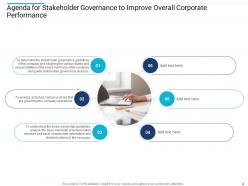
Slide 2: This slide presents the agenda for the project.
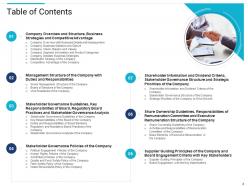
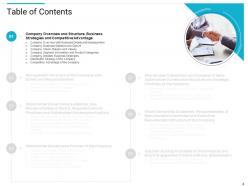
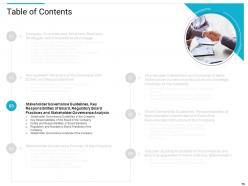
Slide 3: This slide exhibits the table of contents for the project.
Slide 4: This slide showcases the title for company overview and structure.
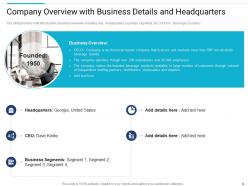
Slide 5: The slide provides brief introduction (business overview, founding year, headquarters, business segments, etc.) of XXXX Beverage Company.
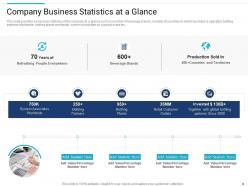
Slide 6: This slide provides some basic statistics of the company at a glance such as number of beverage brands, number of countries in which business is operated, etc.
Slide 7: This slide shows detailed mission, vision and values of the beverage company on which its operation and policies are based.
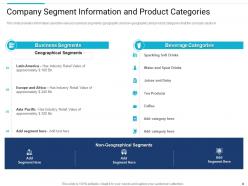
Slide 8: This slide provides information about the various business segments (geographic and non-geographic) and product categories that the company deals in.
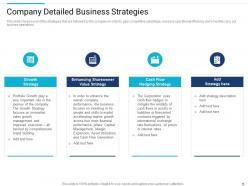
Slide 9: This slide shows some of the strategies that are followed by the company in order to gain competitive advantage, and smoothly carry out busines operations.
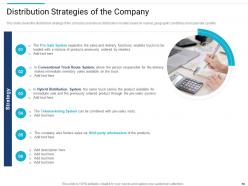
Slide 10: This slide shows the distribution strategy of the company and various distribution models based on market, geographic conditions and customer’s profile.
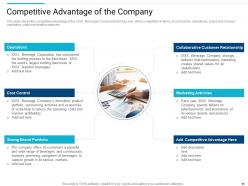
Slide 11: This slide shows the competitive advantage of the XXXX Beverage Company that it has over other competitors in terms of cost control, customer relation ships etc.
Slide 12: This slide presents the title for management structure of the company.
Slide 13: This slide shows the senior management structure of the company with their respective roles and responsibilities.
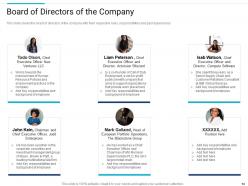
Slide 14: This slide shows the board of directors of the company with their respective roles, responsibilities and past experiences.
Slide 15: This slide shows the board of directors of the company with their respective roles, responsibilities and past experiences.
Slide 16: This slide exhibits the title for stakeholder governance guidelines.
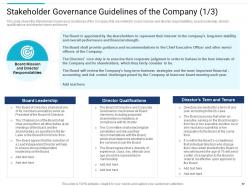
Slide 17: This slide shows the Stakeholder Governance Guidelines of the Company that are related to board mission and director responsibilities, and director’s term and tenure.
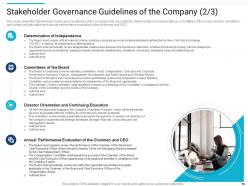
Slide 18: This slide shows the Stakeholder Governance Guidelines of the Company that are related to determination of independence, committees of the board, etc.
Slide 19: This slide shows the Stakeholder Governance Guidelines of the Company that are related to management succession, annual board performance evaluation, etc.
Slide 20: This slide shows the key responsibilities of the members of the board of the company related to strategic planning, risk management and succession planning.
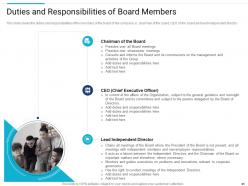
Slide 21: This slide shows the duties and responsibilities of the members of the board of the company i.e. chairman of the board, CEO of the board and lead independent director.
Slide 22: This slide shows some of the regulatory and mandatory board practices that must be followed by all the members of the company.
Slide 23: This slide shows the Stakeholder Governance Analysis of the company showing that how the effectively and efficiently governance structure is executed.
Slide 24: This slide displays the title for stakeholder governance policies.
Slide 25: This slide shows the Political Engagement Policies of the company that are related to environment, health and wellness, legal compliance and requirements etc.
Slide 26: This slide shows the human rights policies that are followed by the company for the betterment of community and employees such as stakeholder engagement, etc.
Slide 27: This slide shows the anti bribery policies that are followed by the company along with the relevant details of the policy such ss policy purpose, etc.
Slide 28: This slide shows the quality and food safety policies that are followed by the company in order to ensure high quality and food safety of all the products.
Slide 29: This slide shows the fleet safety policies that are followed by the company in order to minimize the risk of injury and death from any work-related accidents.
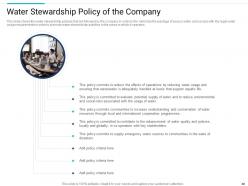
Slide 30: This slide shows the water stewardship policies that are followed by the company in order to the minimize the wastage of excess water and comply with the legal water.
Slide 31: This slide presents the title for supplier guiding principles.
Slide 32: This slide shows the supplier guiding principles of the company that communicate the values and expectations set by the company to the suppliers.
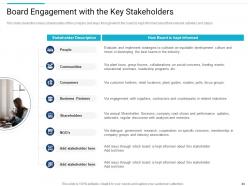
Slide 33: This slide exhibits the title for board engagement with key stakeholders.
Slide 34: This slide displays the title for share ownership guidelines.
Slide 35: This slide explains the share ownership guidelines of the company along with the role/positions in the company and the relevant value of common stock.
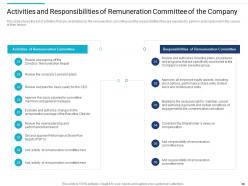
Slide 36: This slide shows the list of activities that are undertaken by the remuneration committee and the responsibilities they are expected to perform and implement.
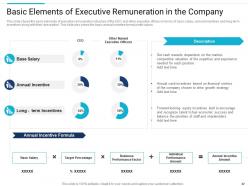
Slide 37: This slide shows the basic elements of executive remuneration structure of the CEO and other executive officers in terms of basic salary, annual incentives etc.
Slide 38: This slide displays the title for shareholder information.
Slide 39: This slide shows the shareholder information of the company that provides information on shareholding sizes and geographical concentration.
Slide 40: This slide shows the stakeholder governance structure of the company and shows the major highlights related to corporate governance, shareowner rights etc.
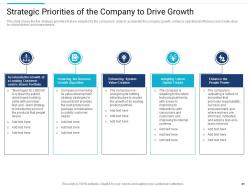
Slide 41: This slide shows the five strategic priorities that are adopted by the company in order to accelerate the company growth, enhance operational efficiency etc.
Slide 42: This is the icons slide for the project.
Slide 43: This slide displays the title for additional slides.
Slide 44: This slide explains about the company.
Slide 45: This slide exhibits the roadmap of the company.
Slide 46: This slide presents the bar graph related to products. The graphs are linked to Excel.
Slide 47: This slide presents the area chart related to products. The charts are linked to Excel.
Slide 48: This slide explains the puzzle for your company.
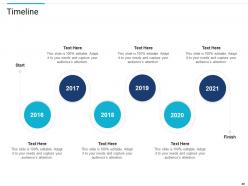
Slide 49: This slide exhibits the yearly timeline of the company.
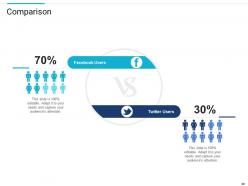
Slide 50: This slide presents the comparison of your products based on selects.
Slide 51: This slide showcases the posts related to past experiences of clients.
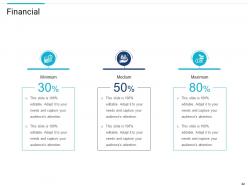
Slide 52: This slide exhibits the financials for your company.
Slide 53: This is the thank you slide and displays the contact details of the company i.e. office address, contact number, etc.
Stakeholder governance to improve overall corporate performance powerpoint presentation slides with all 53 slides:
Use our Stakeholder Governance To Improve Overall Corporate Performance Powerpoint Presentation Slides to effectively help you save your valuable time. They are readymade to fit into any presentation structure.




















FAQs for Stakeholder governance to improve overall corporate performance
Key principles of effective stakeholder governance include transparent communication, balanced representation, clear accountability frameworks, systematic engagement processes, and defined decision-making structures. These principles streamline organizational oversight by ensuring diverse perspectives are heard, conflicts of interest are managed, and strategic decisions reflect stakeholder needs, with many corporations finding that structured governance ultimately delivers improved trust, regulatory compliance, and sustainable business outcomes.
Stakeholder governance influences organizational decision-making by incorporating diverse perspectives, balancing competing interests, and ensuring comprehensive risk assessment across all affected parties. Through structured engagement processes, companies achieve more sustainable strategies, enhanced transparency, and improved stakeholder buy-in, with many organizations finding that inclusive governance ultimately delivers better long-term outcomes and competitive advantage.
Communication serves as the foundation of effective stakeholder governance, enabling transparency, trust-building, and collaborative decision-making through regular updates, feedback mechanisms, and structured dialogue channels. Through strategic communication frameworks, organizations enhance stakeholder engagement, minimize conflicts, and accelerate consensus-building, with many companies finding that consistent, transparent communication ultimately delivers stronger partnerships and improved governance outcomes.
Organizations identify and prioritize stakeholders through comprehensive stakeholder mapping, impact assessment, and influence analysis, evaluating each group's level of interest, power, and potential effect on business outcomes. Through systematic categorization frameworks, companies can segment stakeholders by urgency and importance, enabling strategic resource allocation and targeted engagement approaches that ultimately enhance relationships while delivering improved operational efficiency and competitive advantage.
Common stakeholder governance challenges include conflicting interests among different groups, communication gaps, unclear accountability structures, resource allocation disputes, and balancing short-term demands with long-term strategic objectives. These complexities are particularly evident in large organizations and public institutions, where diverse stakeholder expectations often compete, ultimately requiring robust frameworks that enhance transparency, streamline decision-making processes, and deliver sustainable outcomes.
Technology enhances stakeholder governance through digital platforms, automated reporting systems, real-time communication tools, data analytics dashboards, and blockchain transparency solutions. These technologies streamline decision-making processes, enable faster stakeholder feedback, and deliver comprehensive audit trails, with many organizations finding that automated governance systems significantly reduce administrative overhead while improving stakeholder engagement and regulatory compliance.
Stakeholder governance success metrics include stakeholder satisfaction scores, engagement participation rates, response time to stakeholder concerns, transparency index measurements, and conflict resolution effectiveness. These metrics enable organizations to assess relationship quality, communication efficiency, and trust levels across diverse stakeholder groups, with many institutions finding that regular measurement ultimately delivers stronger partnerships and enhanced organizational reputation.
Stakeholder governance intersects with corporate social responsibility by expanding accountability beyond shareholders to include employees, communities, customers, and environmental considerations in decision-making processes. This strategic combination enables organizations to balance profit generation with social impact, environmental stewardship, and ethical practices, ultimately delivering sustainable competitive advantage and enhanced reputation while meeting increasingly complex stakeholder expectations.
Effective stakeholder engagement strategies include targeted communication channels, collaborative decision-making frameworks, regular feedback mechanisms, transparent reporting systems, and structured consultation processes. These approaches enhance organizational transparency and trust by addressing varying stakeholder needs, facilitating meaningful participation across different groups, and ultimately delivering stronger strategic alignment, with many organizations finding that diverse engagement leads to more robust governance outcomes.
Organizations balance conflicting stakeholder interests through transparent communication frameworks, structured negotiation processes, and strategic priority alignment that considers long-term value creation. By implementing stakeholder mapping, regular engagement sessions, and collaborative decision-making platforms, companies in sectors like healthcare and financial services successfully mediate competing demands while maintaining operational efficiency and stakeholder trust.
Stakeholder governance significantly enhances risk management by incorporating diverse perspectives, ensuring comprehensive risk identification, and promoting transparent decision-making processes across all organizational levels. Through collaborative oversight, companies achieve better risk assessment accuracy, faster response times to emerging threats, and more robust mitigation strategies, with many organizations finding that inclusive governance ultimately delivers reduced operational vulnerabilities and stronger competitive positioning.
Cultural differences significantly influence stakeholder governance through varying communication styles, decision-making processes, hierarchical structures, and relationship-building approaches across different regions and organizations. While Western frameworks often emphasize transparency and individual accountability, many Asian and collectivist cultures prioritize consensus-building and long-term relationship maintenance, with organizations increasingly finding that culturally adaptive governance models deliver stronger stakeholder engagement and more sustainable business outcomes.
Legal frameworks supporting stakeholder governance include benefit corporation statutes, corporate constituency laws, ESG disclosure requirements, fiduciary duty expansions, and stakeholder reporting mandates. These regulations enable organizations to balance shareholder returns with broader stakeholder interests, with many jurisdictions increasingly recognizing that sustainable governance practices ultimately deliver enhanced long-term value and competitive advantage.
Stakeholder feedback can be effectively integrated through regular surveys, focus groups, advisory committees, digital feedback platforms, and structured review sessions. These mechanisms enable organizations to systematically capture insights, prioritize concerns, and adapt strategies accordingly, with many companies finding that continuous stakeholder engagement ultimately delivers improved decision-making, enhanced trust, and stronger competitive positioning.
Case studies reveal that successful stakeholder governance requires transparent communication channels, regular feedback mechanisms, clearly defined roles and responsibilities, and proactive conflict resolution processes. Organizations like Unilever and Patagonia demonstrate that integrating diverse stakeholder perspectives into decision-making ultimately delivers enhanced trust, improved risk management, and sustainable competitive advantage across global markets.
-
Helpful product design for delivering presentation.
-
Editable templates with innovative design and color combination.
-
Good research work and creative work done on every template.