

Step By Step Approach For Rebranding Process Branding CD V





Try Before you Buy Download Free Sample Product
 Impress Your
 Audience
 100%
100% Editable
 Save Hours
 of Time


Brand relevancy is enhanced by managing evolved customers requirements through rebranding initiatives such as brand refresh, reboot, and overhaul. Check out our efficiently designed presentation on Step-by-step approach for rebranding process. It covers key statistics related to brand transformation in terms of business spending, customer perception towards customized content, increase in brand recognition, marketing budget spent, etc. The brand refresh includes goals, benefits, and challenges of Rebranding. It caters to a checklist to ensure a strategic brand refresh process, rebranding development sprint timeline, and a case study. Brand overhaul captures goals, benefits and challenges along with a case study. Moreover, the rebranding campaign initiatives include steps involved in successful Rebranding, checklist, rebranding guidelines, buyers persona decoding, etc. Further, this PPT shows Corporate Rebranding which is managed through the checklist, key elements associated with Rebranding, rebranding canvas, awareness campaign plan, and corporate rebranding activities tracking timeline. The deck also covers the role of personnel associated with the rebranding team, the evaluation scorecard to identify suitable brand agency partners, etc. At last, it shows the cost assessment of the rebranding process that is managed by selecting a suitable platform and rebranding process management along with rebranding project progress that is tracked via a performance analysis dashboard. Get access now.
People who downloaded this PowerPoint presentation also viewed the following :
Content of this Powerpoint Presentation
Slide 1: This slide introduces Step-by-step Approach for Rebranding Process. State your company name and begin.
Slide 2: This slide states Agenda of the presentation.
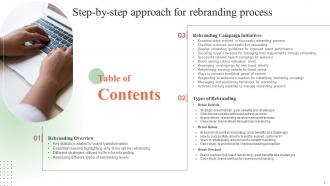
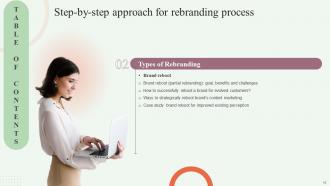
Slide 3: This slide presents Table of Content for the presentation.
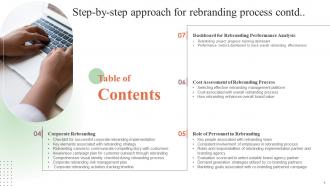
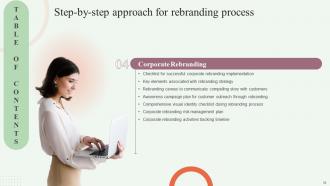
Slide 4: This is another slide continuing Table of Content for the presentation.
Slide 5: This slide highlights title for topics that are to be covered next in the template.
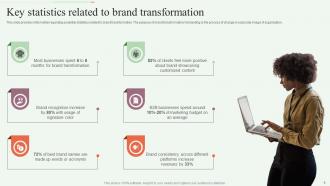
Slide 6: This slide displays Key statistics related to brand transformation.
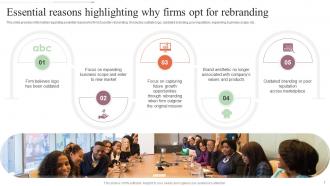
Slide 7: This slide represents Essential reasons highlighting why firms opt for rebranding.
Slide 8: This slide showcases Different strategies utilized by firm for rebranding.
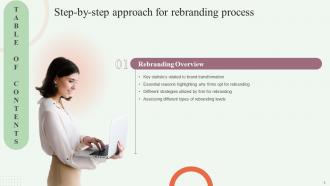
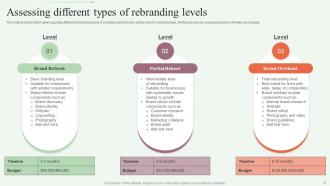
Slide 9: This slide shows Assessing different types of rebranding levels.
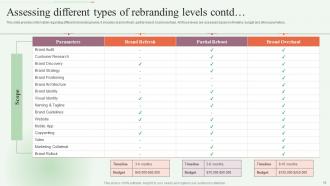
Slide 10: This is another slide continuing Assessing different types of rebranding levels.
Slide 11: This slide highlights title for topics that are to be covered next in the template.
Slide 12: This slide presents Strategic brand refresh: goal, benefits and challenges.
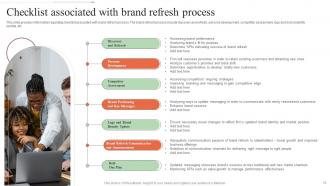
Slide 13: This slide displays Checklist associated with brand refresh process.
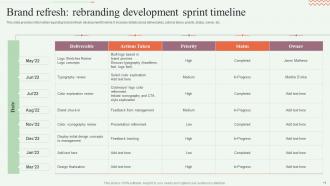
Slide 14: This slide represents brand refresh development timeline.
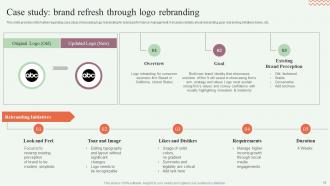
Slide 15: This slide showcases case study showcasing logo rebranding for brand performance management.
Slide 16: This slide highlights title for topics that are to be covered next in the template.
Slide 17: This slide provides information regarding brand reboot(partial reboot).
Slide 18: This slide shows How to successfully reboot a brand for evolved customers.
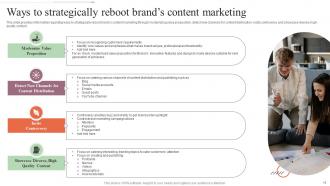
Slide 19: This slide presents Ways to strategically reboot brand’s content marketing.
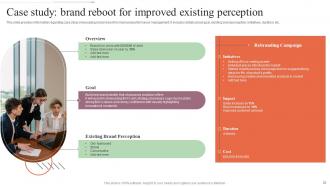
Slide 20: This slide displays case study showcasing brand reboot for improved performance management.
Slide 21: This slide highlights title for topics that are to be covered next in the template.
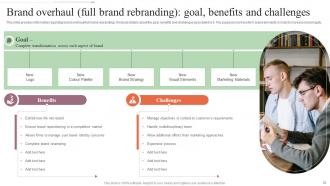
Slide 22: This slide provides information regarding brand overhaul (full brand rebranding).
Slide 23: This slide represents case study showcasing logo rebranding for brand performance management.
Slide 24: This slide highlights title for topics that are to be covered next in the template.
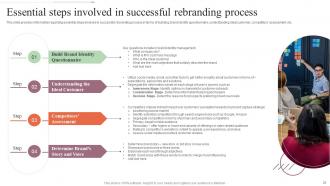
Slide 25: This slide showcases Essential steps involved in successful rebranding process.
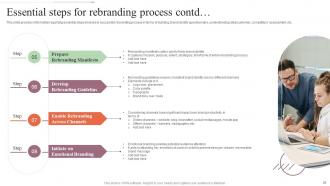
Slide 26: This is another slide continuing Essential steps for rebranding process.
Slide 27: This slide shows Checklist to ensure successful firm rebranding.
Slide 28: This slide presents Develop rebranding guidelines for improved brand performance.
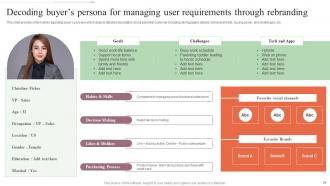
Slide 29: This slide displays Decoding buyer’s persona for managing user requirements through rebranding.
Slide 30: This slide represents Successful rebrand launch campaign for audience.
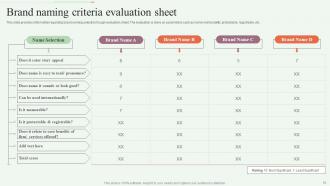
Slide 31: This slide showcases Brand naming criteria evaluation sheet.
Slide 32: This slide shows Revamping existing logo for new brand identity.
Slide 33: This slide presents Refurbishing existing website for brand revival.
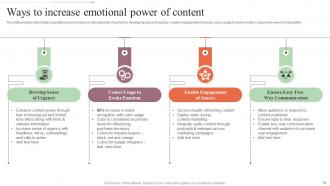
Slide 34: This slide displays Ways to increase emotional power of content.
Slide 35: This slide represents Responding to audience’s reaction for rebranding marketing campaign.
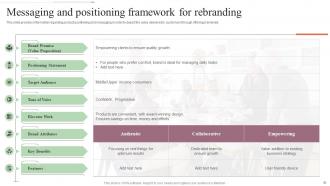
Slide 36: This slide showcases Messaging and positioning framework for rebranding.
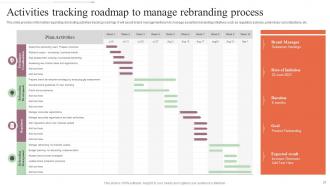
Slide 37: This slide shows Activities tracking roadmap to manage rebranding process.
Slide 38: This slide highlights title for topics that are to be covered next in the template.
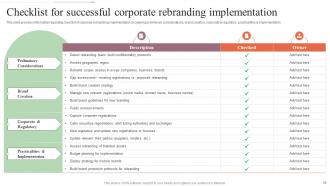
Slide 39: This slide presents Checklist for successful corporate rebranding implementation.
Slide 40: This slide displays Key elements associated with rebranding strategy.
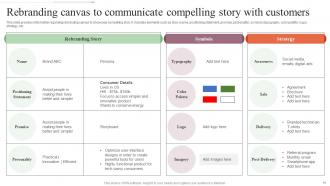
Slide 41: This slide represents Rebranding canvas to communicate compelling story with customers.
Slide 42: This slide showcases Awareness campaign plan for customer outreach through rebranding.
Slide 43: This slide shows Comprehensive visual identity checklist during rebranding process.
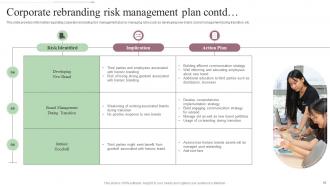
Slide 44: This slide presents Corporate rebranding risk management plan.
Slide 45: This is another slide continuing Corporate rebranding risk management plan.
Slide 46: This slide displays Corporate rebranding activities tracking timeline.
Slide 47: This slide highlights title for topics that are to be covered next in the template.
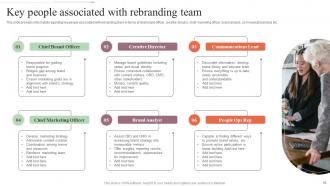
Slide 48: This slide represents Key people associated with rebranding team.
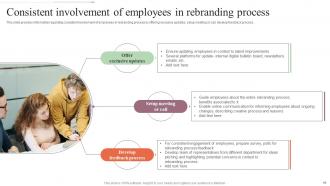
Slide 49: This slide showcases Consistent involvement of employees in rebranding process.
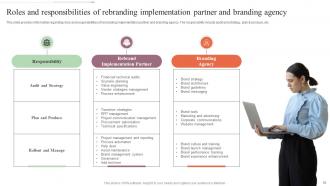
Slide 50: This slide shows Roles and responsibilities of rebranding implementation partner and branding agency.
Slide 51: This slide presents Evaluation scorecard to select suitable brand agency partner.
Slide 52: This slide displays Demand generation strategies utilized by co-branding partners.
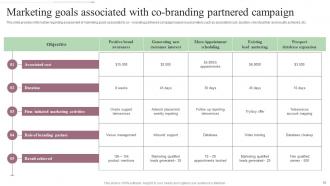
Slide 53: This slide represents Marketing goals associated with co-branding partnered campaign.
Slide 54: This slide highlights title for topics that are to be covered next in the template.
Slide 55: This slide showcases Selecting effective rebranding management platform.
Slide 56: This slide shows Cost associated with overall rebranding process.
Slide 57: This slide presents How rebranding enhances overall brand value.
Slide 58: This slide highlights title for topics that are to be covered next in the template.
Slide 59: This slide displays Rebranding project progress tracking dashboard.
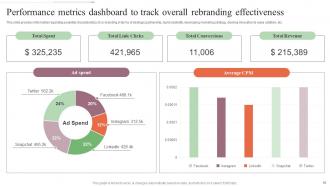
Slide 60: This slide represents Performance metrics dashboard to track overall rebranding effectiveness.
Slide 61: This slide contains all the icons used in this presentation.
Slide 62: This slide is titled as Additional Slides for moving forward.
Slide 63: This is About Us slide to show company specifications etc.
Slide 64: This is Our Goal slide. State your firm's goals here.
Slide 65: This is Our Team slide with names and designation.
Slide 66: This slide provides 30 60 90 Days Plan with text boxes.
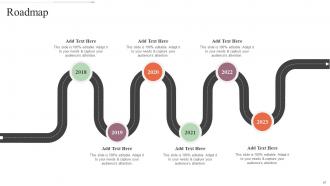
Slide 67: This slide presents Roadmap with additional textboxes.
Slide 68: This slide shows Post It Notes. Post your important notes here.
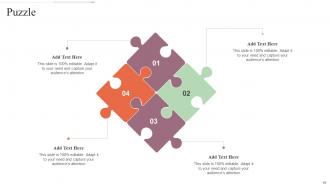
Slide 69: This slide contains Puzzle with related icons and text.
Slide 70: This slide shows SWOT describing- Strength, Weakness, Opportunity, and Threat.
Slide 71: This is a Thank You slide with address, contact numbers and email address.
Step By Step Approach For Rebranding Process Branding CD V with all 76 slides:
Use our Step By Step Approach For Rebranding Process Branding CD to effectively help you save your valuable time. They are readymade to fit into any presentation structure.







































FAQs for Step By Step Approach For Rebranding Process
Key indicators include declining market share, outdated brand perception, significant business model changes, merger or acquisition activity, and negative brand associations. These signals often emerge when companies face increased competition, target new demographics, or expand into different markets, with many organizations finding that proactive rebranding delivers renewed customer engagement and competitive positioning.
Businesses can assess brand effectiveness through customer surveys, social media sentiment analysis, competitor benchmarking, sales performance metrics, and brand recognition studies. Through comprehensive market research, companies like Gap and Tropicana evaluate customer perceptions, market positioning, and brand equity, while analyzing website analytics, conversion rates, and customer feedback to identify disconnect areas, ultimately determining whether rebranding delivers competitive advantage.
Market research serves as the foundation for rebranding decisions by identifying consumer perceptions, competitor positioning, market gaps, and target audience preferences through surveys, focus groups, and brand audits. These insights enable companies to develop strategic messaging, visual identity, and positioning that resonates with their market, with many organizations finding that research-driven rebranding delivers stronger customer connections and measurable competitive advantage.
Businesses can balance brand identity refreshes with customer loyalty by implementing gradual transformations, maintaining core brand values, and engaging customers throughout the rebranding process. Through strategic communication, phased rollouts, and preservation of beloved brand elements, companies like McDonald's and Starbucks have successfully evolved their identities while retaining customer trust, ultimately delivering enhanced market position without alienating their established base.
Companies should involve stakeholders through comprehensive research and feedback sessions, cross-functional team formation, regular communication updates, prototype testing with key groups, and structured approval processes at critical milestones. This collaborative approach ensures buy-in from employees, customers, and partners while minimizing resistance, with many organizations finding that early stakeholder engagement significantly reduces implementation challenges and accelerates market acceptance.
A rebranding initiative enhances market position by modernizing brand perception, differentiating from competitors, attracting new customer segments, and aligning messaging with current market demands. Through strategic visual and messaging updates, companies streamline brand recognition, improve customer engagement, and capture greater market share, with many organizations finding that comprehensive rebranding ultimately delivers increased brand value and sustainable competitive advantage.
Common rebranding pitfalls include insufficient market research, neglecting stakeholder communication, rushing implementation timelines, underestimating costs, and failing to maintain brand consistency across touchpoints. These challenges can be avoided by conducting comprehensive audience analysis, engaging employees and customers early, establishing realistic budgets and schedules, and creating detailed brand guidelines, with many organizations finding that strategic planning and phased rollouts ultimately deliver smoother transitions and stronger market acceptance.
Digital platforms and social media significantly influence rebranding through real-time audience feedback, targeted messaging capabilities, visual identity testing, and amplified brand storytelling reach. These channels enable companies to gauge market reception instantly, refine positioning strategies, and build community engagement around their new brand, with many organizations finding that strategic social media integration accelerates brand adoption and delivers measurable awareness growth.
Businesses ensure rebranding consistency by developing comprehensive brand guidelines, conducting thorough audits of all touchpoints, implementing phased rollouts with quality checkpoints, and providing extensive team training. Through strategic coordination across digital platforms, physical materials, and customer interactions, organizations streamline brand recognition while minimizing confusion, ultimately delivering cohesive experiences that strengthen market positioning and customer trust.
Rebranding's psychological effects include enhanced brand perception, improved customer trust, stronger emotional connections, updated market positioning, and increased brand recall. These design elements work by triggering subconscious associations, conveying brand personality, and influencing purchasing decisions, with many retail and financial services companies finding that strategic visual changes ultimately deliver improved customer engagement and competitive differentiation.
Companies should communicate rebranding through transparent internal briefings, comprehensive training sessions, and clear timeline documentation, while using coordinated external campaigns across digital platforms, press releases, and customer touchpoints. This strategic combination ensures employee alignment and customer understanding, with many organizations finding that simultaneous internal-external communication minimizes confusion and accelerates brand acceptance, ultimately delivering stronger market positioning.
**INPUT**: What are some successful case studies of companies that have effectively executed a rebranding? **OUTPUT**: Successful rebranding case studies include Airbnb's transition from budget accommodations to premium experiences, Dunkin's evolution from Donuts to broader offerings, Old Spice's demographic pivot, and Netflix's streaming transformation. These companies enhanced market positioning, expanded target audiences, and delivered significant revenue growth by strategically realigning brand identity with evolving customer expectations and market opportunities. **Word count: 58 words**
Companies can measure rebranding success through brand awareness surveys, customer perception studies, sales performance metrics, website traffic analysis, and social media engagement rates. These indicators help organizations track shifts in market positioning, customer loyalty, and competitive advantage, with many businesses finding that consistent measurement across 12-18 months reveals the true impact of their strategic rebranding investment.
Storytelling serves as the emotional bridge connecting your brand's past, present, and future vision, helping stakeholders understand the reasons behind change while building excitement for what's ahead. Through compelling narratives, companies like Airbnb and Uber successfully communicated their transformation journeys, ultimately delivering stronger customer connections and smoother market transitions during critical rebranding phases.
Developing a unique value proposition clarifies what differentiates your business from competitors, guides messaging consistency across all touchpoints, and helps stakeholders understand the rebrand's strategic purpose. This focused positioning enables companies to communicate their distinct benefits more effectively to target audiences, streamline marketing efforts, and ultimately build stronger brand recognition and customer loyalty in competitive markets.
-
Such amazing slides with easy editable options. A perfect time-saver.
-
Crisp and neat slides. Makes it fun and easier to curate presentations.