


Step By Step Guide For Creating A Mobile Rideshare App Powerpoint Presentation Slides





Try Before you Buy Download Free Sample Product
 Impress Your
Audience
 100%
Editable
 Save Hours
of Time


A rideshare app is a mobile application that facilitates sharing rides between individuals where users can request transportation services. Get our professionally designed Step-by-Step Guide for Creating A Mobile Rideshare App PowerPoint presentation. Firstly, the Taxi Apps PPT templates present a business overview, offering insights into the taxi service provider business, existing product offerings, and expansion goals, providing a solid foundation. It also assesses the ride-sharing industrys growth and the global rideshare market, including its size, regional variations, membership types, and more. Market research explains existing players and competitor analyses, identifies loopholes and opportunities, and defines your unique selling proposition USP. Furthermore, the Driver App PPT templates navigate the mobile development platform, from choosing the right platform to comparing their strengths and conducting a suitability analysis. This PPT Bundle outlines essential features for passengers, drivers, and the admin panel. Moreover, the App Design PPT slides explain the development of the ride-sharing app, covering backend infrastructure, frontend development, and feature integration. They also provide comprehensive evaluation matrices for functional, performance, stability, and security testing. This ensures a smooth transition with deployment processes and evaluation test cases. Additionally, the presentation details the app store assessment, cost estimation for developing the rideshare app, and Revenue models. Marketing for the rideshare app is also covered. Lastly, it presents a detailed breakdown of roles and responsibilities. Download now.
People who downloaded this PowerPoint presentation also viewed the following :
Content of this Powerpoint Presentation
Slide 1: This slide introduces Step-by-Step Guide for Creating A Mobile Rideshare App. State your company name and begin.
Slide 2: This is an Agenda slide. State your agendas here.
Slide 3: This slide shows Table of Content for the presentation.
Slide 4: This slide shows title for topics that are to be covered next in the template.
Slide 5: This slide showcases overview of a cab service provider business operating in transportation industry across different US states.
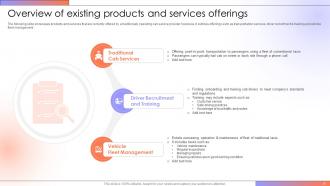
Slide 6: This slide displays products and services that are currently offered by a traditionally operating cab service provider business.
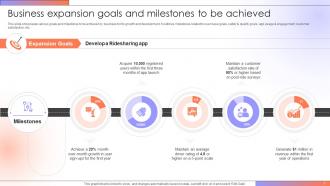
Slide 7: This slide showcases various goals and milestones to be achieved by business for its growth and development.
Slide 8: This slide shows title for topics that are to be covered next in the template.
Slide 9: This slide presents overview of global ride sharing market that outlines industry size and growth potential across upcoming years.
Slide 10: This slide displays market size of global ridesharing industry based on various elements like region which are North America, Europe etc.
Slide 11: This slide showcases growth potential of global rideshare market based on various elements such as booking type (online and offline), vehicle type etc.
Slide 12: This slide presents various trends in global ridesharing market that leads to growth and development in industry.
Slide 13: This slide showcases a timeline that highlights growth and development of ride sharing services in market.
Slide 14: This slide shows title for topics that are to be covered next in the template.
Slide 15: This slide presents overview of various businesses that are already operating in exiting market i.e. have developed a ridesharing app.
Slide 16: This slide showcases products and services that are currently offered by a traditionally operating cab service provider business.
Slide 17: This slide outlines various problems within existing ridesharing app that can be resolved by own business.
Slide 18: This slide also outlines various problems within existing ridesharing app that can be resolved by own business.
Slide 19: This slide showcases psychographics of target audience for effectively developing a ridesharing app.
Slide 20: This slide displays various USP of ride sharing app offered by own business that differentiates own offerings from other players in market.
Slide 21: This slide shows title for topics that are to be covered next in the template.
Slide 22: This slide showcases overview of various platforms which offers interface to create mobile applications.
Slide 23: This slide displays comparison of various native and hybrid apps to develop a rideshare app.
Slide 24: This slide presents analysis of best suitable platform for based on application requirements. It showcases components such as budget, features, UI UX etc.
Slide 25: This slide shows title for topics that are to be covered next in the template.
Slide 26: This slide presents various features of ridesharing app for passengers to enhance their experience.
Slide 27: This slide also presents various features of ridesharing app for drivers to enhance their experience.
Slide 28: This slide showcases various features of ridesharing app for admin panel to enhance their experience.
Slide 29: This slide shows title for topics that are to be covered next in the template.
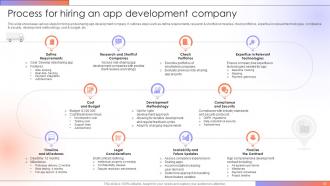
Slide 30: This slide showcases various steps for hiring a ridesharing app development company. It outlines steps such as define requirements, research & shortlist companies etc.
Slide 31: This slide displays various metrics to analyse and shortlist app development companies for developing own rideshare app.
Slide 32: This slide outlines various technologies that are required to develop a ridesharing app. It showcases various aspects such as frontend, backend server etc.
Slide 33: This slide presents various technologies that are required to develop a ridesharing app. It showcases various aspects such as frontend, backend server etc.
Slide 34: This slide shows title for topics that are to be covered next in the template.
Slide 35: This slide showcases various elements to consider while designing and developing wireframe for rideshare app.
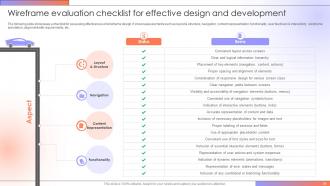
Slide 36: This slide displays a checklist for assessing effectiveness of wireframe design. It showcases elements such as layout & structure, navigation etc.
Slide 37: This slide showcases a checklist for assessing effectiveness of wireframe design. It showcases elements such as layout & structure, navigation etc.
Slide 38: This slide consists of a timeline that showcases weekly tasks required to develop wireframe of a rideshare application.
Slide 39: This slide showcases various elements to consider while developing UI&UX design for rideshare app.
Slide 40: This slide presents a checklist for assessing effectiveness of UI UX design of a ridesharing app. It showcases elements such as onboarding experience etc.
Slide 41: This slide showcases a checklist for assessing effectiveness of UI UX design of a ridesharing app. It showcases elements such as onboarding experience etc.
Slide 42: This slide presents timeline showing time required to design and develop wireframe for rideshare app.
Slide 43: This slide shows title for topics that are to be covered next in the template.
Slide 44: This slide showcases various aspects in developing a ridesharing app represents a set of considerations and tasks that are essential during the development phase.
Slide 45: This slide displays various tasks of backend infrastructure in developing ridesharing application.
Slide 46: This slide presents various tasks of frontend development in creating ridesharing application. It outlines various elements such as passenger app and driver app.
Slide 47: This slide showcases various tasks while integrating multiple features during development of ridesharing application.
Slide 48: This slide shows title for topics that are to be covered next in the template.
Slide 49: This slide showcases testing of functional aspects of rideshare app to monitor and analyse performance ridesharing application.
Slide 50: This slide presents testing of various aspects of rideshare app related to stability and app performance.
Slide 51: This slide showcases testing of various aspects of rideshare app related to security and compliance of a ridesharing app.
Slide 52: This slide presents strategies and processes of testing involved in deployment of ridesharing application ranging from functional validation to performance, security etc.
Slide 53: This slide showcases a testing evaluation matrix to track whether application performs according to requirements or not.
Slide 54: This slide shows title for topics that are to be covered next in the template.
Slide 55: The slide outlines various steps for ridesharing app deployment to ensure successful and seamless release of the application.
Slide 56: This slide showcases metrics to assess accurate deployment of ridesharing app along with action plan.
Slide 57: This slide shows title for topics that are to be covered next in the template.
Slide 58: This slide showcases app store comparison matrix to assess various platforms to launch rideshare application based on KPIs such as user base size, submission etc.
Slide 59: This slide displays various steps for launching ridesharing application on app store to ensure smooth release.
Slide 60: This slide showcases required elements during store listing for a ridesharing app. It highlights components such as name, icon, screenshots etc.
Slide 61: This slide shows title for topics that are to be covered next in the template.
Slide 62: This slide outlines table of features with its hours and cost based on various application modules.
Slide 63: This slide presents detailed breakdown of cost during development of a rideshare application based on various modules.
Slide 64: This slide showcases metrics to assess accurate deployment of ridesharing app along with action plan.
Slide 65: This slide displays estimated cost for developing an application across various regions globally such as USA, Canada, UK, Ukraine, India, South East and Australia.
Slide 66: This slide shows title for topics that are to be covered next in the template.
Slide 67: This slide outlines commission model for generating revenue through ridesharing app.
Slide 68: This slide also outlines commission model for generating revenue through ridesharing app.
Slide 69: This slide outlines advertising model for generating revenue through ridesharing app.
Slide 70: This slide shows title for topics that are to be covered next in the template.
Slide 71: This slide showcases use of referral program as a marketing strategy to promote ridesharing app and expand its user base.
Slide 72: This slide displays use of social media advertising as a marketing strategy to promote ridesharing app and expand its user base.
Slide 73: This slide outlines various examples of different types of promotional offered based on specific geographic areas and for local audiences.
Slide 74: This slide highlights various best practices for partnering with local businesses as a marketing strategy to promote rideshare app.
Slide 75: This slide shows title for topics that are to be covered next in the template.
Slide 76: The slide showcases various roles in developing a rideshare app. It roles such as product manager, product owner, business analyst etc.
Slide 77: This slide presents department wise responsibilities during development of ridesharing app along with key activities.
Slide 78: This slide shows title for topics that are to be covered next in the template.
Slide 79: 79 Forecasted Impact
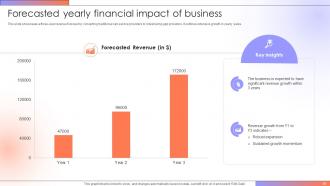
Slide 80: This slide showcases a three-year revenue forecast by converting traditional cab service providers to ridesharing app providers.
Slide 81: This slide shows all the icons included in the presentation.
Slide 82: This slide is titled as Additional Slides for moving forward.
Slide 83: This slide presents Target audience analysis for ridesharing app.
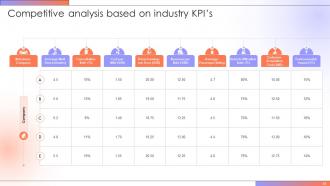
Slide 84: This slide displays Competitive analysis based on industry KPI’s.
Slide 85: This slide presents Assessing USP of existing ridesharing apps.
Slide 86: This slide displays Best ridesharing apps comparison matrix.
Slide 87: This slide presents Mobile app development cost by application type.
Slide 88: This slide showcases App development cost by features and functionality.
Slide 89: This slide presents Android vs iOS comparison matrix for app development.
Slide 90: This slide displays Native vs hybrid comparison matrix for app development.
Slide 91: This slide presents Key steps of ridesharing application process workflow.
Slide 92: This slide shows Post It Notes for reminders and deadlines. Post your important notes here.
Slide 93: This slide shows SWOT analysis describing- Strength, Weakness, Opportunity, and Threat.
Slide 94: This is a Thank You slide with address, contact numbers and email address.
Step By Step Guide For Creating A Mobile Rideshare App Powerpoint Presentation Slides with all 102 slides:
Use our Step By Step Guide For Creating A Mobile Rideshare App Powerpoint Presentation Slides to effectively help you save your valuable time. They are readymade to fit into any presentation structure.





















FAQs for Step By Step Guide For Creating A Mobile Rideshare App
Real-time tracking is huge - people get anxious not knowing where their ride is. Make the booking flow dead simple and show pricing upfront (nobody likes getting hit with surge pricing at the end). Payment integration needs to work smoothly, plus ratings and ride history so they can rebook favorites easily. Push notifications help but seriously, don't spam people or they'll delete your app. Maps better be responsive with accurate ETAs. Honestly, I've seen too many apps try to get fancy with animations when users just want basic stuff to work. Test with real people constantly - we developers think weird compared to normal humans using this stuff.
So you'll need three main things: identity checks, GPS tracking, and emergency stuff. Background checks for drivers are obvious, but also verify passenger IDs when they sign up. The tracking thing is huge - people really want their friends to know where they are during rides. Build in an emergency button that calls local cops, plus two-way ratings so drivers and passengers can rate each other. Driver photo verification before pickup is smart too. Oh and secure payments obviously - though that's probably easier than the safety features tbh. Ride sharing with friends is another good one to include.
Dude, React Native or Flutter are your best bets here. Both let you build for iOS and Android at once, which saves a ridiculous amount of work. React Native's got way more libraries to choose from, but Flutter runs smoother UI-wise. If your team already knows JavaScript, just go React Native - you'll be up and running faster. Node.js with Express handles the backend stuff really well, especially for live tracking and matching riders. Honestly both frameworks are solid picks. Building separate native apps is only worth it if you've got money to burn.
Geolocation is honestly a game changer for ride apps. Users don't have to fumble around typing their pickup spot - it just knows where they are. Real-time driver tracking with ETAs keeps people from constantly refreshing the app (trust me, they do that). You can optimize routes better, let passengers watch their ride approach, and calculate fares before they even book. Oh, and suggesting popular spots based on location is clutch. The whole thing should feel invisible to users while doing tons of work behind the scenes. GPS anxiety is real, so that tracking feature matters more than you'd expect.
Start with the basics - Stripe or Square for cards, plus Apple Pay and Google Pay. PayPal's still huge so definitely include that. Honestly, don't sleep on cash payments depending on your market - some people are just old school like that. For the backend stuff, you'll need split payments and tip handling. Failed payment retries are clutch too. Saved payment methods make everything smoother for repeat users. I'd say launch with maybe 3 solid options first, then see what people actually want before going crazy with more choices.
Definitely build live chat first - people want instant help these days, especially when they're stuck somewhere. Phone support and a solid FAQ are must-haves too. Don't be like those apps that hide support behind three menus! Put it everywhere, but especially where users actually need it - during rides and right after. Oh, and set up automatic alerts for weird stuff like routes going way off track or rides taking forever. Your support team needs to see trip data in real time so they can sort out disputes fast. Nothing's worse than "sorry, we can't see what happened" responses.
Look, money talks first - competitive pay with surge pricing and peak hour bonuses. Drivers don't care about being their "own boss" if they're broke. Quick onboarding is clutch too. Background checks that don't take forever, easy vehicle checks. Oh and real-time support - nothing pisses drivers off more than waiting around with problems. Some gamification stuff helps, like badges and rating systems that unlock actual perks (not just feel-good nonsense). Honestly though? Start with a driver focus group first. Test everything with them before you launch it wide.
Honestly, data analytics is your best friend here. Track where demand spikes in real-time so you can get drivers positioned right. Route optimization cuts down wait times like crazy. User behavior stuff is where it gets interesting though - you'll see exactly which features people actually use vs the ones they ignore. Trip completion rates tell you more than you'd think. Driver ratings too, obviously. Oh and predicting surge pricing becomes way more accurate once you have the patterns down. I'd focus on your busiest routes first since that's where you'll see the biggest impact, then just build out from there.
Reviews and ratings are huge for trust - they're basically what makes people feel safe using your app. I mean, would you hop in a car with a 2-star driver? Hell no. High ratings signal reliability to both riders and drivers since it goes both ways. People can actually see what others think before making decisions. Display those ratings prominently in your interface - like really make them visible. And definitely push users to rate after each ride. Honestly, the whole thing falls apart without that feedback loop since nobody wants to gamble on sketchy drivers or passengers.
Definitely go with a "green ride" filter first - that's your easiest win. Electric and hybrid cars only. Then add carbon offset options where people pay like a buck to offset their trip (though honestly most won't use it). Carpooling discounts are huge though, maybe loyalty points too. The gamification stuff actually works - eco-badges, leaderboards showing carbon savings vs driving solo. Users eat that up. Oh and partner with EV charging networks so drivers can find stations. Start simple with the vehicle filter though. People will notice it right away and it's not complicated to build.
Ugh, so each city has totally different rules - some love rideshare apps, others basically protect taxi monopolies. Research local transport laws and business licensing for every market you're eyeing. Driver background checks work differently everywhere too, plus insurance and tax stuff varies like crazy. Privacy regulations are another headache on top of all that. Honestly the whole thing's messy to figure out alone. Get local lawyers in each region before you launch - way better than building everything just to get slapped with violations later.
Local business partnerships are honestly a game changer for rideshare apps. You can set up deals where users get ride credits for shopping at certain stores, or discounted rides to partnered restaurants. Uber does this really well with their restaurant stuff. The cool thing is it creates extra revenue through commissions while giving users actual reasons to pick your app over Lyft or whatever. Oh and businesses usually jump at this because who doesn't want more customers walking through their door? I'd start by hitting up busy spots in your main areas and pitching them on cross-promotion opportunities.
Honestly, the hardest part is gonna be user acquisition costs - it's insane expensive to pull people away from Uber/Lyft when they're already pretty satisfied. Getting drivers is just as brutal since most are already locked into those platforms (though yeah, tons are multi-apping anyway). You'll burn through cash fast dealing with that chicken-and-egg thing where you need both sides at once. Marketing against companies with those massive budgets? Good luck with that. My advice would be finding some specific niche or maybe a smaller city where the big guys aren't really killing it yet.
Honestly, social media is pretty clutch for rideshare apps. People trust user stories way more than fancy ads, so when riders post about their experiences (good or terrible), that's gold. You can jump into conversations, fix problems publicly - shows you actually care. Target your posts to specific neighborhoods where you operate. Oh and respond to mentions fast, like within a couple hours. Don't just spam promotional stuff though, that's annoying. The viral potential is real when people share their ride stories. I'd focus on whatever platforms your users are actually using, not just everywhere.
Dude, most rideshare apps are honestly pretty meh when you actually use them every day. Try adding predictive pickup suggestions or real-time carpooling that matches people on the spot. Safety stuff works great too - panic buttons that auto-contact emergency people. Oh, and everyone's into eco stuff now so carbon tracking or electric car preferences hit different. Smart transit integration is clutch, plus split-fare for groups. Loyalty programs tied to local spots keep people coming back. But honestly? Just survey your users first about what pisses them off most with current apps.
-
The service is fast, and I could access any presentation after buying the subscription. I don’t think I’ll ever have to worry about a presentation in my life.
-
It makes easy work of my work presentations. I’ve never had to be nervous about my presentations for meetings.