

Steps Involved In Beer Brewing Process





Try Before you Buy Download Free Sample Product
 Impress Your
 Audience
 100%
100% Editable
 Save Hours
 of Time


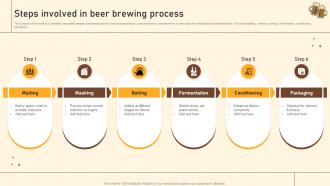
The purpose of this slide is to highlight sequential stages comprising beer brewing process aiding in comprehensive comprehension or execution for enthusiasts and trainees alike. It includes malting, mashing, boiling, fermentation, conditioning, packaging.
People who downloaded this PowerPoint presentation also viewed the following :
Steps Involved In Beer Brewing Process with all 9 slides:
Use our Steps Involved In Beer Brewing Process to effectively help you save your valuable time. They are readymade to fit into any presentation structure.








FAQs for Steps Involved In
So you need four basic things: water, malted grains (usually barley), hops, and yeast. Water's like 90% of beer so don't use garbage tap water if you can help it. The grains give you sugars that turn into alcohol, hops make it bitter and keep it from going bad. Yeast does all the heavy lifting - turns sugar into booze and bubbles. Some people throw in corn or rice but honestly those four are plenty. My buddy tried adding weird stuff when he started and it was... not great. Focus on how each ingredient changes the taste and you'll get it way faster.
Malt's basically what gives your beer its whole vibe - color and flavor both come from this choice. Pilsner malt keeps things light and crisp with just a hint of sweetness. Roasted malts? Total opposite - you'll get those deep browns and blacks plus chocolate, coffee, caramel notes. Crystal malts are like the middle ground, adding body and that classic beer taste we all know. Here's the thing though - roasting time is everything. Longer roast = darker color and way more intense flavors. Honestly, try brewing with just one type of malt first so you can actually taste what each one does before mixing them.
So hops are basically what make beer taste like beer instead of liquid bread. They balance out all that sweetness from the malt and keep your beer from going bad. Different varieties totally change the vibe - Cascade gives you those citrusy IPA flavors, while Fuggles is more earthy and herbal. Honestly, it's wild how much the timing matters too. Add them early and you get bitterness. Toss them in late for aroma and flavor. IPAs are probably the easiest style to really taste the hop differences if you're just getting into this stuff.
So yeast is what turns your sweet wort into actual beer - it munches on the sugars and spits out alcohol and CO2. Pretty cool process honestly. Different strains create totally different flavors, which blew my mind when I first learned that. Ales ferment warmer with top-fermenting yeast, lagers go colder with bottom-fermenting types. Start with ale yeast though, way more forgiving if your temps get wonky. I learned that the hard way with my first batch lol.
So basically it comes down to yeast and temperature. Ales use top-fermenting yeast around 60-75°F and they're done in like 3-5 days - super quick. Lagers are the opposite - bottom-fermenting yeast, way colder temps (45-55°F), and they take forever. We're talking weeks or months because of all that cold conditioning. The yeast creates different flavors too. Ales get fruity or spicy notes while lagers end up clean and crisp. Honestly, start with an ale if you're new to this - they don't freak out if your temp control isn't perfect.
Dude, temp control makes or breaks your beer - seriously. Your yeast will throw a tantrum if it gets too hot, creating these nasty fusel alcohols that taste like paint thinner. Cold temps? Fermentation just dies or moves at a snail's pace. Ales want around 65-72°F, lagers prefer it chilly at 45-55°F. Actually had a batch of IPA go sideways last month because my basement got too warm. Keep things steady in that sweet spot and you'll avoid most headaches. Worth grabbing a temp controller if you're doing this regularly.
So there's basically three ways to extract hop flavors. Early boil additions (60+ minutes) give you bitterness, mid-boil around 15-30 minutes adds flavor. Late additions or flameout get you aroma without the bite. Honestly, dry hopping after fermentation is where it's at for IPAs - you get those crazy citrus and pine notes with zero bitterness. Oh, and whirlpool additions work great too if you keep temps around 160-180°F. It pulls out the oils without making things bitter. Really just depends what you're going for.
Water chemistry totally makes or breaks your beer - I learned this the hard way on my third batch. Your mineral content (calcium, magnesium, sulfates) changes everything from how bitter your hops taste to whether your yeast stays happy. pH matters too since it controls enzyme activity during mashing. That's actually why certain styles came from specific regions - the local water just worked better for those beers. You can add salts and acids to mimic famous brewing areas, which is pretty cool. Definitely get your water tested first though, so you know what you're working with.
Basically, craft breweries can mess around with weird ingredients and small batches while big companies just want consistency across massive production. Craft places will do cool stuff like dry-hopping mid-fermentation or using wild yeasts for those funky sour beers. Commercial breweries? They're all about automation and standardized recipes to crank out millions of barrels. Fermentation time's totally different too - craft brewers might take weeks while big operations rush it through in days. Honestly, the batch size difference says everything about their approach. Next time you're at a brewery, ask about their fermentation process. Shows you what they're really about.
Dude, brewing uses SO much water - like 3-7 gallons just to make one gallon of beer. Crazy, right? Plus all that heating and cooling burns through energy, creating tons of CO2. Don't even get me started on the wastewater and packaging waste. Transportation adds to the mess too. But honestly, a lot of breweries are stepping up now with water recycling and renewable energy stuff. Some are switching to better packaging materials. If you're looking at brewery partners, definitely grill them about their sustainability game - it makes a real difference.
Start by changing just one thing at a time - maybe swap your base malt or try a different hop variety. Specialty grains are seriously underrated for adding complexity without screwing things up. Split batches work great too, where you use different yeasts on each half. My best brews honestly happened when I ran out of something and just grabbed whatever was lying around (probably not the advice you're looking for but it's true). Different yeast strains will completely transform your beer's character. Keep notes though - I wish I'd started a brewing journal way earlier because now I can barely remember what worked.
Dude, brewing tech has gotten insane lately. You can monitor everything - temperature, pH, fermentation - all from your phone now. No more standing around guessing if things are going right. Computer-controlled mashing systems handle the precision stuff, and the automated cleaning is honestly a game changer (saves so much time). The filtration and pasteurization equipment they have now? Way better quality and your beer lasts longer. Oh, and if you're looking to upgrade anything first, definitely go with temperature control. That'll make the biggest difference in your final product. Everything else is just bells and whistles really.
Dude, sanitization will make or break your beer - seriously. I had one batch turn into straight vinegar because I got lazy with it. Any random bacteria or wild yeast will mess with your brewing yeast and create nasty flavors. Star San is your friend for anything touching the beer after you boil. Clean everything first, then sanitize - both steps matter. I always make extra solution and keep it in a spray bottle. Super handy when you're in the middle of brewing and need to sanitize something quick. Trust me, it's way better than dumping a whole batch down the drain.
Ugh, consistency is such a pain. Temperature's your biggest enemy - fermentation goes sideways with just a few degree changes. Your malt will be different every batch too, even from the same supplier, which totally messes with flavor. Water chemistry shifts with the seasons (who knew?), so your pH and minerals are all over the place. Oh and timing - that's critical but easy to mess up when you're juggling everything else. Honestly, start documenting every single detail now. Get decent monitoring gear if you can swing it. You'll thank yourself later when you can actually spot what went wrong.
Oh man, barrel aging is where the magic happens! You'll get vanilla and caramel flavors from the wood itself, plus whatever was in there before - whiskey barrels are my favorite honestly. The wood lets in tiny amounts of oxygen that smooth out any harsh edges. Your beer basically transforms into something way more complex. Just don't go crazy with timing though - I've had friends leave theirs too long and end up with this bitter, over-oaked mess. Start checking it around 3-6 months and trust your taste buds.
-
Like always a great experience with you guys. Always there on the drop of hat to help.
-
“Thank you to the SlideTeam. Your presentations look really skillful and have made my life so much easier.”