

Steps Involved In Search Engine Optimization Process Incorporating Digital Platforms In Marketing Plans




Try Before you Buy Download Free Sample Product
 Impress Your
 Audience
 100%
100% Editable
 Save Hours
 of Time


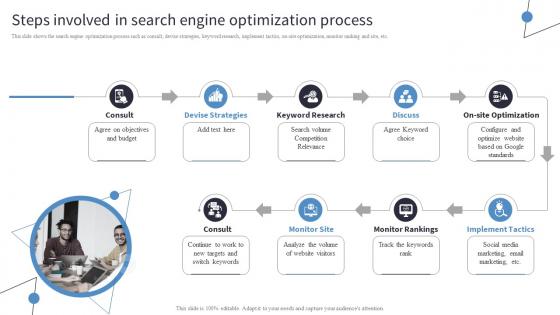
This slide shows the search engine optimization process such as consult, devise strategies, keyword research, implement tactics, on site optimization, monitor ranking and site, etc.
People who downloaded this PowerPoint presentation also viewed the following :
Steps Involved In Search Engine Optimization Process Incorporating Digital Platforms In Marketing Plans with all 6 slides:
Use our Steps Involved In Search Engine Optimization Process Incorporating Digital Platforms In Marketing Plans to effectively help you save your valuable time. They are readymade to fit into any presentation structure.





FAQs for Steps Involved In Search Engine Optimization Process Incorporating Digital Platforms
SEO foundational principles include keyword research, on-page optimization, technical SEO, quality content creation, and link building strategies. These approaches work together by improving website visibility, enhancing user experience, and building domain authority, with many businesses finding that consistent application across e-commerce, healthcare, and professional services ultimately delivers higher search rankings and increased organic traffic.
Keyword research fundamentally shapes SEO strategy by identifying search terms your target audience uses, revealing content opportunities, and guiding on-page optimization priorities. Through comprehensive keyword analysis, businesses can align their content with user intent, optimize for competitive gaps, and prioritize high-value topics, ultimately delivering increased organic visibility and targeted traffic growth.
On-page SEO significantly enhances search engine rankings by optimizing content quality, keyword placement, meta descriptions, header tags, and internal linking structures. These strategic optimizations enable search engines to better understand and index content while improving user experience, with many businesses finding that comprehensive on-page strategies deliver higher organic visibility and competitive advantage.
Meta tags and descriptions serve as crucial communication tools between websites and search engines, providing structured information about page content, keywords, and relevance signals that influence ranking algorithms. These elements significantly enhance click-through rates from search results, improve user experience by setting accurate expectations, and help search engines categorize content effectively, with many businesses finding that optimized meta elements deliver measurable improvements in organic visibility and website traffic.
Website loading speed significantly affects SEO performance by influencing search engine rankings, user experience metrics, and conversion rates. Search engines like Google prioritize faster-loading sites in their algorithms, while users increasingly abandon slow websites, with many e-commerce and service businesses finding that improved loading speeds deliver higher search visibility, reduced bounce rates, and ultimately enhanced competitive advantage.
Backlinks are links from external websites pointing to your site, serving as digital endorsements that search engines use to evaluate your content's authority, relevance, and trustworthiness. These connections significantly boost search rankings by demonstrating credibility, with many businesses finding that quality backlinks from reputable sources ultimately deliver enhanced visibility and competitive advantage in search results.
Mobile optimization and responsive design significantly enhance SEO outcomes by improving user experience, reducing bounce rates, and increasing page load speeds across devices. With Google's mobile-first indexing prioritizing mobile-friendly sites, businesses in retail, healthcare, and financial services find that responsive designs deliver higher search rankings, increased organic traffic, and ultimately better conversion rates in an increasingly mobile-driven marketplace.
High-quality content directly influences SEO ranking through enhanced user engagement, longer dwell times, increased backlinks, and improved search relevance signals that algorithms prioritize. Search engines increasingly reward comprehensive, valuable content that answers user intent, with many businesses finding that strategic content optimization delivers higher organic visibility, increased traffic, and ultimately stronger competitive positioning in search results.
Search engines evaluate user engagement metrics through click-through rates, bounce rates, time on page, pages per session, and return visitor frequency. These algorithms analyze behavioral signals like scroll depth, social shares, and direct traffic patterns, with many websites finding that higher engagement correlates with improved rankings, ultimately delivering better visibility and organic traffic growth.
SEO-friendly URLs should be short, descriptive, keyword-rich, use hyphens instead of underscores, and follow a logical hierarchy that reflects your site structure. These practices enhance search engine crawling, improve user experience, and boost click-through rates, with many e-commerce and content-driven businesses finding that clean URL structures significantly increase organic visibility and search rankings.
Regular content updates should occur at least weekly through blog posts, monthly for key service pages, and quarterly for foundational content like About or FAQ sections. This consistent publishing schedule signals search engines that your site remains active and valuable, with many businesses finding that fresh, relevant content combined with updated product information, industry insights, and seasonal campaigns ultimately delivers improved rankings and sustained organic traffic growth.
SEO performance tracking tools include Google Analytics, SEMrush, Ahrefs, Moz Pro, and Google Search Console. These platforms streamline monitoring by tracking keyword rankings, analyzing competitor strategies, and measuring organic traffic growth, with many organizations finding that comprehensive analytics ultimately deliver better search visibility and competitive advantage in increasingly crowded digital markets.
Local SEO targets geographically-specific searches through Google My Business optimization, location-based keywords, local citations, and customer reviews, while traditional SEO focuses on broader, non-location-specific rankings. Restaurants, medical practices, and retail stores leverage local SEO to capture nearby customers searching for immediate services, ultimately driving foot traffic and regional market dominance.
Common SEO mistakes include keyword stuffing, neglecting mobile optimization, ignoring page loading speeds, overlooking meta descriptions, and creating duplicate content. These errors significantly impact search rankings and user experience, with many businesses finding that avoiding these pitfalls while focusing on quality content, technical optimization, and user-focused design ultimately delivers better organic visibility and competitive advantage.
Social media activity impacts SEO rankings through increased brand visibility, content amplification, and indirect ranking signals that search engines consider. While social shares don't directly boost rankings, they enhance content reach, drive website traffic, and build brand authority, with many businesses finding that consistent social engagement ultimately improves search visibility and organic discovery.
-
The PPTs are extremely simple to modify. Thank you for providing the slides that are ready to be used. They assist me in saving a lot of time.
-
I want to express my gratitude to SlideTeam’s presentation design services team for helping me create the best presentation of my life!