


Steps To Build It Asset Management System




Try Before you Buy Download Free Sample Product
 Impress Your
 Audience
 100%
100% Editable
 Save Hours
 of Time


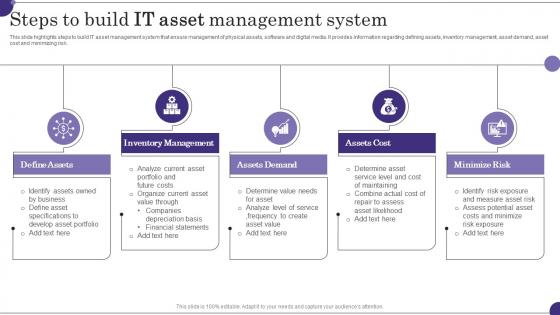
This slide highlights steps to build IT asset management system that ensure management of physical assets, software and digital media. It provides information regarding defining assets, inventory management, asset demand, asset cost and minimizing risk.
People who downloaded this PowerPoint presentation also viewed the following :
Steps To Build It Asset Management System with all 6 slides:
Use our Steps To Build It Asset Management System to effectively help you save your valuable time. They are readymade to fit into any presentation structure.





FAQs for Steps To Build It
You need four main things: asset discovery, lifecycle management, compliance tracking, and cost optimization. Start by figuring out what you actually have - spreadsheets are trash for this unless you're super small. Get automated tools to track your assets, locations, and users. Then handle the full lifecycle from buying to disposal. Compliance tracking saves you from audit hell (trust me on that one). Cost analysis helps you find waste. Oh, and definitely start with the discovery part first - can't manage what you can't see, right? Build everything else once you've got that visibility down.
Track both the money side and how stuff actually performs. I'd do quarterly check-ins for your critical systems, yearly for everything else. Look at utilization rates, maintenance costs, whether things still do what you need. Your accounting folks probably have depreciation schedules but honestly that's just one piece. Security holes matter too - plus vendor support timelines and if newer tech could handle it better. Oh, and create some basic scorecard weighing cost vs performance vs risk for each type of asset. Makes the whole process way less of a headache.
Dude, automation will save your sanity with asset tracking. No more drowning in spreadsheets trying to figure out what equipment you actually have. Set it up to automatically scan your network and update everything in real-time - then you'll get those compliance reports without doing anything. I swear, the reporting alone is worth it because you'll have actual current data instead of scrambling when your boss randomly asks for numbers. Oh, and start with just the discovery part first. Get that working solid, then add the fancy reporting stuff once your data isn't garbage anymore.
So basically ITAM keeps tabs on all your software and licenses automatically - way less painful than those Excel nightmares we used to deal with. It'll catch if someone installs random stuff they shouldn't or if you're about to go over your license limits. The cool part? You get real-time alerts when you're getting close to violations, plus it spits out compliance reports for audits. Trust me, set up those threshold notifications so you can buy more licenses before you accidentally break rules. Your future self will thank you when audit season rolls around.
Data quality is going to be your biggest headache - stuff's scattered everywhere across different systems and random spreadsheets. Getting teams to actually adopt new processes? Good luck with that. IT folks especially hate changing how they track things. Oh, and you'll discover so much shadow IT that departments bought without telling anyone (happens more than you'd think). Discovery phase is brutal for this reason. My take? Don't try to fix everything at once. Pick one department, get it working smoothly there, then slowly expand. Way less painful than attempting some massive rollout that'll probably fail anyway.
Honestly, you've gotta automate this stuff or you'll go crazy trying to track everything manually. Get some discovery tools running regular scans and hook them into your asset system. Track the whole lifecycle too - not just when things show up, but moves, changes, when they get retired. Someone specific needs to own keeping the records current when changes happen. That's huge. Otherwise updates become this thing people forget about until audit time rolls around. Start with figuring out what you actually have right now, then build in those automated checks. Way easier to catch things drifting than fix a total mess later.
Honestly, focus on the basics first - cost savings from optimizing licenses and your compliance scores. Audit failures will ruin your day, trust me. Track how accurate your inventory is and how fast you can provision new stuff. User satisfaction matters too because nobody wants angry employees waiting around for laptops. Oh, and utilization rates show if you're actually getting value from what you bought. Don't go crazy with metrics though. Pick maybe 4-5 that actually matter and check them monthly. You'll drive yourself nuts trying to measure everything.
Look, ITAM basically shows you what tech stuff you actually have vs what you're paying for. Software licenses are usually the goldmine - tons of companies are paying for seats nobody uses. You'll spot duplicate purchases between departments too, which happens more than you'd think. Compliance audits suck and cost a fortune, so staying on top of that matters. The real win is having actual data when renewal time comes instead of just guessing what you need. Honestly, start with a software audit first - that's where most people find the biggest waste sitting around.
Get yourself a centralized discovery tool first - Lansweeper or ManageEngine AssetExplorer both do automatic scanning of your hardware and software. ServiceNow's the gold standard but honestly? Total overkill unless you're huge. Make sure whatever you pick actually talks to your CMDB and ticketing system. Nobody wants another data silo sitting around collecting dust. Oh, and grab something like Flexera or Snow for software licensing - trust me, you don't want to deal with audit hell later. I learned that one the hard way. Focus on what plays nice with your current setup.
Honestly, connecting ITAM with ITSM is one of those things that sounds boring but actually saves your sanity. Your service desk can see exactly what hardware someone's using the second they submit a ticket - no more playing 20 questions about their laptop model. You can set up automatic triggers too, like flagging devices that keep breaking. The whole "single source of truth" thing actually works here. Teams stop hoarding info in spreadsheets (finally). Oh, and start with linking your asset database to tickets first - don't try to do everything at once or you'll hate yourself.
Honestly, you're looking at some serious headaches without proper tracking. Security vulns are huge - can't patch software you don't even know is running. Compliance audits will destroy your budget too, especially when you can't prove your licensing is legitimate. I've watched companies get slammed with six-figure penalties over this exact thing. Cost overruns happen constantly because teams keep buying duplicate licenses since nobody knows what already exists. Ghost assets just sit there burning money for no reason. Oh, and audit surprises? Those bills hit different when you're scrambling to figure out what licenses you actually own versus use. Get that basic inventory going now.
Honestly, data analytics will show you stuff about your IT assets that you'd never notice otherwise. I'd start with something simple like software usage - you'll probably find licenses you're paying for but barely using. Hardware replacement becomes way easier when you can predict failures from performance data instead of waiting for things to crash. The dashboards are kind of addictive once you get into it. Budget forecasting gets more accurate too. Oh, and it catches compliance problems early, which saves you from expensive headaches later. Even basic reporting in one area will give you some quick cost savings to show for it.
Okay so track literally everything - purchase dates, warranties, configurations, all of it. Get a centralized CMDB going and set up alerts for lease expirations so you're not panicking at the last second. Trust me on this one. Audit your inventory regularly because equipment just... disappears sometimes. Standardize vendors when you can - makes life way easier down the road. Oh and base refresh cycles on actual performance, not just how old something is. Start documenting what you have right now, even if it's a total mess. Better to start somewhere than keep putting it off.
Oh man, ITAM is actually perfect for this stuff! Better tracking means your hardware lasts way longer, which cuts down on e-waste big time. Software licensing gets optimized too - no more buying licenses you don't need. The visibility is honestly the best part because you'll see what you're actually using vs what you think you're using (always surprising). You can redeploy underused equipment instead of purchasing new stuff. When things do die, proper recycling becomes way easier. I'd start with a basic inventory audit - you'll probably find tons of stuff just sitting around unused.
You can't secure stuff you don't even know exists, right? That's why asset management matters so much for cybersecurity. Keep good records of what you have and you'll spot vulnerable systems faster, patch the important stuff first, and catch sketchy devices that shouldn't be there. Think of it like - how do you secure a building if you don't know where all the doors are? Pretty impossible. Once you know what's actually on your network, risk management becomes way easier since you can focus on the critical assets first. Honestly, just start by scanning what's connected right now. You'll definitely find some weird stuff you forgot about.
-
Awesome presentation, really professional and easy to edit.
-
If you are looking for satisfactory PowerPoint services, SlideTeam is your go-to place. I am fully contented with their research and development team.