Stock pitch for departmental stores powerpoint presentation ppt slide template

Rating:
80%
Stock pitch for departmental stores powerpoint presentation ppt slide template
Slide 1 of 16
Favourites Favourites

Try Before you Buy Download Free Sample Product

Audience Impress Your
Audience
Editable 100%
Editable
Time Save Hours
of Time
The Biggest Sale is ending soon in
0
0
:
0
0
:
0
0
Rating:
80%
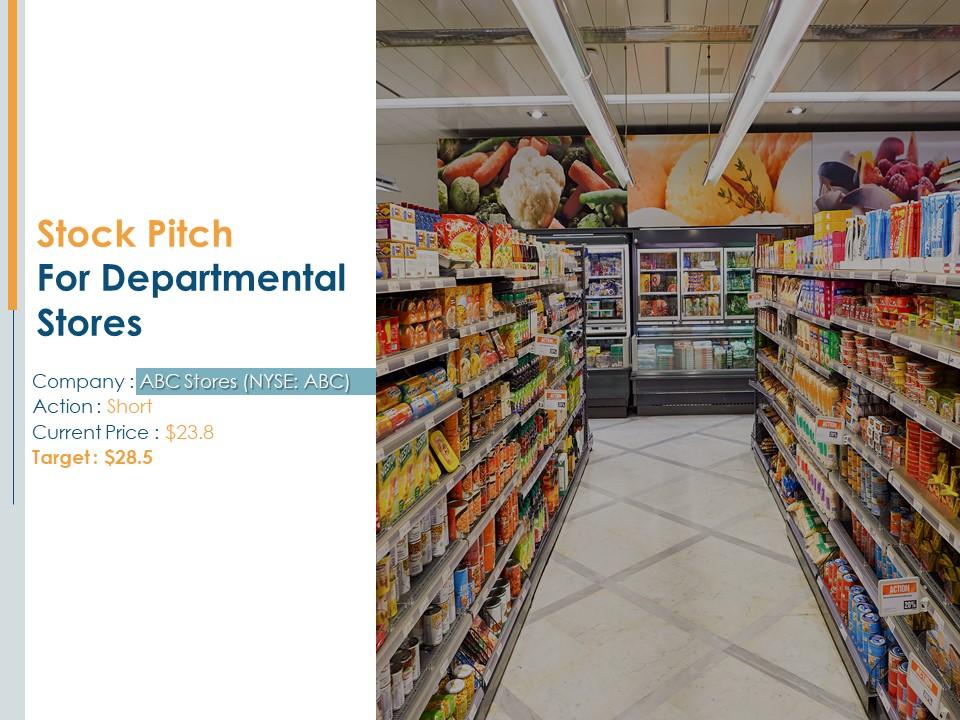
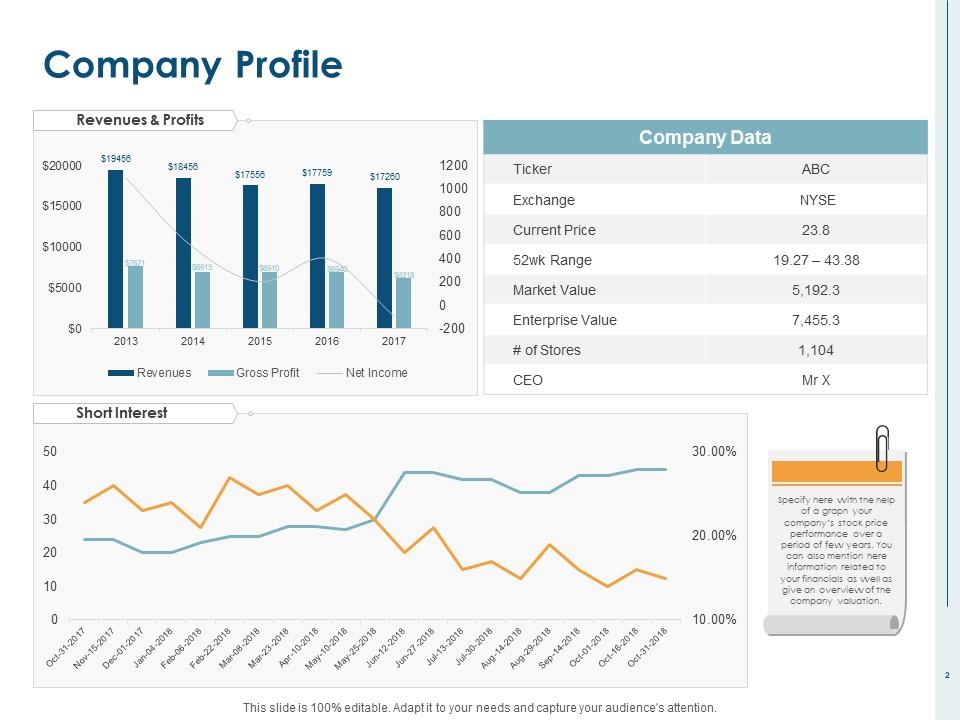
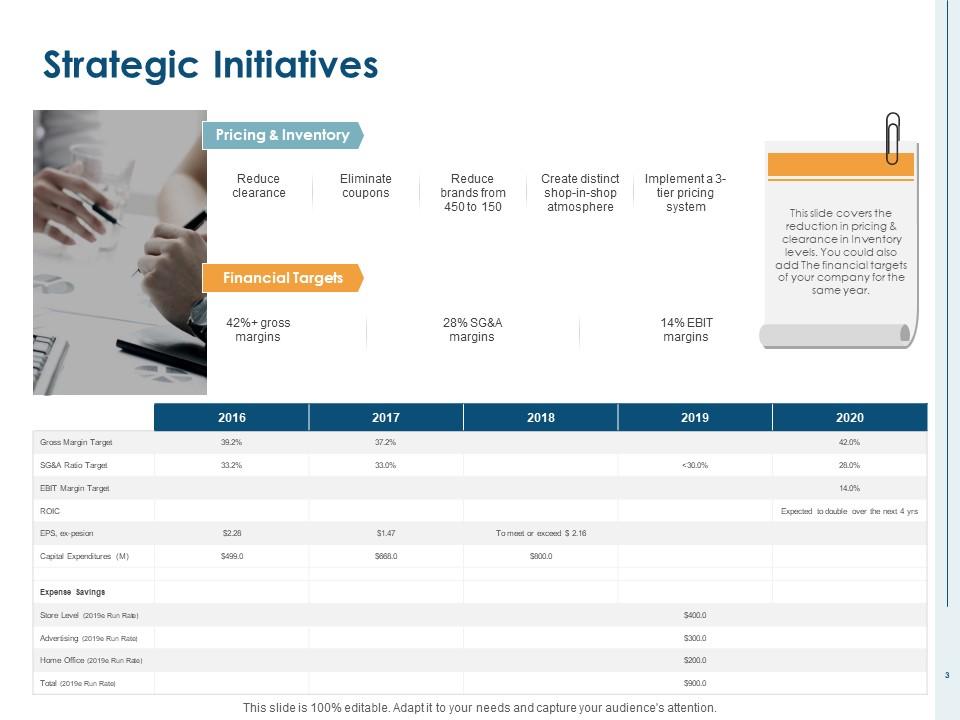
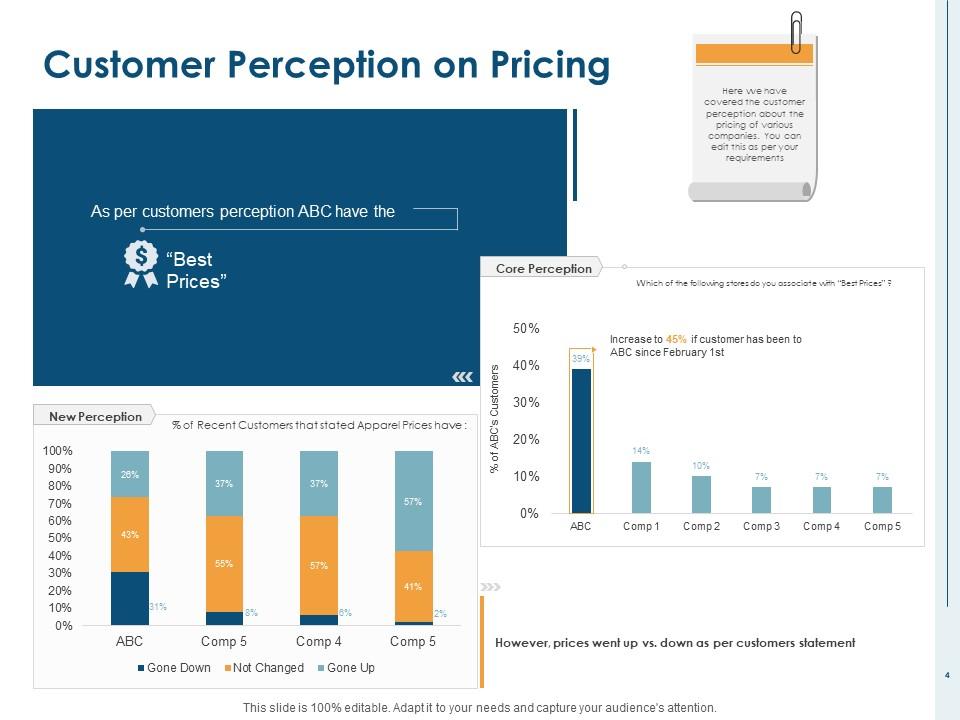
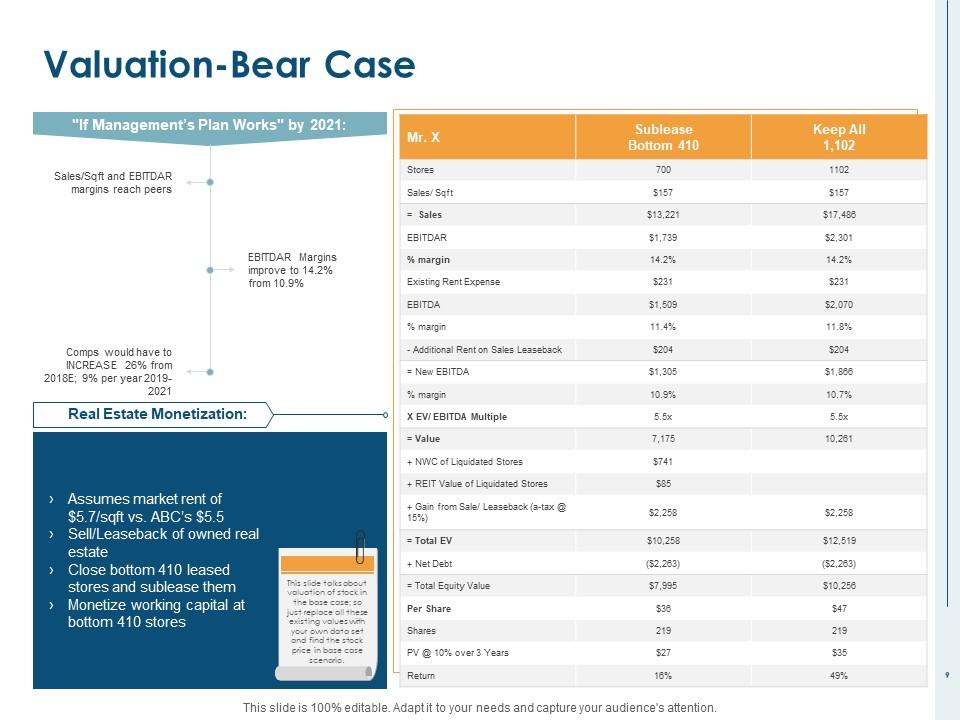
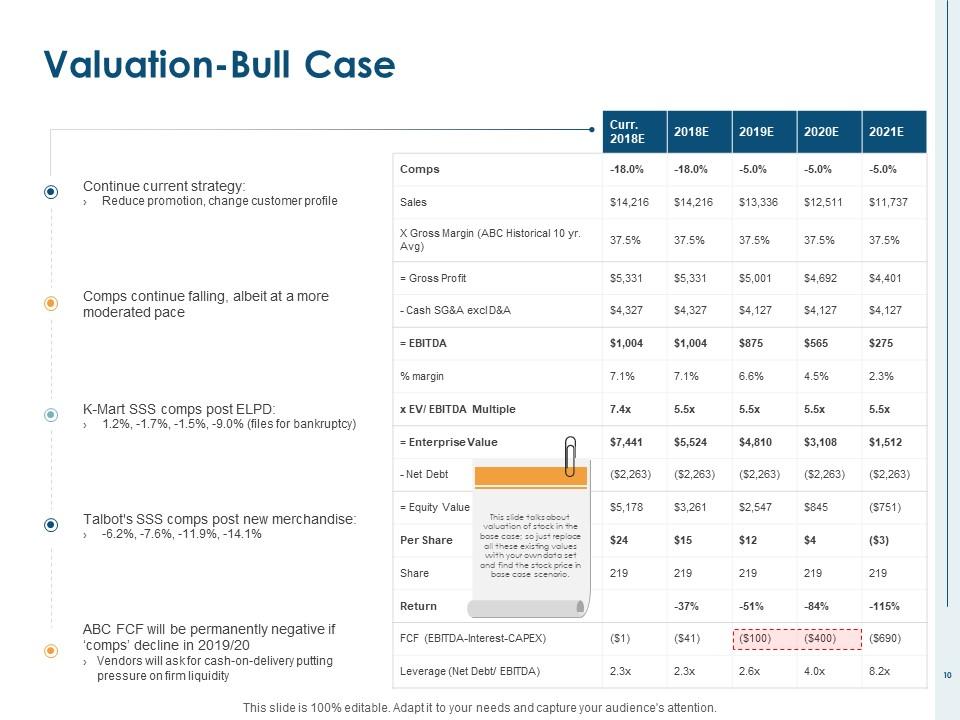
Our Stock Pitch For Departmental Stores Powerpoint Presentation Ppt Slide Template is the perfect way to pitch your stock. We have researched thousands of stock pitches and designed the most impactful way to convince your investors to invest in your equity.

People who downloaded this PowerPoint presentation also viewed the following :

FAQs for Stock pitch for departmental stores powerpoint presentation

Key metrics include revenue per square foot, same-store sales growth, inventory turnover ratio, gross margin trends, and debt-to-equity ratios. These indicators enable investors to assess operational efficiency, customer demand patterns, and financial stability, with many retail analysts finding that strong inventory management and consistent comparable store sales ultimately deliver sustainable competitive advantage in an increasingly competitive retail landscape.

Location significantly impacts departmental store performance through foot traffic patterns, demographic alignment, accessibility, competition density, and operational costs. Prime locations in high-traffic areas, shopping districts, or near complementary businesses typically command higher valuations and deliver stronger sales, while strategic positioning enables stores to capture target demographics more effectively, ultimately enhancing revenue potential and long-term competitive advantage.

Customer experience serves as a critical differentiator through personalized service, seamless omnichannel integration, strategic store layouts, and innovative technology adoption. Successful departmental stores like Nordstrom and Macy's leverage these elements to build customer loyalty, reduce price sensitivity, and drive repeat purchases, ultimately delivering sustainable competitive advantage in an increasingly crowded retail landscape.

Technology and e-commerce integration enhance traditional departmental stores by enabling omnichannel experiences, personalized recommendations, inventory optimization, mobile payments, and seamless online-to-offline customer journeys. These digital capabilities allow retailers to compete with pure e-commerce players while leveraging their physical presence, with many stores finding that integrated approaches drive higher customer lifetime value and operational efficiency.

Current trends in inventory management include AI-powered demand forecasting, real-time inventory tracking, automated replenishment systems, omnichannel inventory visibility, and predictive analytics for seasonal planning. These technologies streamline operations by reducing stockouts, minimizing overstock situations, and optimizing warehouse space allocation, with many retail chains finding that integrated inventory systems ultimately deliver faster customer service and significantly improved profit margins.

Seasonal sales and promotions significantly impact departmental store revenue projections by driving 30-40% of annual sales during peak periods, creating concentrated revenue spikes that require careful cash flow management and inventory planning. These promotional cycles enable stores to clear seasonal inventory, attract price-sensitive customers, and boost market share, with many retailers finding that strategic timing ultimately delivers enhanced profitability despite temporary margin compression.

Investors should analyze age distribution, income levels, urbanization rates, household composition, and consumer spending patterns when evaluating departmental store markets. These demographic factors determine purchasing power, product preferences, and shopping frequency, with retailers in affluent suburban areas and growing metropolitan regions typically experiencing stronger foot traffic, higher transaction values, and more consistent revenue streams, ultimately delivering sustainable competitive advantage.

Macroeconomic factors significantly influence departmental store performance, with inflation reducing consumer purchasing power while higher unemployment rates decrease discretionary spending on non-essential items like clothing, home goods, and luxury products. During inflationary periods, retailers often face compressed margins from rising costs and cautious consumer behavior, while economic downturns typically drive shoppers toward discount chains and essential purchases, ultimately forcing department stores to adjust pricing strategies and inventory management.

Evaluating departmental store management involves assessing operational efficiency metrics, digital transformation leadership, inventory management expertise, customer experience innovation, and financial stewardship capabilities. Through comprehensive analysis of store performance data, omnichannel strategy execution, and supply chain optimization, investors can gauge leadership effectiveness, with many finding that successful teams demonstrate consistent same-store sales growth, margin expansion, and adaptive response to evolving retail landscapes.

Loyalty programs and customer retention strategies drive long-term departmental store success by increasing repeat purchases, boosting average transaction values, and reducing customer acquisition costs. These programs enable retailers like Macy's and Nordstrom to gather valuable customer data, personalize shopping experiences, and create emotional connections, ultimately delivering higher lifetime customer value and sustainable competitive advantage in an increasingly crowded retail landscape.

Potential risks include declining foot traffic, e-commerce competition, inventory management challenges, changing consumer preferences, and high operational costs. These risks can be mitigated through omnichannel integration, strategic location optimization, and data-driven inventory systems, with many retailers finding that digital transformation, personalized customer experiences, and flexible store formats ultimately deliver competitive advantage in an increasingly hybrid retail landscape.

The competitive landscape forces departmental stores to differentiate through curated experiences, personalized service, and strategic omnichannel integration, while big-box retailers compete on price and online platforms dominate convenience. Many departmental stores are finding success by leveraging their physical footprint for experiential retail, exclusive partnerships, and seamless click-and-collect services, ultimately delivering unique value propositions that neither pure online nor big-box competitors can replicate.

Supply chain logistics and vendor relationships directly impact departmental store profitability through inventory optimization, cost reduction, faster product turnover, and improved margins. Strategic vendor partnerships enable better pricing negotiations, exclusive product access, and streamlined operations, with many retail chains finding that efficient logistics systems reduce operational costs by 15-20% while enhancing customer satisfaction through consistent product availability.

Sustainability initiatives significantly enhance departmental store brand image by demonstrating environmental responsibility, attracting eco-conscious consumers, and differentiating from competitors through authentic commitment to sustainable practices. These programs influence purchasing decisions by building customer loyalty, justifying premium pricing for sustainable products, and appealing to younger demographics, with many retailers finding that transparent sustainability efforts ultimately drive increased foot traffic and sales growth.

Post-pandemic consumer behavior significantly reshapes departmental store strategies through accelerated digital adoption, heightened health consciousness, and shifted shopping preferences toward convenience and value. These behavioral changes drive stores to enhance omnichannel experiences, prioritize contactless services, and reimagine physical spaces as experiential destinations, with many retailers finding that integrating online-offline touchpoints ultimately delivers stronger customer loyalty and competitive positioning.

Ratings and Reviews

80% of 100
Write a review
Most Relevant Reviews
  1. 80%

    by Michael Allen

    Design layout is very impressive.

1 Item

per page: