

Strategic Guide To Develop Customer Billing System Powerpoint Presentation Slides





Try Before you Buy Download Free Sample Product
 Impress Your
 Audience
 100%
100% Editable
 Save Hours
 of Time


Customer billing software is an organized system to invoice clients for services. Its purpose is to ensure proper administration and company performance. Check out our expertly crafted Strategic guide to developing a customer billing system template. It provides a general overview of invoicing software technology along with types, features, frameworks, and challenges faced by businesses while implementing billing systems. Additionally, our Customer Billing Software deck covers steps to develop a structured billing platform these include business model selection, research methodology, function requirements, hiring a development team, creating a minimum viable product, etc. Furthermore, the complete Presentation exhibits an employee training plan for successful invoicing operations. Moreover, our Invoicing Management module showcases the overall cost and budget for software deployment and maintenance. Lastly, it represents the estimated impact and KPI dashboard to assess the performance of the client billing system. Get access to this powerful template now.
People who downloaded this PowerPoint presentation also viewed the following :
Content of this Powerpoint Presentation
Slide 1: This slide introduces Strategic Guide to Develop Customer Billing System. Commence by stating Your Company Name.
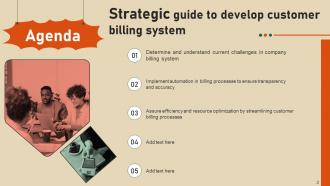
Slide 2: This slide depicts the Agenda of the presentation.
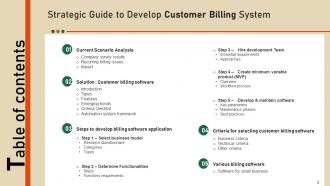
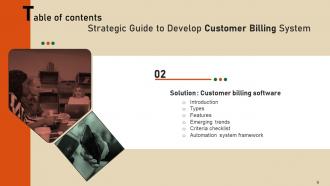
Slide 3: This slide includes the Table of contents.
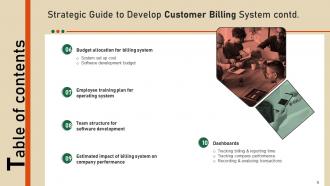
Slide 4: This is yet another slide continuing the Table of contents.
Slide 5: This slide includes the Title for the Topics to be discussed further.
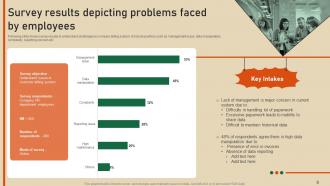
Slide 6: The Following slide shows survey results to understand challenges in company billing system.
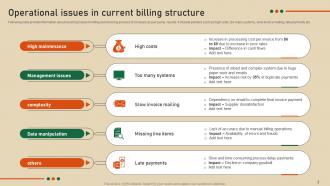
Slide 7: This slide talks about the Operational issues in current billing structure.
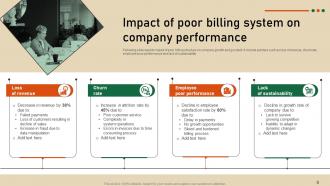
Slide 8: This slide highlights the Impact of poor billing system on company performance.
Slide 9: This slide includes the Hedaing for the Contents to be covered in the following template.
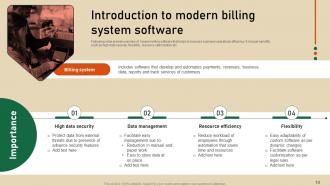
Slide 10: This slide reveals the Introduction to modern billing system software.
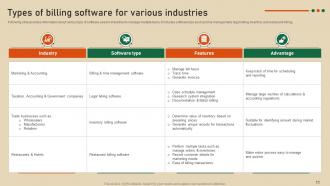
Slide 11: This slide states the Types of billing software for various industries.
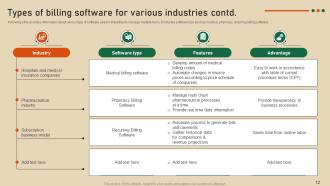
Slide 12: This slide continues the Types of billing software for various industries.
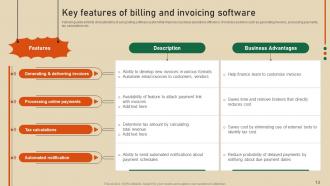
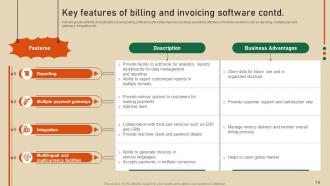
Slide 13: This slide continues the Key features of billing and invoicing software.
Slide 14: This slide exhibits the Key features of billing and invoicing software.
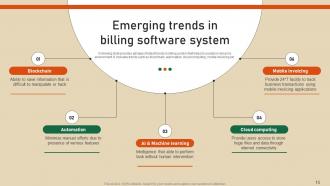
Slide 15: This slide talks about Emerging trends in billing software system.
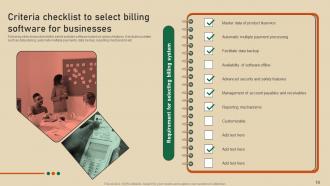
Slide 16: The Following slide shows checklist to select suitable software based on various features.
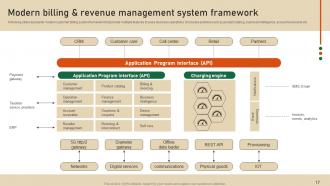
Slide 17: This slide displays the Modern billing & revenue management system framework.
Slide 18: This slide showcases the Title for the Ideas to be discussed in the upcoming template.
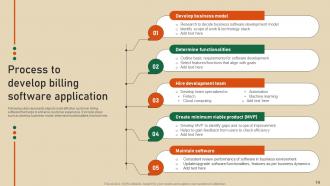
Slide 19: This slide illustrates the Process to develop billing software application.
Slide 20: This slide depicts the Heading for the Ideas to be covered further.
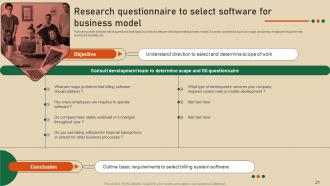
Slide 21: This slide reveals the Research questionnaire to select software for business model.
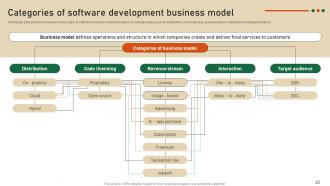
Slide 22: This slide presents the Categories of software development business model.
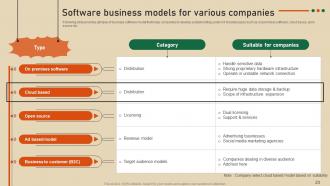
Slide 23: This slide shows the Software business models for various companies.
Slide 24: This slide displays the Title for the Contents to be discussed next.
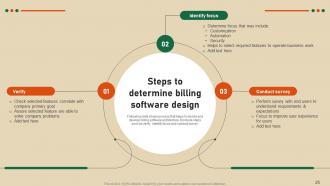
Slide 25: This slide states the Steps to determine billing software design.
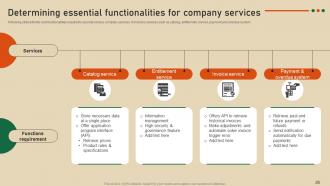
Slide 26: This slide deals with Determining essential functionalities for company services.
Slide 27: This slide includes the Heading for the Topics to be covered in the folloiwng template.
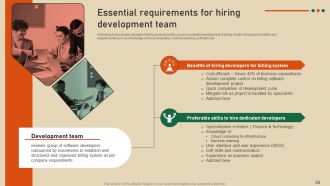
Slide 28: This slide states the Essential requirements for hiring development team.
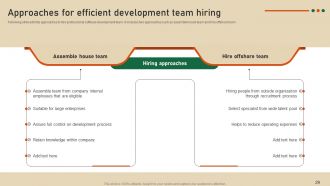
Slide 29: This slide highlights the Approaches for efficient development team hiring.
Slide 30: This slide reveals the Title for the Topics to be discussed in the upcoming template.
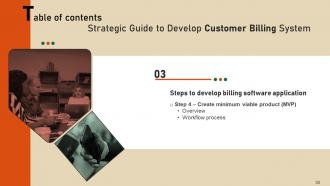
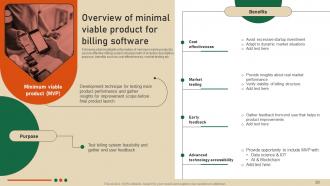
Slide 31: This slide highlights information of minimum viable product to assure effective billing system development.
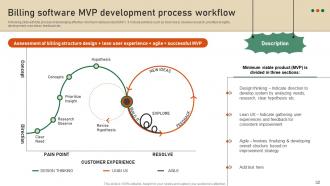
Slide 32: The Following slide exhibits process of developing effective minimum viable product (MVP).
Slide 33: This slide indicates the Heading for the Contents to be covered in the forthcoming template.
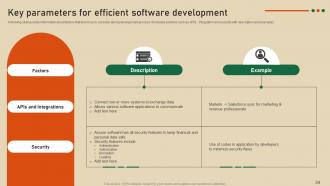
Slide 34: This slide highlights the Key parameters for efficient software development.
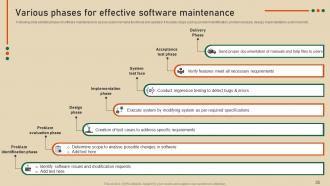
Slide 35: This slide portrays the Various phases for effective software maintenance.
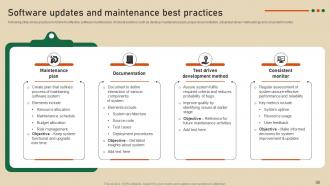
Slide 36: This slide depicts the Software updates and maintenance best practices.
Slide 37: This slide reveals the Title for the Ideas to be discussed in the following template.
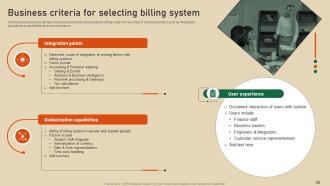
Slide 38: This slide highlights the Business criteria for selecting billing system.
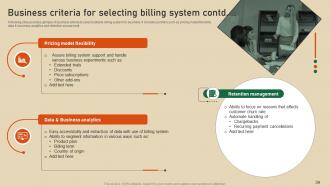
Slide 39: This slide continues the Business criteria for selecting billing system.
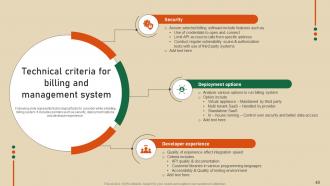
Slide 40: The Following slide represents technological factor to consider while selecting billing system.
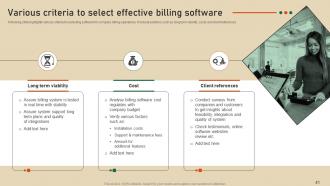
Slide 41: This slide displays the Various criteria to select effective billing software.
Slide 42: This slide portrays the Heading for the Ideas to be covered in the following template.
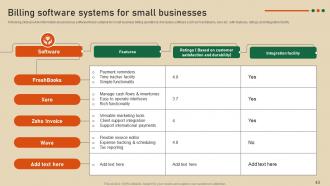
Slide 43: This slide provide information about various software that is suitable for small business billing operations.
Slide 44: This slide displays the Title for the Contents to be discussed in the next template.
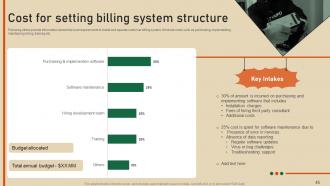
Slide 45: This slide provide information about total cost requirements to install and operate customer billing system.
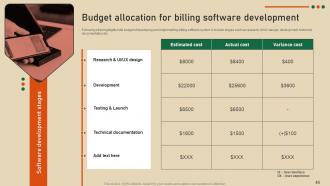
Slide 46: This slide states the Budget allocation for billing software development.
Slide 47: This slide incorporates the Heading for the Topics to be covered further.
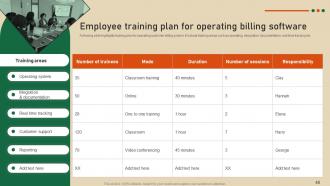
Slide 48: This slide highlights training plan for operating customer billing system.
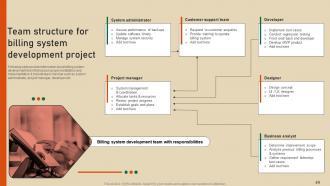
Slide 49: This slide dipslays the Team structure for billing system development project.
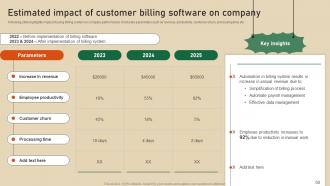
Slide 50: The Following slide highlights impact of using billing system on company performance.
Slide 51: This slide portrays the Title for the Topics to be discussed in the upcoming template.
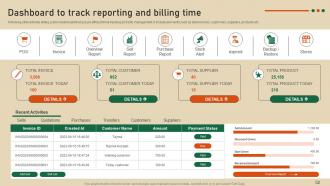
Slide 52: This slide exhibits billing system dashboard that assure efficient time tracking and bills management.
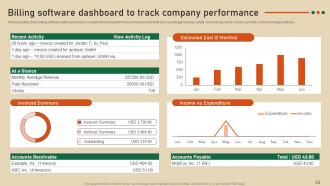
Slide 53: This slide shows the Billing software dashboard to track company performance.
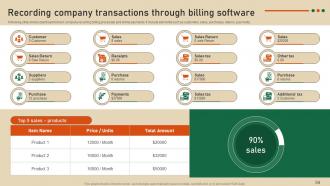
Slide 54: The Following slide displays the dashboard to track company recurring billing processes and online payments.
Slide 55: This is the Icons slide containing all the Icons used in the plan.
Slide 56: This slide is used for depicting some Additional information.
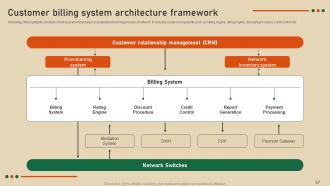
Slide 57: The Following slide highlights structure of billing system that helps to understand working process of network.
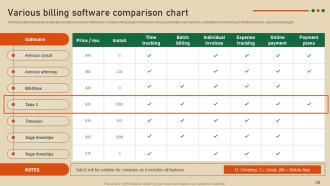
Slide 58: This slide states the Various billing software comparison chart.
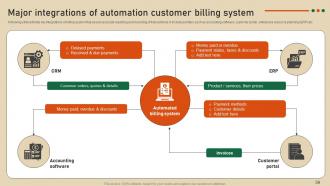
Slide 59: This slide indicates the Major integrations of automation customer billing system.
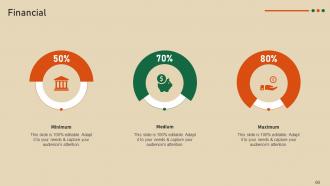
Slide 60: This slide elucidates information related to the Financial topic.
Slide 61: This slide contains Post it notes for reminders and deadlines.
Slide 62: This is the Puzzle slide with related imagery.
Slide 63: This is the 30 60 90 Days Plan slide for effective planning.
Slide 64: This slide reveals the SWOT analysis.
Slide 65: This is the Thank You slide for acknowledgement.
Strategic Guide To Develop Customer Billing System Powerpoint Presentation Slides with all 70 slides:
Use our Strategic Guide To Develop Customer Billing System Powerpoint Presentation Slides to effectively help you save your valuable time. They are readymade to fit into any presentation structure.










FAQs for Strategic Guide To Develop Customer Billing System
A customer billing system should include automated invoice generation, multiple payment options, real-time payment tracking, customizable billing cycles, and self-service customer portals. These features streamline financial operations by reducing manual errors, accelerating payment processing, and enhancing transparency, with many organizations finding that comprehensive billing systems ultimately deliver improved cash flow and stronger customer relationships.
Automation reduces billing errors by eliminating manual data entry, standardizing calculation processes, and integrating real-time validation checks that catch discrepancies before invoice generation. Through automated workflows, organizations streamline payment processing, ensure consistent pricing application, and maintain accurate customer records, with many financial services and retail companies finding that automated systems deliver faster invoicing cycles and significantly improved customer satisfaction.
Integration with existing CRM systems enables customer billing systems to access comprehensive customer data, payment histories, subscription details, and communication preferences in real-time. This strategic combination streamlines invoice generation, automates payment processing, and enhances customer service interactions, with many organizations finding that seamless CRM integration ultimately delivers faster billing cycles and improved customer experiences.
A customer billing system supports multiple payment methods by integrating diverse payment gateways, automated processing workflows, and flexible checkout interfaces that accommodate credit cards, digital wallets, bank transfers, and subscription models. This flexibility proves crucial for customer retention and market expansion, with many businesses finding that offering varied payment options reduces cart abandonment while enabling access to different demographic segments and international markets.
Online billing security considerations include data encryption, PCI DSS compliance, multi-factor authentication, secure payment gateways, regular security audits, and fraud detection mechanisms. These protective measures enhance customer trust by safeguarding sensitive financial information, preventing unauthorized access, and ensuring regulatory compliance, with many financial institutions finding that robust security frameworks ultimately deliver competitive advantage and reduced operational risk.
Businesses can leverage billing analytics to identify revenue patterns, optimize pricing strategies, reduce churn through payment behavior insights, and uncover upselling opportunities through customer usage data. These analytics enable companies to streamline collections, enhance customer retention, and maximize lifetime value, with many organizations finding that data-driven billing approaches deliver significant competitive advantages.
Companies face integration complexities with existing systems, data migration issues, staff training requirements, customer communication during transitions, and ensuring regulatory compliance across different markets. These challenges often involve coordinating multiple departments, managing downtime risks, and maintaining service continuity, with many organizations finding that phased implementations and comprehensive change management ultimately deliver smoother transitions and better user adoption.
A customer billing system automates subscription management by handling recurring payment processing, proration calculations, plan upgrades and downgrades, dungeon management for failed payments, and comprehensive billing analytics. Through automated workflows, businesses streamline revenue operations, reduce manual errors, and enhance customer retention with seamless payment experiences, while financial teams gain real-time visibility into subscription metrics and cash flow forecasting.
Compliance with financial regulations in billing systems ensures accurate tax calculations, proper audit trails, and adherence to data protection standards like PCI DSS and GDPR. This regulatory alignment minimizes legal risks, prevents costly penalties, and builds customer trust, while enabling businesses to operate seamlessly across multiple jurisdictions and ultimately delivering competitive advantage through reliable, transparent financial operations.
Customer feedback can be incorporated through user surveys, focus groups, beta testing programs, and direct customer interviews during system design phases. Many financial services companies and utility providers use feedback-driven development cycles, implementing features like simplified invoice layouts, flexible payment options, and mobile-friendly interfaces, ultimately delivering enhanced user experiences and reduced customer service inquiries.
Cloud-based platforms, artificial intelligence, blockchain technology, mobile-first designs, and API integrations are revolutionizing customer billing systems. These technologies streamline payment processing, enhance security protocols, and automate invoice generation, with many financial services and subscription-based businesses finding that real-time billing capabilities deliver faster customer experiences and improved operational efficiency.
A customer billing system enhances satisfaction and retention by providing transparent billing details, automated payment reminders, flexible payment options, personalized billing preferences, and real-time account access. These features streamline customer interactions while reducing billing disputes, with many service providers finding that clear, accessible billing processes significantly improve customer trust and long-term loyalty.
Billing systems accelerate payment collection by automating invoice generation, enabling real-time service tracking, and streamlining payment processing workflows. Through automated reminders, integrated payment gateways, and digital delivery methods, organizations across healthcare, utilities, and professional services reduce collection cycles from weeks to days, ultimately improving cash flow and operational efficiency.
Cloud-based billing systems offer scalability, automatic updates, lower upfront costs, and remote accessibility, while on-premises solutions provide greater data control, customization capabilities, and potential long-term cost savings. Organizations typically find that cloud solutions deliver faster implementation and reduced IT overhead, whereas on-premises systems enable deeper integration with existing infrastructure, ultimately depending on regulatory requirements and growth projections.
Businesses ensure billing system scalability by implementing cloud-based infrastructure, modular architecture, and automated processing capabilities that handle increasing transaction volumes. These systems streamline operations through flexible pricing models, real-time integration, and robust database management, with many organizations finding that scalable billing platforms ultimately deliver reduced operational costs and enhanced customer experiences.
-
My team has been relying on SlideTeam’s professional PPT designs for a while now. It has greatly sped up quality work at my organization. So thanks!
-
Easy to use and customize templates. Helped me give a last minute presentation.