


Strategic Management Overview Process Models And Framework Complete Deck Strategy CD V




Try Before you Buy Download Free Sample Product
 Impress Your
 Audience
 100%
100% Editable
 Save Hours
 of Time


Strategic management is the ongoing process of preparing, observing, and evaluating an organizations requirements to achieve long-term objectives. Grab our Strategic Management template. It is insightfully created, offering guidelines for achieving organizational goals and growing the company. Our Systematic business planning deck includes the entire workflow of structured company planning. Professionals can refer to slides like strategic management and everything about a strategic leader to guide the audience through strategic management. It also contains the structure, models, tools, leadership philosophies, and abilities needed to become a successful strategic leader. Further, our Strategic plan PPT incorporates explicit information for the businesses. Lastly, the module exemplifies creating a strategic plan that is successful from start to finish and putting it into action to reach the desired outcome. Download this 100 percent editable presentation and get access to our highly researched and skillfully designed product.
People who downloaded this PowerPoint presentation also viewed the following :
Content of this Powerpoint Presentation
Slide 1: This slide introduces Strategic Management – Overview, Process, Models and Framework. Commence by stating Your Company Name.
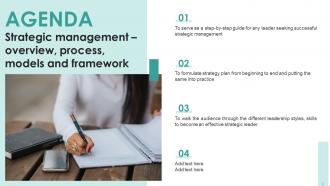
Slide 2: This slide depicts the Agenda of the presentation.
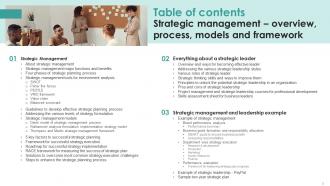
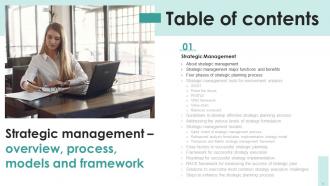
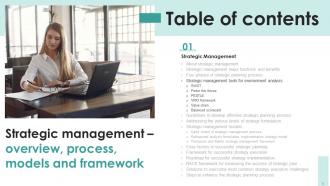
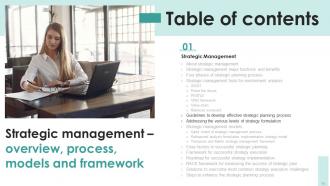
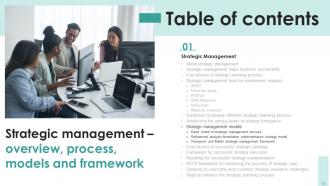
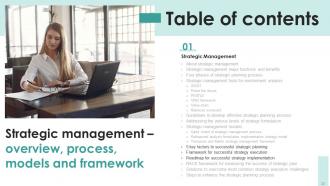
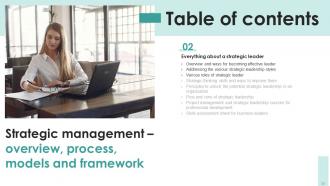
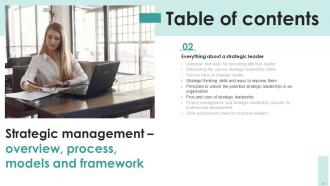
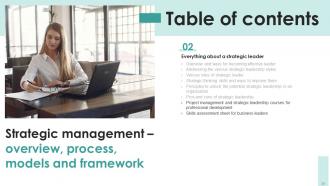
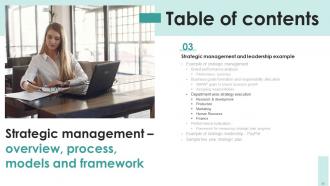
Slide 3: This slide incorporates the Table of contents.
Slide 4: This slide highlights the Title for the Topics to be covered further.
Slide 5: This slide provides an overview about strategic management.
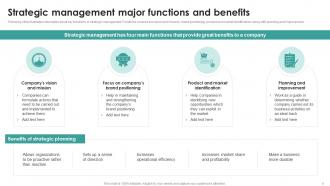
Slide 6: This slide illustrates information about key functions of strategic management.
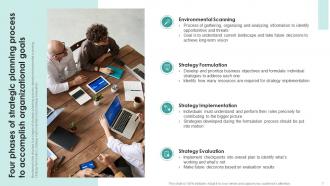
Slide 7: This slide displays the Four phases of strategic planning process to accomplish organizational goals.
Slide 8: This slide indicates the Heading for the Contents to be discussed next.
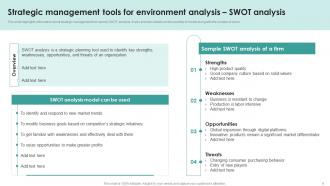
Slide 9: This slide highlights information about strategic management tool namely SWOT analysis.
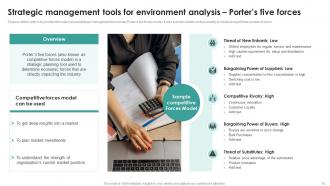
Slide 10: This slide provides information about strategic management tool namely Porter’s five forces model.
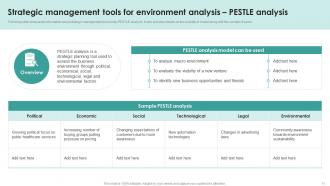
Slide 11: This slide showcases information about strategic management tool namely PESTLE analysis.
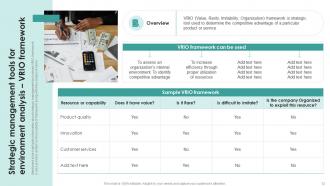
Slide 12: This slide highlights information about strategic management tool namely VRIO framework.
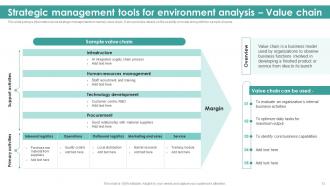
Slide 13: This slide portrays information about strategic management tool namely value chain.
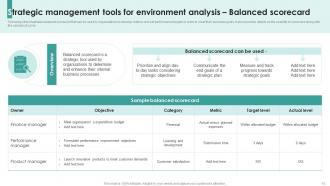
Slide 14: This slide illustrates balanced scorecard that can be used by organizations to develop metrics and set performance targets.
Slide 15: This slide elucidates the Title for the Ideas to be further discussed.
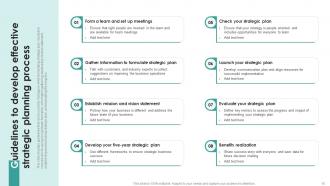
Slide 16: This slide displays guidelines that can be used by managers while formulating strategic plan.
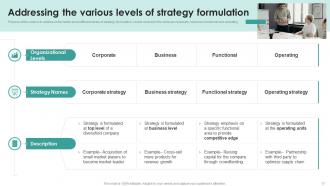
Slide 17: This slide Addresses the various levels of strategy formulation.
Slide 18: This slide presents the Heading for the Ideas to be covered next.
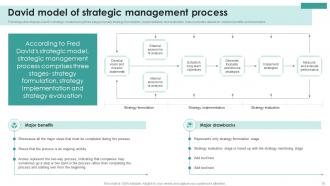
Slide 19: This slide exhibits the David’s strategic model having three stages.
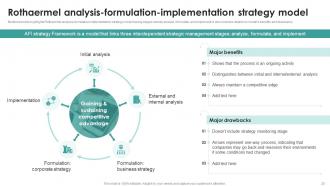
Slide 20: Mentioned slide highlights Rothaermel analysis-formulation-implementation strategy model having stages.
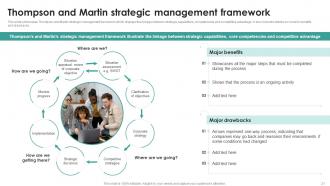
Slide 21: This slide reveals the Thompson and Martin strategic management framework.
Slide 22: This slide depicts the Title for the Contents to be discussed further.
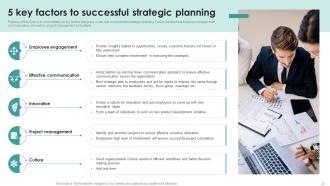
Slide 23: This slide states the 5 key factors to successful strategic planning.
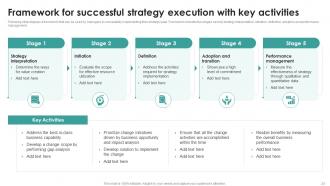
Slide 24: This slide illutrstaes the Framework for successful strategy execution with key activities.
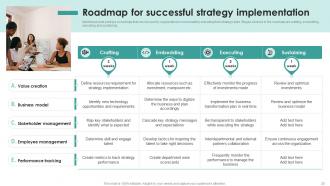
Slide 25: This slide portrays a roadmap that can be used by organizations in successfully executing their strategic plan.
Slide 26: This slide shows the Heading for the Topics to be covered in the following template.
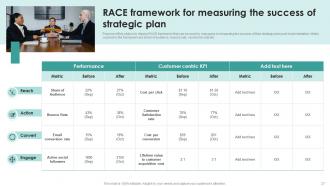
Slide 27: This slide displays a RACE framework that can be used by managers in measuring the success of their strategic plan post implementation.
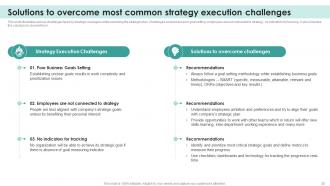
Slide 28: This slide presents the Solutions to overcome most common strategy execution challenges.
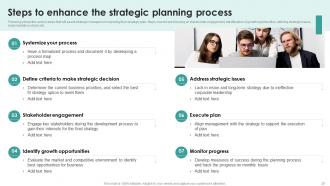
Slide 29: This slide reveals the Steps to enhance the strategic planning process.
Slide 30: This slide highlights the Title for the Topics to be discussed in the next template.
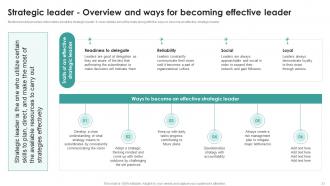
Slide 31: This slide provides information about the strategic leader.
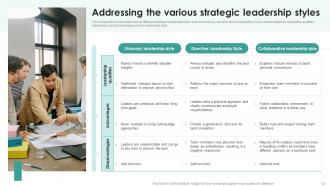
Slide 32: This slide portrays information about different strategic leadership styles.
Slide 33: This slide deals with Determining the various roles of strategic leader.
Slide 34: This slide incorporates the Heading for the Contents to be covered in the forth-coming template.
Slide 35: This slide illustrates the various strategic thinking skills and ways to improve them.
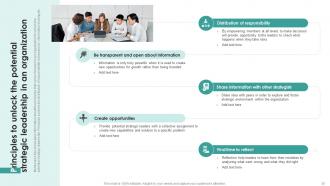
Slide 36: This slide exhibits the Principles to unlock the potential strategic leadership in an organization.
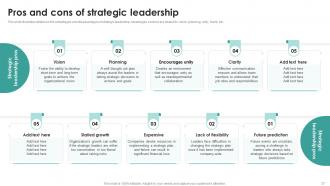
Slide 37: This slide illustrates details on the advantages and disadvantages of strategic leadership.
Slide 38: THis slide shows the Title for the Ideas to be discussed next.
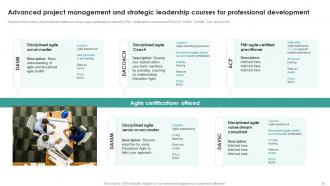
Slide 39: This slide focuses on the Advanced project management and strategic leadership courses for professional development.
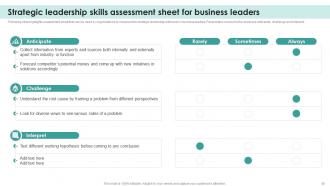
Slide 40: This slide highlights the Strategic leadership skills assessment sheet for business leaders.
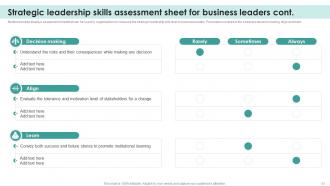
Slide 41: This slide continues the Strategic leadership skills assessment sheet for business leaders.
Slide 42: THis slide contains the Heading for the Ideas to be further covered.
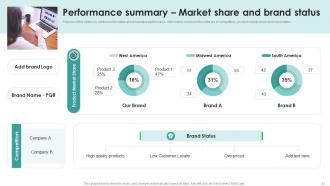
Slide 43: This slide addresses information about business performance.
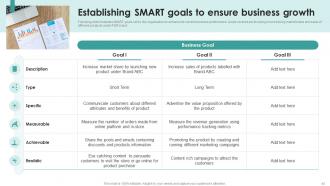
Slide 44: This slide emphasizes on Establishing SMART goals to ensure business growth.
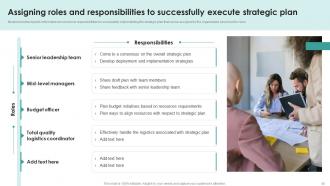
Slide 45: This slide deals with Assigning roles and responsibilities to successfully execute strategic plan.
Slide 46: This slide mentions the Title for the Contents to be discussed in the following template.
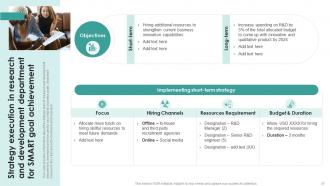
Slide 47: This slide talks about Strategy execution in research and development department for SMART goal achievement.
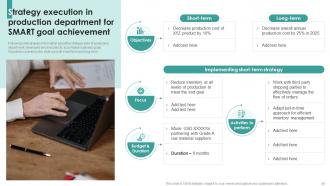
Slide 48: This slide mentions about Strategy execution in production department for SMART goal achievement.
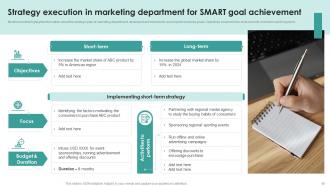
Slide 49: This slide highlights the Strategy execution in marketing department for SMART goal achievement.
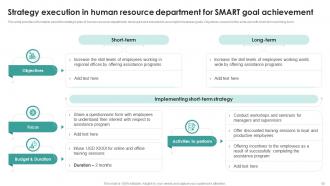
Slide 50: This slide provides information about the Strategy execution in human resource department for SMART goal achievement.
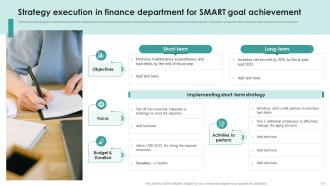
Slide 51: This slide displays information about the strategic plan of finance department, developed and executed to accomplish business goals.
Slide 52: This slide portrays the Heading for the Topics to be covered in the forth-coming template.
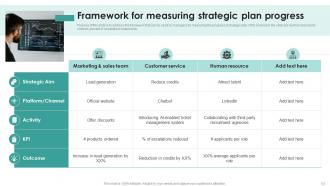
Slide 53: This slide illustrates the Framework for measuring strategic plan progress.
Slide 54: This slide exhibits the Title for the Topics to be discussed in the next template.
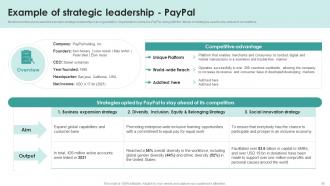
Slide 55: This slide showcases the example strategic leadership in an organization.
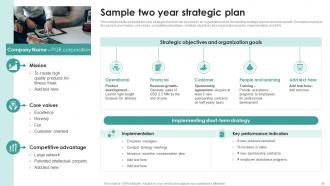
Slide 56: This slide illustrate a sample two year strategic plan that can be used by an organization.
Slide 57: This is the Icon slide containing all the Icons used in the plan.
Slide 58: This slide is used for depicting some Additional information.
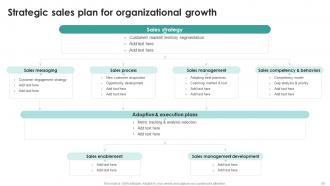
Slide 59: This slide talks about the Strategic sales plan for organizational growth.
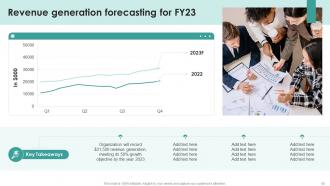
Slide 60: This slide illustrates the Revenue generation forecasting for FY23.
Slide 61: This is the About us slide. State your company-related information here.
Slide 62: This slide contains the Post it notes for reminders and deadlines.
Slide 63: This is the Puzzle slide with related imagery.
Slide 64: This is the Venn diagram sldie.
Slide 65: This is Our target sldie. State your company targets here.
Slide 66: This slide reveals the Magnifying glass for minute details.
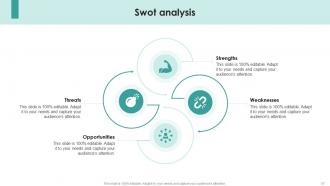
Slide 67: This slide elucidates the Swot analysis.
Slide 68: This is the Idea generation slide for encouraging innovative Ideas.
Slide 69: This slide portrays the organization' Mind map.
Slide 70: This is the Thank You slide for acknowledgement.
Strategic Management Overview Process Models And Framework Complete Deck Strategy CD V with all 75 slides:
Use our Strategic Management Overview Process Models And Framework Complete Deck Strategy CD to effectively help you save your valuable time. They are readymade to fit into any presentation structure.











FAQs for Strategic Management Overview Process Models And Framework Complete Deck
Key components of an effective strategic management process include environmental scanning, strategy formulation, implementation planning, resource allocation, and performance monitoring. These elements work together by analyzing market conditions, setting clear objectives, and establishing measurable outcomes, with many organizations finding that systematic integration of these components delivers sustained competitive advantage and operational efficiency.
Organizations align strategic goals with operational capabilities through capability assessment, resource mapping, and strategic gap analysis. This alignment enables companies to identify operational strengths, address capability deficiencies, and reallocate resources effectively, with many enterprises finding that integrated planning processes ultimately streamline execution and deliver sustainable competitive advantage.
SWOT analysis enhances strategic decision-making by providing comprehensive internal and external assessments, identifying competitive advantages, revealing market opportunities, and highlighting potential threats before they impact operations. Through systematic evaluation of strengths, weaknesses, opportunities, and threats, organizations streamline resource allocation, minimize risks, and develop targeted strategies, with many companies finding that regular SWOT assessments ultimately deliver better strategic alignment and competitive positioning.
Corporate culture significantly influences strategic direction by shaping decision-making processes, risk tolerance, innovation capacity, employee engagement levels, and leadership approaches throughout the organization. This cultural foundation determines how strategies are developed and executed, with many organizations finding that aligned cultures accelerate implementation, enhance adaptability, and ultimately deliver sustainable competitive advantage in increasingly dynamic business environments.
Strategic management adapts to rapid change through agile planning frameworks, continuous environmental scanning, scenario-based forecasting, flexible resource allocation, and real-time performance monitoring. Organizations increasingly embrace adaptive strategies that enable quick pivoting, with companies like Netflix and Amazon demonstrating how iterative strategic adjustments deliver sustained competitive advantage in volatile markets.
Common strategy implementation challenges include resistance to change, insufficient resources, poor communication, lack of leadership alignment, and inadequate performance monitoring systems. These obstacles often emerge across industries, with many organizations finding that addressing cultural barriers, ensuring stakeholder buy-in, and establishing clear accountability measures ultimately delivers smoother transitions and sustainable competitive advantage.
Stakeholder analysis significantly influences strategic planning by identifying key stakeholders, assessing their interests, evaluating their influence levels, and determining potential impacts on organizational objectives. Through systematic stakeholder mapping, organizations can anticipate resistance, secure necessary support, and align strategic initiatives with stakeholder expectations, ultimately delivering more feasible strategies and enhanced stakeholder buy-in across implementation phases.
Strategic plan success metrics include financial indicators like revenue growth and ROI, operational measures such as market share and customer satisfaction, strategic milestones including goal completion rates, and leading indicators like employee engagement and innovation pipeline strength. These comprehensive metrics enable organizations to track both short-term performance and long-term strategic progress, with many companies finding that balanced scorecards combining financial, customer, internal process, and learning perspectives deliver the most accurate assessment of strategic effectiveness.
Technology enhances strategic management through advanced analytics, AI-driven forecasting, cloud-based collaboration platforms, and real-time performance dashboards. These tools streamline data collection, automate scenario planning, and enable faster decision-making, with organizations across retail, healthcare, and manufacturing finding that integrated systems deliver improved strategic alignment and competitive responsiveness.
Leaders can foster innovation while pursuing strategic objectives through cross-functional collaboration, dedicated innovation time, pilot programs, reverse mentoring, and strategic partnerships with startups or research institutions. These approaches enable organizations to balance operational excellence with creative exploration, with many companies finding that structured innovation processes, like Google's 20% time or 3M's innovation culture, ultimately deliver breakthrough products and sustained competitive advantage in rapidly evolving markets.
Competitive analysis informs strategic positioning by revealing market gaps, competitor weaknesses, pricing strategies, and differentiation opportunities that organizations can exploit. Through systematic evaluation of rivals' strengths and limitations, companies identify untapped customer segments, optimize resource allocation, and develop unique value propositions, ultimately enabling them to carve out defensible market positions while anticipating competitive responses.
Scenario planning enables organizations to prepare for multiple future possibilities by developing strategic responses to various potential outcomes, market shifts, and external uncertainties. This approach helps companies, particularly in volatile sectors like energy and financial services, build resilient strategies, minimize risks, and identify emerging opportunities, ultimately delivering competitive advantage through enhanced adaptability and informed decision-making.
Strategic alliances contribute to competitive advantage by enabling resource sharing, market expansion, technology transfer, and risk mitigation across partner organizations. Through strategic partnerships, companies accelerate innovation, access new customer segments, and reduce operational costs, with many businesses in telecommunications, pharmaceuticals, and automotive finding that collaborative approaches deliver faster market entry and enhanced capabilities than independent development.
Global market trends significantly influence local strategic management by dictating resource allocation, competitive positioning, market entry strategies, and operational adaptations to maintain relevance. These trends enable organizations to anticipate shifts, align local operations with international standards, and leverage emerging opportunities, with many companies finding that proactive trend integration delivers enhanced market responsiveness and sustainable competitive advantage.
Ethical considerations in strategic management include stakeholder transparency, environmental responsibility, fair labor practices, honest communication with investors, and sustainable resource allocation. These principles enhance organizational reputation, reduce regulatory risks, and build long-term stakeholder trust, with many companies finding that ethical strategies ultimately deliver competitive advantage and improved financial performance.
-
“As you have innovative ideas and they are all customizable, this saves a huge chunk of your time to prepare well-read presentations.”
-
Graphics are very appealing to eyes.