


Strategic Plan To Foster Diversity And Inclusion In Organization Powerpoint Presentation Slides
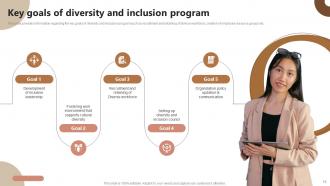
Diversity management is an intrinsic approach to promote the greater inclusion of employees across various backgrounds to create a positive work environment. Our Strategic Plan to Foster Diversity and Inclusion in Organization PPT deck can assist HR managers in improving acceptance and respect among diversified employees to create a truly global workplace. This PowerPoint module showcases current workplace diversity regarding gender and ethnicity representation. It also highlights limited diversity impact, such as discrimination of minorities and intersectionality in the workplace. Additionally, the presentation covers the multiple goals of the diversity and inclusion program the development of inclusive leadership, fostering a work environment that supports cultural diversity, recruitment and retaining a diverse workforce, and setting up a diversity and inclusion council. Further, the module includes a strategic action plan for the DandI program, along with its impacts at the workplace in terms of reduction in conflicts, increased visibility of minorities, diversified talent pool, and increased resilience and trust. At last, it highlights dashboards to monitor the effectiveness of the diversity and inclusion program by tracking workforce diversity and gender and ethnicity distribution. Get access to this powerful template now.
Diversity management is an intrinsic approach to promote the greater inclusion of employees across various backgrounds to c..


















-

- Google Slides is a new FREE Presentation software from Google.
- All our content is 100% compatible with Google Slides.
- Just download our designs, and upload them to Google Slides and they will work automatically.
- Amaze your audience with SlideTeam and Google Slides.
-

Want Changes to This PPT Slide? Check out our Presentation Design Services
-

- WideScreen Aspect ratio is becoming a very popular format. When you download this product, the downloaded ZIP will contain this product in both standard and widescreen format.
-

- Some older products that we have may only be in standard format, but they can easily be converted to widescreen.
- To do this, please open the SlideTeam product in Powerpoint, and go to
- Design ( On the top bar) -> Page Setup -> and select "On-screen Show (16:9)” in the drop down for "Slides Sized for".
- The slide or theme will change to widescreen, and all graphics will adjust automatically. You can similarly convert our content to any other desired screen aspect ratio.
Compatible With Google Slides

Get This In WideScreen
You must be logged in to download this presentation.


Do you want to remove this product from your favourites?
PowerPoint presentation slides
Deliver this complete deck to your team members and other collaborators. Encompassed with stylized slides presenting various concepts, this Strategic Plan To Foster Diversity And Inclusion In Organization Powerpoint Presentation Slides is the best tool you can utilize. Personalize its content and graphics to make it unique and thought-provoking. All the fifty one slides are editable and modifiable, so feel free to adjust them to your business setting. The font, color, and other components also come in an editable format making this PPT design the best choice for your next presentation. So, download now.

People who downloaded this PowerPoint presentation also viewed the following :
Content of this Powerpoint Presentation
Slide 1: This slide displays the title Strategic plan to foster DIVERSITY AND INCLUSION in organization.
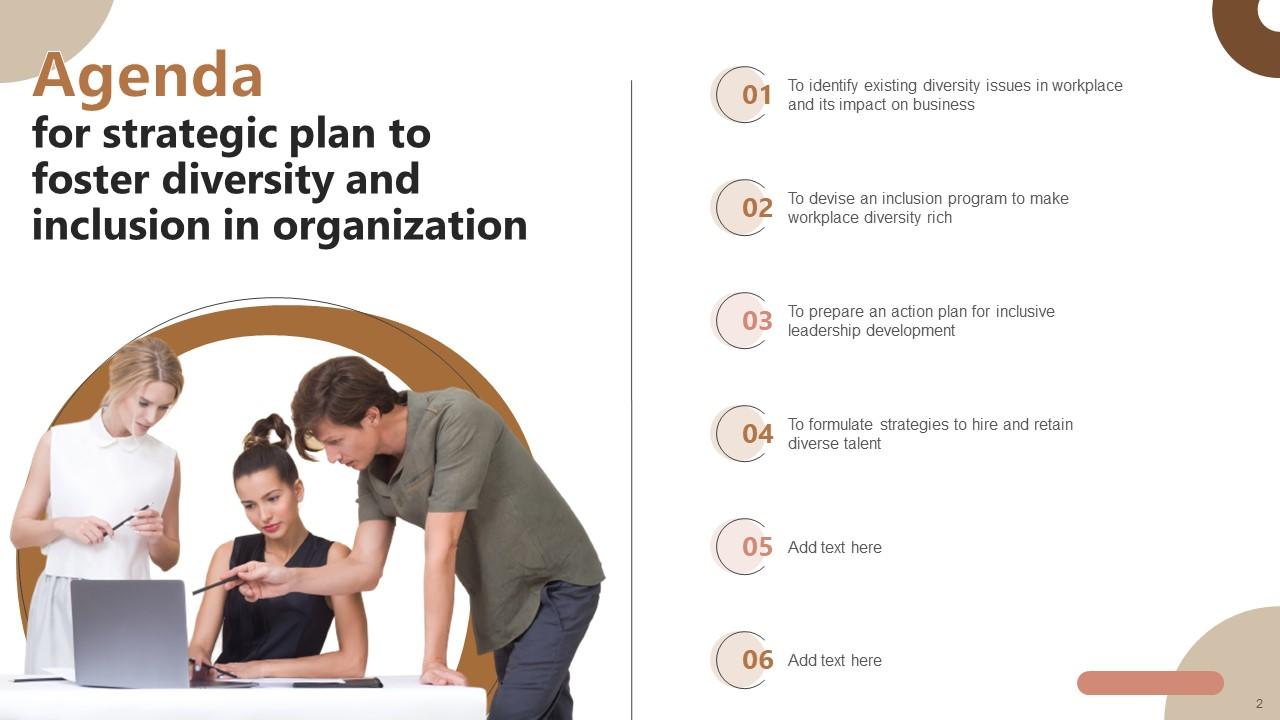
Slide 2: This slide displays the title Agenda.
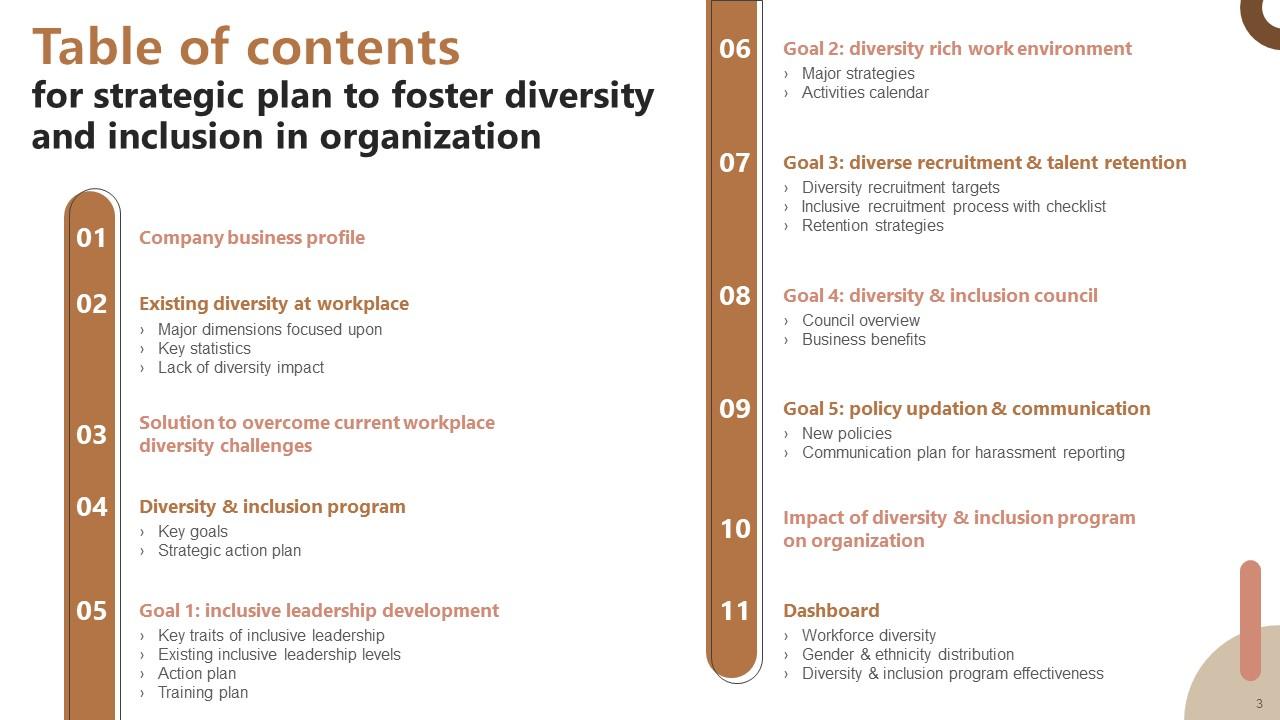
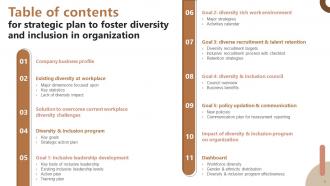
Slide 3: This slide exhibit table of content.
Slide 4: This slide exhibit table of contents- Company business profile.
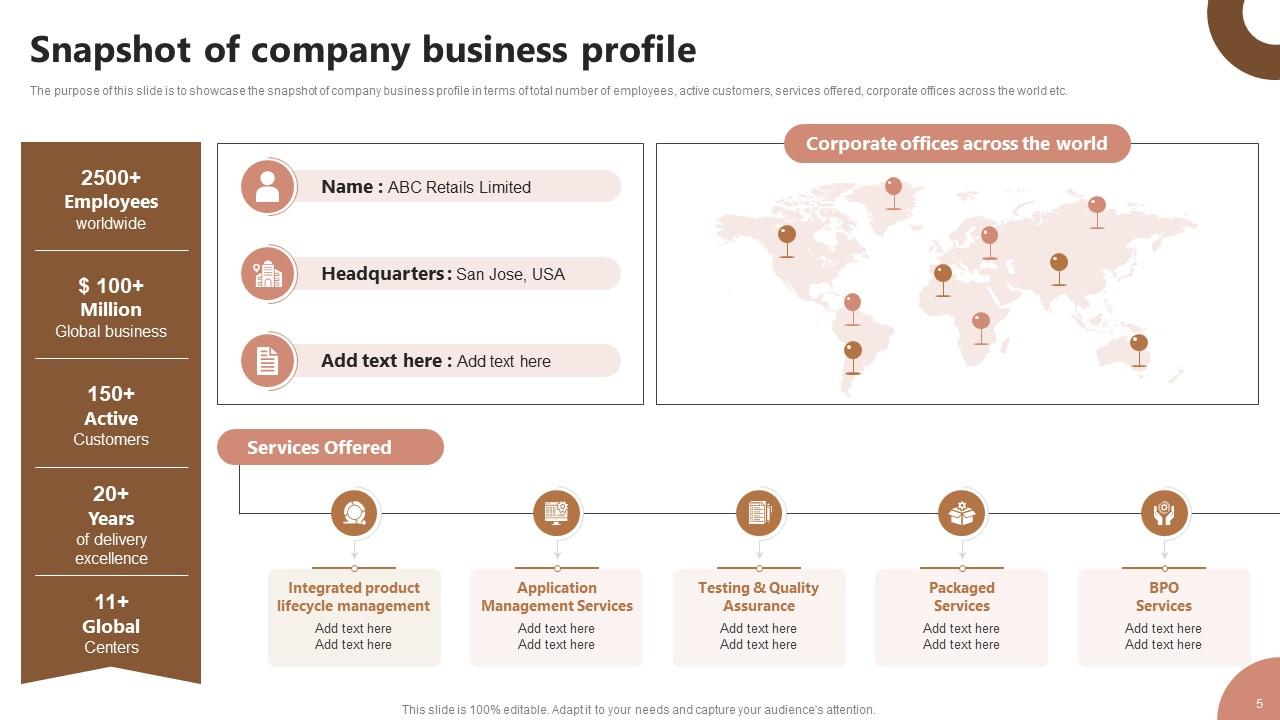
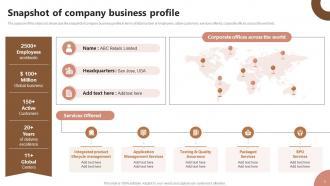
Slide 5: The purpose of this slide is to showcase the snapshot of company business profile.
Slide 6: This slide exhibit table of content- Existing diversity at workplace.
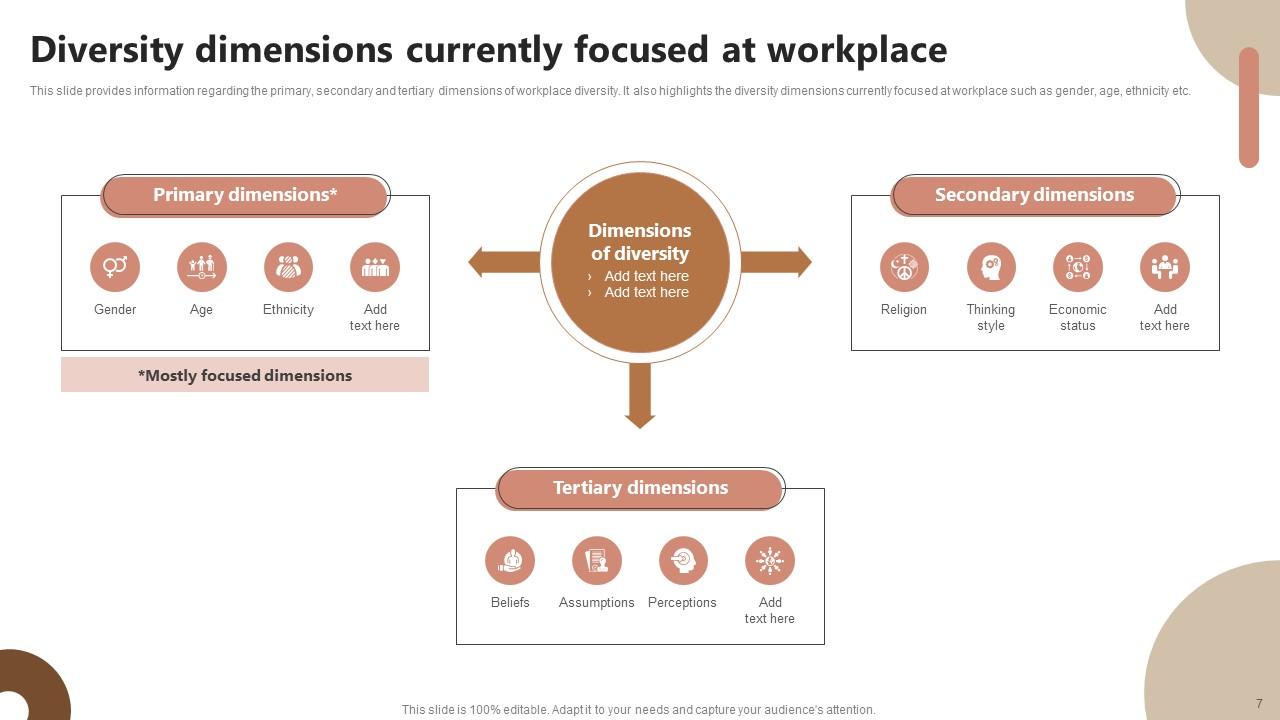
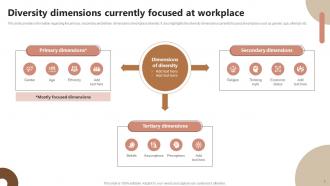
Slide 7: This slide provides information regarding the primary, secondary and tertiary dimensions of workplace diversity.
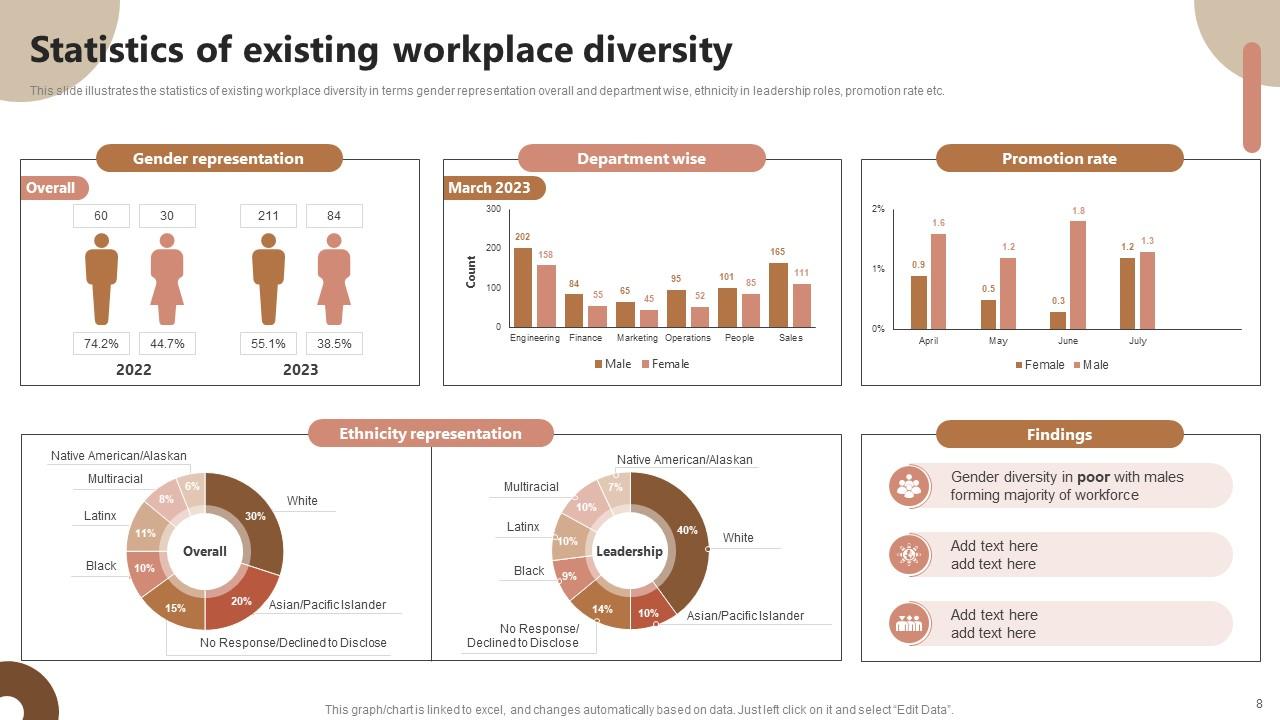
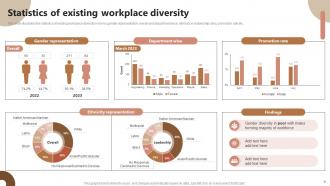
Slide 8: This slide illustrates the statistics of existing workplace diversity in terms gender representation overall and department wise.
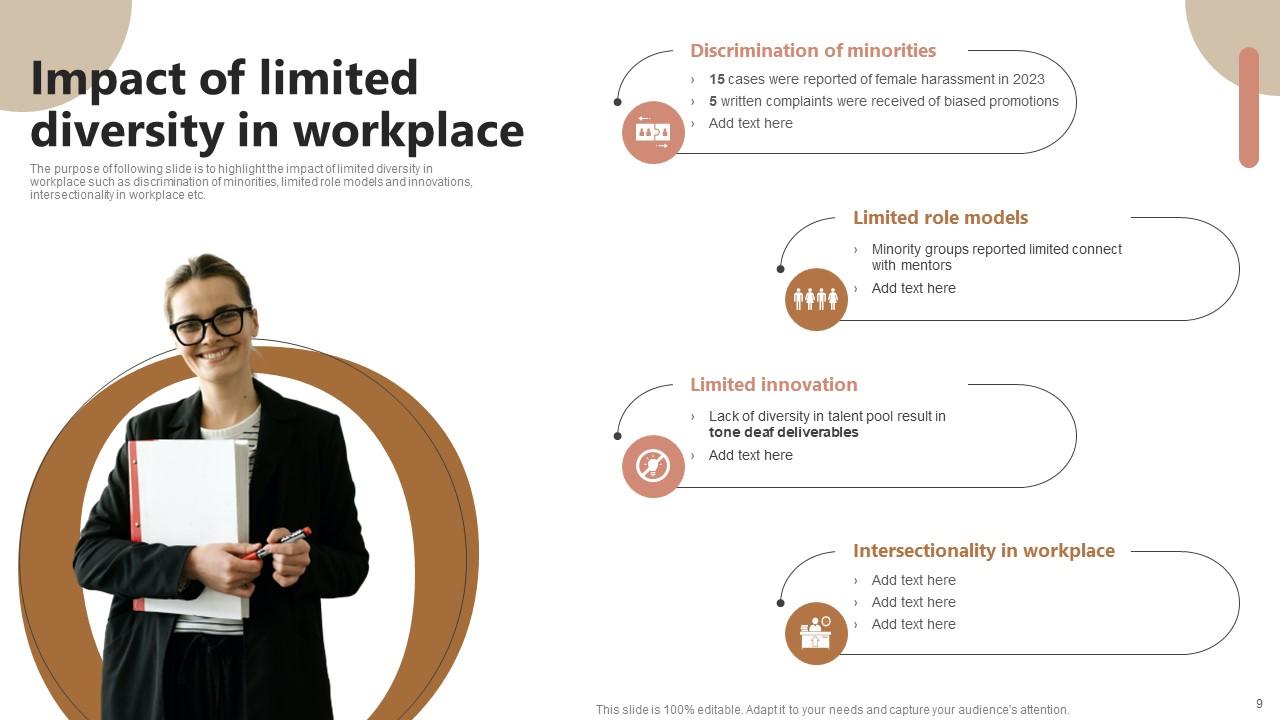
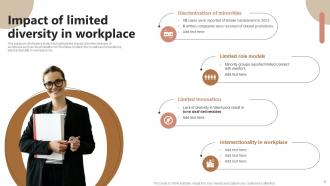
Slide 9: The purpose of following slide is to highlight the impact of limited diversity in workplace.
Slide 10: This slide exhibit table of content- Solution to overcome current workplace diversity challenges.
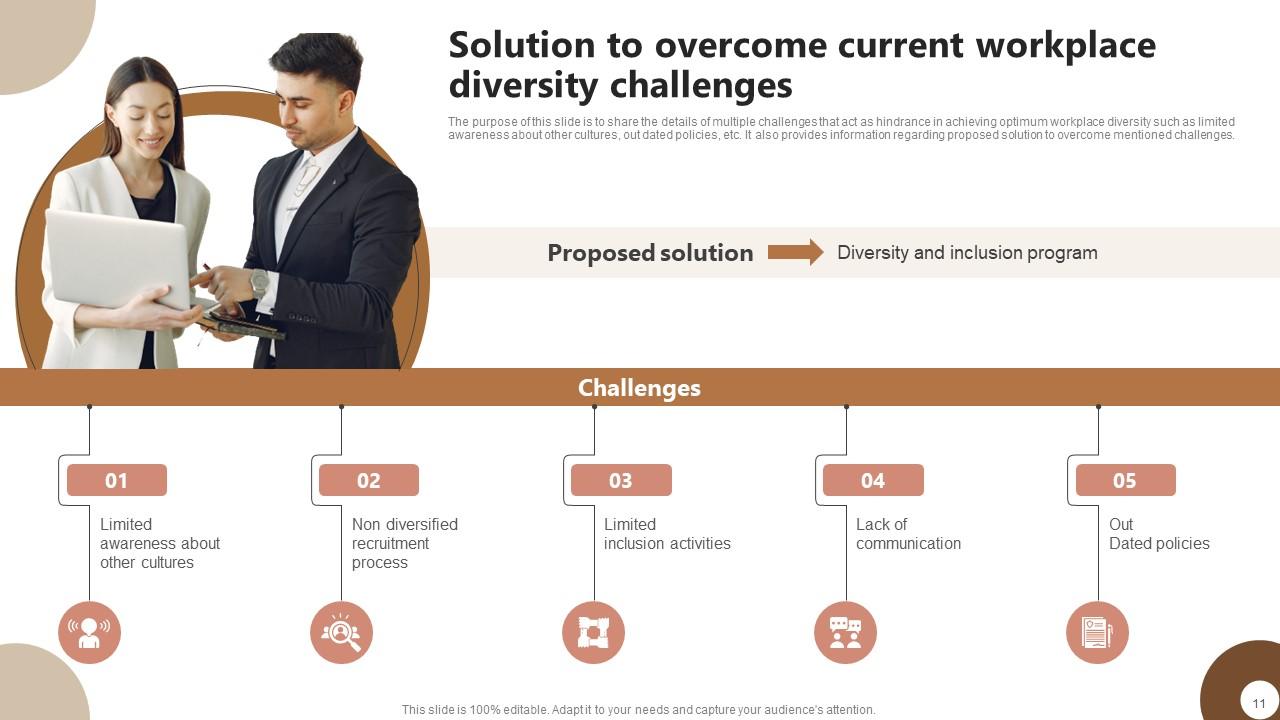
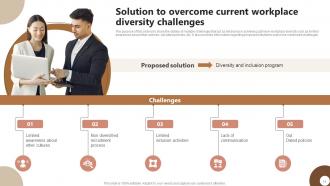
Slide 11: The purpose of this slide is to share the details of multiple challenges that act as hindrance in achieving optimum workplace diversity.
Slide 12: This slide exhibit table of content- Diversity & inclusion program.
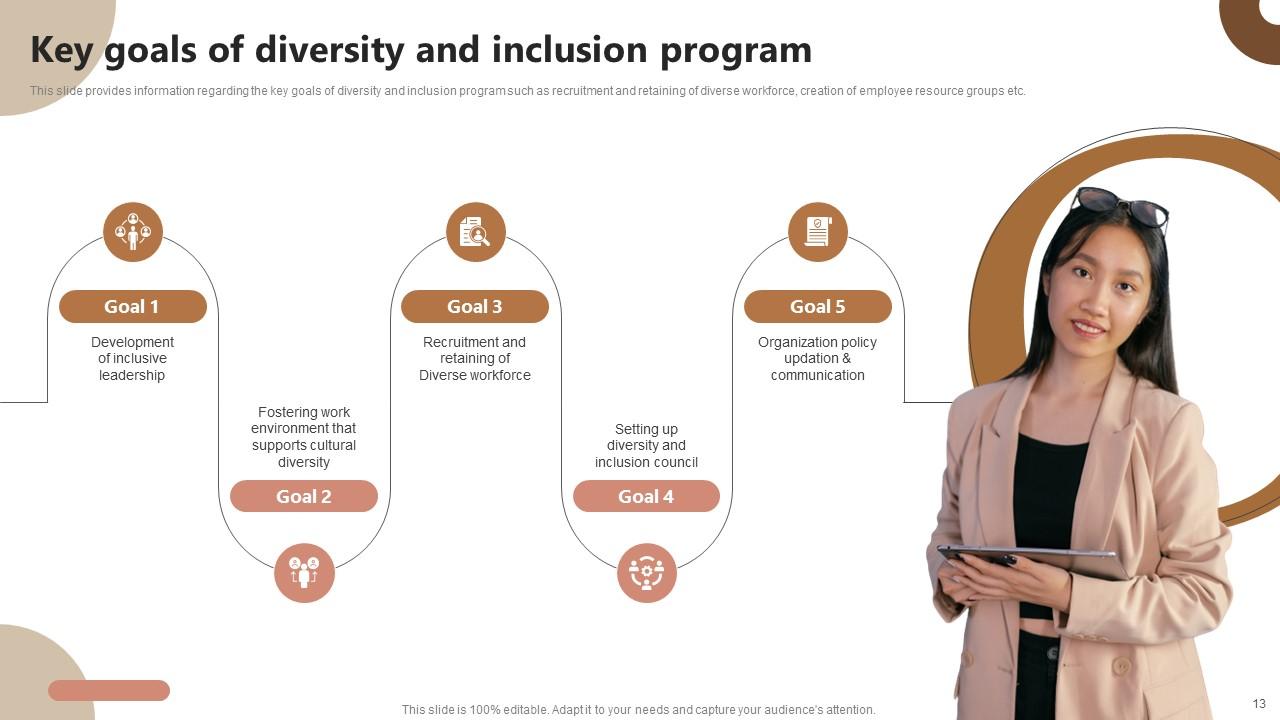
Slide 13: This slide provides information regarding the key goals of diversity and inclusion program.
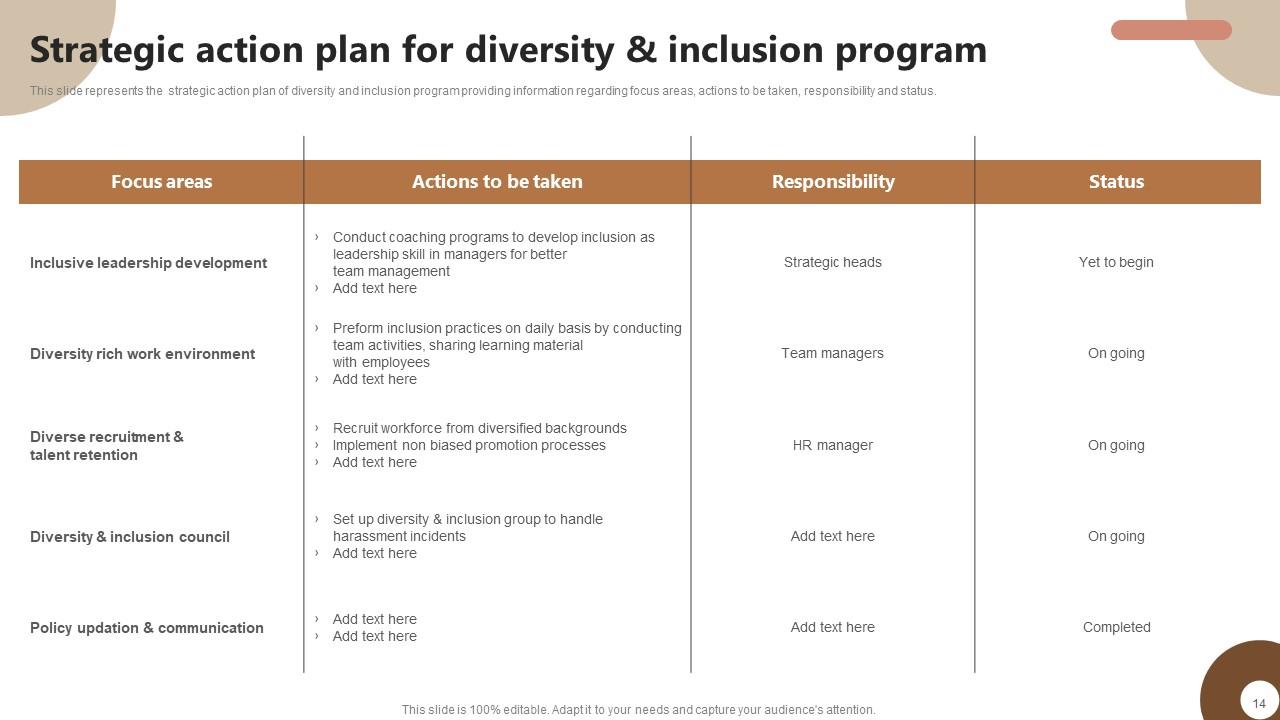
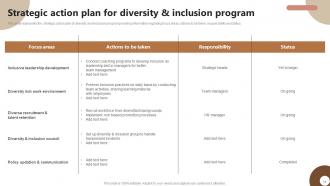
Slide 14: This slide represents the strategic action plan of diversity and inclusion program.
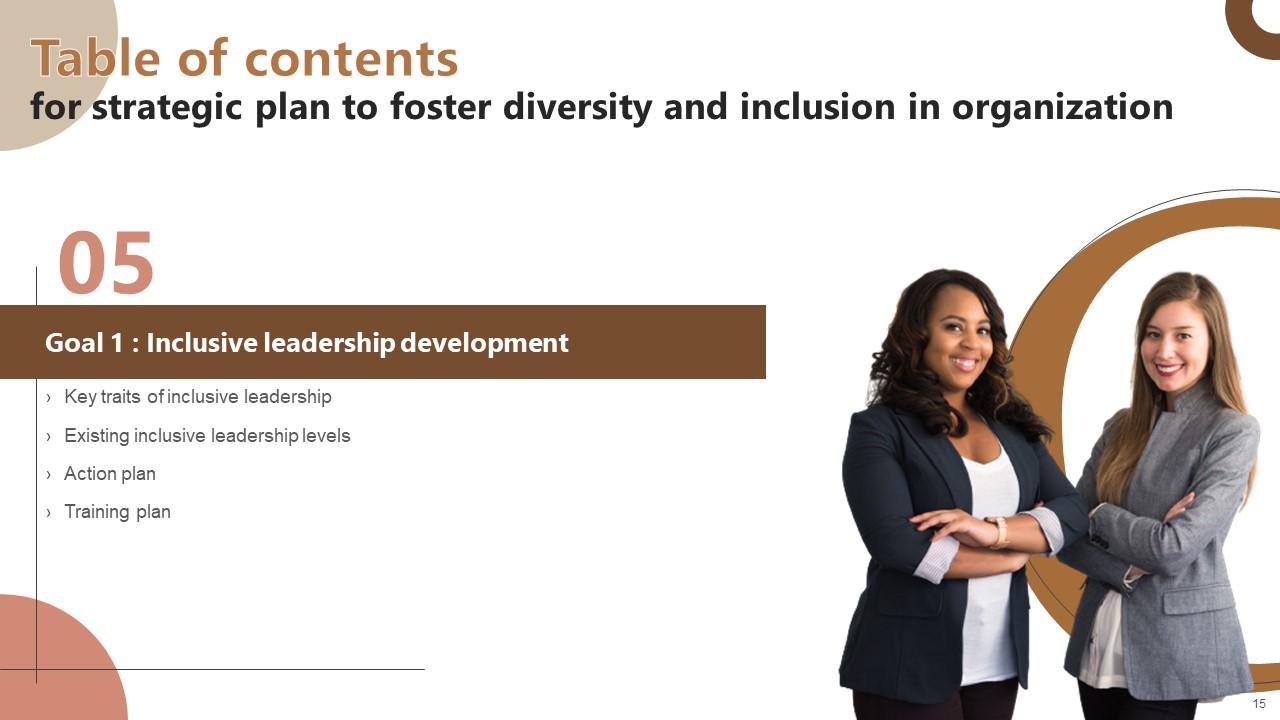
Slide 15: This slide exhibit table of content: Goal 1 : Inclusive leadership development.
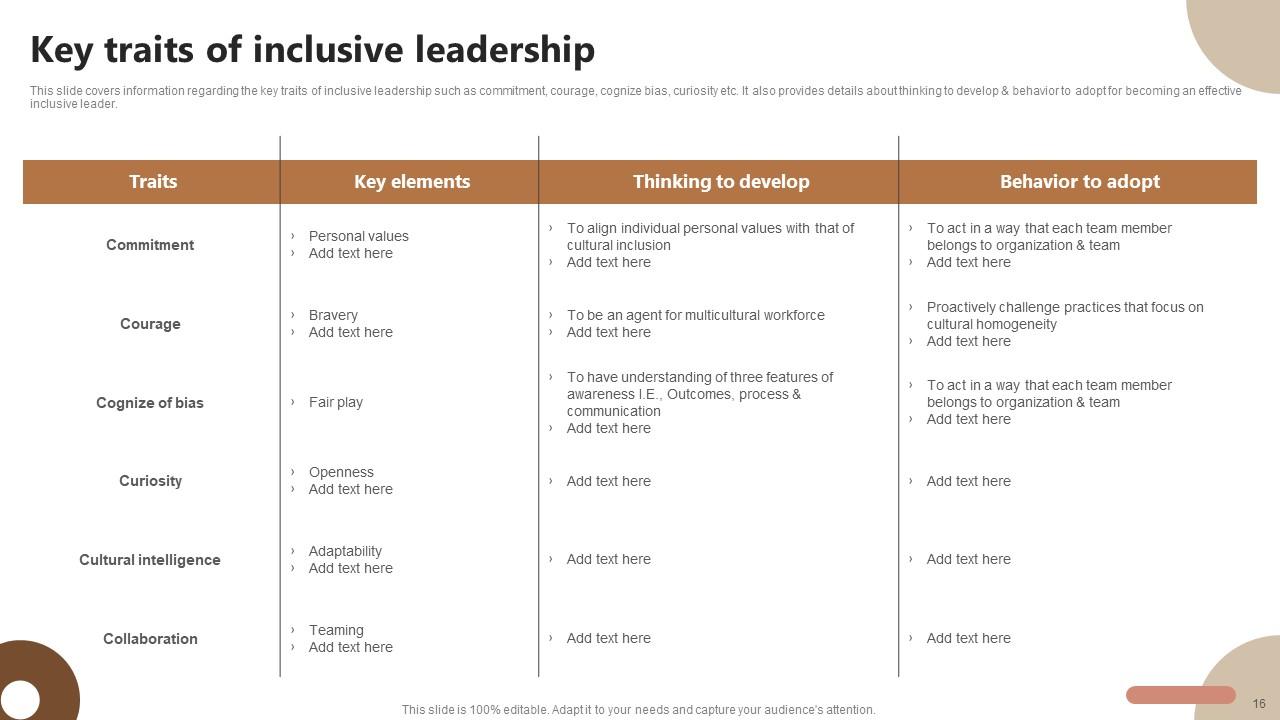
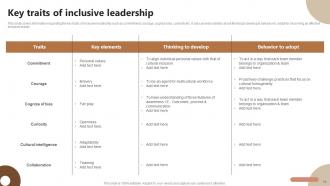
Slide 16: This slide covers information regarding the key traits of inclusive leadership.
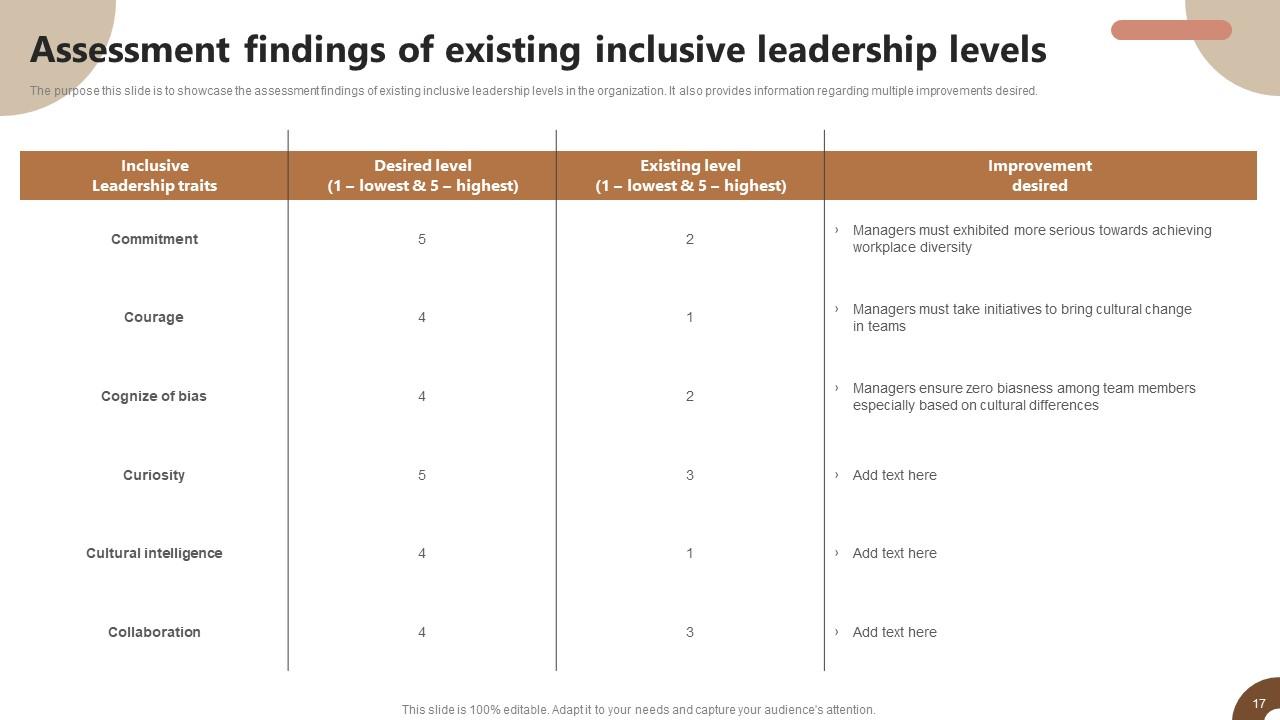
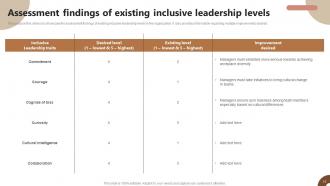
Slide 17: The purpose this slide is to showcase the assessment findings of existing inclusive leadership levels in the organization.
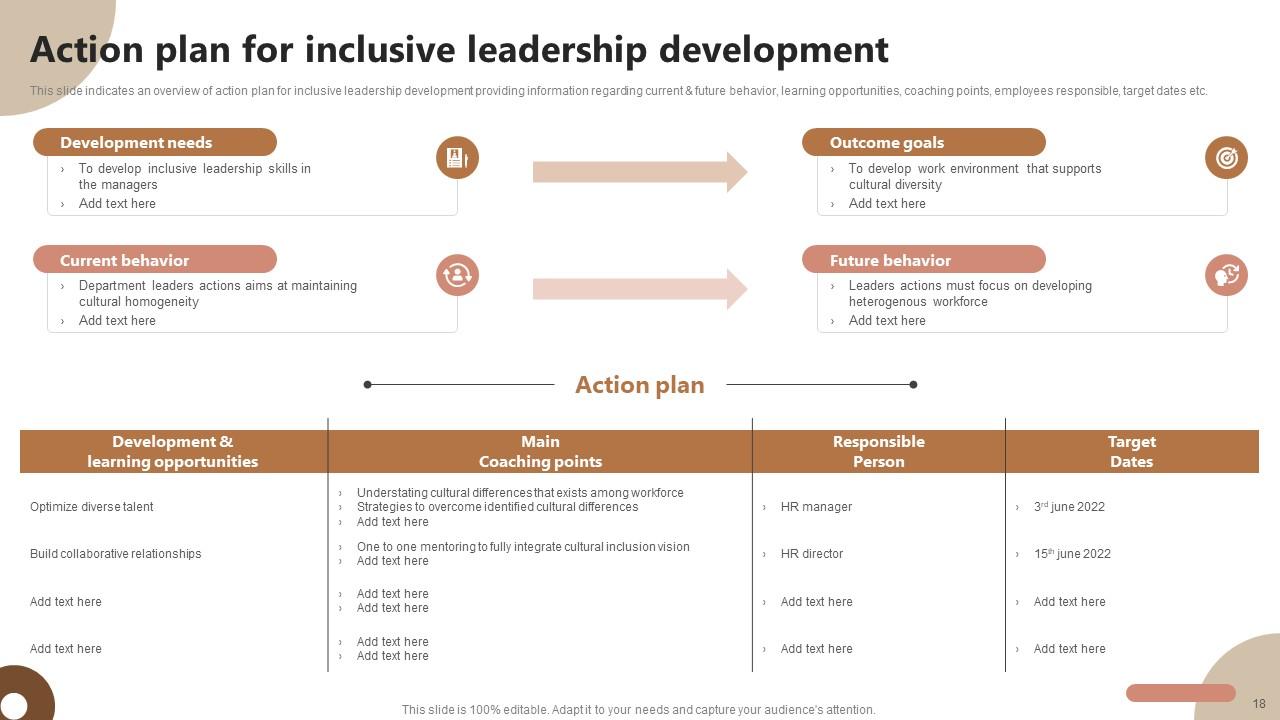
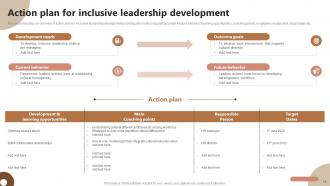
Slide 18: This slide indicates an overview of action plan for inclusive leadership development.
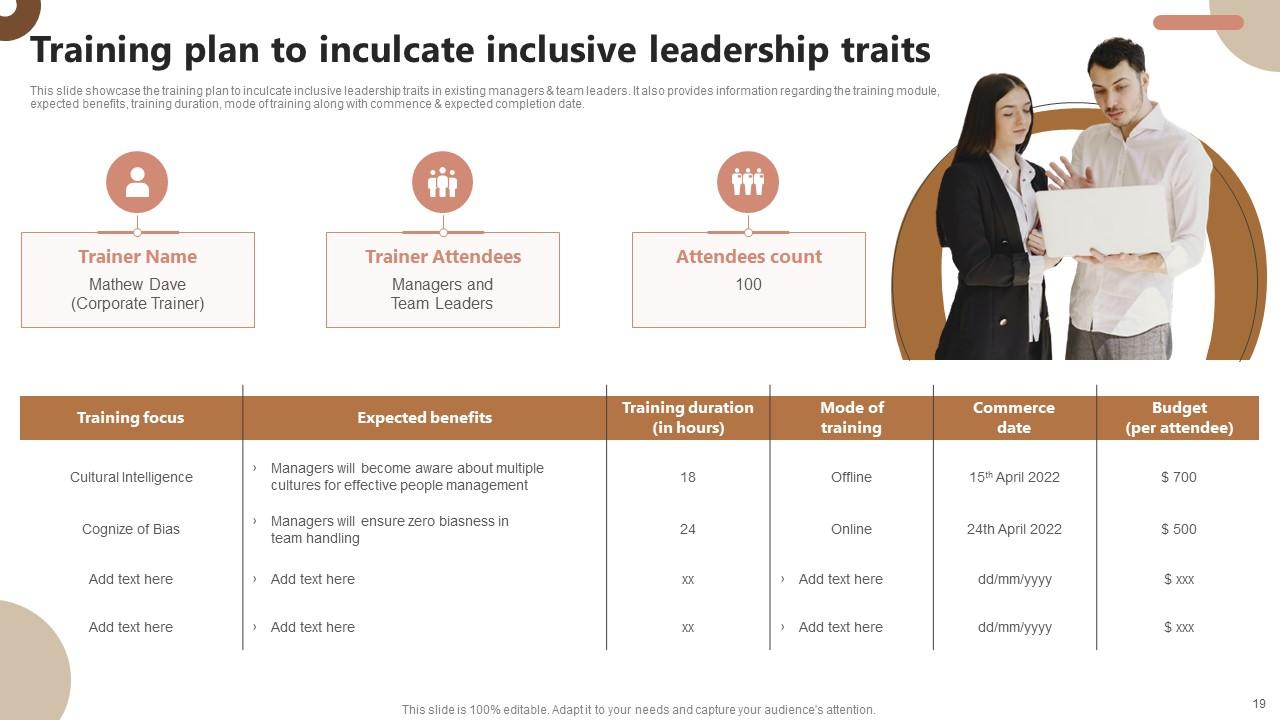
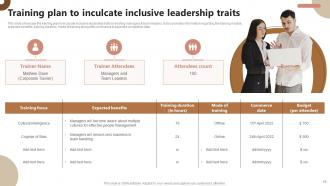
Slide 19: This slide showcase the training plan to inculcate inclusive leadership traits in existing managers & team leaders.
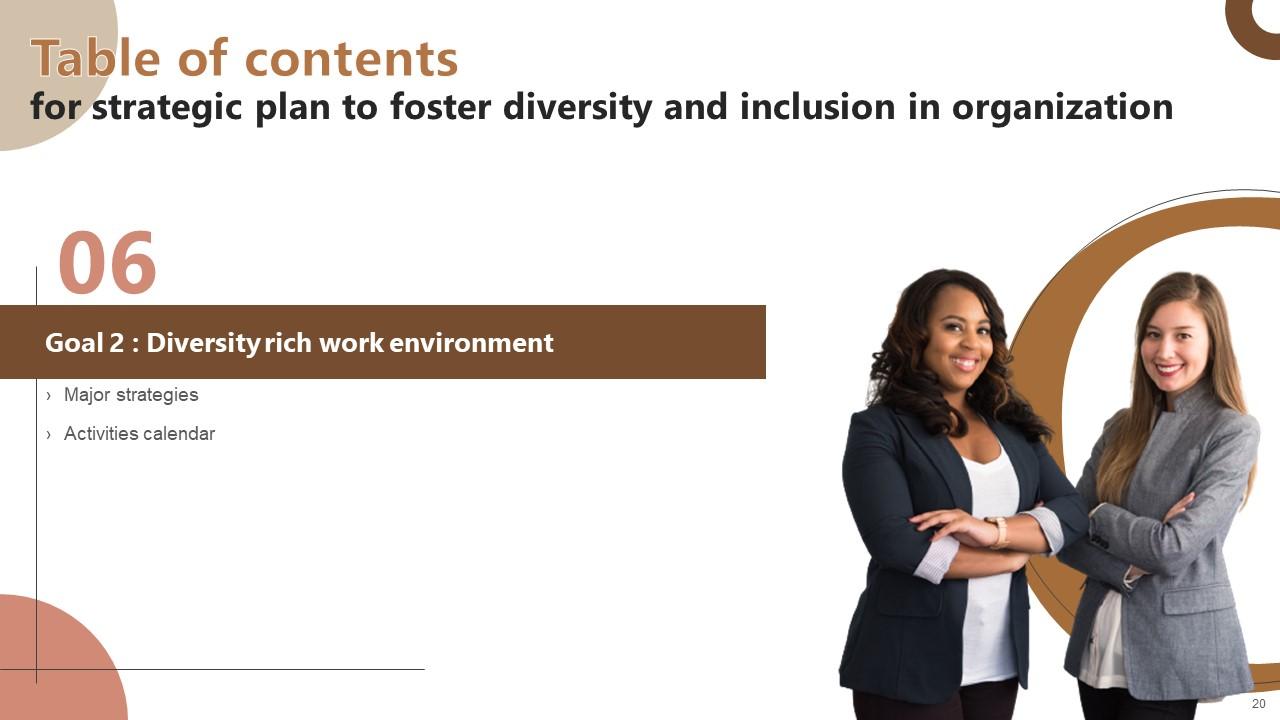
Slide 20: This slide exhibit table of content- Goal 2 : Diversity rich work environment.
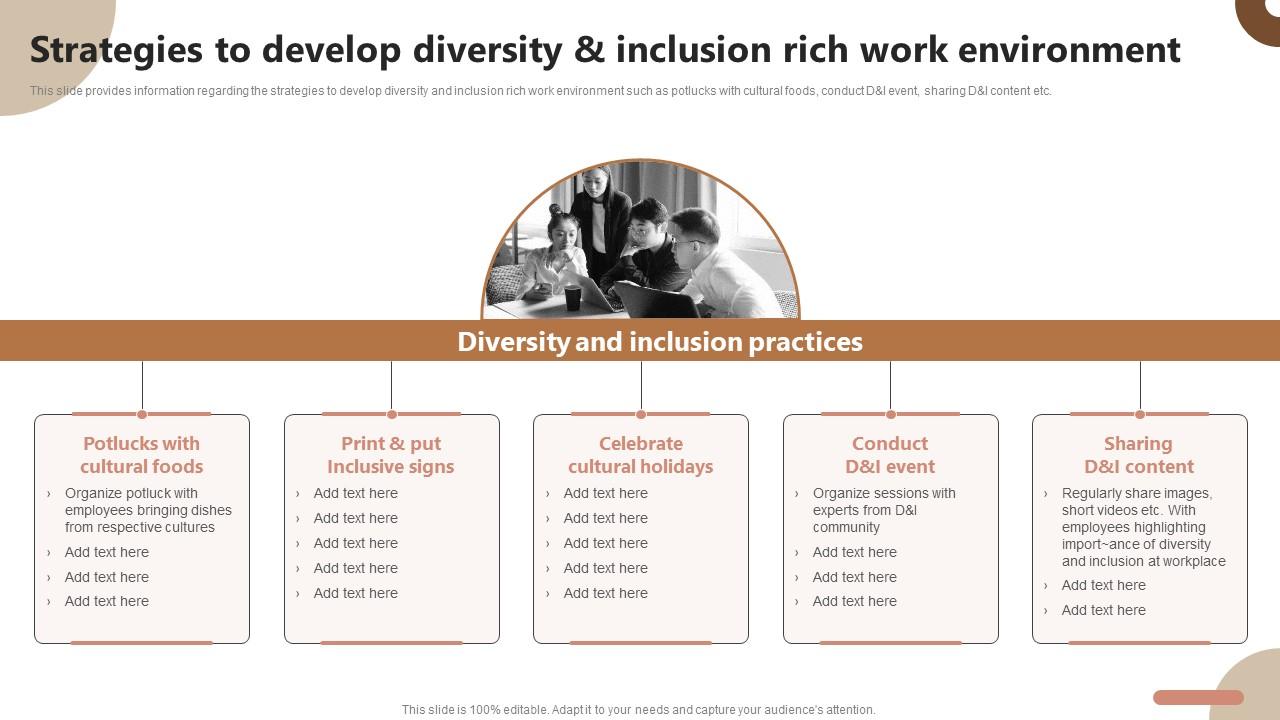
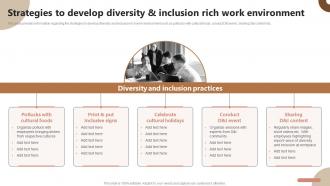
Slide 21: This slide provides information regarding the strategies to develop diversity and inclusion rich work environment.
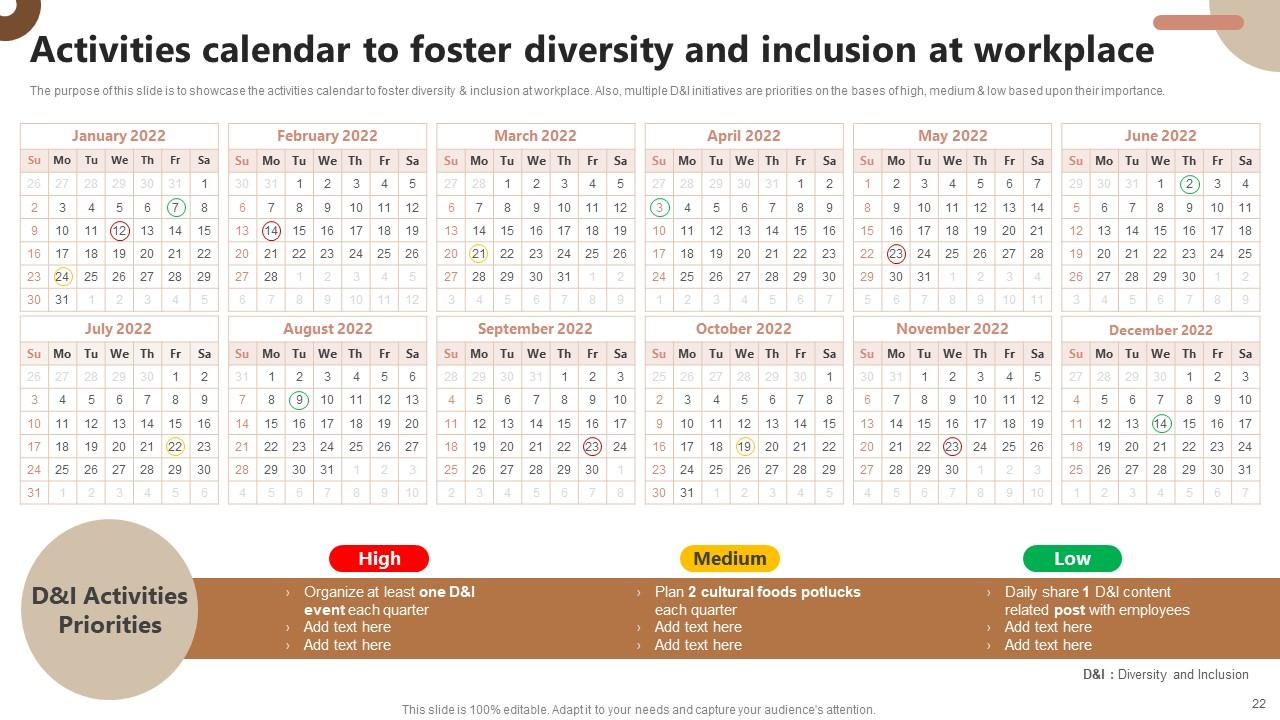
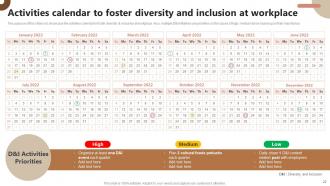
Slide 22: The purpose of this slide is to showcase the activities calendar to foster diversity & inclusion at workplace.
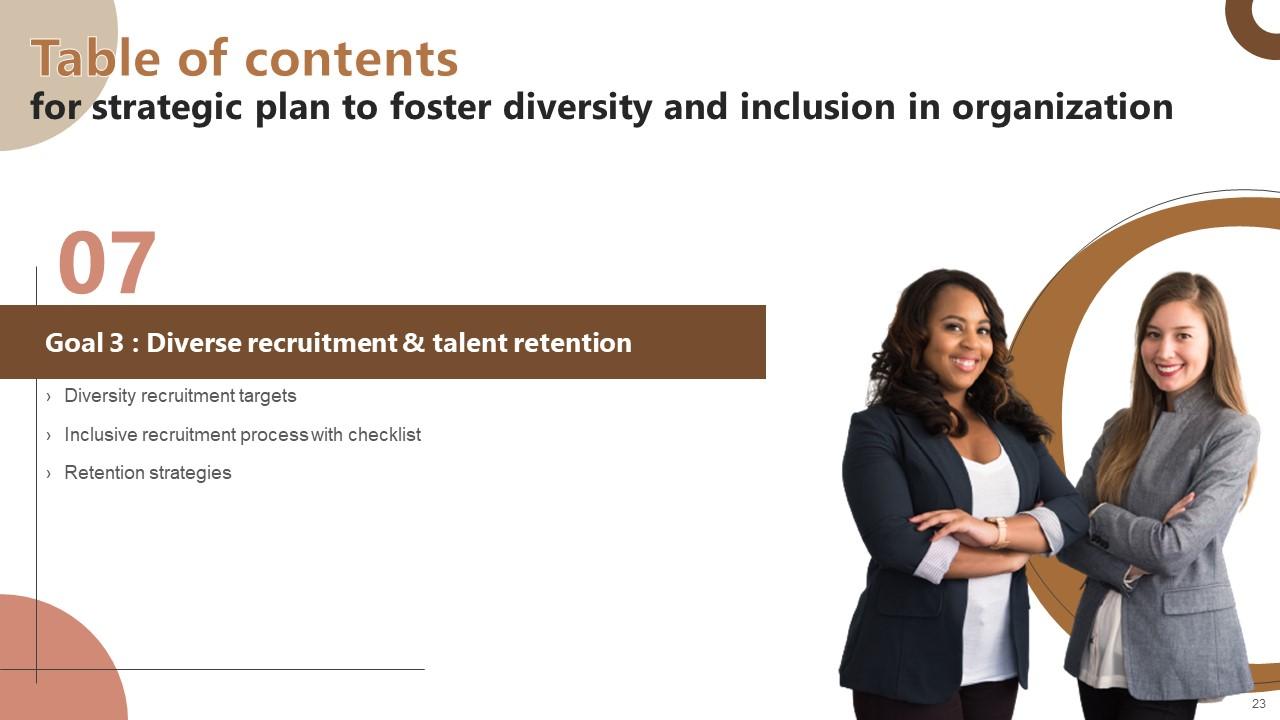
Slide 23: This slide exhibit table of content- Goal 3 : Diverse recruitment & talent retention.
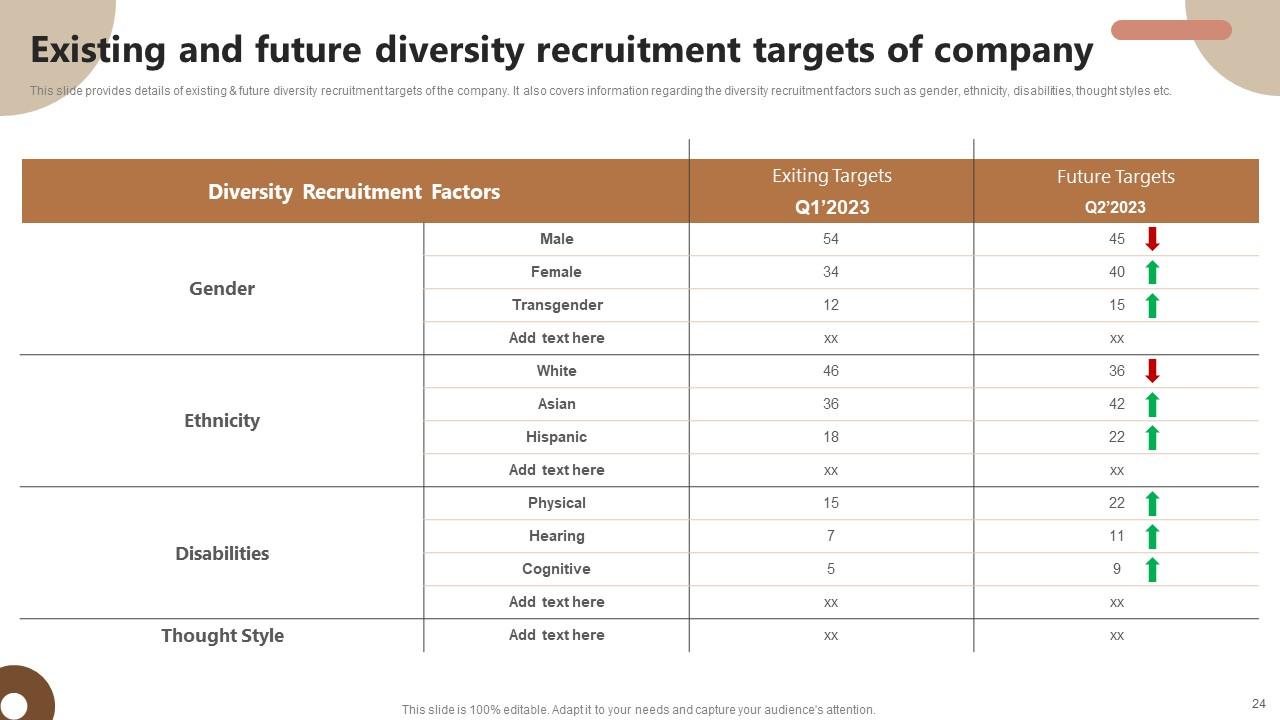
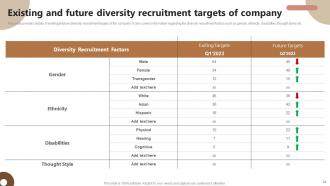
Slide 24: This slide provides details of existing & future diversity recruitment targets of the company.
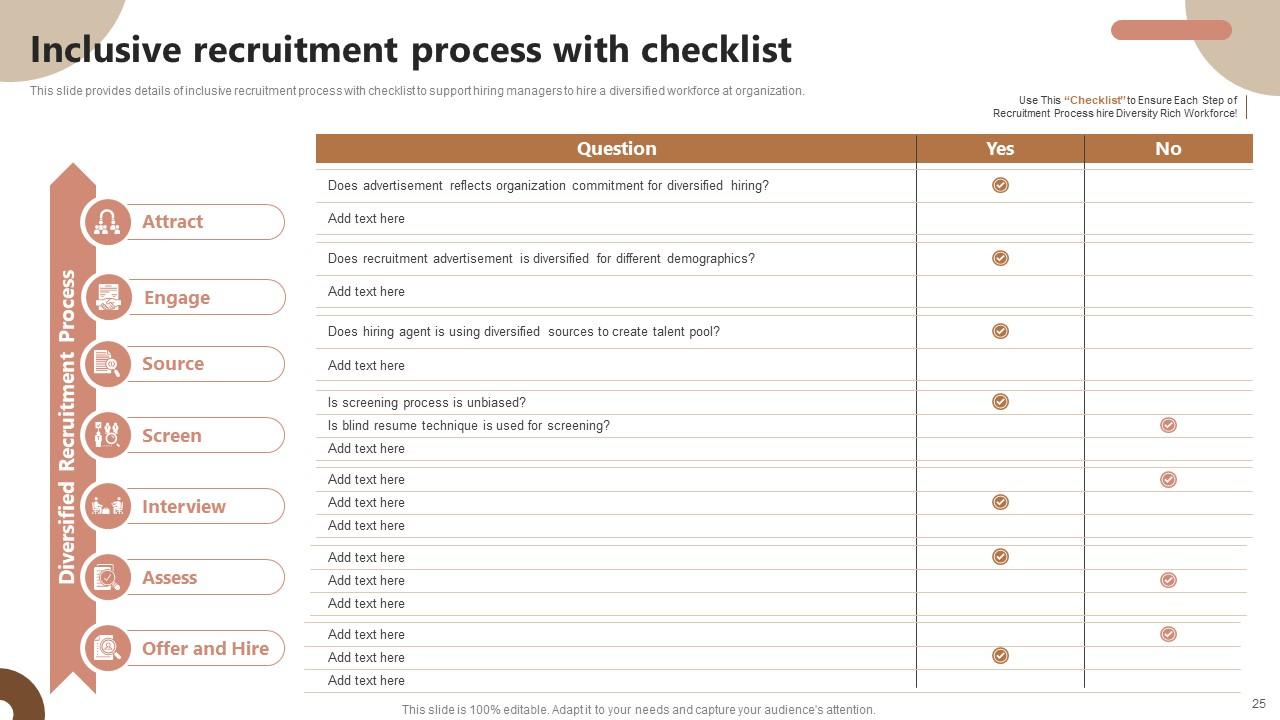
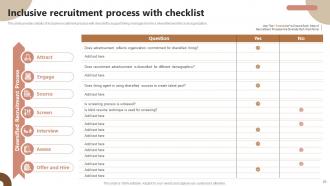
Slide 25: This slide provides details of inclusive recruitment process with checklist to support hiring managers to hire a diversified workforce at organization.
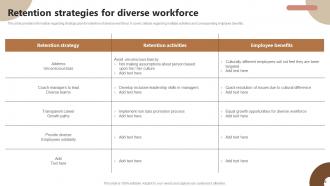
Slide 26: This slide provides information regarding strategic plan for retention of diverse workforce.
Slide 27: This slide exhibit table of content: Goal 4 : Diversity & inclusion council.
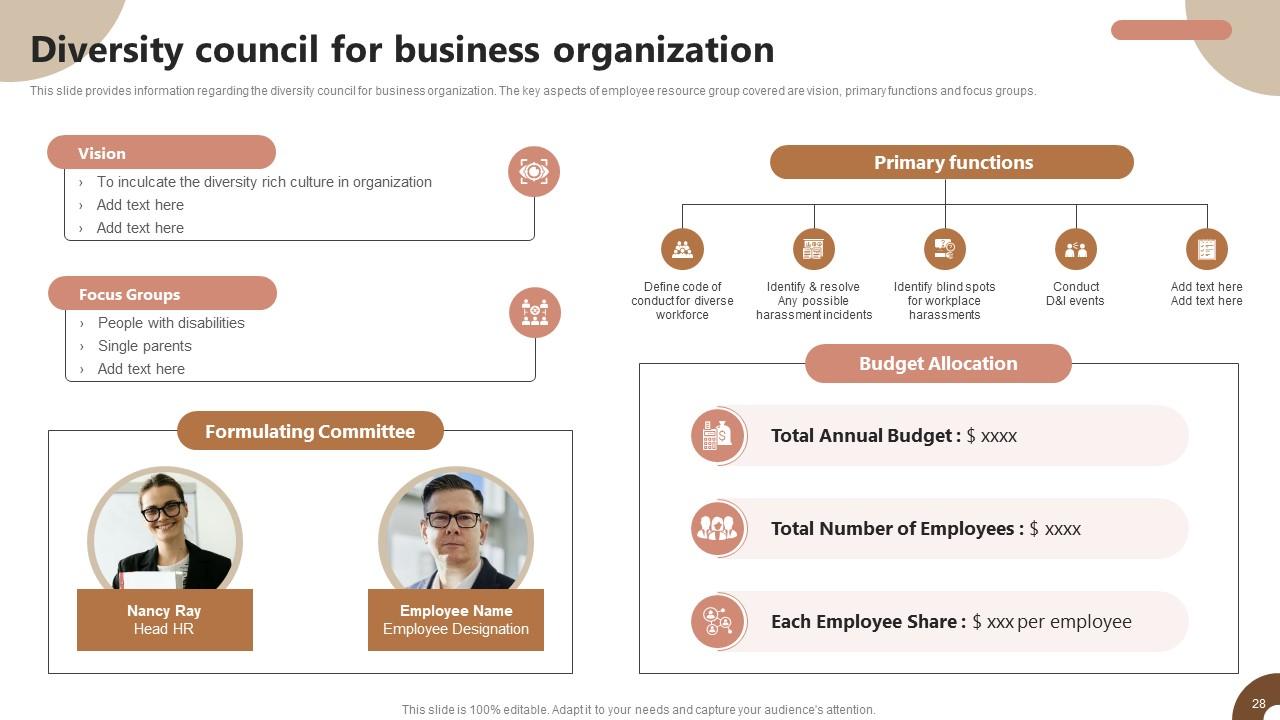
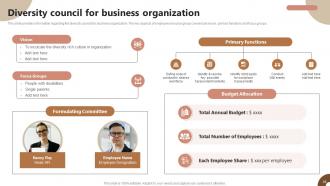
Slide 28: This slide provides information regarding the diversity council for business organization.
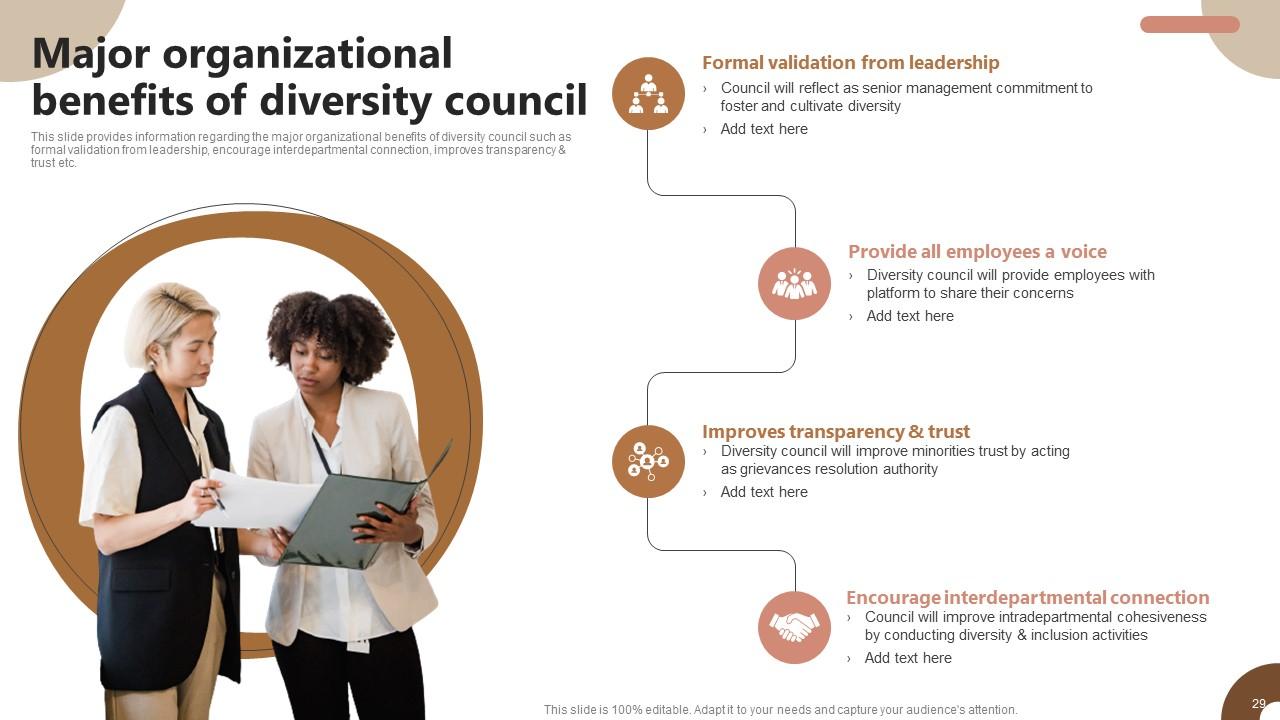
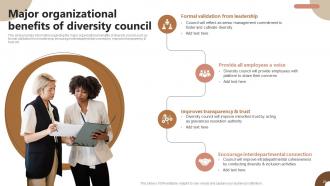
Slide 29: This slide provides information regarding the major organizational benefits of diversity council.
Slide 30: This slide exhibit table of content: Goal 5 : Policy updation & communication
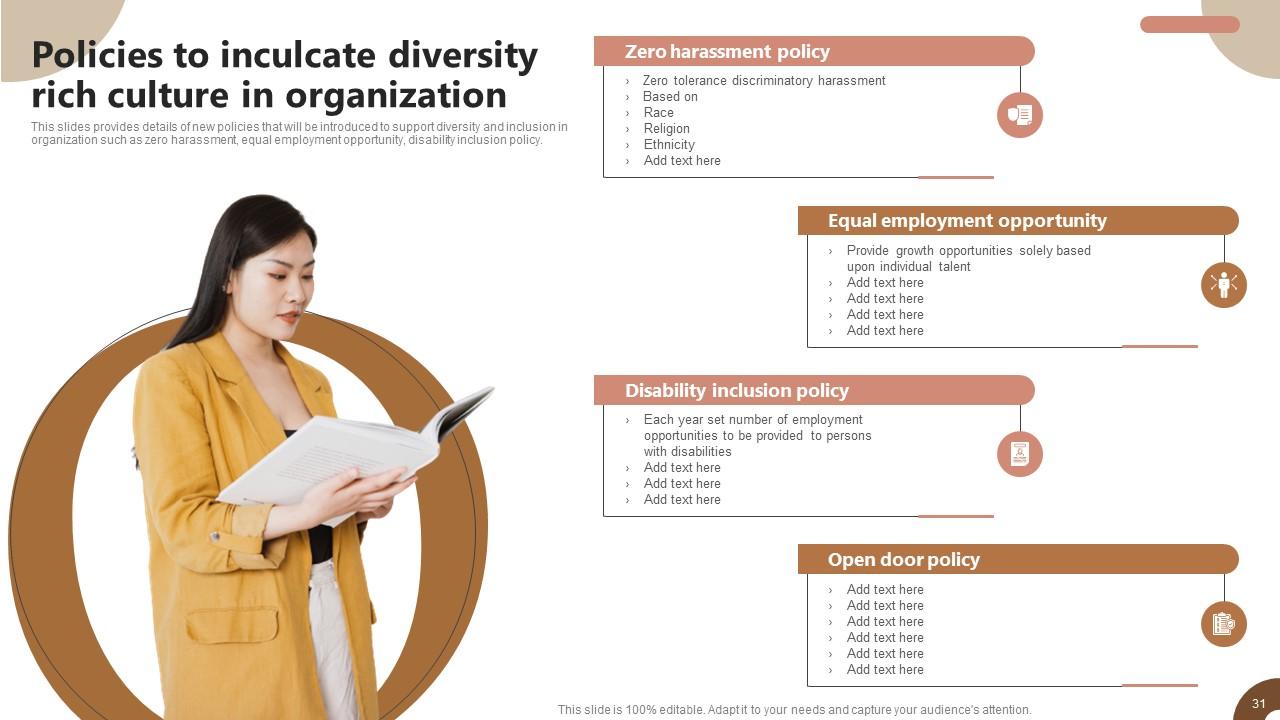
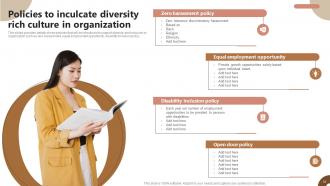
Slide 31: This slides provides details of new policies that will be introduced to support diversity and inclusion in organization.
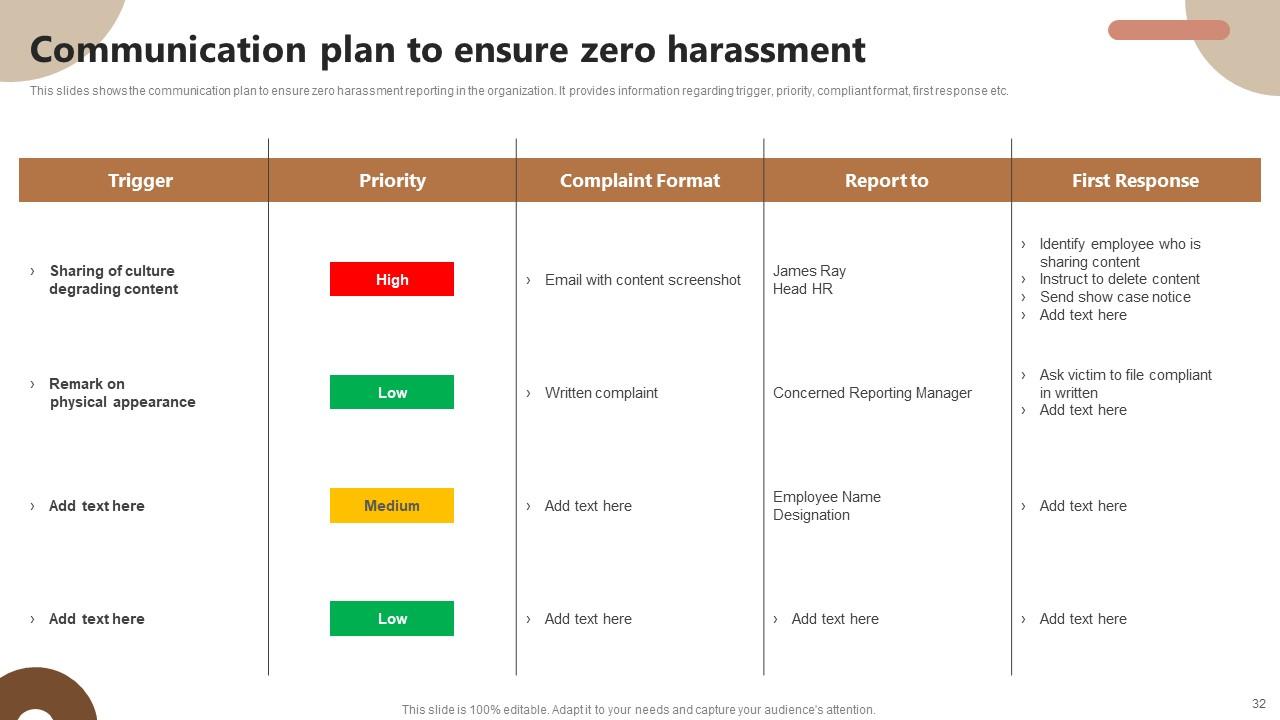
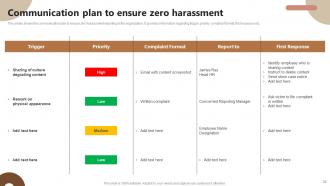
Slide 32: This slides shows the communication plan to ensure zero harassment reporting in the organization.
Slide 33: This slide exhibit table of content- Impact of diversity & inclusion program On organization.
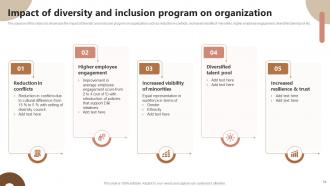
Slide 34: The purpose of this slide is to showcase the impact of diversity and inclusion program on organization.
Slide 35: This slide exhibit table of content- Dashboard.
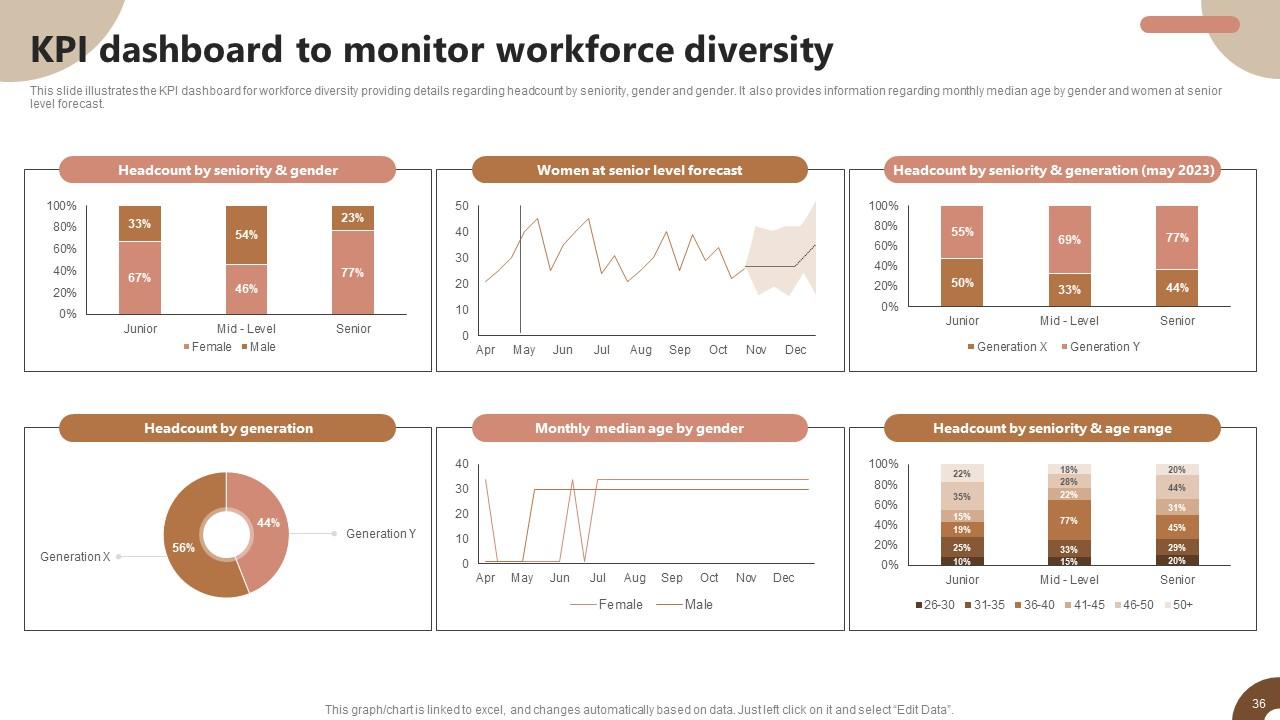
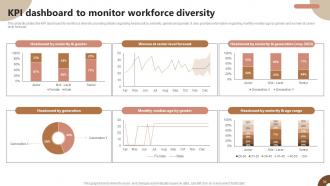
Slide 36: This slide illustrates the KPI dashboard for workforce diversity providing details regarding headcount by seniority, gender and gender.
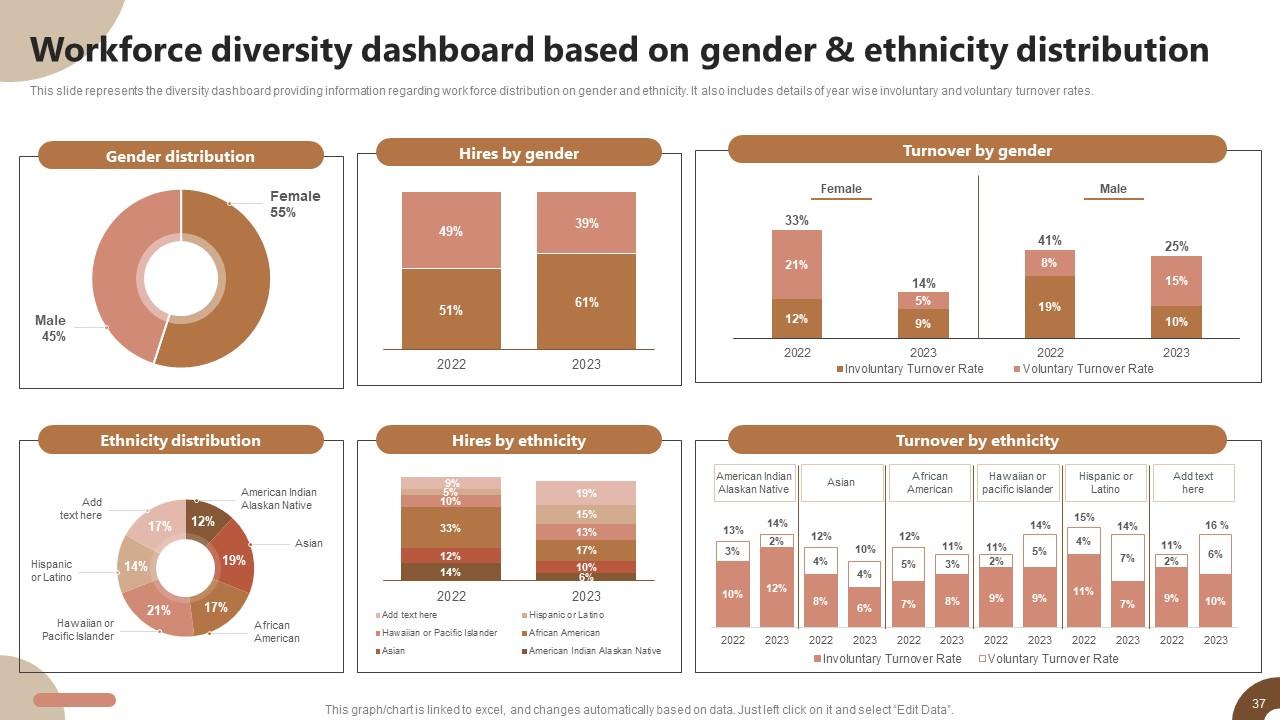
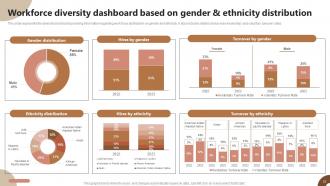
Slide 37: This slide represents the diversity dashboard providing information regarding work force distribution on gender and ethnicity.
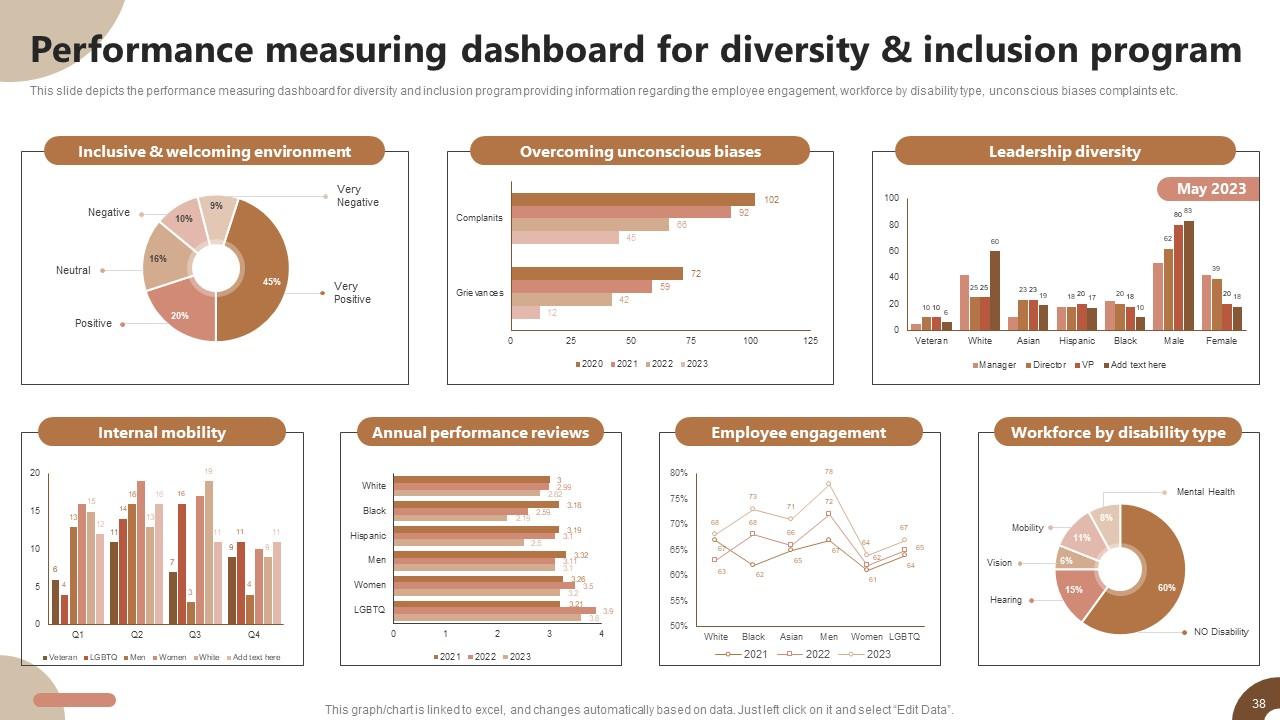
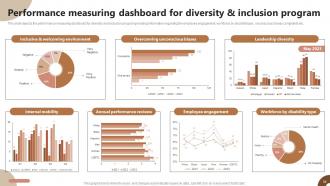
Slide 38: This slide depicts the performance measuring dashboard for diversity and inclusion program.
Slide 39: This is the icons slide.
Slide 40: This slide presents title for additional slides.
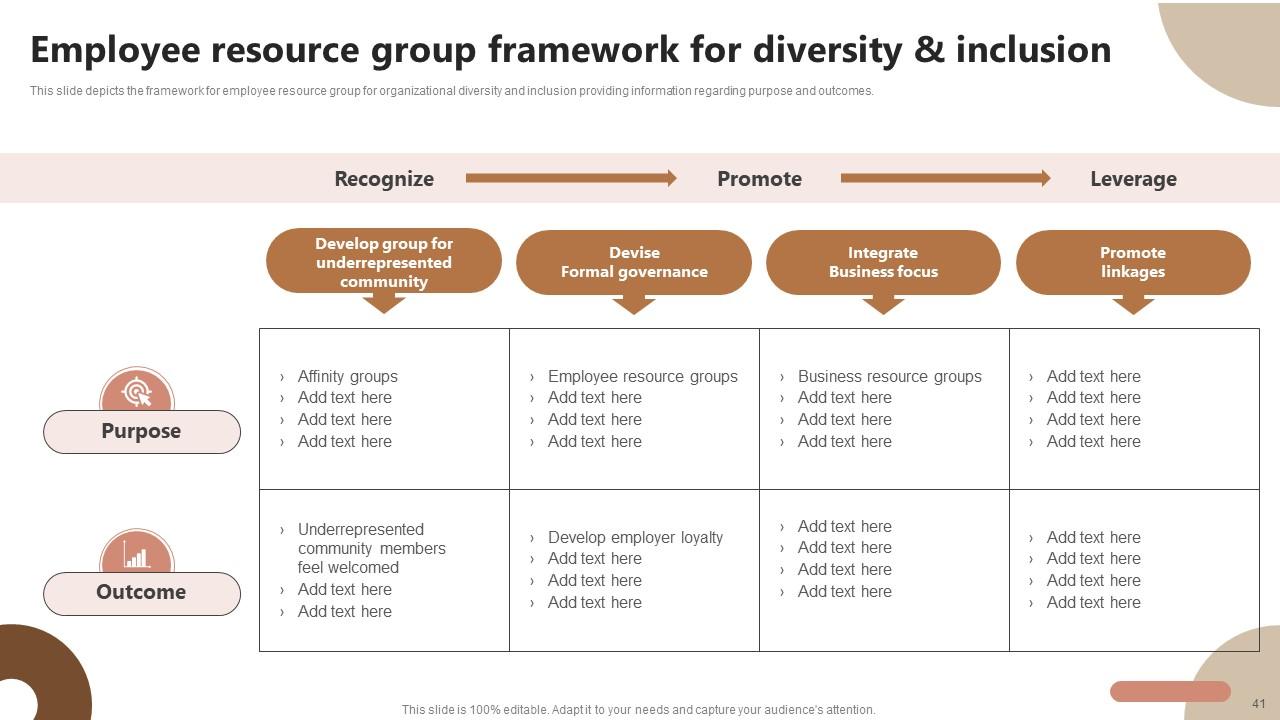
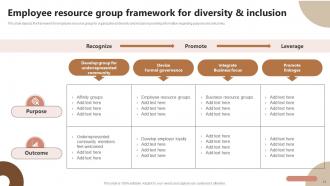
Slide 41: This slide depicts the framework for employee resource group for organizational diversity and inclusion providing information regarding purpose and outcomes.
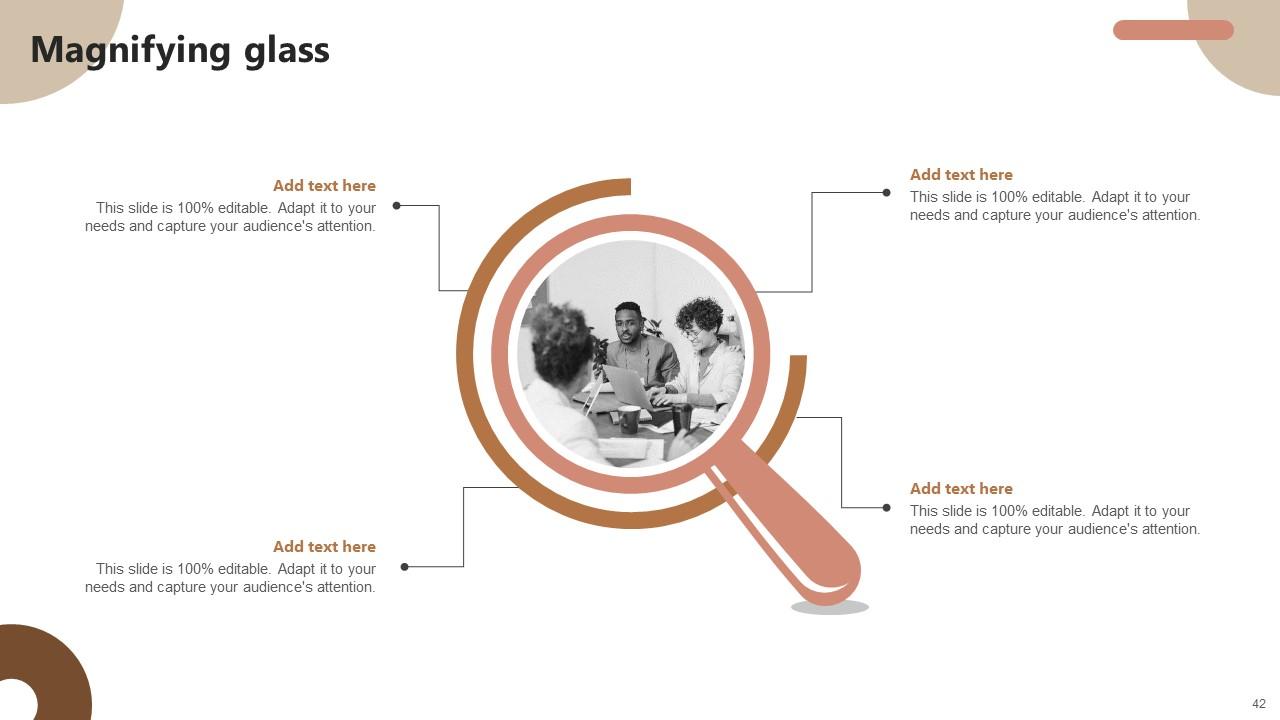
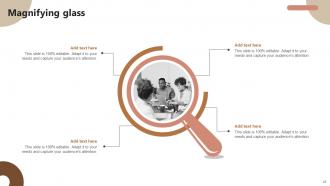
Slide 42: This slide showcase Magnifying glass.
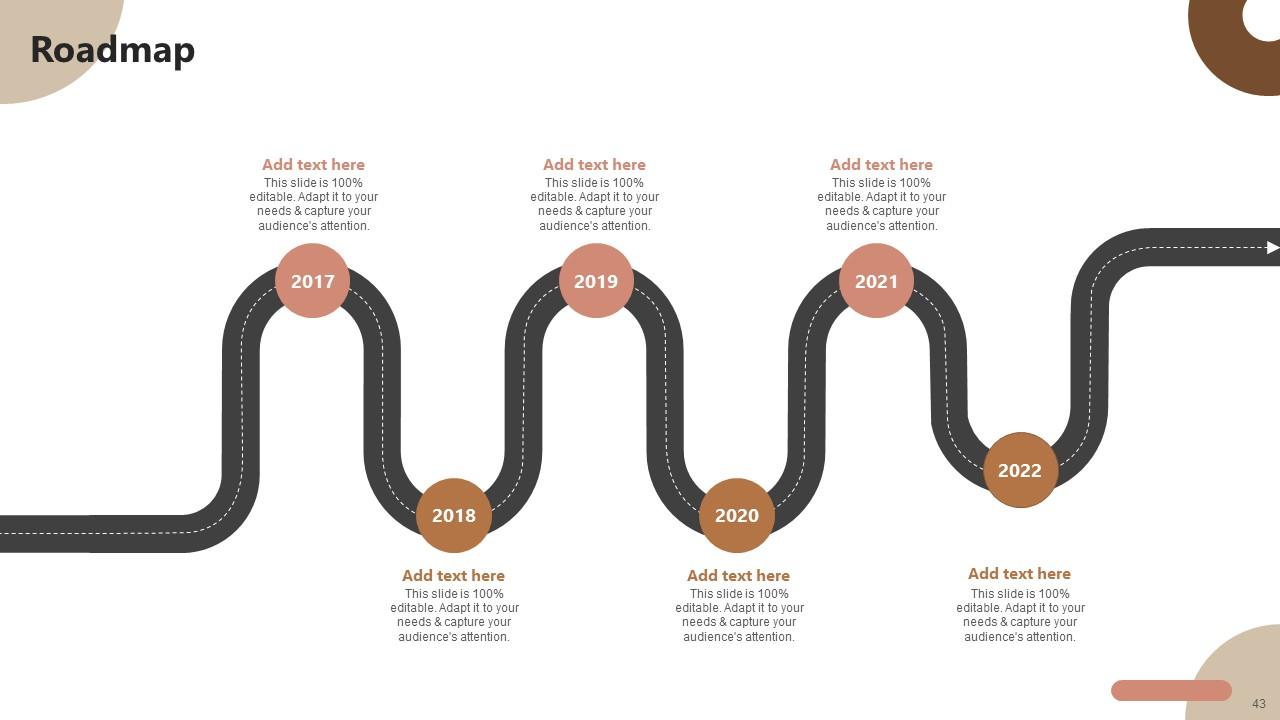
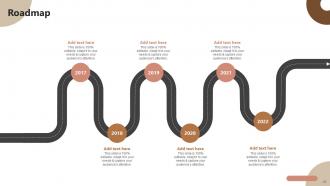
Slide 43: This slide shows roadmap of company.
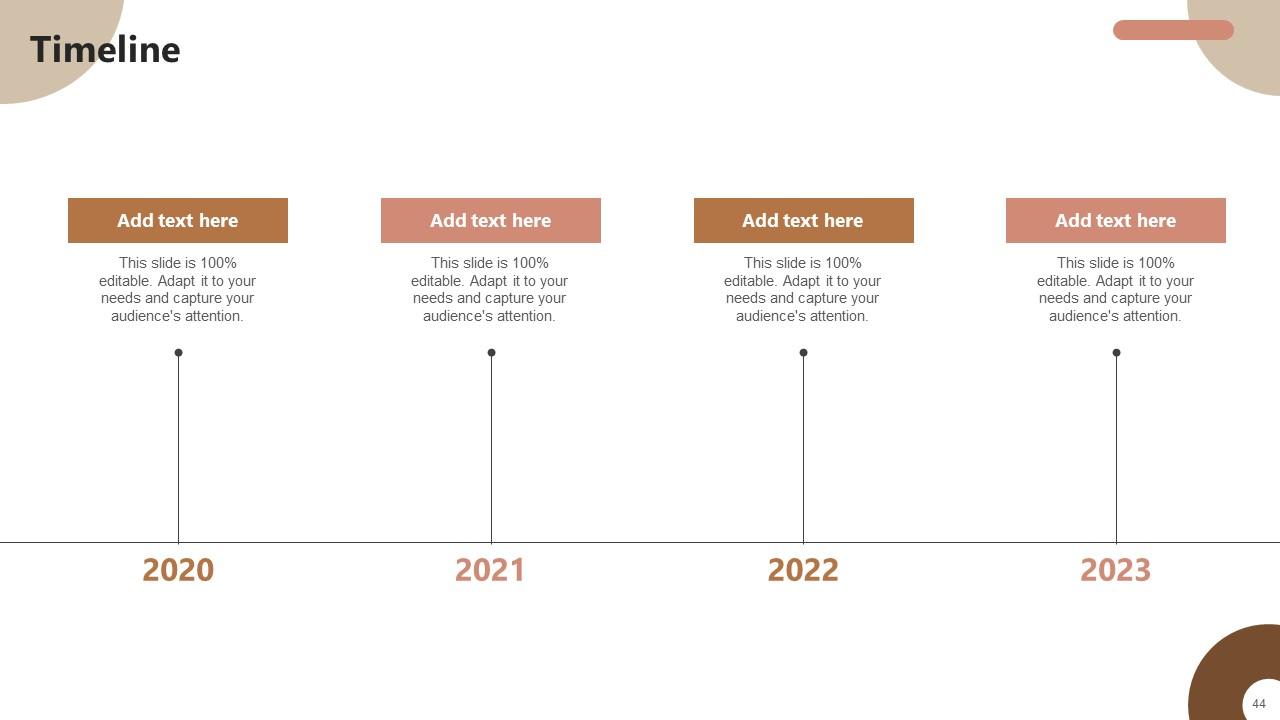
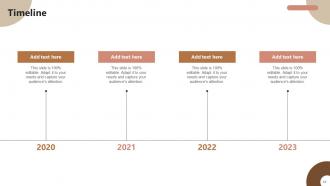
Slide 44: This slide exhibits yearly timeline of company.
Slide 45: This slide shows puzzle for displaying elements of company.
Slide 46: This slide exhibits ideas generated.
Slide 47: This slide showcase Our target.
Slide 48: This slide presents Circular.
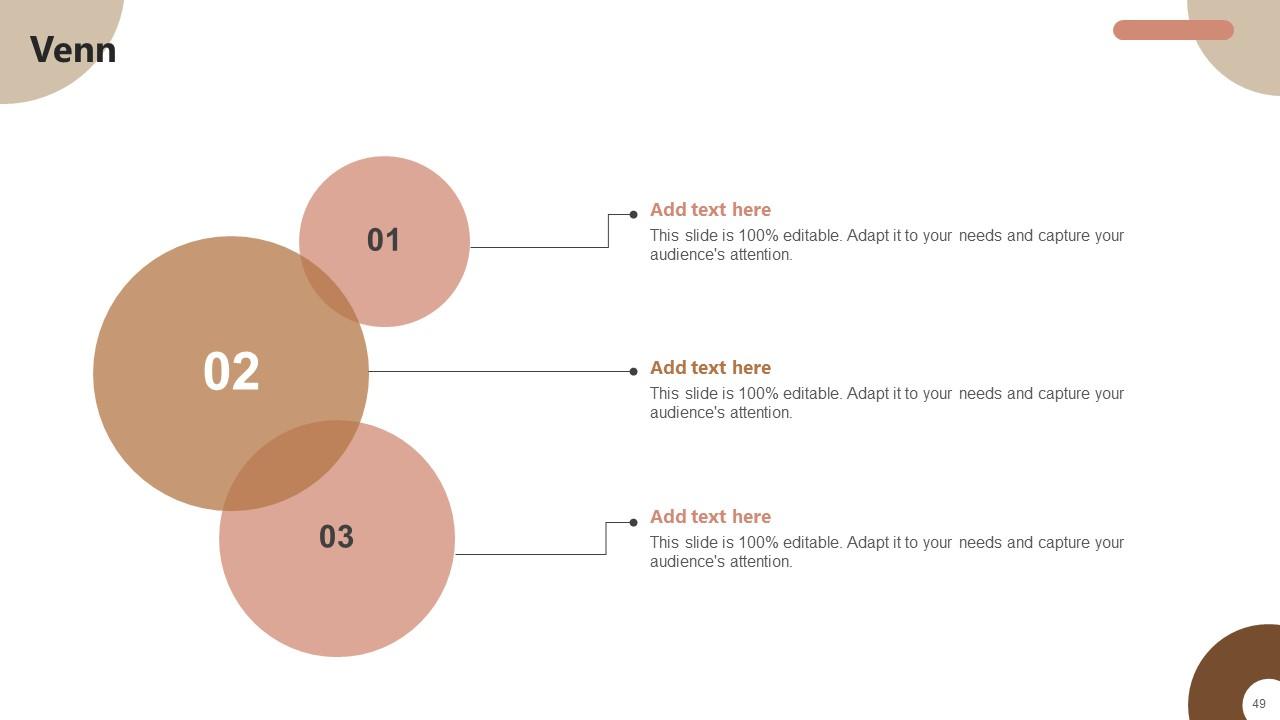
Slide 49: This slide display Venn.
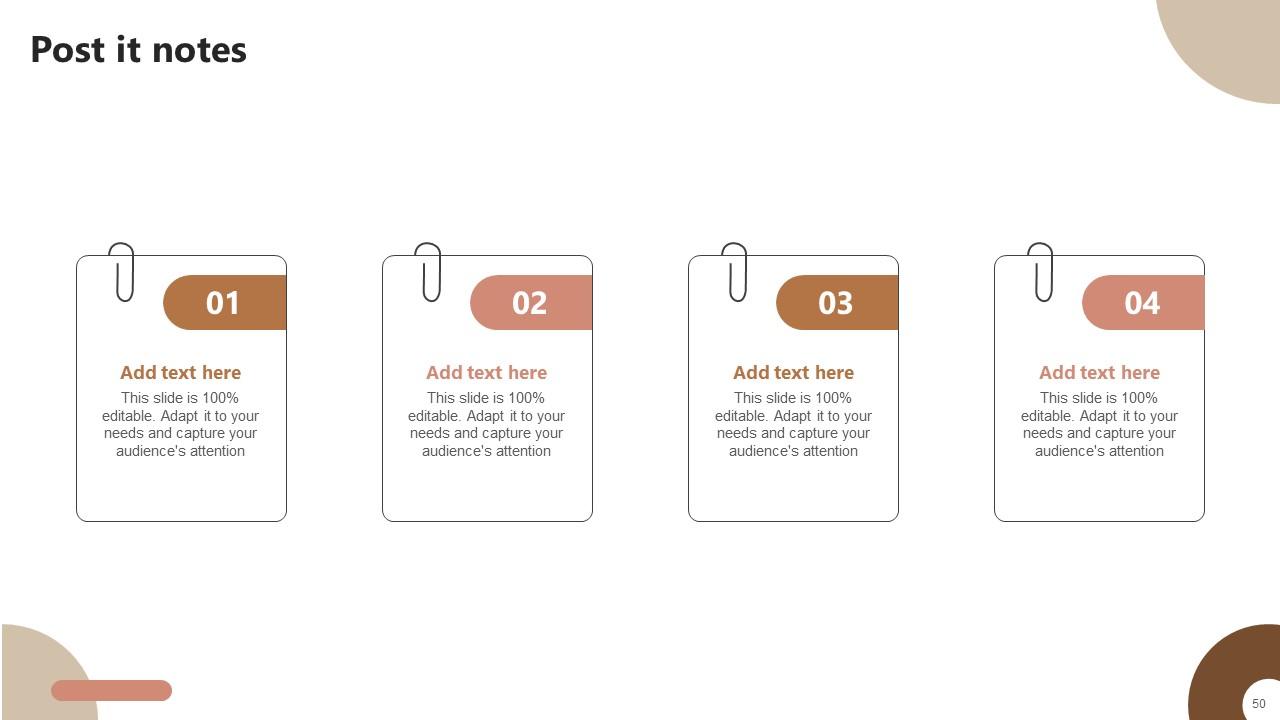
Slide 50: This slide depicts posts for past experiences of clients.
Slide 51: This is thank you slide & contains contact details of company like office address, phone no., etc.
Strategic Plan To Foster Diversity And Inclusion In Organization Powerpoint Presentation Slides with all 56 slides:
Use our Strategic Plan To Foster Diversity And Inclusion In Organization Powerpoint Presentation Slides to effectively help you save your valuable time. They are readymade to fit into any presentation structure.
-
They saved me a lot of time because they had exactly what I was looking for. Couldn’t be happier!
-
You guys are life-saver when it comes to presentations. Honestly I cannot do much without your services. Thank you!!!
