

Strawman Project Plan Assurance And Control Initiatives For Product Improvement




Try Before you Buy Download Free Sample Product
 Impress Your
 Audience
 100%
100% Editable
 Save Hours
 of Time


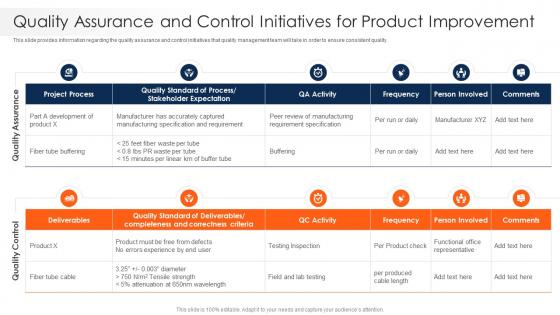
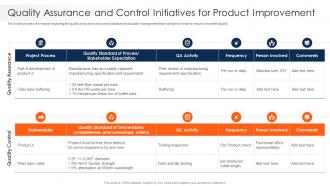
This slide provides information regarding the quality assurance and control initiatives that quality management team will take in order to ensure consistent quality.
People who downloaded this PowerPoint presentation also viewed the following :
Strawman Project Plan Assurance And Control Initiatives For Product Improvement with all 6 slides:
Use our Strawman Project Plan Assurance And Control Initiatives For Product Improvement to effectively help you save your valuable time. They are readymade to fit into any presentation structure.





FAQs for Strawman Project Plan Assurance And Control Initiatives
Honestly, I'd start with retention and churn rates - they don't lie about whether people actually like what you're building. Daily/monthly active users are solid too, plus how much people are using new features you roll out. Customer satisfaction scores give you the feelings side of things, which matters more than you'd think. Support tickets dropping usually means you're fixing real pain points. Oh, and revenue per user keeps the business folks happy. Don't try tracking everything though - pick like 3 or 4 to start or you'll drive yourself crazy with data overload.
Build feedback right into every dev phase - get user input early, test concepts with betas, keep gathering insights after launch. Monthly user interviews are gold. Also set up in-app feedback widgets and dig through support tickets regularly. Here's the thing though - you've gotta actually DO something with what people tell you (most teams just collect and ignore). Create some way to sort and rank all that feedback, then feed it back into your roadmap decisions. Oh, and always circle back to show customers how their suggestions became real features. That last part builds serious loyalty.
Look, competitive analysis is basically peeking at what everyone else is doing so you don't miss obvious opportunities. Check out their user reviews - that's where the real dirt is. You'll spot gaps in your own product pretty quick. Also watch their pricing and features they're pushing. Honestly, I'd set up quarterly reviews because things move fast these days. It's like having a cheat sheet for where users might bail on you for something better. The whole thing helps you figure out what people actually expect now versus six months ago.
Agile's probably your best starting point - those short sprints let you test stuff quickly and change direction when things aren't clicking. Lean is solid too because it cuts through all the fluff and focuses on what customers actually care about (not our brilliant assumptions lol). Design Thinking's worth mixing in if you're dealing with tricky UX issues. Most teams I know don't stick to just one approach though. They'll run Agile sprints but throw in Lean thinking to make sure they're not just building features fast, but building the right ones. Start simple with some basic sprint cycles and see how it feels.
Dude, you absolutely need different teams talking to each other. Engineering knows what's technically possible, marketing gets the customer headaches, and sales hears the real drama from clients. When they sync up regularly instead of working separately, you catch problems before they blow up your budget. Honestly, some of the worst product disasters I've seen could've been avoided with basic communication. Try doing quick 30-minute check-ins each week during your next project. It'll save you from those awful "wait, nobody mentioned this would break everything" conversations right before launch. Trust me on this one.
Jira or Linear are solid for tracking improvements - I've used both. For seeing what actually needs fixing, check out Hotjar or Fullstory since they show real user behavior. Figma's obviously great for design stuff. Honestly, the Slack integrations with these tools make everything so much smoother for team updates. Analytics-wise, go with Mixpanel or Amplitude to see if your changes actually worked. The trick is connecting everything so data flows between tools. I'd say pick one main tracking tool first and build from there - saves you from tool chaos later.
Honestly, dig into your usage metrics and see where people are bailing out - that's your biggest clue right there. Heat maps are crazy useful for this stuff, plus A/B testing shows you what's actually working vs what you think is working. Don't sleep on support tickets either, they're basically a goldmine of recurring problems nobody talks about. User feedback combined with hard conversion data gives you the real story. Oh and those drop-off points in your funnels? Start there. Fix the biggest friction spots first instead of getting distracted by shiny new features nobody asked for.
Honestly, UX testing shows you how people *actually* use your stuff - which is probably way different than you think. Users get stuck in the weirdest places! You'll spot issues you totally missed and see which features just aren't clicking. The data helps you figure out what to fix first for better conversions and happier users. I always tell people to start simple - even basic user interviews work. Oh, and you can test ideas before building the whole thing out. Seriously saves time. Even small tests give you those "aha!" moments that change everything.
Make a simple matrix plotting user impact vs business value - that's your starting point. High impact stuff obviously gets priority, but here's the thing: don't just rely on what your team thinks users want. Actually dig into support tickets, run quick surveys, check your analytics to see where people bail out. Development effort matters too since sometimes tiny fixes create massive wins. Oh and one more thing - resist the urge to tackle everything at once. Pick 2-3 clear winners and focus there. Your team will thank you later.
Honestly, the compounding effect is where the real magic happens. You make these tiny 1% improvements week after week, and they start building on each other like compound interest. Each small win might feel pointless at first, but give it a few months and suddenly your users are way happier, retention's up, performance feels snappy. Way better than waiting around for that one "perfect" feature that'll supposedly change everything. I'd just pick one small thing to improve each week and track it. You'll be shocked how fast it adds up - like, genuinely surprised.
Ugh, so many ways to mess this up. Don't talk to users first and you'll build stuff nobody wants - watched whole teams waste months like that. Also resist the urge to fix everything at once, it never works. Pick one thing, test small changes, then scale up. The "build first, measure later" thing is deadly too. Set your success metrics upfront or you're flying blind. Oh and here's something people always skip - actually analyzing what happened after launch. I get it, the next feature seems way more exciting, but that's literally where you learn what worked.
Honestly, you've gotta make improvement feel normal, not like some special project. Celebrate the small wins AND the failures - they're both teaching you stuff. Set up regular times for teams to share what they learned from user feedback or experiments that totally bombed. Most companies I've seen treat this like a quarterly thing instead of building it into daily habits, which is why it never sticks. Let people test ideas without getting approval from half the company first. Oh, and give them actual time for it - like 20% of their week. Sounds like a lot but it works when people actually use it.
Honestly, your brand reputation matters more than you'd think when launching product improvements. People who already trust you? They'll actually notice the upgrades and give you credit. But if your brand sucks, even amazing improvements get ignored - it's like they think "yeah right, probably still garbage." Trust me, I've seen this happen so many times. Strong brands get away with mediocre updates while great products from weak brands get dismissed. Super unfair but that's just how people's brains work. You gotta build that trust while you're improving your product, not after.
Just do A/B testing - split your traffic between the old version and your new feature. Figure out your success metrics first though (conversion rates, engagement, whatever actually matters). Here's the annoying part: you've gotta wait long enough for real statistical significance. I know it's tempting to call it early when things look promising! Start small with like 10% of users, then bump it up if it's working. Definitely track the numbers AND what people are actually saying about it. Oh, and have your rollback ready because things can go sideways fast.
Think of it this way - innovation stops your product from becoming that dusty thing nobody uses anymore. Customer needs shift constantly, tech advances, competitors get smarter. You've gotta stay ahead or get left behind. It's how you discover new features that actually matter, fix what's broken, and sometimes totally rethink your approach. Honestly, the best innovations usually come from questioning stuff you've always assumed was fine. Get feedback that makes you uncomfortable - that's where the good ideas hide. Short updates are cool, but breakthrough improvements? Those change everything for users.
-
Loved the templates on SlideTeam, I believe I have found the go to place for my presentation needs!
-
Qualitative and comprehensive slides.