

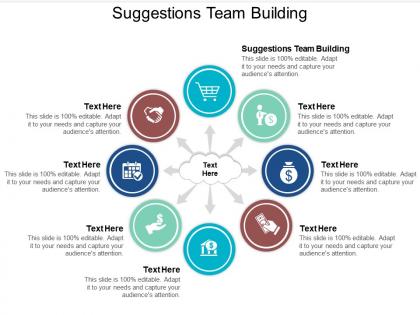
Suggestions team building ppt powerpoint presentation ideas graphics example cpb




Try Before you Buy Download Free Sample Product
 Impress Your
 Audience
 100%
100% Editable
 Save Hours
 of Time


Our Suggestions Team Building Ppt Powerpoint Presentation Ideas Graphics Example Cpb get the forces of good into alignment. Get them fighting against evil.
People who downloaded this PowerPoint presentation also viewed the following :
Suggestions team building ppt powerpoint presentation ideas graphics example cpb with all 5 slides:
Encourage better behavior with our Suggestions Team Building Ppt Powerpoint Presentation Ideas Graphics Example Cpb. Get everyone to act correctly.

FAQs for Suggestions team building ppt powerpoint presentation ideas
Trust and communication are huge. Get your team hanging out beyond just work meetings - team lunches work well, or even casual coffee chats. Those cheesy trust exercises are awful tbh, but real bonding actually helps. Everyone needs to understand their role and how it connects to the big picture. Oh, and feedback has to happen regularly or people just drift. I'd start small though - maybe a weekly Slack channel where people share wins and roadblocks? Short team coffee sessions work too. Build from there once you see what clicks.
Honestly, games are way better than those cringy icebreakers nobody wants to do. People actually start talking and joking around when they're focused on something fun instead of forced conversation. You'll be surprised - like that super quiet person from accounting might turn out to be ridiculously competitive! Escape rooms work great, or team trivia nights. The trick is picking stuff where everyone has to work together rather than just trying to beat each other. Those shared moments and inside jokes? They totally stick around back at the office.
Honestly, without good communication you're just crossing your fingers that people will magically work well together. The teams that actually click? They share ideas openly and give real feedback - not the sugar-coated stuff. I've watched so many team-building things crash because everyone's holding back or not really hearing each other. You've gotta make people feel safe to speak up first. Then worry about setting clear expectations. Model how you want people to talk to each other, and actually give everyone space to contribute in your meetings. It's pretty basic but most people skip this step.
Honestly, virtual escape rooms are pretty fun if your team's into that sort of thing. Coffee chats work great too - just pair people up for quick 15-minute calls, nothing formal. Online game nights get everyone actually talking instead of sitting there muted like zombies. Oh, and collaborative playlists are surprisingly good for bonding. For teams across different time zones, try async stuff like photo challenges or recipe swaps. The trick is making it interactive, not just another meeting everyone dreads. I'd start small and see what clicks with your group first.
Honestly, start with employee engagement scores and team satisfaction surveys - those'll tell you the most. Retention rates are probably your best indicator though, because let's be real, people bail when teams suck. I'd also track how often people actually choose to collaborate on stuff versus being forced to. Productivity metrics help, plus how fast conflicts get resolved. Oh, and communication quality - like, are people actually talking or just going through the motions? Here's the thing: measure before you do any team building, then check again in 3-6 months. Don't go overboard trying to track everything. Pick maybe 2-3 things that matter most for what you're trying to fix.
Honestly, diversity totally changes team building - mostly in good ways, but you gotta plan for it. Different backgrounds mean way better brainstorming and problem-solving. But here's the thing - some people might feel left out if activities don't work for everyone's communication style or physical abilities. I've watched team exercises completely bomb when they assumed everyone loves public speaking or obstacle courses, which... yeah, no. Pick stuff that plays to different strengths instead. Your facilitator needs to actually get your team's vibe and roll with it when something isn't clicking.
Your leadership approach totally affects how well your team clicks. I've watched autocratic managers completely tank team chemistry - people feel micromanaged and never build real trust with each other. Democratic styles work way better since everyone gets to actually communicate and make decisions together. Oh, and transformational leaders? They're probably the best at this because they get people excited about the same goals, which brings everyone closer naturally. You've gotta read your team though and switch up your style based on what they actually need to work well together.
Honestly, you don't need to spend a ton on team building stuff. Potluck lunches work great - everyone brings food and tells the story behind their dish. Walking meetings at a nearby park are pretty nice too. My team did a volunteer day at the food bank once and it was actually really bonding (plus you feel good about it). Free online escape rooms or trivia nights can get competitive in a fun way. Even basic coffee chats help. Oh, and those "lunch and learn" things where someone teaches the group something random. Just pick one and try it next month - you'd be amazed how much these little things matter.
Quarterly's a solid starting point, but honestly? Your team's vibe matters way more than some magic number. Remote teams definitely need more frequent check-ins than office folks. When you're dealing with big changes or new hires, I'd say monthly or even every two weeks makes sense. Here's the thing though - consistency beats going all-out once a year. Those massive retreats are fun but regular small stuff works better. Start quarterly and see how it goes. If people seem disconnected or collaboration feels off, ramp it up. You'll figure out what clicks.
Oh man, so many options! Zoom or Teams work great for face-to-face stuff. Kahoot's perfect for trivia nights - super easy to set up. Jackbox Games are honestly the best though, everyone always ends up crying laughing at someone's awful drawing skills. Miro's solid for brainstorming sessions when you need to get creative. Breakout has these virtual escape rooms that get pretty intense. Even simple Slack polls work as quick icebreakers. I'd start small - maybe just throw a 15-minute trivia into your next meeting and see how it goes.
So here's the thing - when people actually know each other beyond just work stuff, they don't jump to the worst conclusions when someone's having a bad day. Team-building creates those connections first. You get shared experiences to look back on, and honestly, better communication habits too. I've watched teams who do regular hangouts (doesn't have to be fancy) actually work through their beef instead of just staying mad. Even something simple like grabbing lunch together makes a huge difference. People will give each other way more grace when they've laughed together before.
Ditch the trust falls - they're awful. Skills-based stuff works way better. Hackathons are great, or escape rooms where people actually have to work together. My old team did a cooking competition once and honestly? It was less awkward than I expected. Group art projects sound super cheesy but they actually reveal who's creative in unexpected ways. Mystery games work too, or VR if you've got the budget. The whole point is finding something that doesn't make everyone internally cringe. Pick whatever matches your team's vibe instead of some generic corporate thing.
Honestly, team building works because people don't want to hate going to work every day. When your coworkers actually like each other, retention goes way up - like, dramatically. It's wild how much difference it makes. People feel safer speaking up, they collaborate better instead of just surviving meetings together. Plus you'll see way less turnover and higher engagement scores. I'd start small though - maybe team lunches or quick check-ins? Even that stuff builds real connections. Nobody's gonna quit a job where they genuinely enjoy the people they work with.
Figure out what's bugging them first - could be they hate "forced fun" or they're just swamped. Talk to them one-on-one beforehand, honestly. Give people actual roles instead of springing surprise trust falls on them (those are the worst). Make it optional but still encourage joining - weirdly that sometimes gets better turnout. Connect activities to real work stuff so it doesn't feel pointless. Let them pick what you're doing too. Sometimes just saying "hey I know this isn't everyone's thing" goes a long way. Don't overthink it.
Honestly? Pick activities that actually connect to what your team struggles with day-to-day. Random trust falls are pretty much useless (and awkward). But if your team sucks at communicating, do communication workshops. Need better problem-solving? Design challenges that mirror real work situations. The whole point is strengthening skills they'll actually use together. Otherwise you're just burning budget on feel-good stuff that won't change how they collaborate on actual projects. Every activity should make them better at their jobs - that's what separates good team building from the cheesy corporate nonsense everyone dreads.
No Reviews