


Supervise Event Monitoring In Industrial Plants




Try Before you Buy Download Free Sample Product
 Impress Your
 Audience
 100%
100% Editable
 Save Hours
 of Time


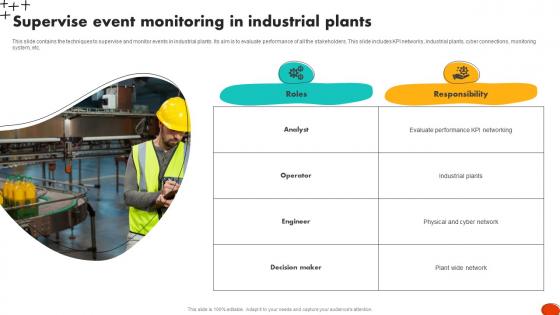
This slide contains the techniques to supervise and monitor events in industrial plants. Its aim is to evaluate performance of all the stakeholders. This slide includes KPI networks, industrial plants, cyber connections, monitoring system, etc.
People who downloaded this PowerPoint presentation also viewed the following :
Supervise Event Monitoring In Industrial Plants with all 9 slides:
Use our Supervise Event Monitoring In Industrial Plants to effectively help you save your valuable time. They are readymade to fit into any presentation structure.








FAQs for Supervise Event Monitoring
Effective supervisors demonstrate clear communication, active listening, decisiveness, emotional intelligence, and consistent feedback delivery. These leadership qualities enable supervisors to build trust, resolve conflicts efficiently, and motivate teams toward strategic objectives, with many organizations finding that strong supervisory skills directly correlate with improved employee retention and operational performance.
Supervisors foster positive team culture through clear communication, consistent recognition of achievements, collaborative goal-setting, and creating psychological safety where team members feel valued and heard. By implementing regular feedback sessions, promoting work-life balance, and modeling respectful behavior, supervisors enhance employee engagement, reduce turnover, and ultimately drive higher productivity and innovation across their organizations.
Communication serves as the foundation of effective supervision, enabling clear expectations, regular feedback, performance guidance, and trust-building between supervisors and team members. Through structured check-ins, active listening, and transparent dialogue, supervisors streamline workflow coordination, enhance employee development, and minimize workplace conflicts, with many organizations finding that strong communication practices ultimately deliver higher productivity and improved team morale.
Effective remote team management strategies include establishing clear communication protocols, implementing regular check-ins and virtual meetings, setting measurable goals and deadlines, utilizing collaborative project management tools, and fostering team culture through virtual engagement activities. These approaches streamline coordination by enhancing transparency, maintaining accountability, and building trust, with many organizations finding that structured remote supervision ultimately delivers improved productivity and employee satisfaction.
Effective supervision techniques vary significantly across industries based on regulatory requirements, safety protocols, and operational demands, with healthcare emphasizing patient safety compliance, manufacturing focusing on quality control and equipment monitoring, and financial services prioritizing risk management and regulatory adherence. These industry-specific approaches enable supervisors to deliver targeted oversight, streamline sector-relevant processes, and enhance operational efficiency while meeting unique compliance standards, ultimately providing organizations with competitive advantages tailored to their specific business environments.
Common supervisory challenges include managing diverse team dynamics, balancing workloads effectively, providing constructive feedback, resolving conflicts, and maintaining productivity while supporting employee development. These obstacles can be overcome through regular one-on-one meetings, clear communication protocols, and structured performance management systems, with many organizations finding that investing in supervisor training and mentorship programs ultimately delivers improved team engagement, reduced turnover, and enhanced operational efficiency.
Supervisors can balance authority and approachability by establishing clear expectations while maintaining open communication, demonstrating consistency in decision-making, and showing genuine interest in team members' development and concerns. This strategic combination enables leaders to command respect while fostering trust, with many organizations finding that approachable supervisors who maintain clear boundaries ultimately deliver higher team performance and employee engagement.
**INPUT**: What training or resources can enhance a supervisor's skill set? **OUTPUT**: Effective supervisory training includes leadership development programs, communication workshops, conflict resolution courses, performance management certification, and emotional intelligence training. These resources enhance supervisors by improving team dynamics, streamlining feedback processes, and building strategic decision-making capabilities, with many organizations finding that comprehensive skill development ultimately delivers higher employee engagement and operational efficiency. **Word count: 54 words**
Feedback influences team performance by establishing clear expectations, identifying skill gaps, and reinforcing positive behaviors through regular communication and recognition. When delivered constructively, feedback enhances motivation across departments like sales, customer service, and operations, with many organizations finding that consistent feedback loops ultimately drive higher engagement, improved productivity, and stronger employee retention rates.
Supervisors can assess team development needs through performance reviews, skill gap analyses, 360-degree feedback, direct observation, and one-on-one discussions with team members. These methods enable leaders to identify specific training requirements, career aspirations, and competency gaps across different roles, ultimately delivering targeted development programs that enhance productivity, employee engagement, and organizational capability.
Technology assists supervisors through automated performance tracking, real-time communication platforms, data analytics for decision-making, scheduling software, and digital feedback systems. These tools streamline workforce management by reducing administrative tasks, enhancing team coordination, and providing actionable insights, with many organizations finding that supervisors can focus more on strategic leadership while delivering improved operational efficiency.
Emotional intelligence is crucial for supervisory effectiveness, enabling leaders to manage relationships, navigate workplace dynamics, and motivate teams through self-awareness, empathy, and social skills. Supervisors with strong emotional intelligence enhance team productivity, reduce workplace conflicts, and create positive work environments, with many organizations finding that emotionally intelligent leaders deliver better employee retention, improved communication, and ultimately stronger business performance.
Supervision significantly impacts employee retention by providing clear guidance, regular feedback, and professional development opportunities, while fostering trust and engagement through consistent communication. Effective supervisors reduce turnover by addressing concerns proactively, recognizing achievements, and creating supportive work environments, with many organizations finding that quality supervision directly correlates with higher retention rates and improved employee satisfaction.
Supervisors should handle team conflicts through active listening, facilitating open dialogue between parties, identifying root causes, and establishing clear resolution timelines. Effective conflict management involves remaining neutral, focusing on behaviors rather than personalities, and implementing follow-up meetings to ensure lasting solutions, ultimately strengthening team cohesion and productivity.
Performance review best practices include setting clear expectations, documenting achievements throughout the year, providing specific feedback with examples, creating development goals, and maintaining two-way dialogue. These approaches enhance employee engagement by fostering transparency, building trust, and aligning individual contributions with organizational objectives, with many supervisors finding that regular feedback cycles ultimately deliver improved performance and stronger team dynamics.
-
The PPT layout is great and it has an effective design that helps in presenting corporate presentations. It's easy to edit and the stunning visuals make it an absolute steal!
-
Topic best represented with attractive design.