

Supplier Segmentation Powerpoint Ppt Template Bundles





Try Before you Buy Download Free Sample Product
 Impress Your
Audience
 100%
Editable
 Save Hours
of Time


Our Supplier Segmentation Powerpoint Ppt Template Bundles are topically designed to provide an attractive backdrop to any subject. Use them to look like a presentation pro.
People who downloaded this PowerPoint presentation also viewed the following :
Supplier Segmentation Powerpoint Ppt Template Bundles with all 22 slides:
Use our Supplier Segmentation Powerpoint Ppt Template Bundles to effectively help you save your valuable time. They are readymade to fit into any presentation structure.











FAQs for Supplier Segmentation Powerpoint
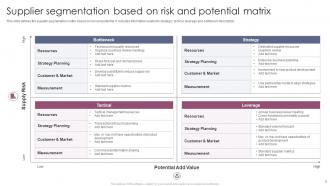
Look at four main things: how much you're spending, how critical they are, risk levels, and performance. Money talks, so start there - your biggest spend gets priority. Then figure out if you can easily replace them or if they'd totally screw you over if something went wrong. Financial health, where they're located, quality scores, delivery track record - all that matters. Honestly, I'd just throw them on a simple matrix first (spend vs how strategic they are), then add the risk stuff after. Makes it way easier to see who needs what kind of attention.
So supplier segmentation is basically sorting your suppliers by how much they actually matter to your business. Instead of treating everyone the same, you put way more effort into your critical suppliers - like building real partnerships and working on innovation together. The commodity guys? Just automate their orders and do basic check-ins. Honestly, most companies mess this up by overthinking it. Once you nail it though, you'll cut costs and free up time to focus on relationships that actually impact your bottom line. Your team stops wasting energy on low-stakes stuff.
Honestly, you can't do supplier segmentation without diving into the data first. Pull all your procurement numbers - spend amounts, payment records, performance scores, risk levels. Look for patterns that jump out naturally. Trust me, going with your gut instead of actual data is how you end up with expensive mistakes. Short bursts work better than long analysis sessions, by the way. The numbers will show you stuff you'd never catch otherwise, like which suppliers are chronically late or bleeding you dry. Once you've got everything pulled together, the clustering patterns usually become pretty obvious.
So risk factors are what determine how you sort suppliers into different categories. Financial health, location, whether they're your only option for something, past compliance issues - all that stuff gets weighed to create risk scores. Suppliers in sketchy regions or sole-source situations? They need way more oversight and stricter contracts. Your basic commodity suppliers though - much more hands-off. What really matters is having a solid framework for scoring everyone consistently. Otherwise you're just winging it based on whatever feels right, which honestly never ends well.
Honestly, technology makes supplier segmentation way less painful. Instead of drowning in spreadsheets, you can use AI to automatically sort suppliers by spend, risk, and performance - saves so much time. Analytics platforms catch patterns you'd never spot manually, like which suppliers always deliver early or whose quality is slipping. Real-time dashboards update everything automatically as things change. I'd start with a supplier management platform that connects to your current systems. My friend's company did this last year and it cut their manual work in half. The setup takes a bit but it's worth it.
Honestly, the worst mistake is overcomplicating things - I've watched so many teams build these elaborate 7-segment models that nobody uses. Stick to 3-4 segments tops. Don't just look at spend either. Risk matters, innovation potential matters, market stuff matters too. I worked with this one team who created this gorgeous segmentation framework that literally sat on a shelf because it was way too theoretical. Your criteria need to be things you can actually measure, and everyone should get why suppliers land in each bucket. Start simple and build from there based on what really drives how you manage different suppliers day-to-day.
Honestly, supplier segmentation is one of those things that sounds boring but actually makes a huge difference. You basically group your suppliers into 3-4 categories based on their value to you. Then you can focus your energy where it counts - like doing joint innovation projects with your most important partners instead of wasting time on routine check-ins with commodity suppliers. The transactional ones? Just streamline those processes and move on. I learned this the hard way after spending way too much time micromanaging low-value relationships. Map out your current suppliers first, then adjust how much attention you give each group. You'll see better results across the board.
So there's a few ways to tackle this. Kraljic Matrix is probably your best bet - it maps suppliers by profit impact versus supply risk, which actually makes sense for figuring out who matters most. ABC analysis just ranks by spend, pretty basic stuff. Some companies get fancy with custom models using quality scores or whatever, but honestly? Most teams I've worked with just stick with Kraljic since everyone gets it. Oh, and spend-based segmentation is another option too. Just pick something that fits your priorities and that you'll actually use - I've seen way too many beautiful charts that nobody ever looks at again.
So here's the thing - you'll constantly be shuffling suppliers around categories because markets are wild. Your "strategic" suppliers can become total roadblocks when demand explodes. Meanwhile, suppliers you barely thought about suddenly become critical. It's honestly a nightmare when everything shifts overnight. Supply shortages flip low-risk suppliers into bottlenecks instantly. Then you've got economic chaos, new regulations, or - ugh, don't get me started on geopolitical drama - completely changing who's risky and who isn't. Build your framework so you can move suppliers between buckets quickly. Otherwise you're stuck with classifications that made sense six months ago.
Honestly, it depends on what type of suppliers you're dealing with. Strategic ones? Track innovation, financial health, and how solid your relationship is - you can't afford these partnerships going south. With suppliers where you've got buying power, focus hard on cost and delivery since that's where you can really squeeze value. Bottleneck suppliers are tricky though - supply security and risk stuff matter most there. Routine suppliers don't need anything fancy, just basic cost and delivery metrics. I'd start by figuring out which category each supplier fits into, then pick maybe 3-4 metrics per group. Keep it manageable or you'll drown in data.
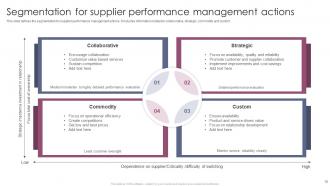
So basically you match your approach to how important each supplier is. Strategic partners need dedicated managers and regular exec meetings - the whole relationship thing. Routine suppliers? Just stick to standard processes and quarterly check-ins. Don't overthink those ones honestly. High-risk suppliers need way more monitoring plus backup plans (learned that the hard way). With your transactional suppliers you can get competitive with bidding and negotiations. Main thing is don't treat your critical suppliers like you would your office supply guy. Map out who goes where first, then build different ways to work with each group.
So basically, different supplier types need totally different inventory approaches. Your key suppliers? Give them VMI deals or share longer forecasts with them. But those transactional ones you can't really trust - yeah, you'll need way more safety stock for those guys. Critical suppliers get watched like hawks with frequent check-ins, while commodity suppliers can pretty much run themselves. Honestly sounds simple but it gets chaotic quick when you're actually doing it. Map out what inventory policies you're using now against your supplier segments. Bet you'll find some weird mismatches that don't make sense.
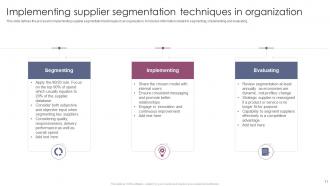
Honestly, just keep it stupid simple at first. Throw your suppliers into 3-4 buckets - strategic, preferred, transactional, whatever makes sense based on how much you spend and how critical they are. Excel is totally fine for this, don't get caught up in fancy tools yet. I've watched so many small businesses get paralyzed trying to make it perfect from day one. Focus on where 80% of your money goes - that's your goldmine. Then actually treat each group differently. Maybe your strategic partners get quarterly calls while the transactional ones just get an annual checkup. The whole point is changing how you manage relationships, not just making pretty categories.
Honestly, supplier segmentation is huge for sustainability stuff. You sort suppliers by environmental impact, spend, and risk - then focus your green push where it'll actually move the needle. Why waste energy making tiny suppliers jump through hoops when your biggest partners could cut way more carbon? I learned this the hard way trying to manage everyone the same way (total mess). Push your strategic suppliers hard on emissions while just keeping tabs on the smaller ones. Match your expectations to what each tier can realistically deliver. Way more effective than treating everyone identical.
At minimum, check your supplier segments once a year. But honestly? Quarterly reviews make way more sense with how crazy fast things change now. Performance data and spending patterns shift constantly - you don't want to miss when some random vendor suddenly becomes mission-critical to your operations. I'd set up alerts when spending jumps 20-30% or more. That way you're not just reacting to fires. Market conditions can flip a supplier's risk overnight, so staying on top of it systematically beats playing catch-up later.
-
I joined SlideTeam last month and there’s no doubt that I tend to find our bond only strengthening over time. Best place to find world-class themes, templates, and icons.
-
Informative design.