Supplier Vendor Communication Strategy Building An Effective Corporate Communication Strategy

Rating:
100%
Supplier Vendor Communication Strategy Building An Effective Corporate Communication Strategy Supplier Vendor Communication Strategy Building An Effective Corporate Communication Strategy
Slide 1 of 6

or

Favourites Favourites

Try Before you Buy Download Free Sample Product

Audience Impress Your
Audience
Editable 100%
Editable
Time Save Hours
of Time
The Biggest Sale is ending soon in
0
0
:
0
0
:
0
0
Rating:
100%
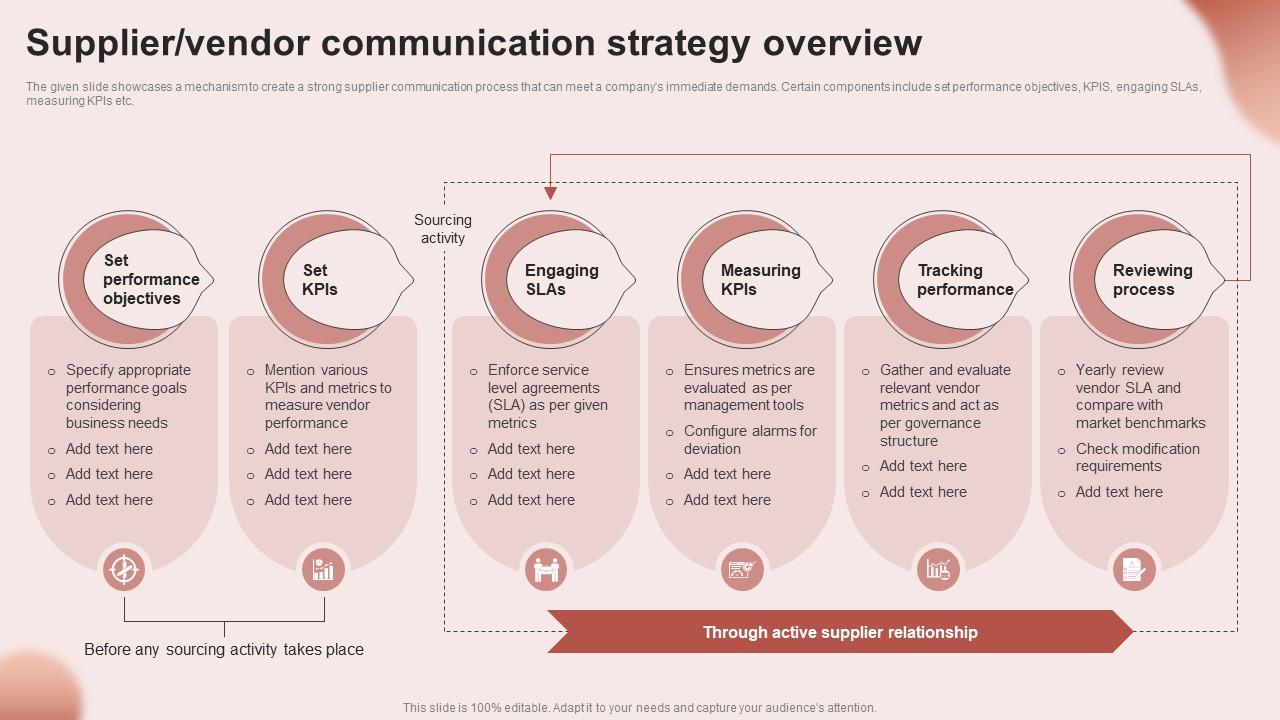
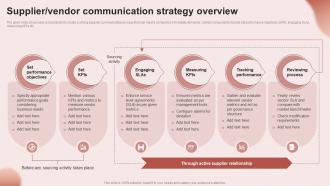
The given slide showcases a mechanism to create a strong supplier communication process that can meet a companys immediate demands. Certain components include set performance objectives, KPIS, engaging SLAs, measuring KPIs etc. Increase audience engagement and knowledge by dispensing information using Supplier Vendor Communication Strategy Building An Effective Corporate Communication Strategy This template helps you present information on six stages. You can also present information on Set Performance Objectives, Measuring Kpis, Tracking Performance using this PPT design. This layout is completely editable so personaize it now to meet your audiences expectations.

FAQs for Supplier Vendor Communication Strategy Building An Effective

Key principles for effective supplier communication include transparency, regular feedback cycles, clear performance expectations, collaborative problem-solving, and strategic alignment with business objectives. These principles enhance relationships by establishing trust, streamlining operations, and minimizing conflicts, with many organizations finding that consistent, structured communication ultimately delivers stronger partnerships, improved supplier performance, and enhanced competitive advantage.

Businesses can tailor communication by categorizing suppliers into strategic partners, preferred vendors, and transactional suppliers, then adjusting frequency, formality, and channel preferences accordingly. Strategic suppliers require regular executive-level meetings and collaborative planning sessions, while transactional suppliers benefit from automated systems and standardized processes, ultimately optimizing relationships and operational efficiency across the supply chain.

Technology revolutionizes supplier communication through cloud-based platforms, automated messaging systems, real-time tracking tools, AI-powered analytics, and integrated dashboards. These solutions streamline collaboration by enabling instant updates, predictive insights, and seamless data exchange, with manufacturing and retail organizations finding that enhanced visibility ultimately delivers faster response times and stronger partnerships.

Companies establish trust and transparency by implementing regular performance reviews, sharing forecasts and business updates, maintaining open feedback channels, and creating collaborative problem-solving processes. Through consistent communication protocols, organizations enable stronger partnerships, reduce supply chain risks, and enhance operational efficiency, with many finding that transparent relationships ultimately deliver cost savings and competitive advantage.

Supplier communication effectiveness metrics include response time tracking, issue resolution rates, communication frequency analysis, stakeholder satisfaction scores, and compliance adherence measurements. These metrics enable organizations to streamline vendor relationships, enhance operational efficiency, and minimize supply chain disruptions, with many procurement teams finding that systematic measurement ultimately delivers stronger partnerships and competitive advantage.

Businesses should communicate with suppliers weekly for operational updates, monthly for strategic reviews, and quarterly for comprehensive performance assessments, with critical issues requiring immediate contact. This structured approach enables stronger partnerships, reduces supply chain disruptions, and enhances operational efficiency, with many organizations finding that consistent communication ultimately delivers better pricing negotiations and improved service levels.

Common barriers to effective communication with suppliers include language differences, cultural misunderstandings, time zone challenges, inadequate technology platforms, and unclear expectations or specifications. These obstacles can be overcome by implementing standardized communication protocols, utilizing collaborative digital platforms, establishing regular check-in schedules, and providing cultural sensitivity training, with many organizations finding that investing in relationship management and clear documentation ultimately delivers stronger partnerships, reduced misunderstandings, and improved supply chain efficiency.

Feedback loops can be integrated through regular performance reviews, digital scorecards, collaborative improvement sessions, and automated reporting systems that track key metrics. These mechanisms enable suppliers and organizations to identify issues quickly, implement corrective actions, and enhance overall performance, with many companies finding that structured feedback processes strengthen partnerships while delivering improved quality, reduced costs, and greater supply chain resilience.

Effective stakeholder communication during supplier negotiations includes regular status updates, structured reporting frameworks, stakeholder mapping matrices, cross-functional team briefings, and transparent decision-tracking systems. These strategies streamline information flow by establishing clear communication channels, scheduled touchpoints, and documented progress records, with many procurement teams finding that proactive transparency ultimately delivers stronger stakeholder buy-in and faster negotiation cycles.

Cultural differences significantly influence supplier communication through varying communication styles, decision-making processes, relationship expectations, and business etiquette preferences. Organizations address these challenges by implementing cross-cultural training programs, establishing standardized communication protocols, and appointing cultural liaisons, with many global companies finding that culturally-aware communication strategies enhance supplier relationships and ultimately deliver improved collaboration and operational efficiency.

Best practices for using digital tools in supplier communication include implementing centralized platforms, establishing real-time messaging systems, automating routine notifications, creating shared document repositories, and maintaining consistent data formatting standards. These approaches streamline collaboration by reducing email overload, enhancing transparency, and accelerating decision-making processes, with many organizations finding that integrated communication tools ultimately deliver stronger supplier relationships and improved operational efficiency.

Conflict resolution with suppliers improves through structured communication protocols, regular feedback sessions, defined escalation procedures, and collaborative problem-solving frameworks. These approaches streamline dispute management by establishing clear expectations, maintaining transparency, and fostering partnership-focused dialogue, with many organizations finding that proactive communication significantly reduces conflicts while strengthening long-term supplier relationships and operational efficiency.

Onboarding establishes clear communication protocols, expectations, and performance metrics while introducing suppliers to company systems, processes, and key stakeholders. Through structured onboarding programs, organizations build lasting partnerships by setting communication standards, defining escalation procedures, and creating feedback mechanisms, with many companies finding that thorough onboarding reduces future miscommunications and strengthens supplier relationships.

Businesses can foster long-term supplier relationships through regular performance reviews, transparent contract negotiations, collaborative planning sessions, shared goal-setting initiatives, and consistent feedback mechanisms. These strategic communication approaches enable mutual trust-building, streamlined operations, and joint problem-solving capabilities, with many organizations finding that proactive supplier engagement ultimately delivers reduced costs, improved quality, and enhanced supply chain resilience.

Crisis communication with suppliers should focus on transparency, real-time updates, collaborative problem-solving, contingency planning, and maintaining trust through honest dialogue. During disruptions, organizations streamline operations by establishing clear communication channels, sharing impact assessments, and jointly developing alternative solutions, with many companies finding that proactive supplier partnerships ultimately deliver faster recovery and stronger long-term relationships.

Ratings and Reviews

100% of 100
Review Form
Write a review
Most Relevant Reviews
  1. 100%

    by Charlie Jones

    Innovative and attractive designs.
  2. 100%

    by Davies Rivera

    Content of slide is easy to understand and edit.

2 Item(s)

per page: