


Supply Chain Management With Cost Analysis Dashboard





Try Before you Buy Download Free Sample Product
 Impress Your
Audience
 100%
Editable
 Save Hours
of Time


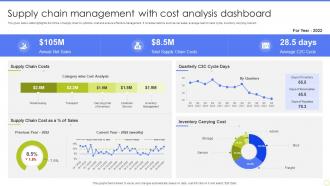
The given below slide highlights the KPAs of supply chain to optimize cost and ensure effective management. It includes metrics such as net sales, average cash to cash cycle, inventory carrying cost etc.
People who downloaded this PowerPoint presentation also viewed the following :
Supply Chain Management With Cost Analysis Dashboard with all 7 slides:
Use our Supply Chain Management With Cost Analysis Dashboard to effectively help you save your valuable time. They are readymade to fit into any presentation structure.






FAQs for Supply Chain Management With
So you've got five main pieces: planning, sourcing, manufacturing, delivery, and handling returns. Demand forecasting is huge - seriously, don't just wing it and hope for the best. Build solid relationships with suppliers for sourcing good materials. Manufacturing needs to be flexible since things always change (learned that the hard way). Warehousing and logistics handle your delivery side. Oh, and set up a decent returns process early - you'll thank yourself later when customers start sending stuff back. I'd map out what you're doing now first. See where the biggest problems are hiding.
Honestly, AI and blockchain are pretty huge for supply chains right now. With AI you can actually predict what people want instead of just guessing, plus it figures out the best routes automatically. Blockchain's great because you get this permanent record of everything - like, you'll know if that "organic" label is legit or not. The visibility thing is massive too. You can track stuff from the factory all the way to someone's door. Fewer empty shelves, less wasted product. Though I'd probably start with just the AI demand stuff first - easier to test out.
Ugh, where do I start? Demand forecasting is brutal - customers are so unpredictable it's not even funny. Then you've got supplier issues, inventory that's either too much or too little, and costs going up constantly. Honestly, the tech integration stuff gives me a headache because nothing wants to work together properly. Don't even get me started on all the sustainability requirements and compliance changes. Oh, and you're always trying to balance having enough stock without your cash being tied up forever. My take? Focus on visibility first. Can't fix what you can't actually see happening across everything.
Start with an audit of your suppliers - check their environmental and social practices first. Prioritize ones with B-Corp or Fair Trade certifications if you can. Route efficiency and local sourcing help cut your carbon footprint too. Honestly, the packaging reduction thing makes a bigger difference than most people think. Don't just chase the cheapest option though - you'll want suppliers who actually care about sustainability goals long-term. Pick one segment of your supply chain to tackle first. The whole thing can feel overwhelming if you try to fix everything at once.
Honestly, demand forecasting is what makes or breaks your whole supply chain. You'll avoid that awful cycle of either being totally sold out or drowning in stuff nobody wants. Look at your past sales data first - seasonal trends tell you tons. Even rough forecasting beats just winging it completely. When you nail what customers actually want, procurement timing gets way easier. Plus you're not wasting money on dead inventory. Keeps everyone happy since products are there when people need them. It's basically your roadmap for not screwing up inventory decisions.
Honestly, just pick like 4-5 metrics that actually matter to your business instead of tracking everything under the sun. On-time delivery and order accuracy are obvious ones. Inventory turnover tells you if stuff's just sitting around collecting dust. Cost per unit and lead times matter too. Customer satisfaction is probably the most important though - if they're pissed, nothing else really matters. Oh, and definitely track how your suppliers are doing. Set up a simple dashboard to check these monthly, maybe compare against what other companies in your industry are hitting. Don't overthink it at first.
Dude, supply chains are wild right now. Everyone's obsessing over sustainability and ESG stuff - like actually tracking carbon footprints instead of just talking about it. Companies ditched that "cheapest factory in China" mentality after COVID screwed everything up. Now it's all about keeping production closer to home. AI's everywhere too - demand forecasting, blockchain for transparency. Pretty much became the norm overnight. Oh, and flexibility is king now. Nobody wants to get caught with their pants down again like in 2020. Focus on visibility in your setup. Trust me on this one - you'll thank yourself later when the next crisis hits.
Look, good supplier relationships make or break your supply chain performance. Quality, delivery, costs - everything hinges on this. Solid partnerships mean they'll actually prioritize your stuff and give you heads up when things might go sideways. Bad relationships? You're getting delayed shipments and quality problems left and right. Here's the thing though - don't just chase the cheapest option every single time. Yeah I know it's tempting when budgets are tight, but building long-term partnerships pays off way more. They'll have your back when you really need flexibility.
Risk management is basically your safety net for when supply chains go sideways. Trust me, disruptions happen - suppliers fail, disasters hit, ships get stuck in canals (still can't believe that whole Suez thing). One major hit can ripple through everything and cost you big time in money and customer trust. You'll want to map out where you're vulnerable first. Identify backup suppliers before you need them. Build some wiggle room into your processes. Start with an audit of your most critical suppliers and their locations - that's honestly the best first step.
Honestly, you've gotta spread out your suppliers - don't put all your eggs in one basket like I stupidly did before COVID hit. Talk to your key suppliers regularly, not just when stuff goes wrong. Get some tracking tools so you can see problems coming instead of getting blindsided. Yeah, keeping extra inventory costs more upfront, but trust me it's worth it when everything goes sideways. Start by figuring out where you're most screwed if something breaks down. Then make backup plans for those spots. Oh and buffer stock for critical stuff - learned that one the hard way!
Honestly, just focus on the big three first: on-time delivery, inventory turnover, and cost per order. Those'll give you a solid picture of what's actually happening. Supplier lead times matter too - and definitely track order accuracy because fast shipping means nothing if you're sending the wrong stuff half the time. Don't go crazy with like 15 different metrics right off the bat. Pick 4-5 that actually match what your business cares about. Track them for three months consistently, then you can always layer on more specific ones later if needed.
So inventory basically screws with your costs in three ways. Having too much stuff sitting around eats your cash flow and warehouse space costs add up fast. Not having enough? That's when you're scrambling with rush orders and paying crazy shipping fees to avoid pissing off customers. Honestly, the whole thing is a balancing act - you want to hit that sweet spot where you're not overstocked but also not constantly running out. Better forecasting helps a ton, and you'll need reorder points that actually work for your specific situation instead of just guessing.
Honestly, data analytics is a game-changer for catching problems before they blow up your supply chain. You can forecast demand, optimize inventory, track how your suppliers are actually performing - all that messy data suddenly makes sense. What's really nice is spotting bottlenecks as they happen and switching routes or suppliers instantly. Cost and delivery comparisons between vendors become way easier too, so you're not just guessing on purchases. My advice? Don't go crazy at first. Pick something simple like inventory turnover, show it works, then expand from there.
Trade deals totally change your supply chain game. Tariffs drop between partner countries, so those routes suddenly become way cheaper. Customs gets easier too. But here's where it gets tricky - you might end up switching suppliers just for the preferential rates, even when your original supplier was actually better. Those rules of origin requirements? Yeah, they can be a nightmare to navigate. I've seen companies get burned by not checking these properly. Anyway, whenever new agreements pop up, definitely map out how they'd affect your current suppliers and shipping routes.
Oh man, cultural stuff will totally trip you up if you're not ready for it. Different countries have completely different ways of communicating and doing business. Some places you gotta build relationships first before anyone talks numbers - learned that one the hard way lol. Others are super direct and transactional. Time zones are honestly the least of your problems compared to different attitudes about deadlines, hierarchy, and how flexible contracts should be. My advice? Do your homework on your partners' cultural norms before jumping in. It'll save you so many headaches down the road.
-
Great product with effective design. Helped a lot in our corporate presentations. Easy to edit and stunning visuals.
-
The templates you provide are great! They have saved me tons of time and made my presentations come alive. Thank you for this awesome product. Keep up the good work!