


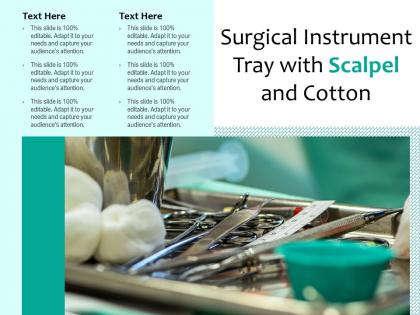
Surgical instrument tray with scalpel and cotton




Try Before you Buy Download Free Sample Product
 Impress Your
 Audience
 100%
100% Editable
 Save Hours
 of Time


Our Surgical Instrument Tray With Scalpel And Cotton are topically designed to provide an attractive backdrop to any subject. Use them to look like a presentation pro.
People who downloaded this PowerPoint presentation also viewed the following :
Surgical instrument tray with scalpel and cotton with all 2 slides:
Use our Surgical Instrument Tray With Scalpel And Cotton to effectively help you save your valuable time. They are readymade to fit into any presentation structure.
FAQs for Surgical instrument tray with
Essential surgical instrument tray components include scalpels, forceps, scissors, hemostats, retractors, needle holders, and suction devices. These instruments streamline surgical workflows by enabling precise incisions, tissue manipulation, and bleeding control, with many operating rooms finding that standardized tray configurations enhance efficiency, reduce preparation time, and ultimately deliver safer patient outcomes.
Sterilization techniques significantly influence instrument selection and tray arrangement by determining material compatibility, spatial requirements, and processing protocols. Steam sterilization requires heat-resistant materials and proper spacing for steam penetration, while ETO sterilization allows temperature-sensitive instruments but demands longer processing times, with many hospitals finding that strategic tray design ultimately streamlines workflow and ensures consistent sterility.
Designing surgical instrument trays for specialty surgeries requires considering procedure-specific requirements, instrument compatibility, sterilization protocols, ergonomic accessibility, and workflow efficiency. These factors ensure optimal organization by accommodating unique tools like microsurgical instruments or orthopedic implants, enabling standardized setup procedures, and ultimately delivering faster surgical preparation, reduced contamination risks, and enhanced patient safety across specialized medical environments.
Strategic surgical instrument tray layouts enhance efficiency and safety by grouping instruments logically by procedure sequence, positioning frequently used tools within easy reach, and creating standardized arrangements that reduce search time and cognitive load. These organized systems enable faster instrument identification, minimize surgical delays, and reduce contamination risks through predictable placement patterns, with operating rooms finding that well-designed trays ultimately streamline workflows while improving patient outcomes.
Color-coding in surgical instrument trays enhances operational efficiency by categorizing instruments by function, procedure type, or sterilization status, reducing identification time and minimizing errors during critical procedures. This systematic approach streamlines workflow management, improves patient safety through faster instrument recognition, and enables surgical teams to maintain sterile protocols more effectively, ultimately delivering enhanced procedural outcomes.
Technology enhances surgical instrument tray management through RFID tracking systems, automated inventory software, barcode scanning solutions, and real-time sterilization monitoring platforms. These systems streamline instrument accountability, reduce preparation time, and minimize human error, with many hospitals finding that automated tracking delivers faster turnover rates, enhanced patient safety, and significantly improved operational efficiency.
Best practices for maintaining surgical instruments within trays include proper cleaning protocols, systematic visual inspections, functional testing, appropriate lubrication, and standardized arrangement procedures. These practices enhance patient safety by ensuring sterility, maintaining instrument functionality, and reducing surgical delays, with many hospitals finding that consistent tray management ultimately delivers improved operational efficiency and better surgical outcomes.
Different surgical specialties require unique instrument tray configurations based on specific procedural demands, anatomical access needs, surgical complexity, and time constraints. Orthopedic procedures utilize heavy-duty instruments like bone saws and drill sets, while ophthalmology requires delicate microsurgical tools, and cardiovascular surgery demands specialized clamps and sutures, ultimately enabling streamlined workflows and enhanced patient outcomes.
Customizing surgical instrument trays presents both cost reduction opportunities and initial investment considerations for hospitals. While upfront customization requires capital expenditure for tray redesign and staff training, hospitals typically achieve significant long-term savings through reduced instrument waste, faster turnover times, and improved surgical efficiency, with many medical facilities finding that customized trays deliver 15-30% cost reductions within the first year.
Ergonomic design principles enhance surgical instrument trays through intuitive layouts, adjustable heights, lightweight materials, and strategically positioned compartments that reduce surgeon fatigue and improve accessibility. These design improvements streamline surgical workflows by minimizing reaching motions, reducing physical strain, and enabling faster instrument retrieval, ultimately delivering enhanced surgical precision and reduced operating times.
Surgical staff require training in sterile technique protocols, instrument identification and handling, tray organization systems, contamination prevention procedures, and proper sterilization workflows. Through comprehensive programs covering aseptic practices and inventory management, hospitals enhance operational efficiency, reduce infection risks, and streamline surgical processes, with many facilities finding that standardized training ultimately delivers faster turnover times and improved patient safety outcomes.
Material selection significantly impacts surgical instrument performance through corrosion resistance, durability, sterilization compatibility, and maintenance requirements, with stainless steel, titanium, and specialized alloys each offering distinct advantages. Healthcare facilities increasingly find that strategic material choices enhance instrument longevity, reduce replacement costs, and ensure consistent surgical outcomes, while proper tray organization maximizes these benefits across operating room workflows.
Current innovations in modular surgical instrument trays include RFID tracking systems, customizable compartment configurations, antimicrobial surface coatings, color-coded organization modules, and integrated sterilization indicators. These technologies streamline surgical workflows by reducing setup times, minimizing instrument loss, and enhancing sterility protocols, with many hospitals finding that modular designs ultimately deliver improved operational efficiency and safer patient outcomes.
Regulatory standards significantly influence surgical instrument tray composition through strict sterilization protocols, material compatibility requirements, traceability mandates, and safety specifications that healthcare facilities must follow. These regulations ensure patient safety by dictating instrument selection, tray organization, and documentation processes, with many hospitals finding that compliance ultimately delivers enhanced surgical outcomes, reduced infection risks, and streamlined operational efficiency across their surgical departments.
Recycling surgical instrument trays faces challenges including complex sterilization requirements, material compatibility issues, contamination risks, regulatory compliance standards, and cost-effectiveness concerns. Healthcare facilities must balance infection control protocols with environmental sustainability goals, while ensuring instruments meet strict safety standards, with many hospitals finding that specialized reprocessing programs deliver both operational efficiency and reduced environmental impact.
-
Thanks for all your great templates they have saved me lots of time and accelerate my presentations. Great product, keep them up!
-
It saves your time and decrease your efforts in half.
-
Use of different colors is good. It's simple and attractive.
-
Presentation Design is very nice, good work with the content as well.