

Synapse Function PPT Presentation ACP





Try Before you Buy Download Free Sample Product
 Impress Your
Audience
 100%
Editable
 Save Hours
of Time


Unlock the complexities of synapse function with our comprehensive PowerPoint presentation deck. Designed for professionals, this resource delves into synaptic mechanisms, neurotransmitter roles, and neural communication. Enhance your understanding and engage your audience with visually appealing slides and in-depth content tailored for academic and clinical settings.
People who downloaded this PowerPoint presentation also viewed the following :
Synapse Function PPT Presentation ACP with all 41 slides:
Use our Synapse Function PPT Presentation ACP to effectively help you save your valuable time. They are readymade to fit into any presentation structure.






















FAQs for Synapse Function
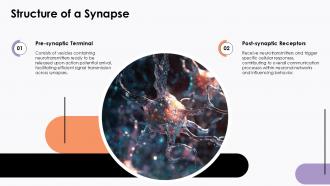
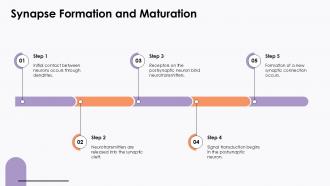
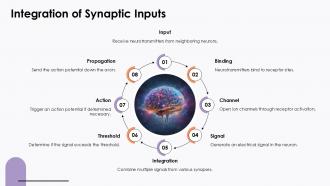
Key components involved in synapse function include presynaptic terminals, synaptic clefts, postsynaptic receptors, neurotransmitters, and calcium channels. These neurological elements work together by enabling signal transmission, facilitating chemical communication, and regulating synaptic plasticity, with many research institutions finding that understanding these mechanisms enhances therapeutic approaches for neurological disorders and cognitive enhancement strategies.
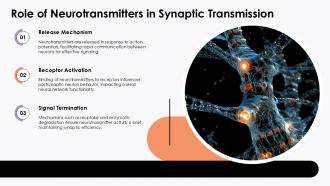
Neurotransmitters directly control synaptic transmission by binding to specific receptors on postsynaptic neurons, determining whether signals are excitatory or inhibitory based on their chemical properties and receptor interactions. These molecular messengers enable precise neural communication across networks, with neurotransmitter balance ultimately delivering coordinated brain function, memory formation, and behavioral responses essential for cognitive performance.
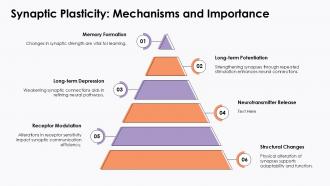
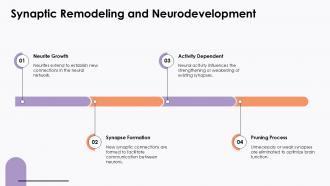
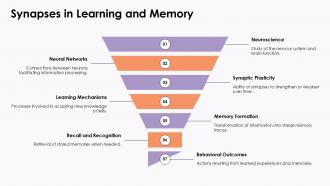
Synaptic plasticity mechanisms contribute to learning and memory through long-term potentiation, long-term depression, structural modifications, neurotransmitter regulation, and synaptic pruning processes. These neuroadaptive changes enable the brain to strengthen relevant neural pathways while weakening unused connections, ultimately facilitating information encoding, storage, and retrieval across cognitive networks essential for educational advancement and skill development.
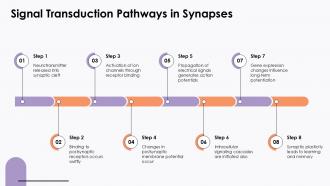
Ion channels regulate synaptic transmission by controlling sodium, potassium, and calcium flow across neuronal membranes, determining signal strength and timing. These specialized proteins enable precise neurotransmitter release and postsynaptic responses, with voltage-gated calcium channels particularly crucial for synaptic plasticity and learning, ultimately delivering the rapid, selective communication that underlies all neural processing and brain function.
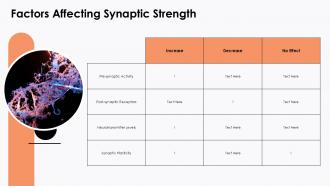
Synaptic strength directly influences neural circuit activity by determining signal transmission efficiency, pathway prioritization, and network connectivity patterns. Stronger synapses facilitate more robust information flow, enabling faster processing and enhanced memory formation, while weaker connections allow for flexible circuit reconfiguration, ultimately delivering improved cognitive performance and adaptive neural responses across diverse brain regions.
Excitatory synapses increase the likelihood of action potential generation by releasing neurotransmitters like glutamate that depolarize the postsynaptic membrane, while inhibitory synapses decrease neuronal firing through neurotransmitters like GABA that hyperpolarize target cells. This balance enables precise neural control, with excitatory connections driving signal transmission and inhibitory ones preventing excessive activation, ultimately delivering coordinated brain function essential for learning, memory, and behavioral regulation.
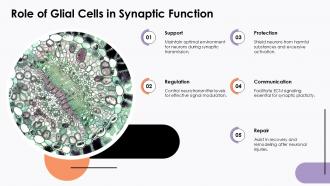
Glial cells interact with synapses through astrocytes that wrap around synaptic connections, microglia that monitor synaptic activity, and oligodendrocytes that provide metabolic support. These cellular interactions enhance synaptic transmission by regulating neurotransmitter uptake, providing essential nutrients, and maintaining optimal ionic environments, ultimately delivering improved neural efficiency and synaptic plasticity across brain networks.
Synaptic dysfunction contributes to neurological disorders through impaired neurotransmitter release, altered receptor sensitivity, disrupted synaptic pruning, and compromised plasticity mechanisms. These cellular disruptions manifest in conditions like Alzheimer's disease, Parkinson's disease, and autism spectrum disorders, where synaptic communication breakdowns ultimately affect cognitive function, motor control, and behavioral responses across diverse patient populations.
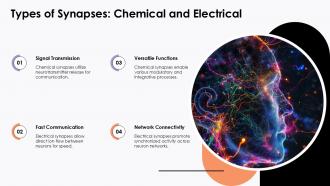
Synapses include chemical synapses, electrical synapses, axodendritic connections, axosomatic junctions, and neuromuscular interfaces, each facilitating distinct neural communication patterns. These specialized connections enhance signal transmission, regulate neural plasticity, and coordinate complex responses across brain regions, with neurological research and medical applications finding that understanding synaptic diversity ultimately delivers improved therapeutic strategies and diagnostic capabilities.
Synaptic vesicles contribute to neurotransmitter release by storing neurotransmitters, docking at presynaptic membranes, and fusing through calcium-triggered exocytosis when action potentials arrive. This process enables rapid, precise chemical communication between neurons, with many research institutions finding that understanding vesicle dynamics enhances drug development, neurological treatments, and therapeutic interventions for synaptic disorders.
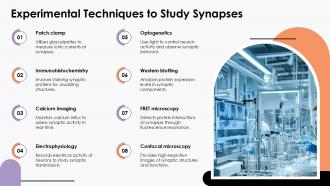
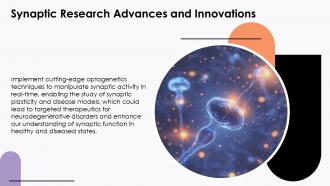
Methods for studying synapse function include electrophysiology, calcium imaging, optogenetics, electron microscopy, and molecular tracking techniques. These approaches enable researchers to measure synaptic transmission, visualize neural activity, and manipulate specific pathways in real-time, with many neuroscience laboratories finding that combining multiple methodologies delivers comprehensive insights into synaptic mechanisms and neurological disorders.
Dendritic spine structure significantly influences synaptic efficacy through spine head size, neck diameter, and surface area, which determine calcium compartmentalization, receptor clustering, and signal transmission strength. Larger spine heads accommodate more AMPA receptors and postsynaptic proteins, while thinner necks create biochemical compartments that enhance signal specificity, ultimately enabling neurons to fine-tune synaptic responses and optimize neural circuit performance across increasingly complex brain networks.
Receptor clustering at the postsynaptic membrane enhances synaptic transmission efficiency by concentrating neurotransmitter receptors in high-density areas, maximizing signal detection and response strength. This strategic organization enables faster neural processing, improved signal-to-noise ratios, and more precise synaptic communication, ultimately delivering enhanced cognitive function and neuroplasticity that supports learning and memory formation across various neural networks.
Long-term potentiation strengthens synaptic connections through repeated stimulation, enhancing signal transmission and memory formation, while long-term depression weakens underused connections by reducing synaptic efficiency. These complementary mechanisms enable neural networks to optimize information processing, refine learning pathways, and maintain synaptic balance, ultimately delivering enhanced cognitive performance and adaptive memory consolidation across increasingly complex neural systems.
Second messengers like cAMP, IP3, and calcium ions amplify and modulate synaptic signals by activating protein kinases, opening ion channels, and regulating neurotransmitter release. These molecular cascades enable neurons to fine-tune synaptic strength, facilitate long-term potentiation, and adapt transmission patterns, ultimately delivering enhanced neural plasticity and more efficient information processing across neural networks.
-
Love how there are no boring templates here! The design is fresh and creative, just the way I like it. Can't wait to edit and use them for my extended projects!
-
“There is so much choice. At first, it seems like there isn't but you have to just keep looking, there are endless amounts to explore.”