

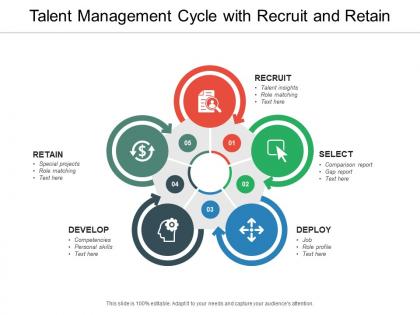
Talent management cycle with recruit and retain




Try Before you Buy Download Free Sample Product
 Impress Your
 Audience
 100%
100% Editable
 Save Hours
 of Time


Feel in the groove with our Talent Management Cycle With Recruit And Retain. Find your thoughts flowing effortlessly.
People who downloaded this PowerPoint presentation also viewed the following :
Talent management cycle with recruit and retain with all 5 slides:
Our Talent Management Cycle With Recruit And Retain allow effortless functioning. You will definitely feel in the groove.

FAQs for Talent management cycle with
Look, you need five main things: finding good people, tracking performance, training/development, planning who takes over key roles, and keeping people from leaving. Most places totally bomb at the development piece though - they'll hire someone amazing then just... forget about them? It's wild. Map out where you're weakest in each area first. Then tackle whatever's bleeding the most talent right now. The key is connecting all these pieces instead of treating them like separate departments that never talk. Otherwise you're just playing whack-a-mole with HR problems.
Look at performance data, but don't just focus on current star players. Watch for people who ask good questions, adapt fast, and go beyond their basic job duties. I swear half the managers I know mess this up - they only promote based on current results instead of spotting potential. Give these folks stretch projects or cross-team work to test how they handle unclear situations. Have regular chats about where they want their career to go. Then actually create paths to get them there. Set up mentoring and get them face time with senior people. Really though, challenging work is the best test of someone's potential.
So technology runs pretty much everything in talent management these days. AI screens resumes now, which is honestly kind of scary when you think about it. Your HRIS does way more than you'd expect - tracks performance, spots skill gaps, even predicts who's about to bail. Analytics can tell you wild stuff about your team. The trick is making sure all your tools actually work together instead of just hoarding data separately. I'd say start by looking at what you're already using and figure out what's missing. Oh, and those learning path suggestions? They're usually pretty decent.
Honestly, talent management is huge for keeping people around. People want to feel like you actually care about where they're headed, not just what they're doing today. Clear career paths make a massive difference - and I mean *actually* clear, not some vague "growth opportunities" BS. Regular check-ins about their goals matter too. When employees can picture their future at your company, they're way less likely to jump ship for slightly better pay elsewhere. The trick is being genuine about it though. You can't just do the bare minimum during annual reviews and expect magic to happen.
Honestly, just pick 4-5 that actually matter to your business instead of going crazy tracking everything. Start with retention and engagement scores - those are your best bet. Time-to-fill for positions is huge too. Internal promotions and learning completion rates give you good insight. Performance ratings? Eh, they're so dependent on who's doing the evaluating. 360 feedback is better if you can swing it. Oh, and succession planning bench strength - super telling about your long-term health. If retention and engagement are climbing, you're probably doing something right.
Honestly, you've got to make development feel like the main thing, not something people do when they have spare time (which is never). Get your leaders talking about their own goals and screw-ups first - that vulnerability piece is huge. Set up real career paths and mentoring programs. When someone takes a stretch assignment, actually celebrate it instead of just moving on to the next fire drill. Here's the thing though - budget matters. You can't just talk about growth in meetings and expect magic. Make those career conversations regular, not once-a-year afterthoughts.
Manager buy-in is your biggest nightmare - they think it's just more busy work. Tech stuff like integrations and data migration will also kick your ass. People absolutely hate updating their profiles and skills, so good luck keeping anything current. Training costs add up fast too. Here's what worked for me though: pick one department first. Show them real results they can't argue with, then expand from there. Way smarter than going company-wide and watching it crash and burn. Trust me on this one.
Honestly, D&I flips talent management on its head. You can't keep posting jobs on the same boring sites and wonder why nothing changes. Start by figuring out where your people actually come from - I bet you'll find some pretty obvious gaps. Then you need to hunt for talent in new places, fix your interview process so it's not biased toward one type of person, and track your demographic data religiously. The promotion stuff matters too - are you only advancing people who remind leadership of themselves? Development programs should work for everyone, not just the usual suspects. It's a total overhaul, but worth it.
Honestly, half the work happens before they even start - send equipment, login info, their first week schedule, all that stuff upfront. Makes a huge difference. Then don't just check in week one and disappear. I'd set up regular conversations through their first 90 days and actually stick to them. Give them a buddy who's not their boss, maybe someone who started recently? Clear goals for 30-60-90 days help too. The thing people forget is explaining how their job connects to everything else - like why does their work even matter? Don't assume they'll ask for help if they're drowning.
Dude, continuous feedback is a game changer - it stops you from just guessing what your team needs. Instead of those awful annual reviews, you're catching problems early and fixing them before they blow up. People actually know where they stand, which honestly most of them are desperate to figure out anyway. Your retention gets way better since employees feel heard. Short weekly check-ins work great, even just 10 minutes. Keep it casual though, not some formal interrogation. You'll spot your stars and problem areas in real time instead of waiting months to realize someone's struggling.
Honestly, it comes down to resources and how formal everything is. Small businesses? You're juggling recruiting, onboarding, development - basically everything with whatever budget you've got. Big corporations have whole HR departments and fancy systems for tracking people's careers. But here's the thing - being small is actually better in some ways. You can be super personal with everyone since you know them individually. Need to pivot when someone shows unexpected talent? Done. My advice? Don't try copying what big companies do. Focus on building real relationships instead. Create flexible opportunities that actually fit your culture - those corporate processes probably won't work for you anyway.
Look, you've gotta tie your talent moves directly to business goals. Expanding into new markets? Hunt down people who can fill those skill gaps. Innovation's your thing? Pour money into creative hires and training programs. Most companies treat HR like it's totally separate from strategy - then act shocked when nothing changes. Get HR into those planning meetings so they actually know where you're headed. My old boss used to skip this step constantly. Build talent pipelines that support real objectives instead of just scrambling to fill whatever job opens up next.
So the big thing right now is AI handling recruitment stuff and companies caring way more about what you can actually do versus your degree. Remote work changed everything - bosses finally realized results matter more than butts in seats, which honestly took long enough. You're seeing tons more project work and flexible paths now. Companies are treating employee experience like it's as crucial as keeping customers happy, so expect personalized development and mental health perks. Nobody stays at one job forever anymore. Skills gaps are getting crazy wide, so start thinking about upskilling programs sooner rather than later.
Honestly, the analytics stuff for HR is pretty wild. You can predict which candidates will crush it in roles and spot who's about to quit before they even know it. Plus tracking what makes your best people tick - that alone is worth it. I'd start with something simple like figuring out turnover patterns. From there you can expand into optimizing where you recruit (some sources are way better than others) and predicting headcount needs. The predictive models get scary accurate once you have enough data. Just don't try to do everything at once or you'll go nuts.
Your leaders basically make or break the whole talent thing - no joke. If they're just checking boxes during performance reviews, you're screwed. The good ones actually invest time in their people's growth and model what they want to see. They champion development initiatives instead of giving them lip service. Honestly, I've watched so many companies fail at this because their managers go through the motions. Get your leadership team on the same page about talent priorities first. When leaders genuinely care about retention and hold themselves accountable, that's when the real magic happens.
No Reviews