

Target Market Analysis Powerpoint Ppt Template Bundles




Try Before you Buy Download Free Sample Product
 Impress Your
 Audience
 100%
100% Editable
 Save Hours
 of Time


Our Target Market Analysis Powerpoint Ppt Template Bundles are topically designed to provide an attractive backdrop to any subject. Use them to look like a presentation pro.
People who downloaded this PowerPoint presentation also viewed the following :
Target Market Analysis Powerpoint Ppt Template Bundles with all 22 slides:
Use our Target Market Analysis Powerpoint Ppt Template Bundles to effectively help you save your valuable time. They are readymade to fit into any presentation structure.








FAQs for Target Market Analysis Powerpoint
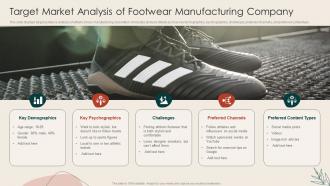
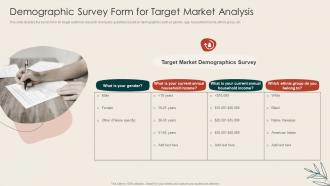
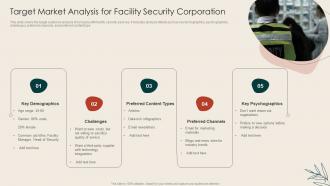
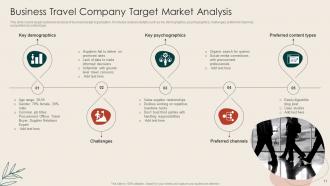
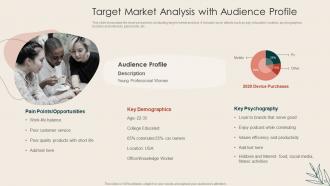
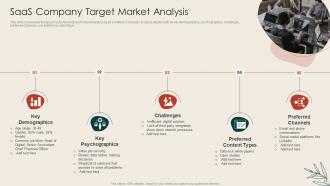
Key demographics for target market analysis include age, gender, income level, education, geographic location, occupation, and family status. These factors enable businesses to segment audiences effectively, tailor marketing strategies, and optimize product positioning, with companies across retail, healthcare, and financial services finding that demographic insights drive higher conversion rates and customer engagement.
Understanding psychographics enhances target market analysis by revealing consumer motivations, values, lifestyle preferences, and purchasing behaviors beyond basic demographics. This deeper insight enables businesses to craft more personalized marketing messages, develop relevant product features, and choose appropriate communication channels, with companies in retail, financial services, and healthcare finding significantly improved customer engagement and conversion rates.
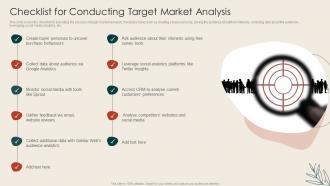
Tools for comprehensive target market analysis include Google Analytics, Facebook Audience Insights, SEMrush, SurveyMonkey, and Tableau for data visualization. These platforms streamline research by delivering demographic insights, competitor intelligence, and consumer behavior patterns, with many organizations finding that integrated analytics approaches ultimately enhance strategic decision-making and competitive positioning.
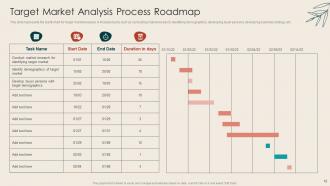
Businesses can identify and segment target markets through demographic analysis, behavioral data tracking, psychographic profiling, geographic mapping, and competitive research. These strategic approaches enable companies to understand customer preferences, purchasing patterns, and pain points more deeply, with many retail and financial services organizations finding that precise segmentation ultimately delivers higher conversion rates and improved resource allocation.
Competitor analysis reveals market gaps, pricing strategies, customer pain points, messaging approaches, and positioning opportunities that directly inform your target market understanding. By studying competitors' strengths and weaknesses, businesses can identify underserved segments, refine their value propositions, and develop differentiated strategies, ultimately delivering competitive advantage and enhanced market positioning.
Businesses should revisit their target market analysis quarterly for tactical adjustments and annually for comprehensive strategic reviews, with additional assessments triggered by major market shifts, competitive changes, or product launches. This regular cadence enables companies to capture evolving consumer behaviors, emerging demographics, and shifting preferences, ultimately maintaining competitive positioning and ensuring marketing investments deliver optimal ROI in an increasingly dynamic marketplace.
Social media insights inform target market analysis by revealing demographic patterns, engagement behaviors, content preferences, sentiment trends, and competitor audience overlap. These platforms enable businesses to analyze real-time conversations, identify emerging customer segments, and understand purchasing triggers across different demographics, ultimately delivering more precise market segmentation and targeted marketing strategies.
Common mistakes include defining markets too broadly, relying on assumptions rather than data, ignoring competitor analysis, neglecting customer feedback, and failing to segment audiences effectively. These oversights often lead businesses to misallocate resources and develop ineffective marketing strategies, with many organizations finding that conducting thorough research and regularly updating their analysis delivers significantly better customer engagement and competitive positioning.
Small businesses can utilize target market analysis through cost-effective methods like social media analytics, customer surveys, Google Analytics, and competitor research using free online tools. These approaches enable resource-constrained businesses to identify customer demographics, preferences, and behaviors without expensive market research firms, with many small retailers and service providers finding that focused analysis of their existing customer base delivers actionable insights for strategic growth.
Qualitative methods include focus groups, in-depth interviews, ethnographic research, and social media listening, while quantitative approaches encompass surveys, web analytics, sales data analysis, and demographic studies. These complementary methodologies enable businesses to understand both customer motivations and measurable behaviors, with many organizations finding that combining emotional insights with statistical trends delivers comprehensive market intelligence and competitive advantage.
Cultural context significantly influences target market analysis by affecting consumer behaviors, purchasing patterns, communication preferences, and product expectations across different regions and demographics. Understanding cultural nuances enables businesses to tailor their messaging, product positioning, and market entry strategies more effectively, with companies like McDonald's and Netflix finding that localized approaches based on cultural insights deliver higher engagement rates and market penetration than standardized global strategies.
Key metrics for measuring targeting success include conversion rates, customer acquisition cost (CAC), lifetime value (CLV), engagement rates, and return on ad spend (ROAS). These metrics enable businesses to evaluate campaign effectiveness, optimize resource allocation, and refine audience segmentation strategies, with many organizations finding that tracking CLV alongside acquisition costs ultimately delivers the clearest picture of long-term targeting ROI.
Customer feedback reveals actual usage patterns, unmet needs, pain points, and demographic characteristics that often differ from initial assumptions. Through surveys, interviews, and behavioral data analysis, businesses can identify their most valuable customer segments, refine messaging strategies, and discover new market opportunities, ultimately enabling more precise targeting and improved customer acquisition in an increasingly competitive landscape.
Customer journey mapping plays a crucial role in target audience understanding by visualizing touchpoints, identifying pain points, revealing decision-making patterns, and uncovering emotional drivers throughout the purchase process. Through detailed mapping, organizations streamline customer experiences, enhance engagement strategies, and optimize resource allocation, with many retail and service companies finding that comprehensive journey analysis ultimately delivers improved conversion rates and stronger customer loyalty.
Consumer behavior trends significantly reshape target market analysis by requiring continuous data collection, segmentation refinement, and strategy adaptation to evolving preferences, purchasing patterns, and communication channels. These shifts compel businesses to leverage real-time analytics, social listening tools, and predictive modeling, with many retail and financial services organizations finding that agile analysis frameworks ultimately deliver more accurate targeting and sustainable competitive advantage.
-
I was mind-blown by the services that SlideTeam provided me. Thanks a ton!
-
Fantastic and innovative graphics with useful content. The templates are the best and latest in the industry.