

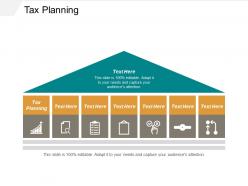
Tax planning ppt powerpoint presentation model templates cpb





Try Before you Buy Download Free Sample Product
 Impress Your
Audience
 100%
Editable
 Save Hours
of Time


Inject adrenaline with our Tax Planning Ppt Powerpoint Presentation Model Templates Cpb. Build up the desire to initiate action.
People who downloaded this PowerPoint presentation also viewed the following :
Tax planning ppt powerpoint presentation model templates cpb with all 5 slides:
Build up the desire to initiate action with our Tax Planning Ppt Powerpoint Presentation Model Templates Cpb. It will inject the adrenaline.


FAQs for Tax planning ppt powerpoint presentation
Key components of an effective tax planning strategy include income timing optimization, strategic deduction maximization, retirement account contributions, tax-loss harvesting, and entity structure evaluation. These approaches streamline financial operations by reducing current tax burdens, accelerating wealth accumulation, and enhancing long-term financial positioning, with many businesses and individuals finding that proactive planning delivers significant cost savings and competitive advantages.
Tax planning enables individuals and businesses to strategically time income, expenses, and investments to maximize available deductions and credits while minimizing overall tax liability. Through careful analysis of tax code opportunities, retirement contributions, and business expense timing, organizations streamline their financial strategies, ultimately delivering significant cost savings and enhanced cash flow for reinvestment and growth.
Tax-loss harvesting involves strategically selling investments at a loss to offset capital gains, thereby reducing overall tax liabilities and improving after-tax returns. This approach enables investors to minimize tax burdens while rebalancing portfolios, with many financial advisors finding that systematic harvesting throughout the year, rather than year-end adjustments, delivers optimal tax efficiency and long-term wealth preservation.
Changes in tax laws significantly reshape tax planning strategies by altering deduction limits, tax rates, compliance requirements, and filing deadlines, requiring immediate strategy adjustments. These regulatory shifts create both challenges and opportunities, with many financial advisors and accounting firms finding that proactive monitoring enables clients to optimize deductions, restructure investments, and maintain compliance while minimizing tax liabilities.
Tax-advantaged accounts like IRAs and 401(k)s deliver immediate tax deductions, tax-deferred growth, and reduced current taxable income, while Roth versions provide tax-free withdrawals in retirement. These strategic vehicles enable individuals and families to minimize lifetime tax burdens, accelerate wealth accumulation, and secure financial independence, with many finding that consistent contributions ultimately deliver substantial tax savings and enhanced retirement security.
Understanding your tax bracket helps inform investment decisions by determining optimal asset allocation, timing strategies, and account selection for maximum after-tax returns. Investors in higher brackets often prioritize tax-advantaged accounts, municipal bonds, and long-term capital gains strategies, while those in lower brackets might emphasize taxable growth investments, ultimately enabling more strategic wealth accumulation.
Freelancers and gig economy workers can employ quarterly estimated payments, detailed expense tracking, retirement account contributions, home office deductions, and separate business banking to optimize their tax planning. These strategies streamline tax obligations by maximizing legitimate deductions, reducing taxable income through strategic retirement savings, and maintaining clear financial records, ultimately delivering significant tax savings and enhanced financial organization for independent professionals.
Estate planning integrates with tax planning through strategic gift giving, trust structures, charitable donations, life insurance policies, and business succession planning. These approaches work by reducing taxable estate value, maximizing exemptions, and leveraging tax-advantaged vehicles, with many high-net-worth families finding that coordinated planning significantly minimizes estate tax burdens while preserving wealth.
Timing significantly impacts tax liability through strategic income deferral and expense acceleration, allowing taxpayers to shift obligations between tax years for optimal rates. Many businesses and individuals leverage this by accelerating deductible expenses before year-end while deferring income recognition, ultimately minimizing overall tax burden and enhancing cash flow management across multiple tax periods.
Charitable contributions can be optimized through strategic timing, donation bunching, appreciated asset giving, donor-advised funds, and charitable remainder trusts. These strategies enable taxpayers to maximize deductions by concentrating donations in high-income years, avoiding capital gains taxes, and creating flexible giving vehicles, ultimately reducing tax liability while supporting causes, with many finding bunching particularly effective for standard deduction optimization.
Capital gains taxes significantly influence investment timing, asset allocation, portfolio rebalancing decisions, and retirement planning strategies. These implications drive investors to consider tax-loss harvesting, hold assets for long-term preferential rates, utilize tax-advantaged accounts, and coordinate with estate planning, ultimately delivering enhanced after-tax returns and strategic wealth preservation.
Individuals can prepare for tax changes from life events by updating withholdings, reviewing filing status options, researching new deductions and credits, and consulting tax professionals for strategic planning. Major transitions like marriage, parenthood, or home purchases significantly impact tax liabilities and opportunities, with many finding that proactive adjustments to payroll deductions and retirement contributions ultimately deliver substantial savings and financial optimization.
Small businesses can leverage tax software like QuickBooks or TaxAct, consult certified public accountants, utilize IRS publications and online resources, attend Small Business Administration workshops, and access industry-specific tax guides. These resources work together to streamline compliance, identify deductions, and optimize timing strategies, with many small businesses finding that combining professional guidance with reliable software ultimately delivers significant cost savings and reduces audit risks.
Technology and tax software enhance tax planning efficiency by automating calculations, streamlining data collection, and providing real-time compliance updates across multiple jurisdictions. These solutions enable accounting firms and businesses to minimize manual errors, accelerate preparation timelines, and deliver more strategic advisory services, with many organizations finding that automated workflows ultimately reduce costs while improving client experiences.
Common tax planning mistakes include failing to keep detailed records, missing quarterly payment deadlines, overlooking available deductions and credits, poor timing of income and expenses, and neglecting retirement contributions. These oversights significantly impact financial outcomes, with many individuals and businesses finding that proactive planning, consistent documentation, and strategic timing ultimately deliver substantial tax savings and improved cash flow management.
No Reviews