


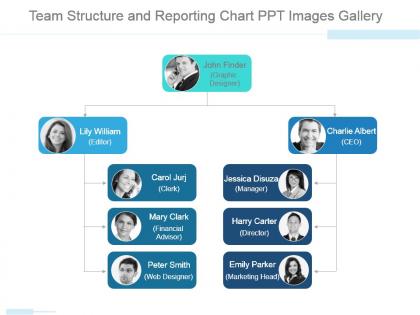
Team structure and reporting chart ppt images gallery




Try Before you Buy Download Free Sample Product
 Impress Your
 Audience
 100%
100% Editable
 Save Hours
 of Time


See belief in their eyes with our Team Structure And Reporting Chart Ppt Images Gallery. They create a 'can do' feeling.
People who downloaded this PowerPoint presentation also viewed the following :
Team structure and reporting chart ppt images gallery with all 5 slides:
Experience bliss with our Team Structure And Reporting Chart Ppt Images Gallery. They create an air of ecstacy.

FAQs for Team structure and reporting chart
Honestly, having clear team roles saves you so much headache. Nobody's confused about who's doing what or who they report to. Decision-making gets faster too since the chain of command makes sense. You know those awkward situations where everyone assumes someone else is handling it? Yeah, that pretty much disappears. Communication flows better when people know the reporting lines. Plus it's easier to spot where you need more training or skills. Just sketch out your current setup first - I bet you'll see some obvious fixes right away. Trust me, it's worth the effort upfront.
Honestly, your team setup makes a huge difference in how smoothly things run. Those old-school hierarchies? Total bottleneck - everything crawls up and down the ladder. Flat teams let people actually talk to each other, though sometimes no one knows who's calling the shots (been there). I'm a big fan of mixing departments together because you get way better ideas when different people bounce thoughts around. Siloed teams just miss stuff they shouldn't. Really depends what you're trying to get done though. Pick whatever stops people from banging their heads against unnecessary walls.
Honestly, your leadership style is what makes or breaks team dynamics. Figure out who's doing what first - then map how info actually flows between people. Good leaders build structure around their team's specific strengths instead of just copying some random playbook. Stay flexible though, because the best setups change as your people grow. Ask your team what's working versus what feels clunky - you'll be surprised what they notice that you don't. And don't get too attached to one way of doing things. Teams that click have leaders who actively design collaboration instead of just hoping it happens naturally.
Honestly, remote work makes you rethink everything about team structure. Those random coffee chats are gone (which actually sucks more than I expected), so now you need crystal clear roles and way better communication systems. I'd go with smaller, independent teams instead of massive hierarchies - cross-functional squads are perfect because they don't need approval for every little thing. Design everything for async first, then sprinkle in meetings only when they're actually useful. Oh, and map out which decisions each team can make solo. That'll save you tons of back-and-forth headaches.
Flat structures are great for speed - no endless approval chains slowing things down. Your team feels more ownership too, which is awesome for creativity. The downside? Total chaos sometimes. I've watched projects die because nobody knew who actually made the final call. Hierarchical setups give you clear accountability and career paths, but man, they can be slow. Innovation gets crushed under all those layers. Team size matters a lot here. Under 15 people doing creative work? Go flat. Bigger teams or anything requiring strict processes? You'll probably need some hierarchy or it gets messy fast.
Honestly, your team structure is probably what's slowing everything down. Too many management layers? Decisions take forever because everyone needs to weigh in. Go too flat though and you'll have people stepping on each other's toes - been there, not fun. The trick is figuring out what actually fits your project size. I'd literally draw out who makes which decisions right now and spot where things get stuck. Clear ownership of stuff matters way more than having the "perfect" org chart. Short projects can handle more chaos than long ones anyway.
Start with Slack or Teams for daily chat - that's your baseline. Then grab a project management thing like Asana or Trello so people actually know what they're supposed to be doing. Honestly, the specific tool doesn't matter much as long as everyone uses it consistently (which is harder than it sounds). If you've got a bigger team, something like Lucidchart helps map out who reports to who. BambooHR's solid for tracking changes. But here's the thing - don't go crazy with tools. Pick maybe 2-3 max and train people properly, otherwise you'll just create more chaos.
Start by looking at your current setup - where are the blind spots? Don't just throw together a "diverse" team and call it done (I've seen way too many that still think exactly alike). Mix up perspectives, backgrounds, and skills when you're building teams. The reporting structure matters too - you don't want certain groups getting stuck in silos. Rotate who's leading different projects if you can. Cross-team collaboration is huge for breaking down barriers. Honestly, it's about baking this stuff in from day one, not slapping it on later.
Honestly, start with delivery speed - are you actually shipping stuff faster now? Then check meeting overload because that's where teams usually die a slow death. I'd also do quick pulse surveys to see if people are miserable or not. Decision speed matters too - how long from "hey we should do this" to actually doing it? Oh and see if teams are helping each other or just blocking each other constantly. Pick like 2-3 of these max though. You'll go crazy trying to measure everything at once.
Your team structure isn't permanent - change it as you grow and pivot. Scaling up means you'll probably need more specialized roles and clearer hierarchies (nobody wants chaos). Strategic shifts? Sometimes you gotta reshuffle entire teams or build new cross-functional ones. Most companies I've watched hit around 50-100 people and suddenly need real departments instead of their flat startup vibe. Don't just let it evolve randomly though. Check your org chart every 6 months or so and honestly ask: does this still make sense for where we're headed right now?
Don't overthink the structure from day one - that's where most people mess up. Clear roles matter way more than fancy org charts. Too many management layers? Total productivity killer, trust me. Communication between teams always gets overlooked and then you're stuck with departments that barely talk to each other. Keep things flexible since you'll definitely need to adjust as you grow. Honestly, I'd just nail the basics first then tweak whatever isn't working for your specific team.
Honestly, mix up your teams with people from different departments - that's where the magic happens. When you've got diverse skill sets bouncing ideas off each other, creativity just flows naturally. Flat hierarchies are clutch too because junior people won't feel intimidated to share wild ideas. I'm biased toward startups for this reason - they nail the whole "fail fast" mentality. Give teams space to experiment without micromanaging every move. Schedule dedicated brainstorming time that isn't about fixing urgent problems. Most important thing? People need to feel safe sharing dumb ideas without getting roasted. Oh, and rotate team members every few months to keep things fresh.
Honestly, just bake it into your regular routine instead of hoping it'll happen naturally. Weekly one-on-ones are clutch, plus monthly team retros (those really help you catch process issues). I'd also throw in quarterly 360s if you can swing it. Make sure feedback flows both ways though - your team should feel comfortable giving you input too. Psychological safety is huge here, otherwise people just sit there agreeing with everything. Oh, and don't try to implement everything at once or you'll burn out. Pick one thing first, maybe those weekly check-ins, then build from there.
Honestly, your team structure makes a huge difference in how people actually feel about their jobs. Clear roles help everyone know where they stand - nobody likes confusion about who does what. Flat structures are great because people feel heard, but I've seen them get messy real quick when too many cooks are in the kitchen. Hierarchical setups give stability, though sometimes employees feel cut off from the big decisions. You really gotta match whatever structure you pick to how your specific team communicates. Maybe shoot them a quick survey? Ask what's bugging them or working well.
Look, you gotta match your team setup to what your industry actually needs. Tech moves fast, so small cross-functional teams work great there. But if you're in healthcare or finance? You need clear chains of command because of all the regulations. Manufacturing usually does well mixing both approaches - though honestly, I've watched way too many companies just copy Google's playbook without thinking. Dumb move. Figure out if your industry cares most about speed, staying compliant, innovation, or just running smoothly. Then build teams around that. Map your biggest headaches to what your teams can handle.
-
Perfect template with attractive color combination.
-
Awesome use of colors and designs in product templates.