

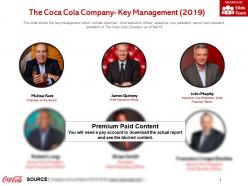
The coca cola company key management 2019





Try Before you Buy Download Free Sample Product
 Impress Your
Audience
 100%
Editable
 Save Hours
of Time


Enlighten folks with inspiring advice through our The Coca Cola Company Key Management 2019. Bring joy to their hearts.
People who downloaded this PowerPoint presentation also viewed the following :
The coca cola company key management 2019 with all 5 slides:
Depict joyful images with our The Coca Cola Company Key Management 2019. Inject good cheer into the interaction.


FAQs for The coca cola company
Coca-Cola's 2019 management strategies focused on portfolio optimization, digital transformation, supply chain streamlining, and organizational restructuring to reduce complexity and accelerate growth. These initiatives enabled the company to divest underperforming brands, automate bottling operations, and implement data-driven decision making across markets, ultimately delivering improved margins and enhanced customer experiences in an increasingly competitive beverage landscape.
Coca-Cola's leadership approach in 2019 emphasized transparency, employee empowerment, and cultural transformation through streamlined communication channels, expanded professional development opportunities, and inclusive decision-making processes. This strategic focus enhanced employee satisfaction, reduced turnover rates, and strengthened cross-functional collaboration, with many divisions finding that empowered teams delivered faster innovation cycles and improved customer experiences, ultimately positioning the company for sustained competitive advantage.
Sustainability initiatives served as a central pillar of Coca-Cola's 2019 management strategy, focusing on water stewardship, packaging innovation, climate action, and community development programs. The company leveraged these initiatives to enhance brand reputation, meet regulatory requirements, and reduce operational costs, while positioning itself competitively in an increasingly environmentally-conscious market landscape.
Coca-Cola's management responded by diversifying their portfolio with low-sugar and zero-calorie beverages, expanding into water, tea, and coffee segments, and reformulating existing products to reduce sugar content. Through strategic acquisitions like Costa Coffee and partnerships with health-focused brands, they streamlined operations while enhancing consumer choice, ultimately delivering improved market positioning in an increasingly health-conscious landscape.
Coca-Cola's management faced intensifying competition from craft beverage brands, health-conscious consumer shifts toward low-sugar alternatives, and aggressive pricing pressure from PepsiCo and emerging regional players across key markets. These challenges required strategic portfolio diversification, with management accelerating investments in water, tea, and sports drinks while streamlining operations, ultimately delivering enhanced market positioning and improved competitive resilience.
Coca-Cola leveraged technology through advanced data analytics for consumer insights, AI-powered vending machines, digital marketing platforms, and supply chain automation systems. These digital transformation initiatives enhanced operational efficiency, personalized customer experiences, and streamlined distribution processes, with many beverage companies finding that strategic technology integration ultimately delivers competitive advantage and accelerated growth in increasingly dynamic markets.
Coca-Cola's 2019 marketing management significantly enhanced brand perception through personalized campaigns, digital transformation initiatives, and sustainability messaging that resonated with younger demographics. The company's strategic focus on emotional storytelling, localized content across global markets, and partnerships with major sporting events strengthened consumer loyalty while positioning Coca-Cola as a socially responsible brand, ultimately delivering improved market share and enhanced customer engagement in an increasingly competitive beverage landscape.
Coca-Cola's management addressed 2019 supply chain disruptions through strategic diversification of suppliers, enhanced digital tracking systems, and strengthened regional distribution partnerships across key markets. These initiatives enabled the company to maintain product availability, reduce dependency on single-source suppliers, and accelerate response times to market fluctuations, ultimately delivering improved operational resilience and consistent customer experiences globally.
Coca-Cola's 2019 financial management decisions included strategic portfolio optimization through brand divestitures, increased investment in zero-sugar product lines, enhanced digital marketing capabilities, and streamlined supply chain operations. These decisions enabled the company to reallocate resources toward higher-growth segments, reduce operational complexity, and strengthen market position in health-conscious consumer segments, ultimately delivering improved margins and sustainable revenue growth.
Coca-Cola's management accelerated product innovation in 2019 through strategic acquisitions like Costa Coffee, expanding zero-sugar variants across core brands, and launching new categories including energy drinks and premium mixers. These initiatives enabled diversification beyond traditional carbonated beverages, enhanced health-conscious consumer appeal, and strengthened market positioning, with many regions finding that localized flavor innovations ultimately delivered increased market share and competitive advantage.
Coca-Cola's 2019 corporate social responsibility approach focused on sustainable packaging, water stewardship, community empowerment, and environmental protection through comprehensive recycling initiatives and local partnership programs. The company emphasized measurable impact by reducing plastic waste, supporting women entrepreneurs globally, and investing in water conservation projects, ultimately delivering enhanced brand reputation and stakeholder trust while addressing critical sustainability challenges across their operational markets.
Coca-Cola's management prioritized diversity and inclusion in 2019 through comprehensive workplace equity initiatives, targeted leadership development programs, supplier diversity expansions, and enhanced employee resource groups focused on underrepresented communities. These strategic efforts streamlined talent acquisition, enhanced workplace culture, and strengthened community partnerships, with many consumer goods companies finding that inclusive practices ultimately deliver improved innovation, broader market reach, and sustainable competitive advantage.
Coca-Cola's 2019 strategic partnerships delivered enhanced market penetration, accelerated innovation cycles, expanded distribution networks, and strengthened digital capabilities across global markets. These alliances enabled faster product launches in emerging categories, improved supply chain efficiency, and enhanced consumer engagement through technology integration, ultimately positioning Coca-Cola for sustained competitive advantage in an increasingly dynamic beverage landscape.
Coca-Cola's management navigated 2019 regulatory challenges through localized compliance strategies, proactive engagement with regulatory bodies, and strategic product reformulations to meet health standards. The company adapted to sugar taxes in markets like the UK and Mexico, enhanced transparency in labeling across European markets, and strengthened food safety protocols in emerging economies, ultimately maintaining market access while demonstrating regulatory agility.
Coca-Cola's 2019 management decisions offer valuable lessons in portfolio diversification, digital transformation, and strategic brand expansion beyond traditional carbonated beverages. The company's emphasis on health-conscious product lines, sustainability initiatives, and localized market approaches demonstrates how beverage leaders can adapt to changing consumer preferences while maintaining core brand strength, ultimately delivering competitive advantage in an increasingly health-focused marketplace.
No Reviews