

Three pillars for business development powerpoint templates




Try Before you Buy Download Free Sample Product
 Impress Your
 Audience
 100%
100% Editable
 Save Hours
 of Time


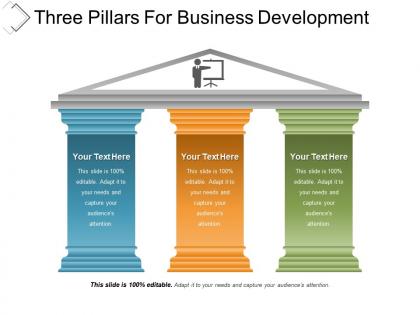
Sustainable development is the ultimate intention of most firms, but, like a mirage, the vision seldom becomes a reality. Presenting these goals using three pillars for business development PowerPoint templates created by SlideTeam helps in driving you towards your aim. The world is not deficient in new growth hacks, practices, and advanced techniques, however, most firms don’t realize these underlying structures. SlideTeam has composed this PowerPoint template for goals of development in a way that is straightforward and extremely easy to understand, and so, the presenter will not come across any complications in order to describe the development strategies to the audience. There are unlimited ways to splurge your money into something futile. SlideTeam focuses on creating effective PPT slideshow that will optimize the growth outcomes. The high-quality content makes it easier to grasp your ideas. Implementing efficient business development strategies is no more a complicated procedure with these PPT slides. Download this compelling PowerPoint template now to leave a mark with your presentation.
People who downloaded this PowerPoint presentation also viewed the following :
Three pillars for business development powerpoint templates with all 5 slides:
Our Three Pillars For Business Development Powerpoint Templates are the epitome of elegance. Get your hands on customized craftsmanship.


FAQs for Three pillars for business
You've got huge advantages over big companies - you can pivot quickly and actually get to know your customers. Build real relationships instead of just hunting for leads. Find businesses that complement yours and set up referral partnerships. Your local connections are gold, honestly. Customer stories and testimonials work way better than fancy ads anyway. Here's the thing - you already understand your customers better than most competitors do. Don't compete on price, that's a losing game. Compete on service and personal touch. Pick your top three referral sources and spend time with them this week.
Look, market research is basically your cheat sheet for not screwing up. You'll actually know what your prospects care about instead of just winging it - their problems, how they buy stuff, what gets their attention. It helps you figure out which segments are worth chasing and catch opportunities competitors are sleeping on. Honestly, the best part? You can test your ideas before dumping money into them. I learned this the hard way on a previous project. Use what you find to tweak your pitch and make your outreach way more targeted. Start simple - just ask your current customers what made them choose you originally.
Look, networking is honestly everything in business development. Cold calling still works but it's such a grind compared to having actual connections. When you know people, you get warm intros and hear about opportunities before they're posted anywhere. Trust matters way more than people think - clients buy from folks they actually like. Your network becomes this weird early warning system for industry changes too. I'd focus on building real relationships with maybe 10-15 key players rather than collecting a million business cards. Quality beats quantity every time, especially when you're starting out.
Honestly, automation is a game changer for BD work. Start with your biggest headaches - maybe lead qualification or those endless follow-up emails. CRM systems can handle most of that automatically, plus schedule your outreach without you babysitting every step. AI research tools are pretty solid for finding the right prospects too. Our team basically cut admin work in half once we got our system dialed in. Oh, and proposal generation - that's another huge time suck you can automate. The whole point is freeing yourself up for the relationship stuff that actually matters.
Track the basics first - lead gen numbers, conversion rates between stages, and how quickly deals close. Revenue growth and customer acquisition costs are no-brainers. But here's what most people miss: relationship stuff matters too. Meeting-to-opportunity ratios tell you if you're actually connecting with the right people. Average deal size shows whether you're climbing upmarket (which honestly should be the goal for most companies). Partnership metrics are huge if that's part of your strategy. Don't go crazy measuring everything though. Pick 3-5 that actually matter for your goals and stick with those.
Honestly, start with real data about your customers - not just guesses. Survey them, check your website analytics, dig into social media insights. Figure out their actual problems and where they hang out online. LinkedIn works great for B2B folks, Instagram's better for younger crowds. Then just... be helpful instead of pushy? I know it sounds obvious, but share useful stuff and actually talk to people before trying to sell anything. Oh, and definitely test different approaches - what works for one business might totally flop for another. Double down on whatever actually brings in customers.
Honestly, the toughest part is just getting people to take you seriously when you're starting out. You don't have the budget to compete with big players, so forget traditional sales stuff. I'd focus on your existing contacts first - ask for warm intros, that actually works better than cold outreach anyway. Partner with businesses that complement yours instead of competing. Content marketing and genuine networking will be your best friends here. Oh, and be prepared to be scrappy for a while. People can smell desperation though, so make sure every interaction actually adds value for them. It's a grind but totally doable.
Dude, you HAVE to get other departments on board or you're basically screwed. Marketing feeds you leads, sales closes deals, product builds what customers actually want - BD can't exist in a vacuum. I've watched so many teams crash and burn because nobody was talking to each other (it's painful to see honestly). Regular check-ins are your best friend here. Create some shared goals everyone can get behind. Trust me, when departments actually work together, your leads are better qualified and handoffs don't suck. Plus you'll sound way smarter on prospect calls.
So customer feedback is like your business GPS - tells you exactly where to go next. You'll discover what people actually want (not what you assume they want, which can be humbling lol). Use it to figure out which products to build or markets to tackle. I'd set up regular ways to collect this stuff, not just when things go wrong. Those gaps customers point out? That's where your next revenue opportunities hide. Honestly, most companies just wing it instead of listening. Make feedback part of your quarterly planning - it's gold.
Honestly, social media's great for building relationships and finding leads if you actually engage instead of just posting into the void. LinkedIn's your best bet for B2B stuff - share industry insights, comment on prospects' posts, join groups where your clients are lurking. Twitter and Instagram work too for showing your personality and expertise. But here's the thing - pick just 1-2 platforms max. I see too many people trying to be everywhere and failing miserably. Start real conversations, share valuable content consistently, and don't just broadcast your stuff. Oh, and actually respond when people comment!
Honestly, most people screw this up because they only call when they need something. Check in regularly just to see how they're doing - no agenda. When you're in meetings, listen way more than you talk and actually remember the random stuff they mention about their kids or whatever. Oh, and be upfront when things go sideways instead of trying to cover it up. That transparency thing really works. Follow through on everything, even tiny promises. I started keeping a simple spreadsheet to track when I last talked to each client - sounds nerdy but it's been a game changer. Short version: communicate consistently and don't be flaky.
Content marketing is basically your secret weapon for generating leads and building relationships at the same time. You create stuff that actually helps your prospects solve their problems, which makes you look like the expert way before they're ready to buy. Way better than cold calling people who don't want to hear from you, honestly. Your blog posts and case studies become these natural conversation starters that open doors. Current clients think you're staying ahead of the curve too when you're dropping insights regularly. Oh, and map your content to where people are in their buying process - that part's huge.
AI and automation are total game-changers right now - seriously streamlines everything from processes to customer service. Remote partnerships mean geography doesn't matter anymore, which opens up so many doors. Sustainability stuff isn't just hype either; people actually care about companies doing the right thing environmentally. Data-driven decisions and personalization? Yeah, that's basically expected now. Subscription models are everywhere too (probably because they're brilliant for recurring revenue). Here's what I'd do: audit what trends actually make sense for your business and customers. Don't try to chase everything at once - pick maybe 1-2 and really focus there first.
Dude, figure out what gap you're actually filling that they aren't. Better pricing? Cool features they don't have? Maybe you're hitting a market they totally ignore. Most people honestly just skip the research part which is insane to me. Dig into their messaging and customer reviews first. Then build your story around what makes you different - not just "we're better!" Test your positioning with real customers early. The whole point is being distinctly you, not some slightly tweaked version of what's already out there.
Dude, start with a solid CRM - HubSpot or Salesforce, whatever fits your budget. Game changer for tracking your pipeline. LinkedIn Sales Navigator is clutch for finding prospects too. Those two together? Your workflow will never be the same. Google Analytics might seem boring but you need to see what's actually working. I'm lowkey obsessed with sales podcasts and webinars - probably listen to way too many but they keep me sharp on new tactics. Honestly though? Get your CRM dialed in first. Everything else is just noise if your prospect data's a mess.
-
Appreciate the research and its presentable format.
-
Good research work and creative work done on every template.