


Tiered Pricing Model For Managed Service Powerpoint Presentation Slides





Try Before you Buy Download Free Sample Product
 Impress Your
 Audience
 100%
100% Editable
 Save Hours
 of Time


Explore our professionally curated PowerPoint presentation on Tiered Pricing Model for Managed Service, designed to enhance organizational performance and reduce costs by outsourcing various IT services. It is a valuable resource for IT and Chief Strategy Managers seeking to determine the optimal pricing model for their organization. Our Capacity Services Management deck offers an in depth analysis of the global managed service industry, encompassing thorough research on market trends, dynamics, and the overall global market scenario. Additionally, it provides competitive analysis, identifying key market leaders and assessing the nature of competition within the industry. Within our Business Model PPT, we unveil innovative pricing models, leveraging automation processes and incorporating various services into organizations. These pricing models, including Per User Pricing, Per Device Pricing, A La Carte Pricing, and Tiered Pricing, are carefully compared based on scalability, cost effectiveness, and technological advancements. Furthermore, our Cloud service providers module highlights the impact of implementing these pricing strategies and the profound effects they can have on sales growth, operational cost reduction, and market share expansion for managed services. Get instant access.
People who downloaded this PowerPoint presentation also viewed the following :
Content of this Powerpoint Presentation
Slide 1: This slide introduces Tiered Pricing Model for Managed Service. Commence by stating Your Company Name.
Slide 2: This slide depicts the Agenda of the presentation.
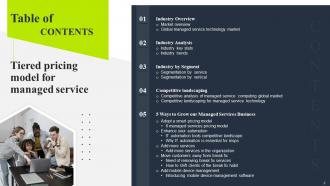
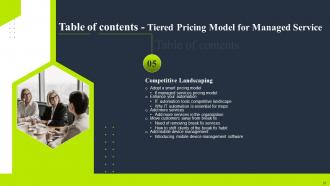
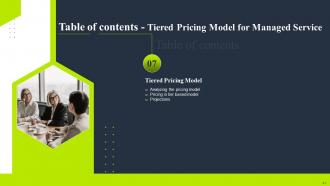
Slide 3: This slide includes the Table of Contents.
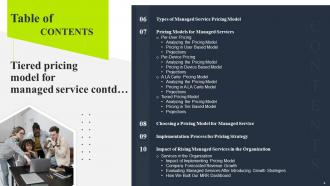
Slide 4: This slide further continues the Table of Contents.
Slide 5: This slide highlights the Title for the Topics to be covered further.
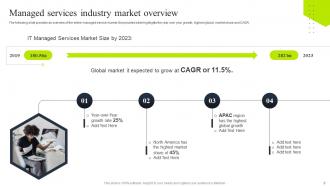
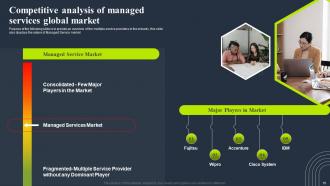
Slide 6: This slide depicts the Managed services industry market overview.
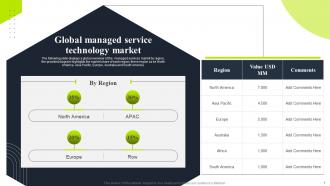
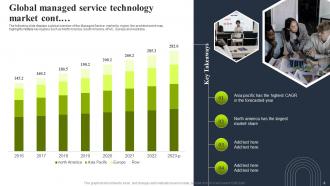
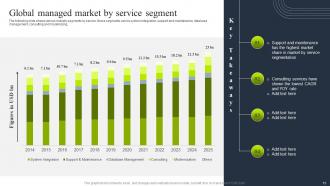
Slide 7: The following slide displays a global managed service technology market.
Slide 8: This slide continues the global overview of the Managed Service market.
Slide 9: This slide reveals the Heading for the Contents to be discussed next.
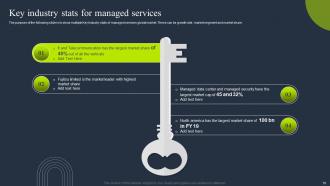
Slide 10: This slide states the Key industry stats for managed services.
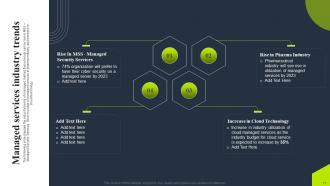
Slide 11: This slide talks about Managed services industry trends.
Slide 12: This slide indicates the Title for the Ideas to be covered in the upcoming template.
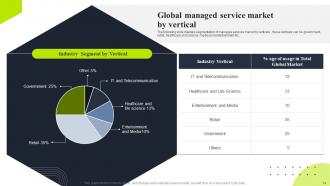
Slide 13: The following slide shows various industry segments.
Slide 14: The following slide displays segmentation of manages services market.
Slide 15: This slide states the Hedaing for the Ideas to be discussed further.
Slide 16: The Purpose of this slide is to provide an overview of the multiple service providers.
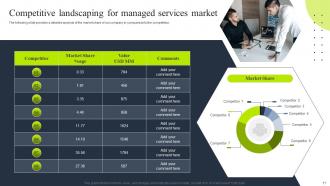
Slide 17: This slide displays the Competitive landscaping for managed services market.
Slide 18: This slide contains the Title for the Contents to be covered next.
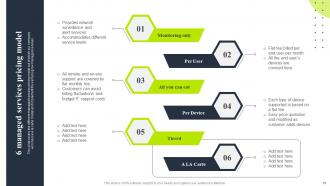
Slide 19: This slide covers the different managed services pricing model.
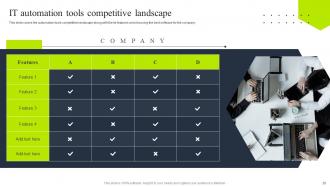
Slide 20: This slide shows the IT automation tools competitive landscape.
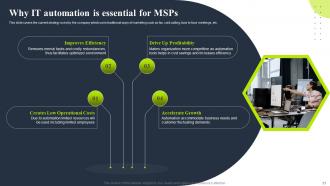
Slide 21: This slide highlights the current strategy used by the company which uses traditional ways of marketing.
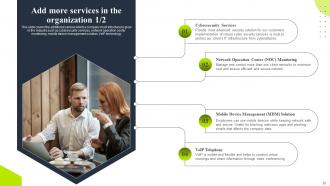
Slide 22: This slide covers the additional service which a company must introduce to grow in the industry.
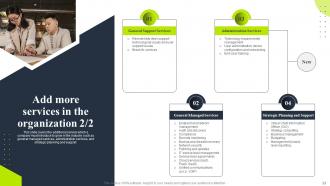
Slide 23: This slide continue the additional service which a company must introduce to grow in the industry.
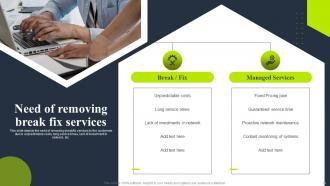
Slide 24: This slide exhibits the Need of removing break fix services.
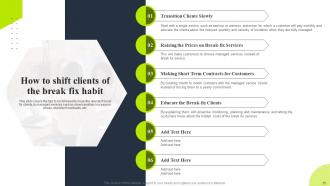
Slide 25: This slide states How to shift clients of the break fix habit.
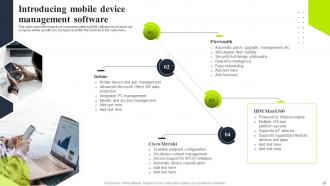
Slide 26: This slide covers the features of companies offering MDM software.
Slide 27: This slide displays the Heading for the Topics to be discussed further.
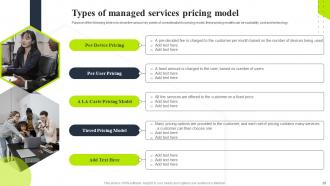
Slide 28: This slide states the Types of managed services pricing model.
Slide 29: This slide includes the Title for the Topics to be covered in the upcoming template.
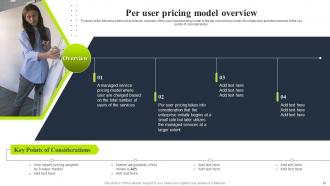
Slide 30: This slide showcases Per user pricing model overview.
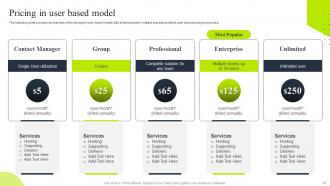
Slide 31: The following slide provides an overview of the pricing.
Slide 32: The Purpose of the following slide is to show total projected sales based on User based pricing model.
Slide 33: This slide depicts teh Heading for the Contents to be further discussed.
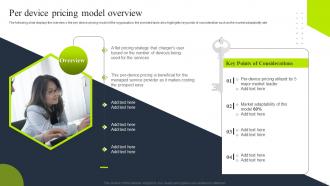
Slide 34: This slide states the Per device pricing model overview.
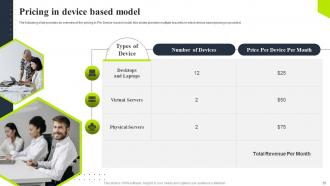
Slide 35: This slide reveals the Pricing in device based model.
Slide 36: The Purpose of the following slide is to show total projected sales based on devcie based pricing model.
Slide 37: This slide indicates the Title for the Ideas to be covered in the upcoming template.
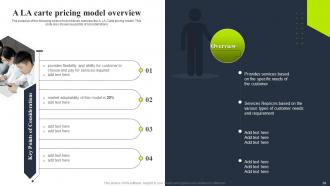
Slide 38: This slide includes the A LA carte pricing model overview.
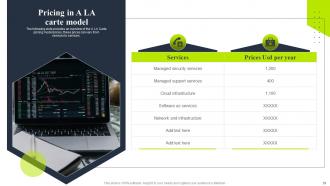
Slide 39: The following slide provides an overview of the A LA Carte pricing model prices.
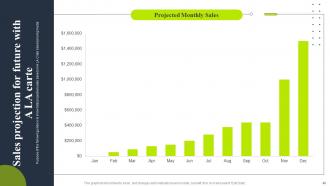
Slide 40: This slide highlights the Sales projection for future with A LA carte.
Slide 41: This slide displays the Heading for the Ideas to be discussed in the next template.
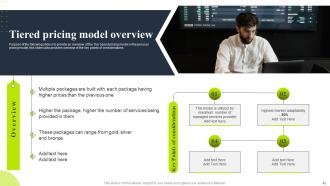
Slide 42: This slide shows the Tiered pricing model overview.
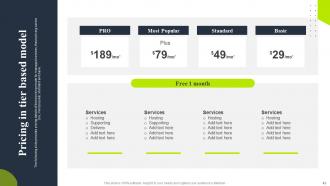
Slide 43: This slide reveals the Pricing in tier based model.
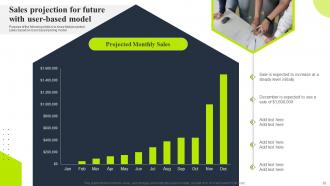
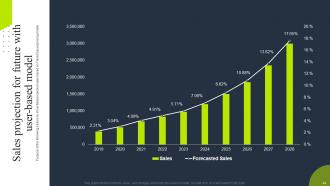
Slide 44: This slide portrays the Sales projection for future with user-based model.
Slide 45: This slide exhibits the Title for the Contents to be covered next.
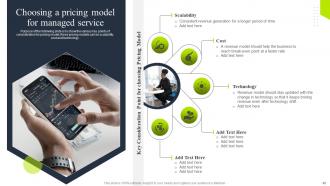
Slide 46: This slide deals with Choosing a pricing model for managed service.
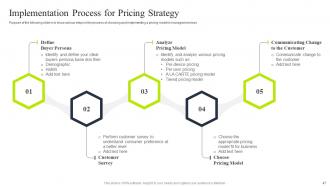
Slide 47: The Purpose of this slide is to show various steps in the process of choosing and implementing a pricing model.
Slide 48: This slide displays the Heading for the Topics to be discussed further.
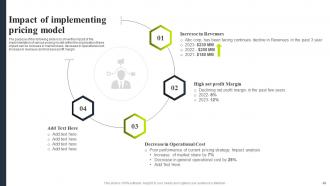
Slide 49: The purpose of the following slide is to show the impact of the implementation of various pricing model within the organization.
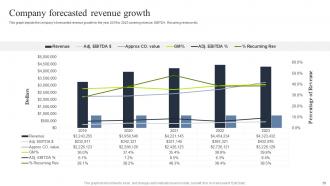
Slide 50: This slide displays the Company forecasted revenue growth.
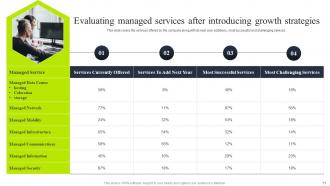
Slide 51: This slide focuses on evaluating managed services after introducing growth strategies.
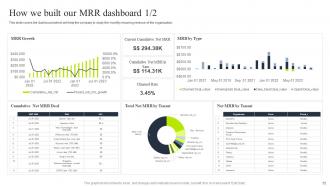
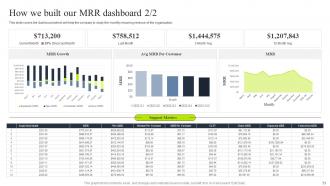
Slide 52: This slide covers the dashboard which will help the company to study the monthly recurring revenue of the organization.
Slide 53: This slide continues the dashboard which will help the company to study the monthly recurring revenue of the organization.
Slide 54: This is the Icons Slide containing all the Icons used in the plan.
Slide 55: This slide is used for depicting some Additional information.
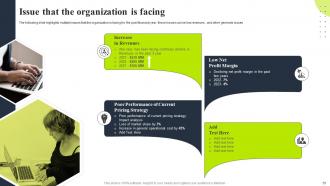
Slide 56: The following slide highlights multiple issues that the organization is facing for the past financial year.
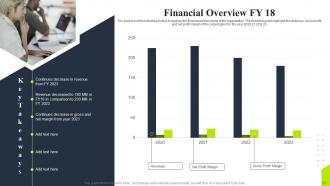
Slide 57: The The purpose of the following slide is to analyze the financial performance of the organization.
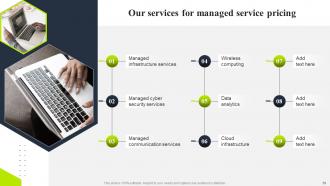
Slide 58: This slide presents the company's services for managed service pricing.
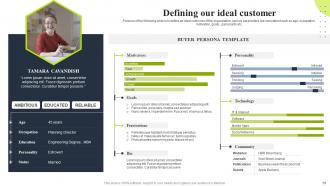
Slide 59: This slide emphasizes on Defining the ideal customer.
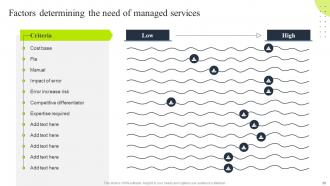
Slide 60: This slide exhibits the Factors determining the need of managed services.
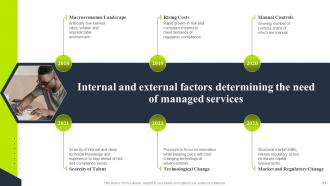
Slide 61: This slide portrays the Internal and external factors determining the need of managed services.
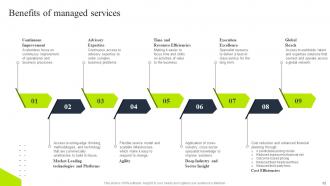
Slide 62: This slide states the Benefits of managed services.
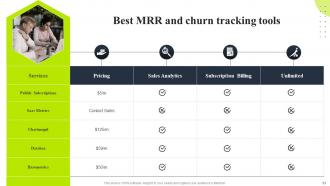
Slide 63: This slide shows the Best MRR and churn tracking tools.
Slide 64: This is the About us slide for stating the company-related information.
Slide 65: This is Meet our team slide. State your team-related information here.
Slide 66: This slide presents the company's mission, vision, and goals.
Slide 67: This slide showcases the organization's Roadmap.
Slide 68: This slide contains the Post it notes for reminders and deadlines.
Slide 69: This is the Venn diagram slide.
Slide 70: This is the Idea generation slide for encouraging fresh ideas.
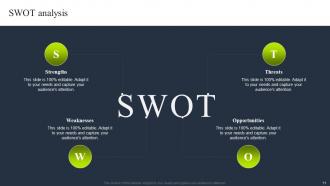
Slide 71: This slide depicts the SWOT analysis.
Slide 72: This is the Thank You slide for acknowledgement.
Tiered Pricing Model For Managed Service Powerpoint Presentation Slides with all 77 slides:
Use our Tiered Pricing Model For Managed Service Powerpoint Presentation Slides to effectively help you save your valuable time. They are readymade to fit into any presentation structure.










FAQs for Tiered Pricing Model For Managed Service
Dude, you're basically casting a wider net for customers with totally different budgets. One fixed price either scares off broke people or leaves cash on the table from folks who'd pay way more. With tiers, your cheap option hooks budget-conscious users while premium stuff milks the power users who want all the bells and whistles. Plus customers can actually grow with you - they'll start basic and upgrade when they need more features. I'd honestly map out what each customer type cares about most first. Makes the whole thing way less overwhelming to set up.
Honestly, tiered pricing is amazing for retention. People hate overpaying for stuff they don't use, so when you give them options that actually fit their needs, they stick around way longer. There's also this weird psychology thing where upgrading feels like you're leveling up instead of just burning more cash - sounds dumb but it totally works. Just don't make your pricing jumps crazy steep or you'll scare people off. The whole point is making upgrades feel natural, not like some massive commitment. Oh, and definitely let people start small - nobody wants to go all-in right away.
Honestly, just look at how your customers actually use your product and what they're willing to spend. Find the natural breakpoints - like casual users vs heavy users vs big companies. Don't go crazy with tiers though, 3-4 is plenty. More than that gets confusing fast. Each tier needs to make you money while still feeling worth it to customers. The trick is making the value jump between levels super obvious so people get why they'd upgrade. Oh and definitely survey your current users first - they'll tell you exactly what matters to them. Way better than guessing.
Make your tiers super clear - no weird jargon that makes people squint at their screen. Show concrete benefits, not just a boring feature list. Like "saves 5 hours/week" instead of "advanced automation tools." Highlight your middle tier as "most popular" - people love being told what others choose. The value jump between each level needs to feel obvious and worth it. I actually hate when companies make me decode their pricing like it's some puzzle. Your customers should instantly get why they'd upgrade from basic to premium without doing mental gymnastics.
So tiered pricing is basically this psychological trick where you make the middle option look amazing. Most people won't go for the cheapest one - feels sketchy, right? And the expensive tier scares them off. So they pick exactly what you wanted them to pick. Plus customers can just choose what fits their budget without you having to convince them. The fancy premium option makes your regular price seem totally reasonable too. I swear this stuff works on me all the time at coffee shops. Just set up your tiers to push people toward whatever makes you the most money, not just what covers your costs.
Honestly, the worst mistake is making your pricing super confusing - like when you can't figure out what's actually different between tiers. Stick to 3-4 options max. Don't price your middle and premium tiers too close together either, people will just pay the extra $10 or whatever. I see companies cramming every random feature into their top tier which is... not helpful. Better approach? Figure out what customers actually want at different points (not what you think they want) and build from there. Oh and make sure the value jump between each tier is obvious - otherwise you're just confusing people for no reason.
Start by pulling your last 6 months of customer data - that's where the real insights live. Map it against your current tiers to see where people actually cluster and what features they're using. Conversion rates between tiers will show you the friction points, and honestly, most companies are probably leaving money on the table somewhere. Check your churn patterns too. Heat maps can reveal which features people ignore vs. the ones they can't live without. Look for those smooth upgrade paths versus the ones where customers just... stop. It's usually pretty obvious once you dig in.
So basically competitor pricing is your sanity check when you're building tiers. Look at what they're charging for their basic stuff and price your entry tier accordingly. Your premium should cost more but you better have solid reasons why. Don't just steal their whole structure though - that's boring and you'll miss good opportunities. Check where they're screwing up or have weird pricing jumps. That's where you swoop in with better tiers. Your middle tier is usually the sweet spot for standing out. Offer something they don't at that price range. I'd map out 3-4 main competitors first and see how your tiers stack up against theirs.
Honestly, I'd start small with A/B testing - maybe grab 10-20% of your customers and try different tier setups. That way if it bombs, you're not screwing over your entire user base. Mock up some landing pages with different pricing models and see which ones convert better. Way easier than overhauling your whole billing system right away. Oh, and definitely survey your existing customers about potential tiers. Their input is usually spot-on since they actually use your product. Once you've got solid data from these tests, rolling out the winner feels way less risky.
Try the decoy effect first - put a crappy option next to your middle tier so it looks amazing. Lead with your highest price too, makes everything else seem reasonable. Names are huge honestly, like "Professional" vs "Tier 2" is night and day. Show what's included AND what's missing in each tier - the contrast hits different. I'd probably test these three things and see what actually works for your people. Oh and don't overthink it, sometimes the simplest changes move the needle most.
Look for patterns in what people complain about most. If everyone's saying your middle tier sucks or they can't figure out what's included, that's your answer right there. People get *really* vocal about pricing - which honestly makes your job easier because they'll just tell you what's broken. Watch which plans they're upgrading from and downgrading to. Also track feature requests and complaints about gaps between tiers. Then use all that to tweak your pricing, move features around, or maybe add a whole new tier that actually matches what they want.
Look at SaaS companies - Slack, Zoom, basically any app you use daily. They've nailed tiered pricing. Netflix and Spotify too, because people actually like picking their level based on what they need and want to pay. AWS built their whole thing around it, honestly. What works is when you can naturally break your product into different value chunks that make sense to customers. These are all scalable digital products where adding/removing features isn't a huge deal. So if you're thinking about this - does your product actually segment well? Like, would people genuinely want the different tiers you're imagining?
So tiered pricing is basically like building stairs for your customers to walk up. Start them on the basic plan, then show what cool stuff they're missing in the higher tiers - more features, better support, you know the drill. Bundle different services into each tier and boom, you've got cross-selling opportunities. The trick is making sure there's a big enough value jump between levels that upgrading actually feels worth the extra cash. Honestly, I think the sweet spot is when that next tier feels like it's just barely out of reach but totally doable.
Honestly, flat-rate works best when your customers hate billing surprises - especially small businesses. They want to know exactly what they're paying upfront. Works great for SaaS where your costs don't really fluctuate much per user anyway. Way simpler to pitch too, which definitely helps with conversions. The main thing is if complicated pricing is scaring people away or pissing off existing customers, just try a flat rate for a bit. See what happens. Sometimes the easiest solution is actually the right one, you know?
Honestly, tiered pricing is perfect for small businesses because you can segment your market without just competing on price alone. Make your basic tier cheaper than the big guys, then add premium options with personal service or specialized features they can't touch. Works amazingly well for SaaS companies - I've watched so many nail this approach. Your top tier should feel exclusive and super targeted to what specific customers actually need. Oh, and start with 3 tiers max based on what your existing customers use most. Don't overcomplicate it from the jump.
-
Kudos to SlideTeam for achieving the high success rate in delivering the top-notch slides.
-
Keep doing the good work guys. Surpass the needs and expectations always!!