Timeline for multiple project on daily basis

Timeline for multiple project on daily basis
Slide 1 of 2
Favourites Favourites

Try Before you Buy Download Free Sample Product

Audience Impress Your
Audience
Editable 100%
Editable
Time Save Hours
of Time
The Biggest Sale is ending soon in
0
0
:
0
0
:
0
0
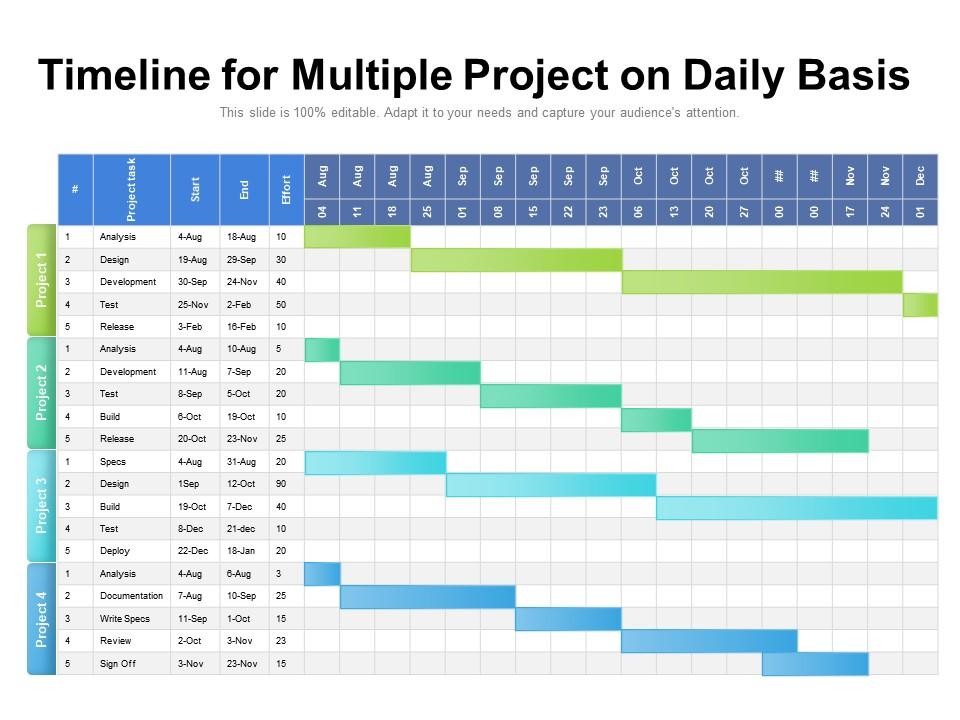
Presenting this set of slides with name Timeline For Multiple Project On Daily Basis. This is a one stage process. The stages in this process are Test, Analysis, Design, Release, Development, Documentation, Write Specs, Review. This is a completely editable PowerPoint presentation and is available for immediate download. Download now and impress your audience.

FAQs for Timeline for multiple project

So traditional project management is like planning your entire road trip down to every gas station stop. You map out requirements, design, building phases - all upfront. Agile's totally different though. Short sprints, constant feedback, adapting as you go. Honestly, I think of it like using GPS that reroutes when there's traffic versus sticking to that printed MapQuest route no matter what. Traditional's solid for predictable stuff where requirements won't change much. But if you're dealing with uncertainty? Agile's your friend. Really depends on how much curveballs you're expecting.

Communication is honestly what makes or breaks a project. You'll catch problems before they spiral, decisions happen way faster, and everyone actually knows what they're supposed to be doing. Trust me, nothing's worse than sitting in a meeting where half the team has no clue what the scope even is anymore. Set up your communication rules right when the project starts - like how often you'll check in, who needs updates, all that stuff. It prevents so many headaches down the road. Plus clients love being kept in the loop instead of wondering if their project disappeared into a black hole.

Honestly, you can't pull off a project without nailing stakeholder management first. Map out everyone who has skin in the game - who influences decisions, who gets impacted, all of it. Get their input on what they actually want during planning (saves you headaches later, trust me). Some will have competing priorities, which is always fun to navigate. Set up how you'll communicate with them right away. Oh, and make a stakeholder matrix at the beginning - sounds fancy but it's just organizing who matters and why. You'll end up checking it way more than you think.

Ugh, scope creep is the worst. First thing - get everything in writing before you start. Make stakeholders actually sign off on the scope, because I swear people conveniently "forget" what they agreed to later. When they inevitably ask for more stuff, don't just cave to avoid conflict. Hit them with the reality: "Yeah we can do that, but it means two extra weeks and another $5K." Let them decide what matters more. Even tiny changes should go through your formal process - those "quick little tweaks" add up fast and will bite you.

Asana and Monday.com are solid choices - Jira too if you're doing dev work. They track tasks and deadlines so you can see who's doing what. But honestly? I've watched teams get obsessed with updating these tools instead of actually getting stuff done. When people use them right though, they're pretty clutch. You can monitor budgets, milestones, all that. For smaller projects, just use Google Sheets - way less overhead. The key is picking something everyone will actually update consistently. Doesn't matter how fancy it is if your team ignores it.

Don't just slap risk management on at the end - weave it through everything from day one. During planning, spot the risks early and bake your mitigation right into tasks and timelines. Here's where teams mess up though: once execution starts, everyone gets swamped and forgets to update their risk register. Big mistake. You've got to keep reviewing it regularly and watch for new stuff that pops up. Honestly, the best approach? Make it a standing agenda item in every team meeting. Otherwise you'll just forget about it completely (been there).

Start with regular check-ins - daily standups work great, or weekly meetings if that's more your speed. Miro's solid for brainstorming sessions, and Slack keeps the quick convos flowing. But honestly? Video calls where you can actually see faces beat everything else. I know it sounds cheesy, but it makes such a difference. Set up shared docs so people can drop ideas whenever inspiration strikes. If you're dealing with time zones (ugh), rotate meeting times so nobody's always stuck with the 6am slot. Try recreating those random office chats somehow - maybe virtual coffee breaks? Don't overwhelm yourself though. Pick two things and nail those first.

Look, budget planning can totally make or break your whole project. Get it right from the start and you'll actually deliver what you promised without begging for more cash later. Most people just phone it in though - then act surprised when everything falls apart. Bad budgeting = scope creep, rushed deadlines, burned out teams, angry stakeholders. The usual disaster combo. Here's what actually works: spend serious time on those initial estimates (I know, boring but crucial), pad it with a real contingency buffer, then check your spending every week. That way you can fix problems before they torpedo the whole thing.

Honestly, communication breakdowns are your biggest enemy. Different departments have conflicting priorities and timelines - it's chaos. Plus everyone speaks their own "technical language" which just adds confusion. Resource fights happen constantly too since teams want the same budget and people. What works? Regular check-ins are clutch. Get a shared project charter going so roles are crystal clear. Oh, and pick ONE communication channel for updates - trust me on this. Having a strong project sponsor who can actually resolve conflicts fast makes all the difference. Without that person, you're kinda screwed.

Don't wait until the end to check your work - build those quality checks right into each step. Define what "done" looks like before you even start. I learned this the hard way on a project that basically imploded because we thought we could wing it. Set up regular checkpoints and actually stick to them. Buffer time is your friend - things will take longer than you think. Get people reviewing stuff early so you're not dealing with surprise feedback at the last minute. Oh, and make a simple checklist for each thing you deliver. Sounds boring but it works.

Track the obvious stuff first - budget, timeline, scope. Did you hit your targets? But here's the thing, those numbers don't tell you everything. Stakeholder happiness matters way more than people think. Team morale too - if everyone's burnt out, that's not really a win. Quality of what you delivered is huge. And honestly? The real test is whether the project actually moved the needle business-wise. I'd make a quick scorecard covering all this and fill it out right after you wrap up, while the details are still clear in your head.

Honestly, you've gotta be brutal with what actually matters. Map stuff by impact vs urgency - tackle the high-impact urgent things first (duh). But here's the thing nobody talks about: constant communication is everything. People hate hearing "we can't do it all" but trust me, it beats scrambling at the last second. Always pad your timelines because something will blow up - it just will. Oh and document why you picked what to do first. When someone inevitably goes "wait, why didn't we prioritize X?" you'll have proof of your reasoning.

Honestly, transparency is huge - don't hide budget issues or timeline problems from stakeholders because that always backfires. Fair resource allocation matters too, plus treating your team equitably. Oh, and keep sensitive info confidential obviously. The environmental/community impact thing is worth considering depending on what you're working on. Most of it just boils down to the golden rule though. I'd set clear ethical guidelines with everyone upfront. Create space where people can actually speak up about concerns without getting shut down - that's harder than it sounds but super important.

Oh man, cultural differences will absolutely tank your international projects if you're not careful. Some people are super direct with feedback, others beat around the bush forever. Time commitments? Forget about it - what's "urgent" means totally different things to different people. Your meetings will run completely differently depending on who's there, and don't even think about resolving conflicts the same way across cultures. Honestly, the trick is doing your research beforehand. Figure out how your team members actually operate. Build in extra time upfront for building relationships and clearing up confusion.

Your leadership style literally shapes how your whole team vibes and gets stuff done. Micromanage too much? You'll stress everyone out and crush any creative ideas - which honestly nobody wants to deal with. Go too hands-off though, and people feel abandoned, especially when they're tackling tricky projects. I've found the trick is reading the room and switching up your approach. Sometimes you need to give clear direction. Other times, just let them handle it. Watch how your team's energy shifts - that's your best indicator of whether you're hitting the mark or not.

Ratings and Reviews

0% of 100
Review Form
Write a review
Most Relevant Reviews

No Reviews