

Training Timeline Powerpoint Ppt Template Bundles





Try Before you Buy Download Free Sample Product
 Impress Your
Audience
 100%
Editable
 Save Hours
of Time


Our Training Timeline Powerpoint Ppt Template Bundles are topically designed to provide an attractive backdrop to any subject. Use them to look like a presentation pro.
People who downloaded this PowerPoint presentation also viewed the following :
Training Timeline Powerpoint Ppt Template Bundles with all 17 slides:
Use our Training Timeline Powerpoint Ppt Template Bundles to effectively help you save your valuable time. They are readymade to fit into any presentation structure.









FAQs for Training Timeline Powerpoint
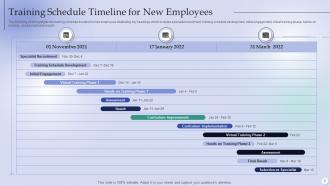
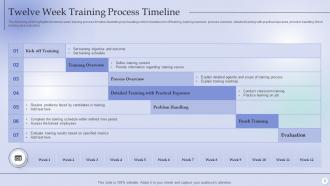
A comprehensive training timeline template should include pre-training preparation phases, learning objectives and milestones, resource allocation schedules, assessment checkpoints, and post-training evaluation periods. These components work together by establishing clear progression pathways, ensuring adequate resource distribution, and maintaining accountability measures, with many organizations finding that structured timelines reduce training costs while delivering more consistent skill development and measurable performance outcomes.
A training timeline template enhances learning retention and engagement by providing structured pacing, clear milestones, and spaced repetition intervals that align with cognitive learning patterns. Through strategic scheduling of content delivery, practice sessions, and assessments, organizations streamline knowledge absorption while maintaining participant motivation, with many corporate training programs finding that well-designed timelines deliver significantly higher completion rates and measurable skill improvements.
Training program durations vary significantly, ranging from one-day workshops for basic skills to 6-12 month comprehensive programs for leadership development, with technical certifications typically spanning 2-6 weeks and compliance training requiring 1-3 days. Effective timeline templates should incorporate buffer periods, milestone checkpoints, and flexible scheduling blocks, enabling organizations to accommodate different learning paces while maintaining consistent progress tracking and ultimately delivering measurable skill development outcomes.
Organizations customize training timeline templates by adjusting duration phases, incorporating industry-specific compliance requirements, aligning modules with company objectives, and integrating existing systems and resources. Through strategic modifications, businesses in sectors like healthcare, manufacturing, and finance can streamline onboarding processes, enhance skill development programs, and ultimately deliver faster employee productivity while maintaining regulatory standards and competitive advantage.
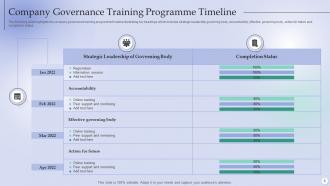
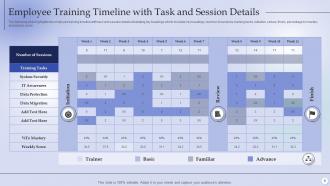
Effective visual elements include clear milestone markers, color-coded phases, progress indicators, intuitive icons, and consistent typography. These design components streamline comprehension by distinguishing different training stages, highlighting key deadlines, and creating visual hierarchy, with many organizations finding that well-designed templates reduce confusion and enhance learner engagement throughout complex training programs.
Training timelines should be reviewed quarterly and updated whenever significant changes occur in technology, processes, or organizational priorities. Many organizations find that regular quarterly assessments, combined with immediate updates following system changes or regulatory shifts, ensures training remains aligned with business objectives, ultimately delivering more effective skill development and improved operational efficiency.
Common tools for creating training timeline templates include Microsoft Project, Asana, Trello, Smartsheet, and Gantt chart software like Monday.com. These platforms streamline training program management by enabling resource allocation, progress tracking, and collaborative scheduling, with many organizations finding that integrated project management tools ultimately deliver better coordination and faster program deployment.
Feedback from previous training sessions informs future timelines by revealing optimal session durations, identifying knowledge gaps requiring additional time, and highlighting pacing issues in content delivery. This data enables organizations to adjust scheduling intervals, allocate more time for complex topics, and streamline sections that proved too lengthy, ultimately delivering more effective training experiences and improved learner outcomes.
Milestones and deadlines serve as critical checkpoints that structure training progression, track learner advancement, ensure accountability, and maintain program momentum throughout the learning journey. These elements enable organizations to monitor training effectiveness, identify potential delays early, allocate resources strategically, and ultimately deliver consistent skill development outcomes across teams.
Different learning styles significantly impact training timeline design by requiring varied content delivery methods, pacing adjustments, and assessment approaches throughout the program. Visual learners benefit from infographic-heavy modules, auditory learners from discussion sessions, and kinesthetic learners from hands-on workshops, with many organizations finding that incorporating multiple learning modalities within each timeline phase enhances retention and ultimately delivers more effective training outcomes.
Common pitfalls include underestimating time requirements, failing to account for different learning paces, inadequate resource allocation, neglecting feedback loops, and overlooking prerequisite skills assessment. These oversights can derail training programs by creating unrealistic expectations, overwhelming participants, and reducing knowledge retention, with many organizations finding that flexible, well-resourced timelines ultimately deliver better employee engagement and measurable skill development outcomes.
Technology enhances training timeline tracking through learning management systems, automated progress monitoring, digital assessment tools, mobile learning platforms, and real-time analytics dashboards. These solutions streamline accountability by providing instant progress visibility, automated reminder notifications, and comprehensive reporting capabilities, with many organizations finding that integrated platforms reduce administrative overhead while delivering measurable improvements in completion rates and learning outcomes.
Remote training timeline templates include virtual platform setup, technology testing phases, asynchronous content delivery windows, live session scheduling across time zones, and digital resource distribution milestones. These elements streamline hybrid learning by accommodating flexible participation, enabling seamless technology integration, and delivering consistent training experiences, with many organizations finding that structured virtual timelines ultimately enhance accessibility while maintaining training effectiveness and employee engagement.
Trainers can measure training timeline effectiveness through participant feedback surveys, skills assessments, performance metrics analysis, knowledge retention tests, and ROI calculations. These evaluation methods enable organizations to track learning outcomes, identify program strengths and gaps, and demonstrate tangible business value, with many companies finding that systematic measurement ultimately enhances future training efficiency and organizational performance.
**INPUT**: What best practices should be followed for collaborating with stakeholders while designing a training timeline? **OUTPUT**: Effective stakeholder collaboration involves conducting initial needs assessments, establishing clear communication channels, setting realistic milestone expectations, and incorporating regular feedback loops throughout the design process. These collaborative approaches streamline timeline development by aligning organizational priorities, resource availability, and learning objectives, with many training departments finding that early stakeholder engagement ultimately delivers more targeted programs and higher participant completion rates.
-
Great quality product.
-
Use of icon with content is very relateable, informative and appealing.