


Transition plan development powerpoint presentation examples




Try Before you Buy Download Free Sample Product
 Impress Your
Audience
 100%
Editable
 Save Hours
of Time


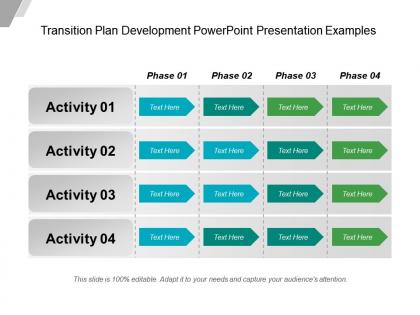
A user can present all sorts of processes, while still maintaining a cool look and feel in the transition planning process PowerPoint slide. With the use of this transition plan sample template, the presenter can show the production process in a colorful, as well as interactive way. You can take help of the transition planning process PPT template to describe main processes including conception, research, analysis, development, and launch. The transition plan sample design template for PowerPoint is useful to guide the discussion related to transition. The initial stage, conception, or ideation which involves taking the data from surveys, for example, suggestions and surveys become easy to illustrate by using the transition planning strategies presentation slide. This transition plan example slide is useful as tools to inspire new projects and product plans. This template consists of different stages which involve comprehensive brainstorming processes. There are different phases in this transition plan example presentation slide, you can adjust project according to fit realistic market needs. The transition plan sample slide for PowerPoint to ensure that the project gets properly developed and implemented. Our Transition Plan Development Powerpoint Presentation Examples give the forces of good the upper hand. They help eliminate evil.
People who downloaded this PowerPoint presentation also viewed the following :
Transition plan development powerpoint presentation examples with all 5 slides:
Figure out the connection between events with our Transition Plan Development Powerpoint Presentation Examples. It helps examine fresh evidence.


FAQs for Transition plan development
Effective transition plans include clear timelines, detailed task assignments, risk assessment protocols, communication frameworks, and resource allocation strategies. These components work together by establishing accountability, minimizing operational disruptions, and ensuring stakeholder alignment throughout the change process, with many organizations finding that comprehensive planning ultimately delivers smoother implementations and sustained competitive advantage.
Assessing the current state involves conducting comprehensive organizational audits, stakeholder interviews, process mapping, resource inventories, and performance baseline measurements. Through systematic evaluation methods, organizations can identify operational gaps, cultural barriers, and strategic misalignments, while documenting existing workflows, technology infrastructure, and team capabilities, ultimately establishing measurable benchmarks for successful transition planning.
Stakeholder involvement ensures comprehensive transition planning by providing diverse perspectives, identifying potential risks, securing resource commitments, and building organizational buy-in across departments. Through collaborative input from employees, management, customers, and partners, organizations can anticipate challenges more effectively, streamline implementation processes, and ultimately deliver smoother transitions with higher success rates and reduced resistance.
A transition plan ensures minimal disruption by establishing clear timelines, identifying critical dependencies, implementing phased rollouts, and creating comprehensive backup protocols. Through strategic resource allocation and continuous monitoring, organizations can maintain operational continuity while introducing changes, with many companies finding that well-structured transition planning reduces downtime by up to 70% and preserves customer satisfaction.
Best practices for communicating transition plans include establishing clear communication channels, creating role-specific messaging, providing regular progress updates, maintaining transparent timelines, and offering dedicated support resources. These approaches streamline stakeholder engagement by addressing individual concerns, minimizing uncertainty, and ensuring coordinated implementation, with many organizations finding that proactive communication ultimately delivers smoother transitions and stronger buy-in.
Address potential resistance by identifying stakeholders early, communicating clear benefits and timelines, providing comprehensive training and support, and establishing feedback channels for concerns. Through transparent communication and strategic change management, organizations can transform resistance into engagement, with many companies finding that involving resistant stakeholders in planning processes ultimately delivers smoother transitions and stronger buy-in.
Transition plan success metrics include timeline adherence, budget variance, stakeholder satisfaction scores, operational efficiency improvements, and risk mitigation effectiveness. These measurements enable organizations to track progress systematically, identify bottlenecks early, and demonstrate ROI, with many companies finding that comprehensive metric frameworks ultimately deliver smoother transitions and stronger competitive positioning.
Cultural considerations significantly impact transition plan development by influencing communication styles, decision-making processes, change acceptance rates, and stakeholder engagement approaches across different organizational or regional contexts. Organizations must adapt their transition strategies to accommodate diverse cultural values, work practices, and resistance patterns, with many multinational companies finding that culturally-sensitive planning reduces implementation friction and accelerates adoption timelines.
Change management strategies during transitions include clear communication protocols, stakeholder engagement frameworks, phased implementation approaches, comprehensive training programs, and continuous feedback mechanisms. These methodologies streamline organizational adaptation by minimizing resistance, enhancing employee buy-in, and maintaining operational continuity, with many companies finding that structured change management ultimately delivers faster adoption rates and sustained competitive advantage.
Knowledge transfer during transitions requires structured documentation, comprehensive training sessions, mentorship programs, and overlapping responsibilities between outgoing and incoming team members. Organizations streamline this process by creating detailed handover documents, conducting cross-training workshops, and establishing temporary advisory roles, with many finding that phased transitions and regular check-ins ultimately deliver smoother operations and minimize knowledge gaps.
Transition plan development tools include project management software, stakeholder mapping templates, risk assessment frameworks, communication platforms, and timeline visualization tools. These resources streamline planning by centralizing documentation, facilitating collaboration, and tracking milestones, with many organizations finding that integrated platforms deliver enhanced coordination, reduced delays, and smoother organizational transformations.
Transition plan timelines vary significantly, with financial services requiring 6-12 months due to regulatory compliance, healthcare needing 12-18 months for system integrations, and manufacturing allowing 3-6 months for operational changes. These variations reflect industry-specific complexities, regulatory requirements, and stakeholder coordination needs, with many organizations finding that phased approaches ultimately deliver smoother implementations and reduced operational disruptions.
Common pitfalls include inadequate stakeholder engagement, unrealistic timelines, insufficient resource allocation, poor communication strategies, and lack of contingency planning. These oversights often result from rushing the planning process or underestimating complexity, with many organizations finding that thorough preparation and stakeholder buy-in ultimately deliver smoother transitions and reduced operational disruption.
Technology facilitates transition planning through automated workflow management, real-time collaboration platforms, data analytics for timeline optimization, and integrated communication systems. These digital tools streamline documentation processes, enable cross-functional team coordination, and provide predictive insights for risk mitigation, with many organizations finding that technology-driven transitions reduce implementation time by 30-40% while enhancing stakeholder alignment.
Essential follow-up actions include performance monitoring, stakeholder feedback collection, risk assessment updates, process optimization, and documentation reviews. These activities enable organizations to identify implementation gaps, address emerging challenges, and refine operational procedures, with many companies finding that systematic post-implementation evaluation ultimately delivers sustained performance improvements and competitive advantage.
-
Appreciate the research and its presentable format.
-
Topic best represented with attractive design.