

Trust Business Plan Powerpoint Presentation Slides





Try Before you Buy Download Free Sample Product
 Impress Your
Audience
 100%
Editable
 Save Hours
of Time


Trust Business Plan is ideal for entrepreneurs and small business owners who need to develop a thorough business plan. Check out our competently designed Trust Business Plan, Including Market Size, Product Segment deck offers a comprehensive overview of your company. The Financial Planning template thoroughly examines your industrys trends, customer segmentation, and competitive environment. Furthermore, using the Trust Business Plan PPT, you can quickly and easily produce a thorough business plan that will assist you in obtaining funding and luring investors. Moreover, the Investment Strategies deck is simple to use and lets you develop a plan to help you achieve your objectives quickly. Lastly, the descriptive document includes a financial summary, revenue model, business economic impact, and DCF valuation. Download the trust business plan PowerPoint Presentation now.
People who downloaded this PowerPoint presentation also viewed the following :
Content of this Powerpoint Presentation
Slide 1: This slide introduces Trust Business Plan.
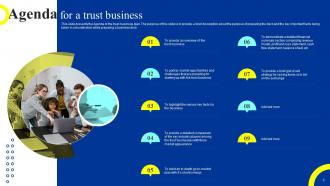
Slide 2: This slide presents the Agenda of the trust business plan.
Slide 3: This slide continues the Agenda of the trust business plan.
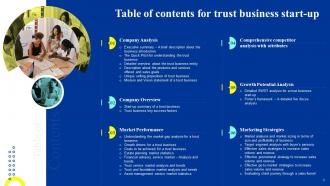
Slide 4: This slide displays Table of contents for presentation.
Slide 5: This slide displays another Table of contents.
Slide 6: This slide continues Table of contents for trust business start-up.
Slide 7: This slide highlights title of contents-Company Analysis.
Slide 8: This slide depicts Table of Contents further.
Slide 9: This slide is to provide a broader overview of the trust industry and the business.
Slide 10: This slide continues a broader overview of the trust industry and the business.
Slide 11: This slide covers a brief glimpse of what the quick pitch of the business to the customers with market information.
Slide 12: This slide continues a brief glimpse of what the quick pitch of the business to the customers with market information.
Slide 13: This slide is to portray organization details.
Slide 14: This slide continues to portray organization details.
Slide 15: This slide is to express the benefits the firm provides to its customers or clients.
Slide 16: This slide continues to express the benefits the firm provides to its customers or clients.
Slide 17: This slide provides a gist for the customers, why to buy services from the us.
Slide 18: This slide again shows a gist for the customers, why to buy services from the us.
Slide 19: This slide provide a gist about the business mission and vision.
Slide 20: This slide also depicts a gist about the business mission and vision.
Slide 21: This slide exhibits Table of contents further.
Slide 22: This slide showcases Table of Contents for presentation.
Slide 23: This slide provides a gist of company start-up summary.
Slide 24: This slide again shows a gist of company start-up summary.
Slide 25: This slide displays another gist of company key to success.
Slide 26: This slide continues a gist of company key to success.
Slide 27: This slide continues Table of contents for presentation.
Slide 28: This slide depicts another Table of Contents for presentation.
Slide 29: This slide highlights the market gap which the industry is undergoing which includes competing with big brands.
Slide 30: This slide also highlights the market gap which the industry is undergoing which includes competing with big brands.
Slide 31 This slide highlights the market gap which the industry is undergoing which includes competing with big brands.
Slide 32: This slide highlights the market gap which the industry is undergoing which includes competing with big brands.
Slide 33: This slide provides a detailed information about the market opportunity.
Slide 34: This slide provides a detailed information about the market opportunity.
Slide 35: This slide provides a detailed information about the business’s milestone, the business’s five year growth plan and it’s sales.
Slide 36: This slide continues a detailed information about the business’s milestone, the business’s five year growth plan and it’s sales.
Slide 37: This slide provides a glimpse of industry overview of the US estate planning market.
Slide 38: This slide continues a glimpse of industry overview of the US estate planning market.
Slide 39: This slide provides a glimpse of market overview concerning with the financial advisory service, its growth, demand and future forecast.
Slide 40: This slide continues a glimpse of market overview concerning with the financial advisory service, its growth, demand and future forecast.
Slide 41: This slide displays a glimpse of industry overview concerning with the trust service market analysis.
Slide 42: This slide continues a glimpse of industry overview concerning with the trust service market analysis.
Slide 43: This slide provides a glimpse of industry overview concerning with the men clothing market, its growth, demand in future.
Slide 44: This slide continues a glimpse of industry overview concerning with the men clothing market, its growth, demand in future.
Slide 45: This slide describes a glimpse of industry overview concerning with the asset management services market, its growth, demand in future.
Slide 46: This slide continues a glimpse of industry overview concerning with the asset management services market, its growth, demand in future.
Slide 47: This slide showcases a competitive framework of trust company competitive analysis within the already existing market in the USA.
Slide 48: This slide again displays a competitive framework of trust company competitive analysis within the already existing market in the USA.
Slide 49: This slide shows Table of contents which is to be discussed further.
Slide 50: This slide exhibits another Table of Contents for presentation.
Slide 51: The purpose of this slide is to provide a glimpse of key competitors in the industry to gain insight.
Slide 52: The purpose of this slide is to provide a glimpse of key competitors in the industry to gain insight.
Slide 53: This slide depicts Table of contents which is to be discussed further.
Slide 54: This slide describes Table of Contents for presentation further.
Slide 55: The slide includes the strengths, weaknesses, opportunities, and threats analysis of the trust business start-up.
Slide 56: The slide continues the strengths, weaknesses, opportunities, and threats analysis of the trust business start-up.
Slide 57: The slide highlights porter’s framework and its implications in the trust business.
Slide 58: The slide continues porter’s framework and its implications in the trust business.
Slide 59: This slide depicts another Table of contents for presentation.
Slide 60: This slide exhibits another Table of Contents for presentation.
Slide 61: The target market for the business is typically individuals and families with significant assets.
Slide 62: This slide provides a brief gist of customer analysis of the clothing store business.
Slide 63: This slide covers an assessment of how the firm’s products and services will fit into a certain market.
Slide 64: This slide continues an assessment of how the firm’s products and services will fit into a certain market.
Slide 65: This slide also covers an assessment of how the firm’s products and services will fit into a certain market.
Slide 66: This slide continues an assessment of how the firm’s products and services will fit into a certain market.
Slide 67: This slide is to implement an effective go-to-market strategy for bringing trust business to an end customer.
Slide 68: This slide continues to implement an effective go-to-market strategy for bringing trust business to an end customer.
Slide 69: This slide is another to implement an effective go-to-market strategy for bringing stationery business to an end customer.
Slide 70: This slide also implement an effective go-to-market strategy for bringing stationery business to an end customer.
Slide 71: This slide continues to implement an effective go-to-market strategy for bringing stationery business to an end customer.
Slide 72: This slide also implement an effective go-to-market strategy for bringing stationery business to an end customer.
Slide 73: This slide is another to implement an effective go-to-market strategy for bringing stationery business to an end customer.
Slide 74: The purpose of this slide is to implement an effective go-to-market strategy.
Slide 75: This slide highlights customer journey mapping to track users' actions and key touch points across levels.
Slide 76: This slide highlights customer journey mapping to track users' actions and key touch points across levels.
Slide 77: This slide is to facilitate managers to convey project progress updates to stakeholders and get their approvals.
Slide 78: This slide is to facilitate managers to convey project progress updates to stakeholders and get their approvals.
Slide 79: This slide also depicts Table of contents for presentation.
Slide 80: This slide shows another Table of Contents for presentation.
Slide 81: This slide provides a glimpse of important financial assumptions that are to be made while setting up the firm.
Slide 82: This slide continues a glimpse of important financial assumptions that are to be made while setting up the firm.
Slide 83: The platform expects strong financial results from year 1 onwards as it looks to establish itself in the market.
Slide 84: This slide presents revenue model of trust business.
Slide 85: This slide showcases breakeven analysis.
Slide 86: This slide represents breakeven analysis.
Slide 87: This slide exhibits breakeven graph.
Slide 88: This slide displays breakeven graph.
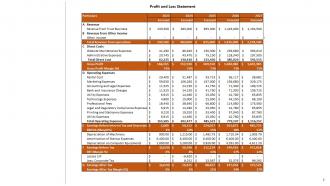
Slide 89: This slide describes profit and loss statement.
Slide 90: This slide illustrates profit and loss statement.
Slide 91: This slide represents graphs of gross profit of the business and earnings before interest tax & depreciation.
Slide 92: This slide shows another graphs of gross profit of the business and earnings before interest tax & depreciation.
Slide 93: This slide represents graphs of total revenue from operations and earnings after tax.
Slide 94: This slide continues graphs of total revenue from operations and earnings after tax.
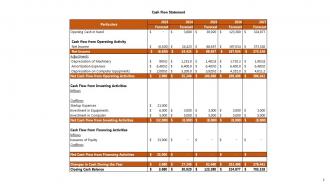
Slide 95: This slide presents the business’s historical and forecasted cash flow results.
Slide 96: This slide represents the business’s historical and forecasted cash flow results.
Slide 97: This slide describes a graph on cash flow analysis and total assets.
Slide 98: This slide shows a graph on cash flow analysis and total assets.
Slide 99: This slide describes balance sheet statement.
Slide 100: This slide depicts balance sheet statement.
Slide 101: This slide displays a graph on cash flow analysis and total assets.
Slide 102: This slide presents a graph on cash flow analysis and total assets.
Slide 103: This slide depicts the different scenarios for deriving final annual profit.
Slide 104: This slide continues the different scenarios for deriving final annual profit.
Slide 105: This slide displays a scenario analysis of annual revenue break-even, annual profit after tax and break-even analysis
Slide 106: This slide presents a scenario analysis of annual revenue break-even, annual profit after tax and break-even analysis
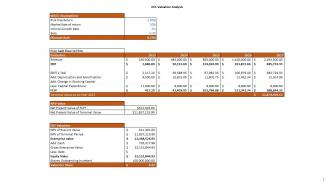
Slide 107: This slide shows the DCF valuation analysis of a business’s financials.
Slide 108: This slide again represents the DCF valuation analysis of a business’s financials.
Slide 109: This slide exhibits Table of contents-Company Analysis.
Slide 110: This slide depicts Table of Contents-Management Summary.
Slide 111: This slide presents organizational structure of the business.
Slide 112: This slide displays another organizational structure of the business.
Slide 113: This slide represents the job role and responsibilities of the employees in the business.
Slide 114: This slide again presents the job role and responsibilities of the employees in the business.
Slide 115: The slide highlights the professional summary section of the café.
Slide 116: The slide highlights the professional summary section of the café.
Slide 117: This slide displays Table of contents for trust business start-up Company Analysis
Slide 118: This slide continues title of contents-Possible exit options for stakeholders.
Slide 119: This slide represents exit strategy for stakeholders.
Slide 120: This slide again presents exit strategy for stakeholders.
Slide 121: This slide shows all the icons included in the presentation.
Slide 122: This slide is titled as Additional Slides for moving forward.
Slide 123: This slide displays Comparison between Male and Female.
Slide 124: This slide contains Puzzle with related icons and text.
Slide 125: This is Our Target slide. State your targets here.
Slide 126: This is a Financial slide. Show your finance related stuff here.
Slide 127: This is an Idea Generation slide to state a new idea or highlight information, specifications etc.
Slide 128: This is a Quotes slide to convey message, beliefs etc.Quotes
Slide 129: This is a Thank You slide with address, contact numbers and email address.
Trust Business Plan Powerpoint Presentation Slides with all 75 slides:
Use our Trust Business Plan Powerpoint Presentation Slides to effectively help you save your valuable time. They are readymade to fit into any presentation structure.






































































FAQs for Trust Business Plan
Key components of a trust business plan include executive summary, market analysis, service offerings, operational structure, regulatory compliance framework, and financial projections. These elements work together by defining target markets, establishing fiduciary responsibilities, outlining investment strategies, and ensuring regulatory adherence, with many financial institutions finding that comprehensive planning ultimately delivers enhanced client confidence and sustainable competitive advantage.
A trust business plan helps manage assets effectively by establishing clear investment strategies, defining risk management protocols, outlining succession planning procedures, and creating structured distribution frameworks. Through comprehensive governance structures, trustees can optimize portfolio performance, minimize tax liabilities, and ensure regulatory compliance, while providing beneficiaries with transparent asset oversight and sustainable long-term wealth preservation strategies.
Common pitfalls include inadequate regulatory compliance research, unrealistic financial projections, insufficient risk management frameworks, poor succession planning, and vague fiduciary responsibility definitions. These oversights can undermine trust operations by creating legal vulnerabilities, cash flow challenges, and operational inefficiencies, with many financial institutions finding that thorough planning ultimately delivers stronger client relationships and sustainable growth.
A trust business plan differs from standard business plans by emphasizing fiduciary responsibilities, regulatory compliance, and beneficiary protection rather than profit maximization. While traditional plans focus on revenue growth and market expansion, trust plans prioritize risk management, asset preservation, and transparent reporting to beneficiaries, ultimately delivering long-term wealth protection and strategic estate planning advantages.
A trustee executes the trust business plan by managing assets according to specified terms, making strategic investment decisions, distributing income to beneficiaries, and ensuring legal compliance throughout the process. Through careful oversight and fiduciary responsibility, trustees enable seamless wealth transfer, minimize tax liabilities, and deliver long-term financial security, ultimately protecting beneficiary interests while maintaining trust objectives.
A trust business plan can be tailored through customized asset distribution strategies, specific beneficiary guidelines, flexible timing mechanisms, tax optimization structures, and personalized governance frameworks. These strategic components enable families to address unique circumstances like special needs dependents, multi-generational wealth transfer, or business succession requirements, ultimately delivering enhanced financial security and legacy preservation while accommodating individual family dynamics and long-term objectives.
Financial projections for a trust business plan should include revenue forecasts, operating expenses, capital requirements, cash flow statements, and break-even analysis. These projections enable trust companies to demonstrate viability to investors, regulators, and stakeholders by showcasing expected fee income, operational costs, and growth trajectories, ultimately delivering strategic insights for sustainable expansion and competitive positioning.
Legal considerations significantly shape trust business plan development by determining structural requirements, compliance frameworks, fiduciary responsibilities, and operational protocols across different jurisdictions. These regulatory parameters influence everything from capital requirements and licensing procedures to client onboarding processes, with many financial institutions finding that early legal consultation streamlines approvals and enhances long-term operational efficiency.
Trust business plans involve complex tax considerations including income tax on trust earnings, potential estate tax benefits, gift tax implications for contributions, and generation-skipping transfer taxes. These structures enable significant tax optimization through strategic timing, beneficiary distributions, and charitable components, with many financial institutions finding that proper trust planning delivers substantial tax savings while preserving wealth across generations.
Technology facilitates trust business plan management through automated compliance monitoring, digital document management, beneficiary portals, and real-time financial reporting systems. These solutions streamline administrative processes by reducing manual oversight, enhancing transparency through secure client access, and ensuring regulatory compliance, with many trust institutions finding that integrated platforms ultimately deliver operational efficiency and improved fiduciary services.
Transparency strategies include regular stakeholder reporting, detailed financial documentation, clear governance structures, independent auditing processes, and accessible communication channels. These approaches enhance accountability by establishing systematic disclosure protocols, implementing oversight mechanisms, and maintaining open dialogue with beneficiaries, ultimately building stakeholder confidence and ensuring regulatory compliance in increasingly scrutinized fiduciary environments.
Trust business plans should be reviewed quarterly for operational adjustments and updated annually for comprehensive strategic assessment, with additional reviews triggered by regulatory changes, market shifts, or significant organizational developments. Many financial institutions find that regular reviews enable proactive adaptation to evolving fiduciary regulations and client expectations, ultimately maintaining competitive positioning while ensuring compliance and operational efficiency.
Individuals creating trust business plans can access estate planning software, legal templates, financial modeling tools, industry publications, and professional development courses. Through consultation with estate attorneys, financial advisors, and trust specialists, entrepreneurs enhance their strategic planning, regulatory compliance, and service offerings, ultimately delivering competitive advantage in the increasingly complex wealth management landscape.
Measuring trust business plan success involves tracking key performance indicators like assets under management growth, client retention rates, fee income generation, regulatory compliance scores, and operational efficiency metrics. Financial institutions and wealth management firms increasingly find that combining quantitative measures with client satisfaction surveys and trustee performance evaluations delivers comprehensive insights, ultimately enabling strategic adjustments that enhance competitive positioning.
Trustees must act with fiduciary duty, maintaining loyalty to beneficiaries, ensuring transparent communication, and making prudent investment decisions aligned with trust objectives. These responsibilities include avoiding conflicts of interest, preserving trust assets, and adhering to legal requirements, with many financial institutions finding that ethical governance ultimately delivers enhanced beneficiary outcomes and sustained trust performance.
-
“Slides are formally built and the color theme is also very exciting. This went perfectly with my needs and saved a good amount of time.”
-
I discovered this website through a google search, the services matched my needs perfectly and the pricing was very reasonable. I was thrilled with the product and the customer service. I will definitely use their slides again for my presentations and recommend them to other colleagues.