Turkey country powerpoint maps

Rating:
80%
Turkey country powerpoint maps
Slide 1 of 7
Favourites Favourites

Try Before you Buy Download Free Sample Product

Audience Impress Your
Audience
Editable 100%
Editable
Time Save Hours
of Time
The Biggest Sale is ending soon in
0
0
:
0
0
:
0
0
Rating:
80%
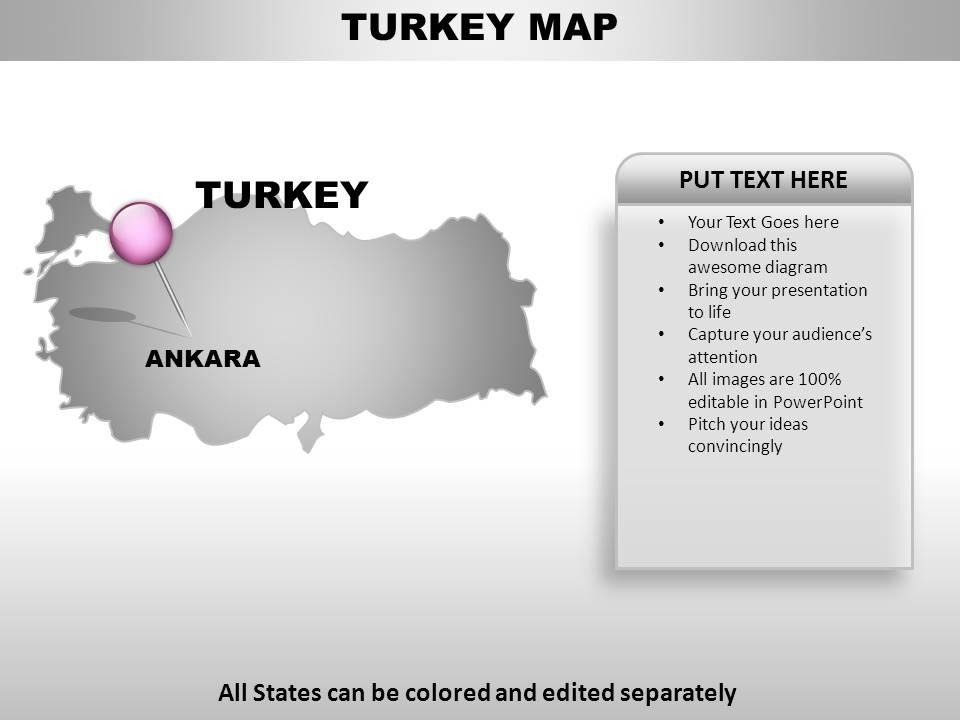
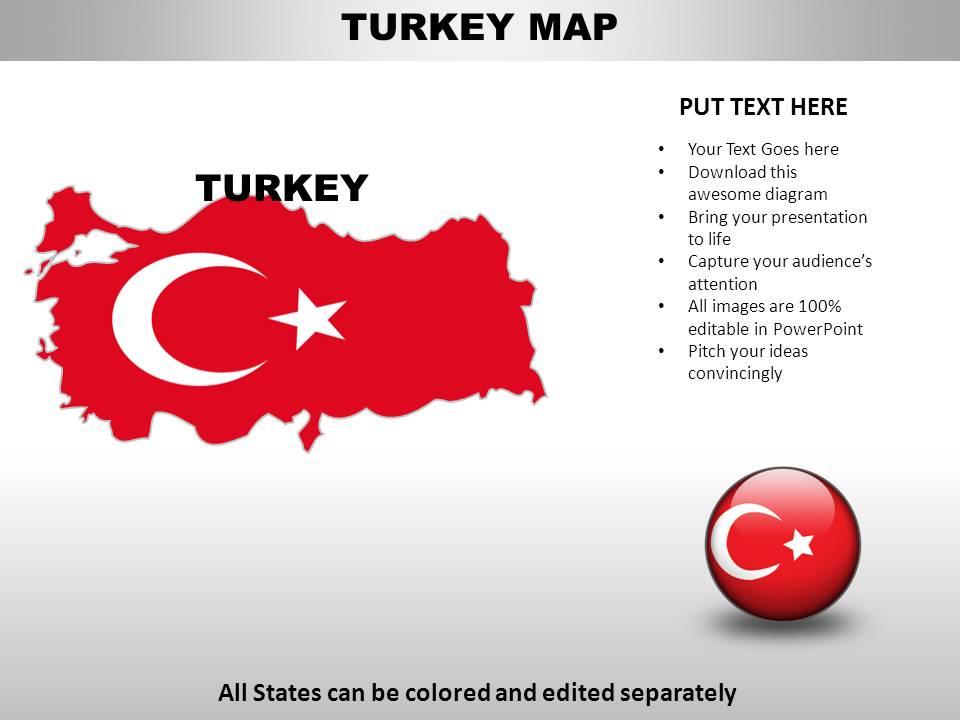
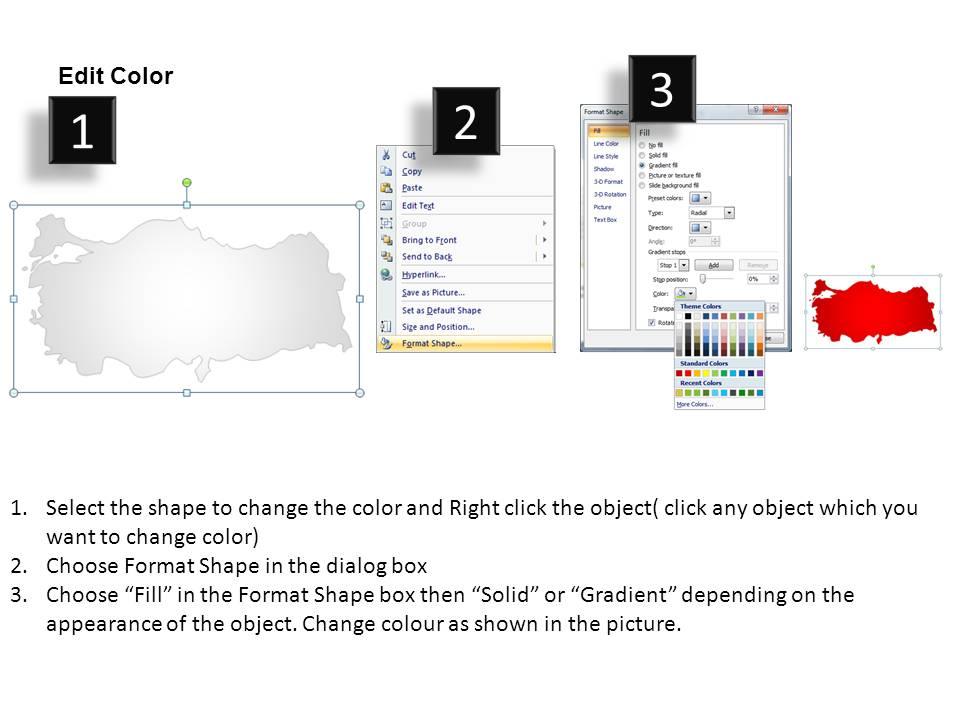
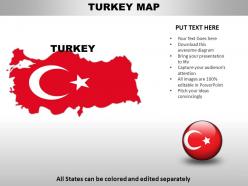
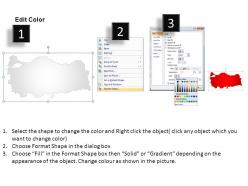
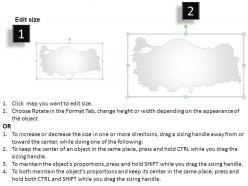
These high quality, editable powerpoint country maps have been carefully created by our professional team to display location and other geographic details in your PowerPoint presentation. Each map is vector based and is 100% editable in powerpoint. Each and every property of any region - color, size, shading etc can be modified to help you build an effective powerpoint presentation. Use these maps to show sales territories, business and new office locations, travel planning etc in your presentations. Any text can be entered at any point in the powerpoint map slide. Simply DOWNLOAD, TYPE and PRESENT!

People who downloaded this PowerPoint presentation also viewed the following :

FAQs for Turkey

The most popular Turkey maps feature detailed provincial boundaries, major cities like Istanbul and Ankara, transportation networks including highways and railways, and topographical elements showcasing the Bosphorus strait and Anatolian plateau. These comprehensive mapping solutions enhance strategic planning by delivering clear geographical context, demographic insights, and infrastructure visibility, ultimately enabling organizations to streamline regional analysis and competitive positioning across Turkish markets.

Historical events have fundamentally reshaped Turkey's cartography through the Ottoman Empire's expansion and contraction, World War I territorial losses, and the 1923 establishment of modern Turkey's borders. These transformations required extensive remapping efforts, with cartographers documenting changing provincial boundaries, new administrative divisions, and territorial acquisitions, ultimately delivering maps that reflect Turkey's evolution from empire to republic.

Digital mapping technologies revolutionize Turkey's infrastructure development, urban planning, disaster management, agricultural optimization, and tourism sector growth. Through GPS systems, satellite imagery, and GIS platforms, Turkish municipalities streamline city planning, farmers enhance crop yields, and businesses deliver faster logistics services, while emergency responders minimize disaster response times, ultimately strengthening Turkey's economic competitiveness.

Turkey's geographical diversity can be effectively represented through topographic maps showing elevation changes, thematic maps highlighting climate zones and vegetation patterns, and specialized cartographic techniques displaying coastal features, mountain ranges, and regional variations. These mapping approaches enable geographers, urban planners, and tourism organizations to visualize Turkey's complex terrain spanning Europe and Asia, ultimately delivering enhanced spatial understanding and strategic planning capabilities for development projects.

High-quality Turkey maps for presentations are available through government cartographic agencies like Turkey's General Directorate of Mapping, professional design platforms such as SlideTeam and Canva, and geographic databases including Natural Earth and OpenStreetMap. These resources deliver customizable formats, accurate geographic data, and presentation-ready designs, enabling businesses and educators to enhance their visual communications with professional cartographic elements that support strategic planning and geographic analysis across various sectors.

Cultural landmarks in Turkey significantly influence map design by serving as primary navigation reference points, tourist attraction markers, and cultural identity symbols that enhance user orientation and engagement. These iconic sites like Hagia Sophia, Cappadocia's formations, and ancient ruins become focal design elements, with many cartographers finding that emphasizing cultural heritage creates more intuitive, culturally-relevant navigation experiences for both locals and international visitors.

Mapping urban versus rural areas in Turkey presents distinct challenges, with urban regions requiring high-resolution data for dense infrastructure, traffic patterns, and rapid development changes, while rural areas face accessibility issues, sparse data coverage, and mountainous terrain complications. Through advanced satellite imaging and ground-truthing techniques, cartographers increasingly address these disparities by combining remote sensing with local surveys, ultimately delivering comprehensive geographic intelligence for both metropolitan centers like Istanbul and remote Anatolian villages.

Thematic maps of Turkey analyze socioeconomic factors by visualizing income distribution, employment rates, education levels, population density, and regional development indicators across provinces and districts. These specialized mapping tools enable government agencies, businesses, and researchers to identify economic disparities, track urbanization patterns, and assess infrastructure needs, ultimately delivering strategic insights for policy development and investment decisions.

Interactive maps for educational purposes related to Turkey include enhanced geographical comprehension, cultural exploration capabilities, historical timeline integration, demographic analysis tools, and real-time data visualization features. These technologies streamline learning by enabling students to explore Turkey's diverse regions, ancient civilizations, and modern developments simultaneously, with many educational institutions finding that interactive mapping ultimately delivers improved student engagement and deeper understanding of Turkey's strategic significance.

Turkey's strategic location bridging Europe and Asia has driven comprehensive mapping strategies focused on border security, trade route optimization, and regional connectivity analysis. These detailed cartographic approaches enable enhanced defense planning, streamlined logistics management, and strategic infrastructure development, with Turkish institutions finding that precise geopolitical mapping delivers significant advantages in diplomatic negotiations and economic partnerships.

**INPUT**: What software tools are best for creating custom maps of Turkey? **OUTPUT**: Leading software tools for creating custom Turkey maps include ArcGIS, QGIS, MapInfo, Adobe Illustrator, and Google Earth Pro, each offering specialized cartographic capabilities and Turkish geographic datasets. These platforms streamline map creation by providing detailed Turkish boundary data, demographic overlays, and export flexibility, with many organizations finding that combining GIS precision with design software ultimately delivers professional visualizations for business presentations and strategic planning.

Topographical maps of Turkey showcase physical features like the Anatolian Plateau, Taurus Mountains, elevation changes, and natural terrain characteristics, while political maps display administrative boundaries, provinces, cities, and governmental divisions. These mapping approaches serve different strategic purposes, with topographical data enabling infrastructure development, agricultural planning, and resource management across Turkey's diverse landscapes, while political maps streamline administrative operations and regional governance initiatives.

Ancient maps of Turkey reveal crucial insights into trade routes, territorial boundaries, cultural exchanges, and urban development across civilizations including Byzantine, Ottoman, and Roman empires. These cartographic records enable historians, archaeologists, and researchers to trace Turkey's strategic importance as a bridge between Europe and Asia, while documenting the evolution of major cities like Constantinople, ultimately delivering deeper understanding of geopolitical transformations and cultural heritage preservation.

Climate change data can be visualized through Turkey maps using temperature gradient overlays, precipitation pattern charts, sea level rise indicators, drought severity zones, and biodiversity shift tracking. These visualization techniques enable environmental agencies, agricultural sectors, and urban planners to identify regional vulnerabilities, monitor ecosystem changes, and develop targeted adaptation strategies, ultimately delivering data-driven climate resilience planning across Turkey's diverse geographical regions.

Historical trade route portrayal in Turkey employs archaeological surveying, GIS mapping, cartographic reconstruction, satellite imagery analysis, and historical document synthesis. These methodologies enable researchers and cultural institutions to visualize ancient Silk Road passages, Byzantine commerce networks, and Ottoman trade corridors, ultimately delivering enhanced understanding of Turkey's strategic commercial heritage for educational institutions and tourism development.

Ratings and Reviews

80% of 100
Write a review
Most Relevant Reviews
  1. 80%

    by Darrell Crawford

    Editable templates with innovative design and color combination.
  2. 80%

    by Darnell Tucker

    Unique and attractive product design.

2 Item(s)

per page: