

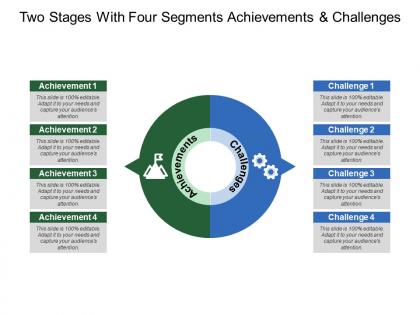
Two stages with four segments achievements and challenges




Try Before you Buy Download Free Sample Product
 Impress Your
 Audience
 100%
100% Editable
 Save Hours
 of Time


Enable children to indulge in their favourite games with our Two Stages With Four Segments Achievements And Challenges. Give them a gift of joy.
People who downloaded this PowerPoint presentation also viewed the following :
Two stages with four segments achievements and challenges with all 5 slides:
You may be a good communicator but can what are your presentations saying? When you come to us we use our Two Stages With Four Segments Achievements And Challenges to ensure you are giving a clear message in a structured manner.

FAQs for Two stages with four segments
You'll start noticing you bounce back from crap way faster - that's huge. Better emotional control too, plus your relationships actually improve. Honestly, the self-awareness thing is wild once it kicks in. Daily progress feels invisible though, which is super frustrating. But then you realize you're handling drama completely differently than before. Goals start matching what you actually care about instead of what sounds good. Oh, and you stop caring so much about what everyone thinks - probably the biggest game changer. Keep a weekly journal or you'll totally miss these shifts happening.
Honestly, you'll want both the hard numbers and the softer stuff. Project completion rates, cycle times, quality scores - that's your concrete data. But those metrics miss so much context! Regular feedback is huge - retrospectives, one-on-ones, team surveys about collaboration and morale. Start with baseline measurements, then check in every few weeks consistently. Oh, and definitely tell your team what you're tracking and why. Nobody likes feeling watched without understanding the point. The transparency thing actually matters more than most people think for keeping everyone on the same page about success.
Tech is basically like a supercharger for getting stuff done faster. You can automate all the boring repetitive work and crunch through data that would take forever manually. AI is crazy good at this - companies can now test thousands of ideas in hours instead of waiting months. But here's the thing that's really cool: it doesn't just speed up what you're already doing. It actually opens up totally new ways to solve problems you didn't even realize existed. I'd start by figuring out what manual tasks are slowing you down the most.
Honestly, sustainable stuff works because it tackles the real problems instead of just putting band-aids on everything. You get cleaner energy AND healthier communities at the same time. The economic benefits are pretty solid too - new jobs in green tech, better public health outcomes, all that good stuff. Plus you're building up defenses against future climate disasters, which... yeah, we're gonna need those. I'd start by looking at what you're already doing and see where it connects to sustainability goals. You might be surprised how much crossover there already is. Most people find way more connections than they expected.
Honestly, it's mostly about expectations and comparisons screwing with your head. When you set the bar crazy high, decent progress feels like failure. Plus your brain loves dwelling on past screw-ups, which makes current wins seem smaller than they are. Social media doesn't help either - everyone's posting their best moments while you're grinding through the messy middle parts. I've noticed people who bounce back from setbacks faster tend to celebrate tiny victories more. My advice? Write down small wins daily and stop comparing your rough draft to someone else's final product.
Honestly, data analytics just shows you what's actually happening instead of guessing. You can track the stuff that matters in real-time and catch problems early. Way better than telling your boss "everything's fine" with zero proof - that doesn't fly anymore. When something's not working, you'll know fast and can switch gears. Same goes for doubling down on wins. The trick is picking like 3-5 metrics that actually mean something (not just vanity numbers) and building dashboards around those. Makes everything so much clearer.
Dude, culture totally changes what "progress" even means. Like Western societies? All about individual success, making money, tech breakthroughs. But Eastern cultures focus more on group harmony and thinking long-term. Indigenous communities see progress as cyclical instead of this straight line upward - which honestly makes way more sense to me. Your background determines if you think cities expanding is awesome development or just destroying nature. Same with AI - revolutionary breakthrough or job-killing nightmare? Really depends where you're coming from. So whenever you're planning something, ask yourself: whose version of "better" are you actually using?
Honestly, education is like society's best investment. Better schools = more skilled workers who can solve bigger problems and come up with cool new tech. Countries that pour money into education always seem to do better overall - just look at places like Finland or South Korea. What's crazy is it's not just about getting a good job anymore. Educated people live healthier lives, commit fewer crimes, and actually participate in democracy. The ripple effects are huge too. When you're surrounded by smart, informed people, everyone benefits from that energy and innovation. It really does lift the whole community up.
Honestly, I started thinking about failure differently after bombing a few things myself. Instead of seeing it as defeat, treat each failure like you're collecting data. What didn't work? Cool, cross that off the list. Each mistake basically narrows down what WILL work - it's like getting expensive market research for free. Try switching from "I screwed up" to "well, that's another way that doesn't work." Sounds cheesy but it actually helps. Document what you learn from each mess-up. Otherwise you'll just repeat the same mistakes. Trust me on that one.
Honestly, celebrating tiny wins is huge - way bigger than most people think. Get your team together regularly so they can share what they've learned, even stupid small stuff. Make sure people aren't scared to mess up and try new things. Oh and don't let anyone get stuck doing the same thing forever, that kills momentum fast. Give them training or new challenges to work on. The real trick though? Be open about your own screwups and learning moments first. People follow what you do, not what you say. Start by just asking what one thing each person wants to improve this quarter.
Look, stable economies are everything for developing countries. GDP growth means they can actually spend money on schools, roads, healthcare - you know, the basics. But when things go south economically? It's chaos. Governments just scramble to keep the lights on instead of planning ahead. Creates this awful loop where nothing improves, so the economy stays broken. I've seen this play out so many times. If you're dealing with developing markets, honestly just check their economic stability first. Saves you from setting impossible deadlines later.
Look, you've gotta weigh benefits vs risks first - that's your foundation. Informed consent is huge, especially with human subjects. Don't forget environmental impact either. Then there's the scary stuff: could your research get weaponized or misused somehow? Access and equity matter too - who actually benefits from this work? That Silicon Valley "break things" approach is honestly pretty reckless when lives are at stake. Oh, and here's the key thing - bake ethical reviews into your design from the start. Don't just slap them on later when you're already neck-deep in the project.
Think of it like telling a story instead of just listing what you did. People's brains are wired for stories - way more engaging than bullet points, honestly. Start with where things were before, then walk through the messy middle part with all the challenges and breakthroughs. End with where you landed. Specific moments work better than vague metrics when you can swing it. Like, instead of "improved efficiency 30%" try "we used to spend every Friday scrambling to close tickets, now we're usually done by Wednesday." The whole narrative thing helps people get why your work actually mattered, not just what boxes you checked off.
Working with other people is honestly a game-changer for getting creative stuff done. You get all these different viewpoints and skills mixed together instead of just your own brain on repeat. Ideas bounce around way better when there's actually someone to bounce them off, you know? Plus you catch problems super early before they turn into disasters. I learned this the hard way on a project last year - wish I'd brought in help sooner. The trick is finding people who are good at what you suck at, not just more of the same.
Honestly, major crises make us rethink what "progress" even means. Like during COVID - suddenly GDP numbers seemed pointless when hospitals were overwhelmed and people were dying. The whole focus shifts to resilience and protecting vulnerable people instead of just chasing bigger profits. Makes you wonder if we've been measuring the wrong stuff this whole time, you know? Maybe we should track how well countries handle disasters and keep communities together, not just economic growth. Crisis preparedness matters way more than most politicians want to admit.
-
Great designs, Easily Editable.
-
Informative design.