


Types Of Communication Strategy CD





Try Before you Buy Download Free Sample Product
 Impress Your
 Audience
 100%
100% Editable
 Save Hours
 of Time


This PowerPoint presentation covers the types of communication strategies of the company. It also depicts that a companys marketing strategy allows organizations to align their communication and create expressive, cohesive messages. These strategies focus on internal and external communications or define the communication strategy for a particular project. This PPT also highlights the impact of communication on the organization; these impacts can increase employee morale, engagement, satisfaction, and brand recognition. The table of contents of this presentation is corporate communication, Types of corporate communications such as public relations PR, internal communication, stakeholder communication, crisis communication, event communication, and new workflow with a new communication strategy. Lastly, this presentation includes internal communication tools and models, a social media crisis communication framework, and stakeholder communication success indicators. Download our 100 percent editable and customizable template, which is also compatible with Google Slides.
People who downloaded this PowerPoint presentation also viewed the following :
Content of this Powerpoint Presentation
Slide 1: This slide introduces Types of Communication Strategy. State your company name and begin.
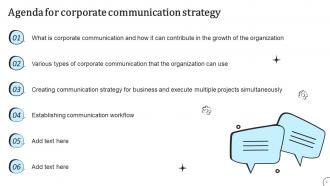
Slide 2: This slide states Agenda of the presentation.
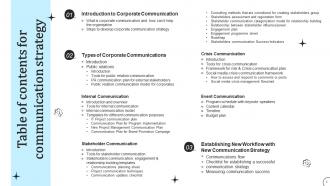
Slide 3: This slide presents Table of Content for the presentation.
Slide 4: This slide highlights title for topics that are to be covered next in the template.
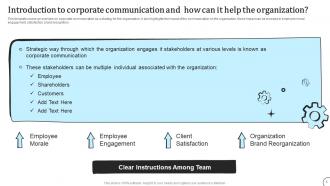
Slide 5: This template covers an overview on corporate communication as a strategy for the organization.
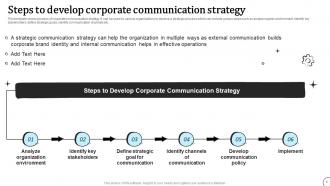
Slide 6: This slide shows Steps to develop corporate communication strategy.
Slide 7: This slide highlights title for topics that are to be covered next in the template.
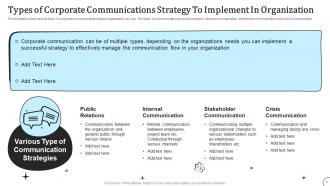
Slide 8: This slide presents Types of Corporate Communications Strategy To Implement In Organization.
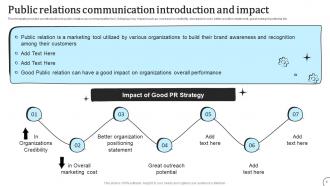
Slide 9: This slide displays Public relations communication introduction and impact.
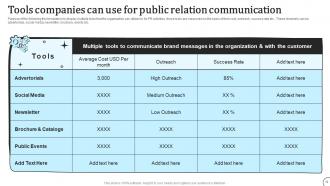
Slide 10: This slide represents Tools companies can use for public relation communication.
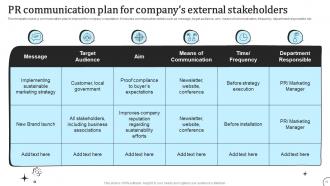
Slide 11: This slide showcases PR communication plan for company’s external stakeholders.
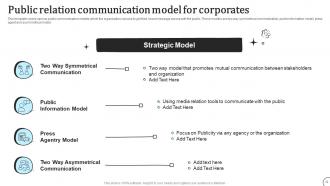
Slide 12: This slide shows Public relation communication model for corporates.
Slide 13: This slide highlights title for topics that are to be covered next in the template.
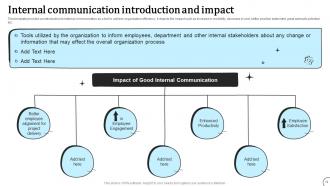
Slide 14: This slide presents Internal communication introduction and impact.
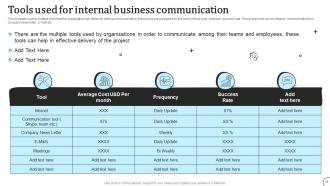
Slide 15: This slide displays Tools used for internal business communication.
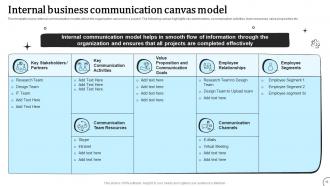
Slide 16: This slide represents Internal business communication canvas model.
Slide 17: This slide highlights title for topics that are to be covered next in the template.
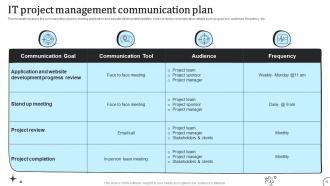
Slide 18: This slide showcases IT project management communication plan.
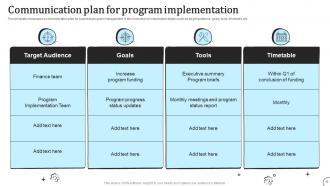
Slide 19: This slide shows Communication plan for program implementation.
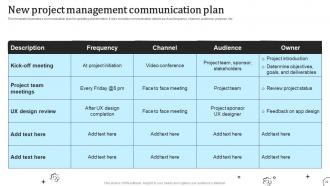
Slide 20: This slide presents New project management communication plan.
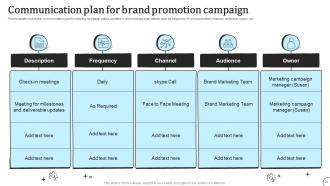
Slide 21: This slide displays Communication plan for brand promotion campaign.
Slide 22: This slide highlights title for topics that are to be covered next in the template.
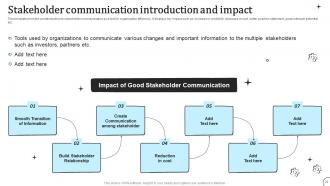
Slide 23: This slide represents Stakeholder communication introduction and impact.
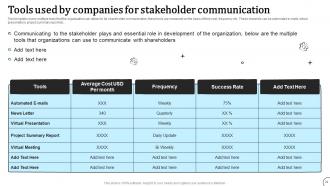
Slide 24: This slide showcases Tools used by companies for stakeholder communication.
Slide 25: This slide highlights title for topics that are to be covered next in the template.
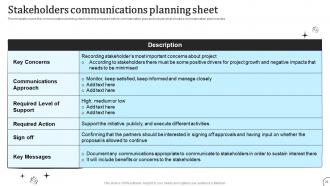
Slide 26: This slide shows Stakeholders communications planning sheet.
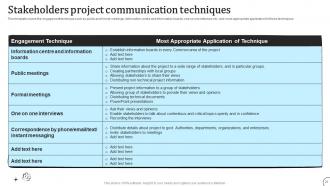
Slide 27: This slide presents Stakeholders project communication techniques.
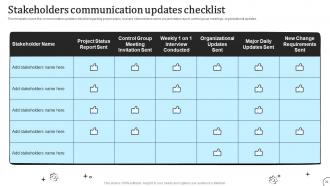
Slide 28: This slide represents Stakeholders communication updates checklist.
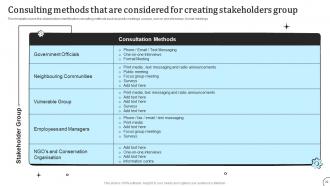
Slide 29: This slide showcases Consulting methods that are considered for creating stakeholders group.
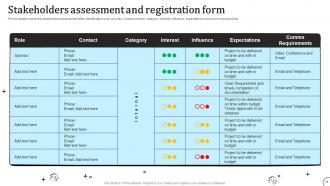
Slide 30: This slide shows Stakeholders assessment and registration form.
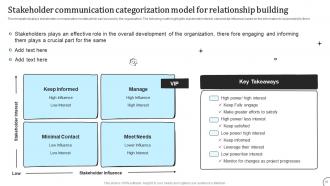
Slide 31: This slide presents Stakeholder communication categorization model for relationship building.
Slide 32: This slide displays Relationship between stakeholder influence/power.
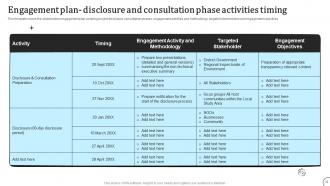
Slide 33: This slide represents Engagement plan- disclosure and consultation phase activities timing.
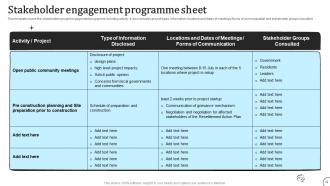
Slide 34: This slide showcases Stakeholder engagement programme sheet.
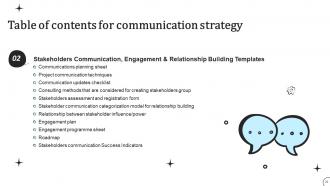
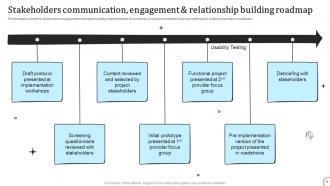
Slide 35: This slide shows Stakeholders communication, engagement & relationship building roadmap.
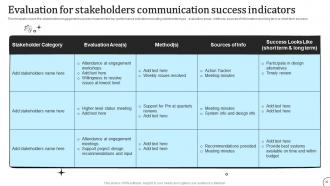
Slide 36: This slide presents Evaluation for stakeholders communication success indicators.
Slide 37: This slide highlights title for topics that are to be covered next in the template.
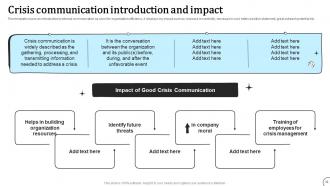
Slide 38: This slide displays Crisis communication introduction and impact.
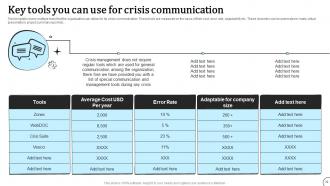
Slide 39: This slide represents Key tools you can use for crisis communication.
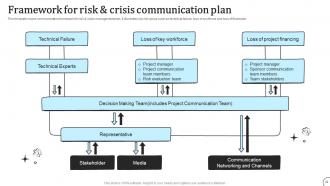
Slide 40: This slide showcases Framework for risk & crisis communication plan.
Slide 41: This slide highlights title for topics that are to be covered next in the template.
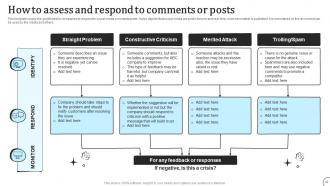
Slide 42: This slide shows How to assess and respond to comments or posts.
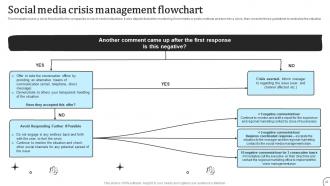
Slide 43: This slide presents Social media crisis management flowchart.
Slide 44: This slide highlights title for topics that are to be covered next in the template.
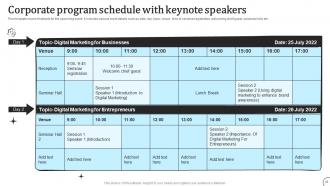
Slide 45: This slide displays Corporate program schedule with keynote speakers.
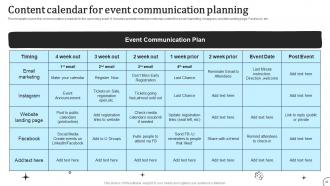
Slide 46: This slide represents Content calendar for event communication planning.
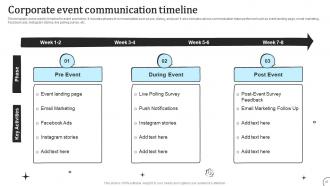
Slide 47: This slide showcases Corporate event communication timeline.
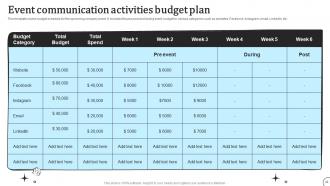
Slide 48: This slide shows Event communication activities budget plan.
Slide 49: This slide highlights title for topics that are to be covered next in the template.
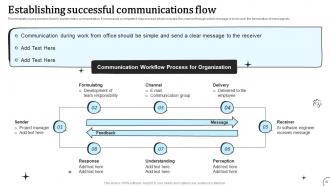
Slide 50: This slide presents Establishing successful communications flow.
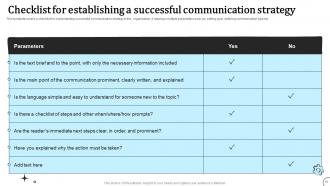
Slide 51: This slide displays Checklist for establishing a successful communication strategy.
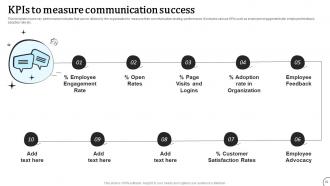
Slide 52: This slide represents KPIs to measure communication success.
Slide 53: This slide contains all the icons used in this presentation.
Slide 54: This slide is titled as Additional Slides for moving forward.
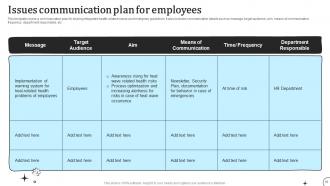
Slide 55: This slide showcases Issues communication plan for employees.
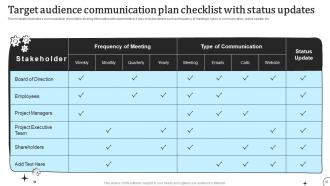
Slide 56: This slide shows Target audience communication plan checklist with status updates.
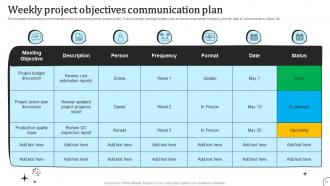
Slide 57: This slide presents Weekly project objectives communication plan.
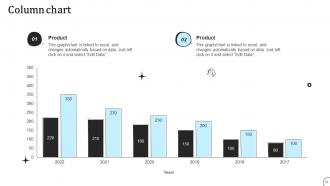
Slide 58: This slide displays Column chart with two products comparison.
Slide 59: This is an Idea Generation slide to state a new idea or highlight information, specifications etc.
Slide 60: This is Our Team slide with names and designation.
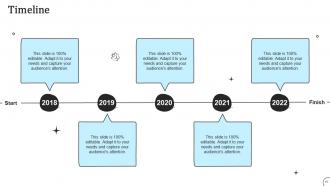
Slide 61: This is a Timeline slide. Show data related to time intervals here.
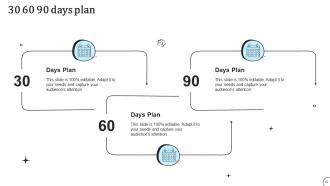
Slide 62: This slide provides 30 60 90 Days Plan with text boxes.
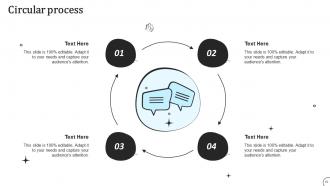
Slide 63: This slide shows Circular Diagram with additional textboxes.
Slide 64: This slide shows Post It Notes. Post your important notes here.
Slide 65: This is Our Goal slide. State your firm's goals here.
Slide 66: This is a Thank You slide with address, contact numbers and email address.
Types Of Communication Strategy CD with all 71 slides:
Use our Types Of Communication Strategy CD to effectively help you save your valuable time. They are readymade to fit into any presentation structure.






FAQs for Types Of
Key components include stakeholder mapping, messaging frameworks, channel selection, timeline coordination, and feedback mechanisms. These elements work together by identifying target audiences, crafting consistent narratives, and selecting appropriate delivery methods, with many organizations finding that strategic communication during mergers or acquisitions significantly enhances stakeholder buy-in and operational integration success.
Businesses can tailor CD communication by segmenting stakeholders into technical teams, executives, and end-users, then customizing messaging, channels, and frequency accordingly. Technical teams need detailed implementation updates through collaborative platforms, executives require strategic progress reports emphasizing ROI and competitive advantages, while end-users benefit from simplified change communications, ultimately ensuring seamless adoption across organizational levels.
Visual communication enhances CD communication strategy by simplifying complex concepts, increasing engagement, and improving message retention through infographics, charts, and multimedia presentations. These visual elements streamline information delivery across diverse audiences, with many organizations finding that strategic visual integration accelerates comprehension, reduces miscommunication, and ultimately delivers more impactful stakeholder experiences.
Medium choice significantly impacts CD communication effectiveness by influencing engagement levels, message clarity, and feedback quality across different organizational contexts. Face-to-face interactions enable real-time dialogue and trust-building, while video conferences provide visual cues for remote teams, and email delivers documented consistency, with many organizations finding that strategic medium combinations ultimately enhance change adoption and minimize resistance.
Key metrics for evaluating CD communication strategy success include deployment frequency, lead time reduction, mean time to recovery, change failure rates, and team collaboration scores. These measurements enable organizations to track operational efficiency, identify bottlenecks in development pipelines, and assess stakeholder engagement, with many technology companies finding that combined quantitative and qualitative metrics ultimately deliver enhanced transparency and competitive advantage.
Storytelling enhances communication strategies in continuous deployment by transforming technical updates into compelling narratives that highlight user benefits, team achievements, and business outcomes. Through story-driven messaging, organizations can communicate deployment successes, feature rollouts, and system improvements more effectively, with many development teams finding that narrative frameworks increase stakeholder engagement and build stronger support for CD initiatives.
Common pitfalls include unclear messaging, insufficient audience research, inconsistent brand voice, poor timing coordination, and neglecting feedback mechanisms. These challenges can significantly undermine campaign effectiveness, with many organizations finding that overlooking stakeholder alignment and failing to test messages across different channels ultimately leads to reduced engagement and missed strategic objectives.
Cultural differences significantly influence international CD communication strategies through language preferences, hierarchical expectations, decision-making processes, and feedback styles. Organizations must adapt their approaches by incorporating local communication norms, adjusting presentation formats, and modifying stakeholder engagement methods, with many multinational companies finding that culturally-sensitive communication frameworks enhance project acceptance and ultimately deliver stronger adoption rates across diverse markets.
Best practices for internal communication within CD-focused organizations include establishing clear change protocols, implementing regular stakeholder updates, creating cross-functional collaboration channels, maintaining transparent feedback loops, and ensuring consistent messaging across all teams. These practices streamline deployment processes by reducing miscommunication, accelerating decision-making, and enhancing team coordination, with many organizations finding that structured internal communication ultimately delivers faster release cycles and improved operational efficiency.
Feedback integration involves establishing systematic collection mechanisms through surveys, stakeholder interviews, performance metrics analysis, and real-time monitoring tools to assess message effectiveness and audience engagement. Organizations can then adapt their CD strategies by adjusting messaging frameworks, refining delivery channels, and updating stakeholder mapping, with many companies finding that continuous feedback loops ultimately enhance communication clarity, accelerate organizational alignment, and deliver measurable improvements in change adoption rates.
Effective CD communication strategy tools include cloud-based collaboration platforms, automated deployment pipelines, real-time monitoring dashboards, integrated chat systems, and comprehensive documentation platforms. These technologies streamline development workflows by enabling instant feedback loops, automated status updates, and seamless team coordination, with many software organizations finding that strategic tool integration ultimately delivers faster deployment cycles and enhanced cross-functional transparency.
Crisis communication serves as a critical component of comprehensive CD strategy by establishing rapid response protocols, maintaining stakeholder trust, and protecting organizational reputation during disruptions. Through proactive planning and transparent messaging frameworks, organizations can navigate challenges while preserving brand integrity, with many financial services and healthcare institutions finding that integrated crisis protocols ultimately strengthen overall communication resilience and stakeholder confidence.
Strategies include regular stakeholder mapping, establishing clear KPI alignment frameworks, implementing cross-functional planning sessions, creating feedback loops, and conducting quarterly objective reviews. These approaches streamline communication effectiveness by connecting messaging directly to business outcomes, revenue targets, and operational goals, with many organizations finding that integrated planning cycles ultimately deliver stronger market positioning and measurable ROI.
Organizations use data analytics to inform CD communication strategy by tracking engagement metrics, analyzing audience behavior patterns, measuring message effectiveness across channels, and identifying optimal timing for communications. Through predictive analytics and sentiment analysis, companies can personalize messaging, anticipate stakeholder needs, and adjust strategies in real-time, with many finding that data-driven approaches significantly enhance communication ROI and strategic alignment.
Employee engagement serves as the foundation for successful change communication strategies, driving message adoption, reducing resistance, and accelerating transformation timelines across organizations. Engaged employees become change advocates who amplify key messages, provide valuable feedback to leadership, and help identify communication gaps, with many companies finding that high engagement levels during change initiatives result in 30% faster implementation and significantly higher success rates.
-
Good to see greet work!!
-
Well-designed and informative templates. Absolutely brilliant!
-
Kudos to SlideTeam for achieving the high success rate in delivering the top-notch slides.