

Types Of Outdoor Advertising Media For Brand Recognition Powerpoint Presentation Slides





Try Before you Buy Download Free Sample Product
 Impress Your
Audience
 100%
Editable
 Save Hours
of Time


Get our professionally created Types of Outdoor Advertising Media for Brand Recognition PowerPoint presentation. This PPT deck contains an overview of outdoor media advertising strategy, its major trends, key benefits, and major challenges faced in outdoor advertising. Moreover, the Out-of-home Advertising PPT templates include an overview of the outdoor media market, highlighting statistics, worldwide spending, global market outlook, and comparative analysis. Furthermore, the Outdoor Branding PPT slides represent the different types of outdoor media, such as billboard advertising, retail advertising, point-of-sale advertising, vehicle marketing, construction advertising, and guerilla marketing. Lastly, this PPT bundle also covers the team and cost structure allocated for implementing the outdoor media strategy. Download our 100 percent editable and customizable template, also compatible with Google Slides.
People who downloaded this PowerPoint presentation also viewed the following :
Content of this Powerpoint Presentation
Slide 1: The slide introduces Types of Outdoor Advertising Media for Brand Recognition. State your Company name and begin.
Slide 2: This is our Aenda slide. State your Agenmda here.
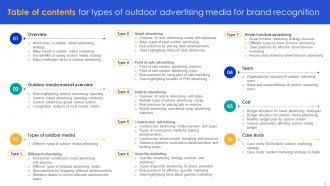
Slide 3: The slide displays Table of contents for the presentation.
Slide 4: The slide shows Table of contents further.
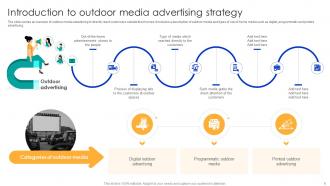
Slide 5: The slide carries an overview of outdoor media advertising to directly reach customers outside their homes.
Slide 6: The slide illustrates figures related to out-of-home media marketing trends.
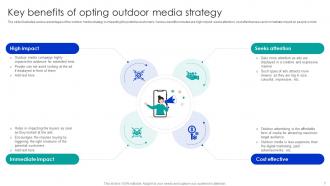
Slide 7: The slide renders various advantages of the outdoor media strategy in impacting the potential customers.
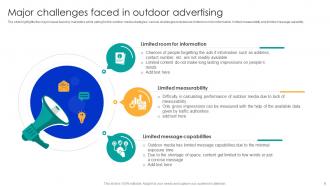
Slide 8: The slide highlights the major issues faced by marketers while opting for the outdoor media strategies.
Slide 9: The slide displays Title of contents further.
Slide 10: The slide illustrates the statistics highlighting the advertising spending on outdoor media to reach out the potential customers.
Slide 11: The slide covers the statistics highlighting the total expenditure incurred on out-of-home advertisements worldwide.
Slide 12: The slide carries the outlook of an outdoor media global market.
Slide 13: The slide demonstrates the comparison of various media available for promoting local market content.
Slide 14: The slide shows another Title of contents.
Slide 15: The slide exhibits various kinds of outdoor media for providing ads to the customers outside their homes.
Slide 16: The slide shows another Title of contents.
Slide 17: The slide illustrates an overview of the billboard advertising used as an out-of-home media to reach the target audience.
Slide 18: The slide highlights various types of billboard advertising to directly interact with the customers.
Slide 19: The slide cover various tips for making the billboard advertisements interactive and effective.
Slide 20: The slide carries the stats highlighting the current status of billboard media in US.
Slide 21: The slide shows Title of contents further.
Slide 22: The slide exhibits an overview of retail advertising containing its description, types and its objectives.
Slide 23: The slide demonstrates various categories of retail media used to provide advertisements in the stores or malls.
Slide 24: The slide carries various practices for displaying the ads in an effective manner at the retail stores or shopping centres.
Slide 25: The slide illustrates various facts and figures related to the retail advertising used to attract potential customers.
Slide 26: The slide represents Title of contents which is to be discussed further.
Slide 27: The slide covers an overview of points of sale advertising including its description, objectives and types such as dumpbins, pavement signs, etc.
Slide 28: The slide contains the multiple types of POS advertising used for increasing the brand awareness.
Slide 29: The slide exhibits various tips for using the point of sale advertising to ensure effective promotions of the products.
Slide 30: The slide illustrates various trends and stats related to the POS advertising highlighting its benefits.
Slide 31: The slide again shows Title of contents.
Slide 32: The slide gives an overview of vehicle advertising form of outdoor media used to increase brand awareness.
Slide 33: The slide exhibits various types of vehicle advertising media used by companies to promote their brand or a product.
Slide 34: The slide illustrates various tips for displaying the advertisements on the vehicles to promote the brand.
Slide 35: The slide outlines the statistics related to vehicle advertising.
Slide 36: The slide shows another Title of contents.
Slide 37: The slide exhibits the overview of construction advertising used to promote an undergoing project or construction site containing its description, types, etc.
Slide 38: The slide carries various types of construction advertising used to promote a specific project or a brand.
Slide 39: The slide covers the best practices for designing the advertisements to be placed on construction sites or buildings.
Slide 40: The slide outlines the statistics for construction advertisements.
Slide 41: The slide again shows Title of contents.
Slide 42: The slide carries an overview of guerrilla advertising strategy containing its description, objectives and types.
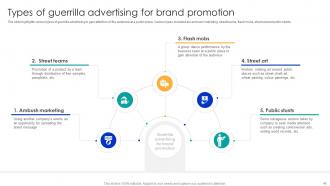
Slide 43: The slide highlights various types of guerrilla advertising to gain attention of the audience at a public place.
Slide 44: The slide illustrates various tips for effective guerrilla marketing to increase the brand awareness.
Slide 45: The slide covers the facts related to guerrilla marketing.
Slide 46: The slide also renders Title of contents.
Slide 47: The slide exhibits an overview of street furniture advertising used to market the product or a brand.
Slide 48: The slide highlights the different forms of street furniture advertising t make an impact on the target audience.
Slide 49: The slide carries various tips for using street furniture advertising in an effective manner to increase the brand awareness.
Slide 50: The slide illustrates statistics highlighting the current figures of street furniture marketing.
Slide 51: The slide represents Title of contents further.
Slide 52: The slide carries an organizational structure for handling the activities of out-of-home advertising.
Slide 53: The slide displays the responsibilities of various team members involved in handling the tasks of outdoor marketing.
Slide 54: The slide depicts Title of contents further.
Slide 55: The slide demonstrates the budget allocated by the company for promoting the brand, products and services.
Slide 56: The slide illustrates the budget allocation for the different types of outdoor media used by the company to promote the products.
Slide 57: The slide carries the planned and actual budget per month for different types of outdoor media advertising.
Slide 58: The slide covers various factors to be considered while estimating the budget for outdoor advertising.
Slide 59: The slide highlights Title of contents further.
Slide 60: The slide covers the case study highlighting the various outdoor marketing strategies used by the business.
Slide 61: The slide illustrates the case study of Apple company highlighting the company overview, outdoor media strategy opted by the business and its impact on the business.
Slide 62: This slide shows all the icons included in the presentation.
Slide 63: This slide is titled as Additional Slides for moving forward.
Slide 64: The slide outlines the setting of SMART outdoor media goals for effective advertising strategies.
Slide 65: This slide shows Post It Notes. Post your important notes here.
Slide 66: This is an Idea Generation slide to state a new idea or highlight information, specifications etc.
Slide 67: This slide presents Roadmap with additional textboxes.
Slide 68: This is a Thank You slide with address, contact numbers and email address.
Types Of Outdoor Advertising Media For Brand Recognition Powerpoint Presentation Slides with all 76 slides:
Use our Types Of Outdoor Advertising Media For Brand Recognition Powerpoint Presentation Slides to effectively help you save your valuable time. They are readymade to fit into any presentation structure.















FAQs for Types Of Outdoor Advertising Media For Brand Recognition
The most common urban outdoor advertising media include billboards, transit advertising, street furniture displays, digital signage, and building wraps. These formats enhance brand visibility by leveraging high-traffic locations, targeting commuters during daily routines, and delivering strategic messaging at key decision points, with many retailers and service providers finding that transit and digital combinations ultimately maximize urban market penetration.
Billboards deliver consistent brand exposure with lower maintenance costs and proven reach, while digital signage offers dynamic content flexibility, real-time updates, and enhanced audience engagement through interactive features. Many retail and hospitality brands find that digital signage generates higher conversion rates and allows targeted messaging, though billboards remain more cost-effective for broad awareness campaigns, ultimately delivering complementary advantages depending on campaign objectives.
Location determines outdoor advertising success by influencing visibility, audience reach, target demographic alignment, and message frequency exposure. Strategic placement near high-traffic areas, shopping centers, or commuter routes enables brands to maximize impressions, enhance brand recall, and drive consumer action, with many retailers and service providers finding that premium locations deliver significantly higher conversion rates and competitive market advantage.
Ambient advertising integrates promotional messages into everyday environments and objects, transforming ordinary spaces like elevators, park benches, sidewalks, and building surfaces into unexpected brand touchpoints. This approach enhances consumer engagement by creating memorable, contextual experiences that feel less intrusive than traditional advertising, with many brands finding that ambient campaigns generate higher recall rates and social media sharing, ultimately delivering stronger emotional connections and increased brand awareness.
Transit advertising delivers high visibility, cost-effectiveness, repeated exposure, targeted demographics, and extended campaign duration through strategic placement in buses, trains, and stations. While this medium presents challenges like limited creative space and potential weather exposure, many transportation authorities find that advertisers achieve significant brand awareness and customer engagement, particularly in urban markets where commuter traffic remains consistently high.
Businesses measure outdoor advertising ROI through foot traffic analysis, brand awareness surveys, digital engagement tracking, sales lift studies, and location-based mobile data analytics. Through GPS technology and beacon tracking, companies in retail, automotive, and hospitality sectors can correlate campaign exposure to store visits and purchases, while QR codes and unique promotional codes enable precise attribution, ultimately delivering measurable insights into campaign effectiveness and competitive advantage.
Emerging outdoor advertising formats include interactive digital billboards with gesture control, holographic displays, augmented reality bus shelters, smart city integration panels, and location-triggered mobile experiences. These technologies revolutionize traditional advertising by delivering personalized content, real-time engagement, and seamless digital-physical integration, with retail brands and transportation companies finding that interactive formats significantly increase consumer engagement and brand recall rates.
Seasonal changes significantly influence outdoor advertising strategies through adjusted messaging, creative elements, product focus, and campaign timing to match consumer behavior patterns. Retailers pivot from summer vacation themes to back-to-school promotions, while restaurants emphasize seasonal menus, and travel companies shift between winter destinations and summer getaways, ultimately delivering more relevant messaging and stronger campaign performance.
Environmental considerations in outdoor advertising include energy consumption from LED displays, light pollution affecting wildlife and communities, material waste from non-recyclable vinyl banners, and visual pollution impacting landscapes. These challenges present opportunities for sustainable innovation, with many advertisers adopting solar-powered displays, biodegradable materials, and smart lighting systems, ultimately delivering reduced environmental impact while maintaining effective brand visibility.
Technology integration enhances traditional outdoor advertising through digital displays, interactive touchscreens, augmented reality features, real-time content updates, and data analytics capabilities. These technological advances enable advertisers to deliver personalized messaging, track engagement metrics, and optimize campaign performance dynamically, with many retail and automotive brands finding that smart billboards and interactive transit displays significantly increase customer engagement and conversion rates.
Regulatory challenges include zoning restrictions limiting billboard placement, permit requirements for installation and maintenance, content censorship laws, environmental protection regulations, and varying size or illumination standards across jurisdictions. These compliance requirements significantly impact campaign planning and costs, with many advertisers finding that partnering with local agencies streamlines navigation of regional regulations, ultimately ensuring successful market entry.
Colors and imagery significantly impact outdoor advertisement effectiveness by capturing attention, conveying brand messages instantly, and triggering emotional responses that drive consumer behavior. Strategic color choices enhance visibility from distances while compelling imagery communicates value propositions within seconds, with many retail and automotive brands finding that bold, contrasting designs increase recall rates and ultimately deliver stronger campaign performance in competitive markets.
Sustainability trends shaping outdoor advertising include solar-powered digital billboards, recyclable materials, biodegradable vinyl, energy-efficient LED systems, and carbon-neutral installation processes. These eco-friendly approaches enable brands to reduce environmental impact while maintaining visibility, with many retail and automotive companies finding that sustainable campaigns enhance brand reputation, attract environmentally conscious consumers, and deliver competitive advantage in increasingly green-focused markets.
The COVID-19 pandemic significantly shifted consumer engagement with outdoor advertising media through reduced commuter traffic, increased neighborhood-focused exposure, and heightened demand for health-conscious messaging. Many advertisers pivoted to residential areas, transit stops, and grocery store locations, while incorporating sanitization themes and community support messages, ultimately discovering more targeted, locally-relevant advertising opportunities that enhance neighborhood-level customer connections.
Storytelling in outdoor advertising creates emotional connections and memorable brand experiences by transforming simple messages into compelling narratives that resonate with audiences during their daily commutes. Through strategic visual sequences, creative campaigns, and contextual placement, brands like Nike and Coca-Cola deliver powerful stories that cut through urban noise, enhance brand recall, and ultimately drive consumer engagement while building lasting emotional loyalty.
-
The templates are the best in class. Very clear and innovative graphics! I am excited to explore and download more presentations.
-
A perfect platform for all your presentation needs. Unlimited products at an affordable price.