

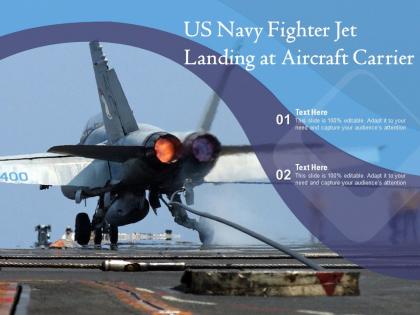
Us navy fighter jet landing at aircraft carrier




Try Before you Buy Download Free Sample Product
 Impress Your
 Audience
 100%
100% Editable
 Save Hours
 of Time


Our US Navy Fighter Jet Landing At Aircraft Carrier are topically designed to provide an attractive backdrop to any subject. Use them to look like a presentation pro.
People who downloaded this PowerPoint presentation also viewed the following :
Us navy fighter jet landing at aircraft carrier with all 2 slides:
Use our US Navy Fighter Jet Landing At Aircraft Carrier to effectively help you save your valuable time. They are readymade to fit into any presentation structure.

FAQs for Us navy fighter jet landing
Dude, it's basically like hitting a moving postage stamp in the middle of the ocean. The landing area is tiny and the ship never stops moving. Weather screws everything up too - crosswinds will push you right off course. You've got literally seconds to catch that arrestor wire on your first shot or you're doing a bolter. Night ops are even worse since you can't see jack. The optical landing system and meatball guidance are pretty much what saves pilots from total disaster. I swear it's like threading a needle on a roller coaster.
Dude, it's wild - carrier landings are basically the opposite of normal flying. Pilots slam down at full throttle instead of trying to make it smooth. They're coming in way steeper and faster than regular planes, aiming for those cables stretched across the deck. The crazy part? They keep gunning it even while landing because if they miss the wires, they gotta take off again immediately. Makes sense but looks terrifying. Regular pilots try to "grease" their landings all gentle-like. Navy guys? Nah, they're basically doing controlled crashes at like 150mph onto a moving ship.
So basically the LSO is like your safety coach standing on deck. These guys are experienced pilots who watch every landing through binoculars, calling out stuff like "power, lineup, you're high" over the radio. Honestly, they're probably the most important person during your approach because carrier landings are brutal. Something looks sketchy? They'll wave you off instantly rather than let you crash into the deck. Makes sense when you think about it - better to go around than become a fireball. Next time you watch carrier videos, spot the guy with the radio near the edge. That's him keeping pilots alive.
So that angled deck is basically everything - pilots come in at this steep 3-4 degree angle while the ship's moving forward. Only gives them like 500 feet to work with, which is insane if you think about regular runways. They've got that "bolter lane" though if their hook misses the wire. Honestly the whole thing looks terrifying. There's this optical system on the port side helping with glide path since judging distance over water is pretty much impossible. What's wild is they never flare like normal landings - just slam it straight down. It's like a controlled crash every single time.
So they've got a few main systems that make it work. The ICLS gives precision approach guidance, and there's also the ACLS that can literally fly the plane hands-off if needed. Then you've got the tailhook catching those arrestor wires on deck - pretty crazy landing on something that's basically 500 feet long and moving. Oh, and the Fresnel Lens system (pilots call it "the ball") with those colorful lights for visual cues. Modern F/A-18s and F-35Cs tie everything together digitally now. Honestly, watching the Landing Signal Officers coordinate it all is wild - they make it look way easier than it actually is.
Dude, environmental stuff is everything for carrier landings. Wind's the big one - you want that steady headwind for your approach speed, but crosswinds will mess up your centerline in a heartbeat. The deck's constantly moving with the waves too, so you're basically trying to land on a target that won't sit still. I've seen some pretty wild weather out there that makes it way trickier. Your LSO is always adjusting calls based on what's happening. Sometimes they'll just call off ops entirely if conditions get too sketchy. Definitely worth checking that deck motion forecast beforehand - saves you some surprises.
So you're looking at like 2-3 years of training before you can actually land on a carrier. Basic flight training comes first, then they move you into advanced tactical stuff. After that it's carrier qualification training - basically doing arrested landings over and over at shore facilities until you don't suck at it. Once you finally get to the actual ship, you need to nail 10 day landings and 6 night ones to qualify. Night landings are honestly terrifying btw. My advice? Start working on your instrument skills now because the precision they want is pretty insane.
So that hook thing is what lets planes land on carriers at all. Drops down from the tail and grabs one of those cables stretched across the deck. Picture this - you're screaming in at 150 mph in a 30,000 pound jet, hit the wire, and boom... dead stop in 300 feet. The physics are honestly insane. Pilots actually gun it during landing too, which seems backwards but makes sense - if you miss the cables you can just take off again immediately. Without the tailhook you'd need like 3,000 feet of runway instead.
So there's actually tons of backup systems working together. The arresting cables catch your tailhook - usually multiple cables spread across the deck. LSOs can wave you off if your approach looks sketchy. Those Fresnel lens things give you the glide path (they're pretty cool honestly, like a giant traffic light). Approach speeds and angles are super controlled too. If everything goes wrong, there's even emergency barricades as a last resort. It's basically redundancy on steroids - one thing fails, three others have your back.
So carrier jets need insanely beefy landing gear - like 3x stronger than regular planes. The struts are reinforced, shock absorbers are way heavier, and the whole attachment to the airframe is built different. Makes sense when you think about it - they're basically slamming into the deck at 150+ mph instead of gliding in smooth. Plus there's that tailhook obviously, but honestly the deceleration forces from those cables are nuts. I watched some carrier footage the other day and man, it looks brutal. Regular civilian planes practically float down compared to that controlled crash landing thing.
So you'll climb back to pattern altitude and enter downwind just like normal. The LSO clears you back into the pattern once you're clear of the ship. Yeah, it sucks burning extra fuel when you're already running low - that's probably the worst part honestly. Run through your landing checklist again, hook still down, all that stuff. Air boss will work you back into the sequence with everyone else. I know it's frustrating but just fly it like any other approach. Stay calm, hit your numbers, trust what you've trained for. Most of us have had multiple bolters anyway, so don't sweat it too much.
Dude, flight sims these days are insane - we're talking photorealistic graphics and motion platforms that actually make you feel the deck pitching beneath you. Real-time weather sim too. The visuals alone will blow your mind, honestly. But here's the crazy part: pilots can practice emergency stuff like wire breaks and sketchy crosswinds without totaling a $30 million jet. Night landings, bad weather, whatever. Your muscle memory builds up just like real flying would. Sure beats burning through actual flight hours - and way less terrifying than learning on an actual carrier deck.
Dude, it really depends on what you're flying. F/A-18s hit the deck around 145 knots with that steep 3.5-degree approach - honestly pretty intense the first few times. CODs are way different, slower but they're heavy as hell. Helicopters obviously do whatever helicopters do. The LSO calls change too since a Hornet needs totally different cues than cargo aircraft. Your fuel load matters more than you'd think - changes your whole approach profile. Weight's a big factor for recovery timing. Just drill your specific aircraft's procedures hard. Generic carrier stuff won't help when you're actually trying to catch the wire.
Honestly, it's like a total mental gauntlet. You've got this tiny deck that looks impossible to hit, plus you're processing a million visual cues while your adrenaline is going crazy. Zero time to hesitate or second-guess yourself either. The fear of completely screwing up is real - we're talking catastrophic failure here. Most pilots who nail it develop these super methodical routines beforehand, almost robotic honestly. Your muscle memory has to take over because your brain wants to panic. Split-second decisions while fighting every instinct to tense up. Trust your training completely or you're toast.
Dude, if your arresting gear or cats go down, you've got yourself a really pricey boat that doesn't do much. You need all four catapults running plus at least three cables working to keep operations smooth. Maintenance always takes longer than they tell you - shocker, right? When that happens, sortie rates tank and pilots can't get enough traps to stay qualified. My advice? Plan maintenance around your big missions and add 20% to whatever timeline they give you. Trust me on that buffer.
No Reviews