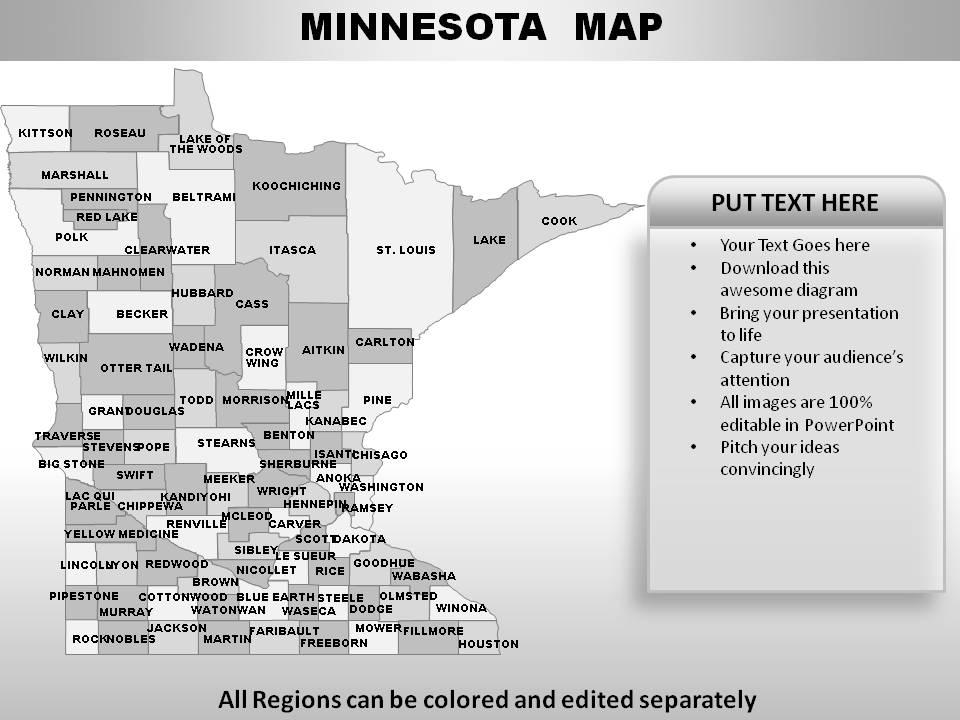
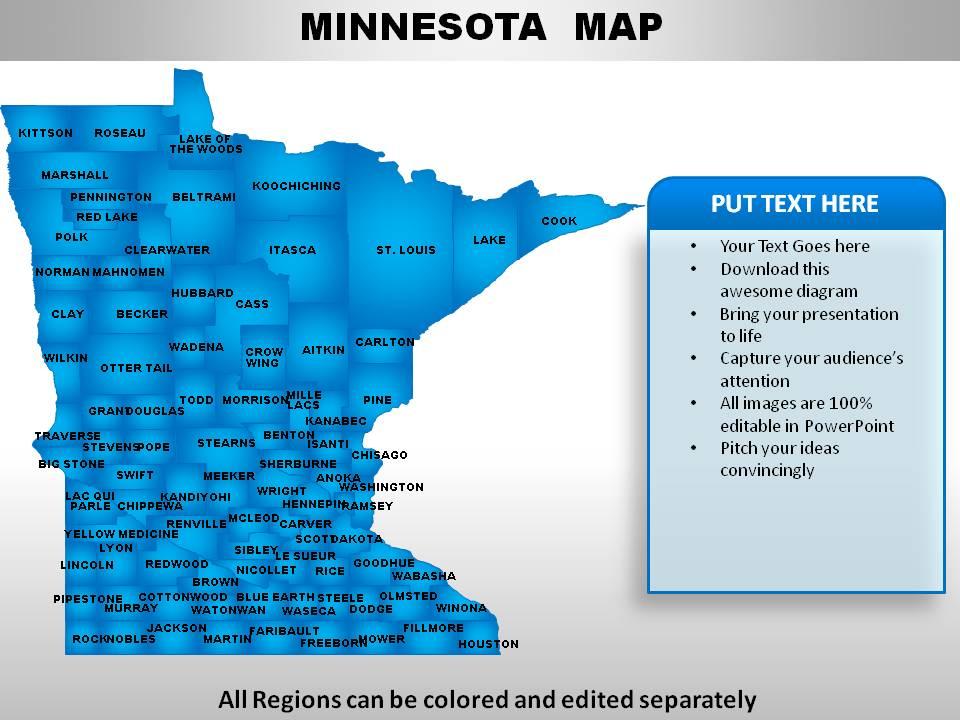
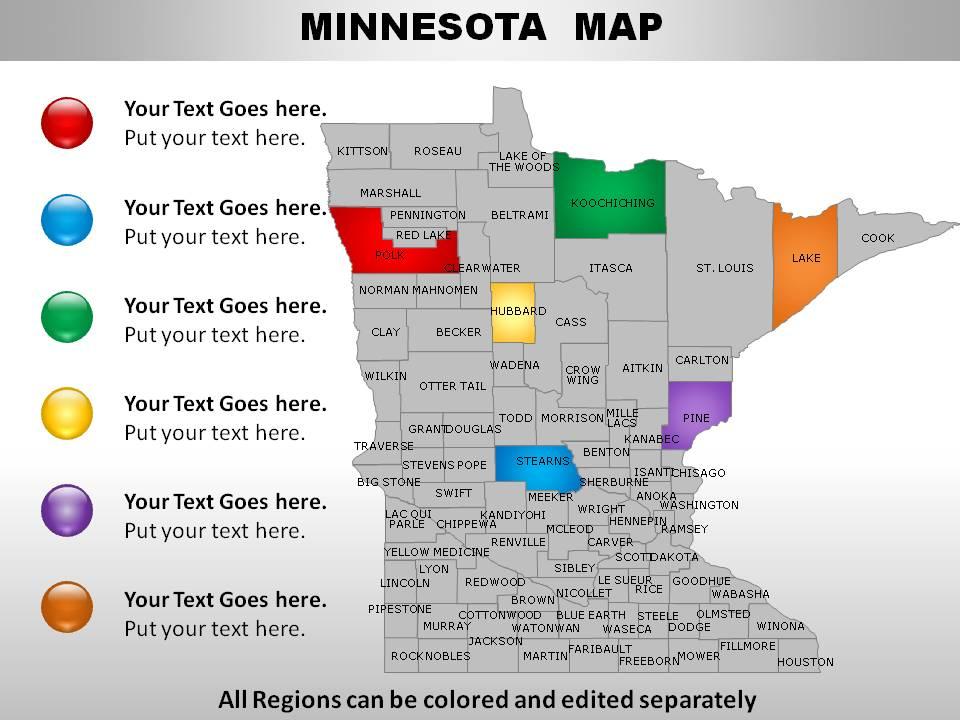
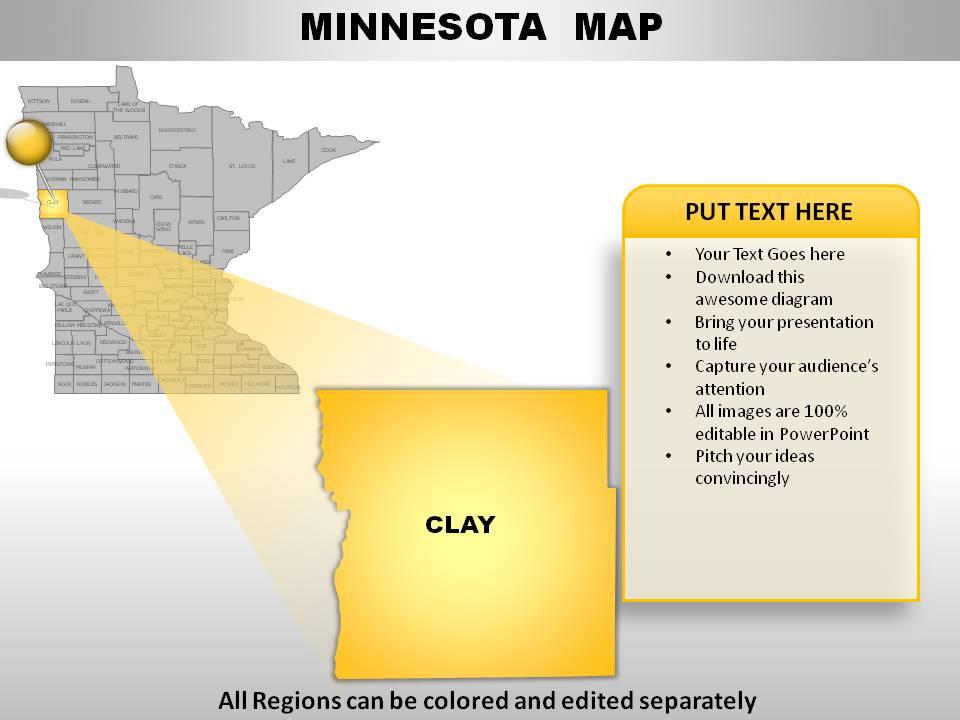
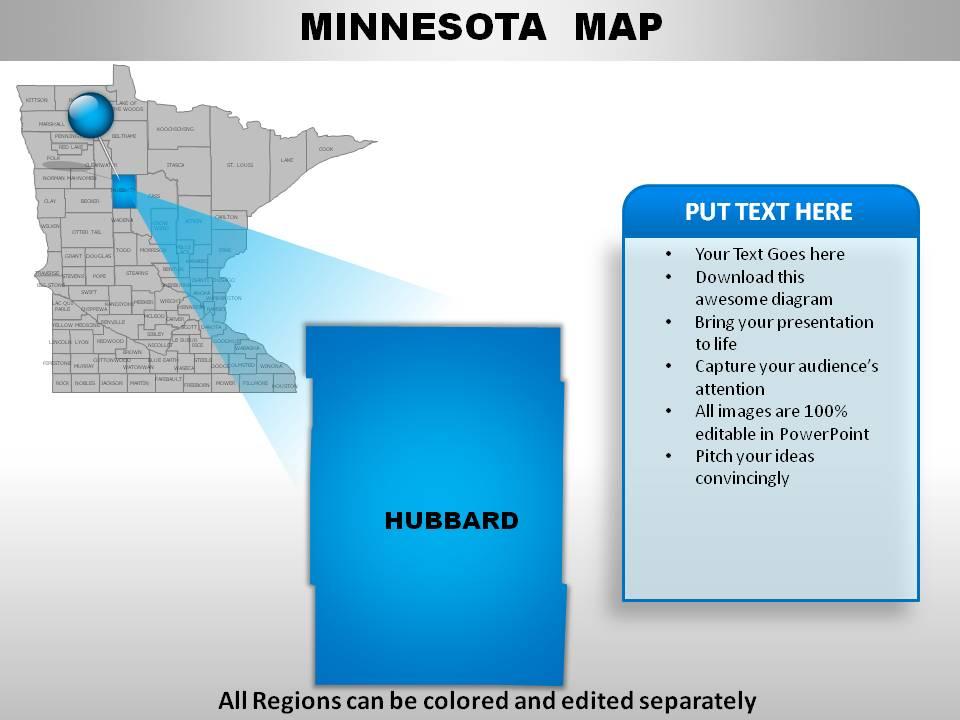
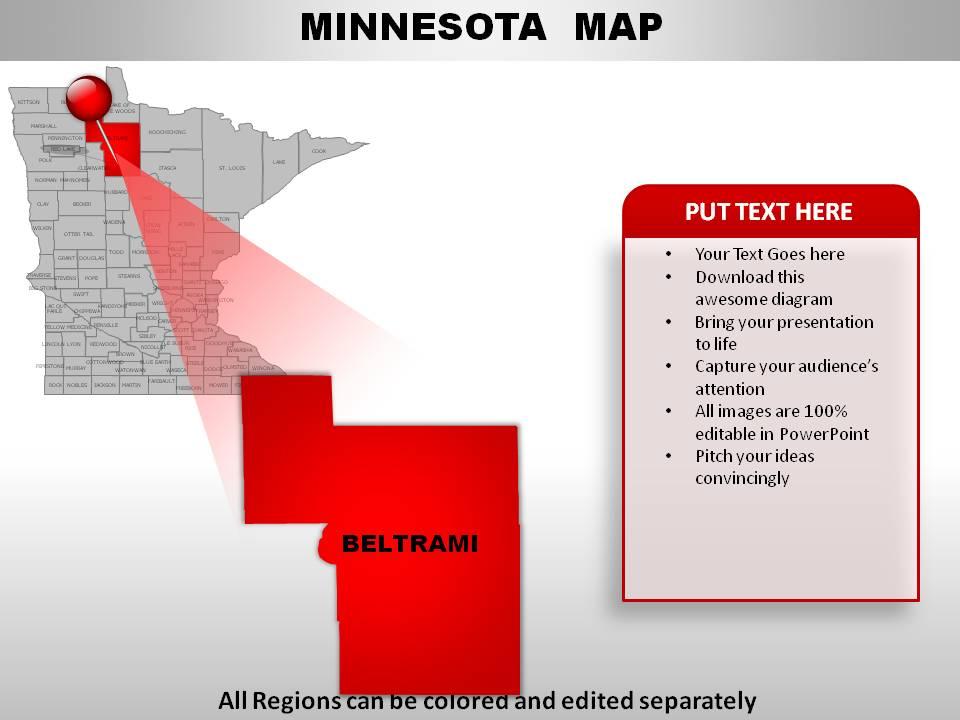
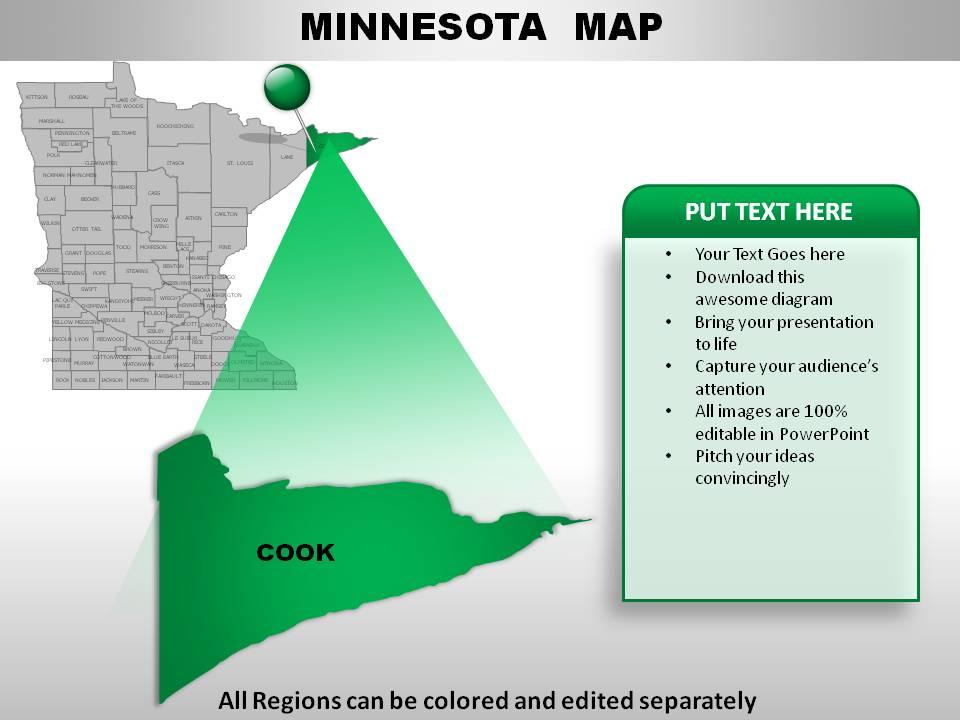
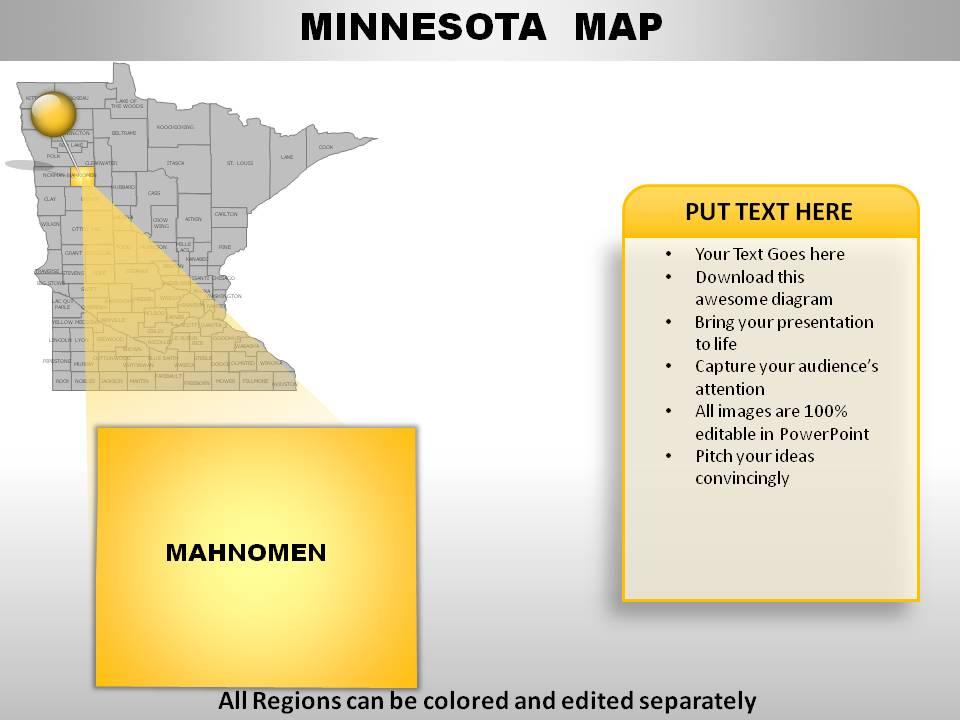
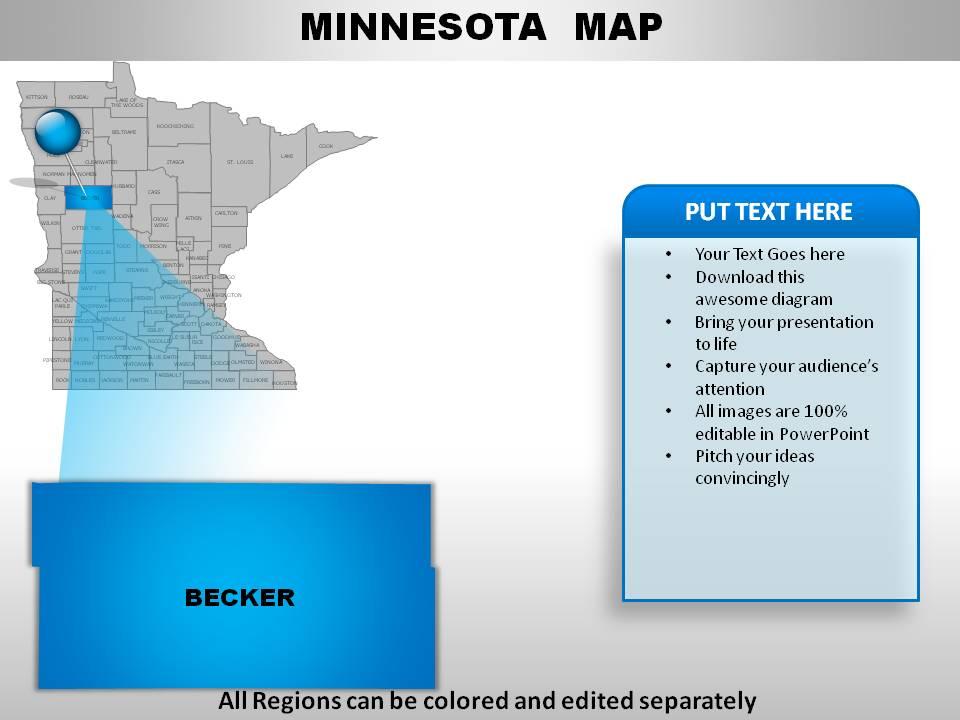
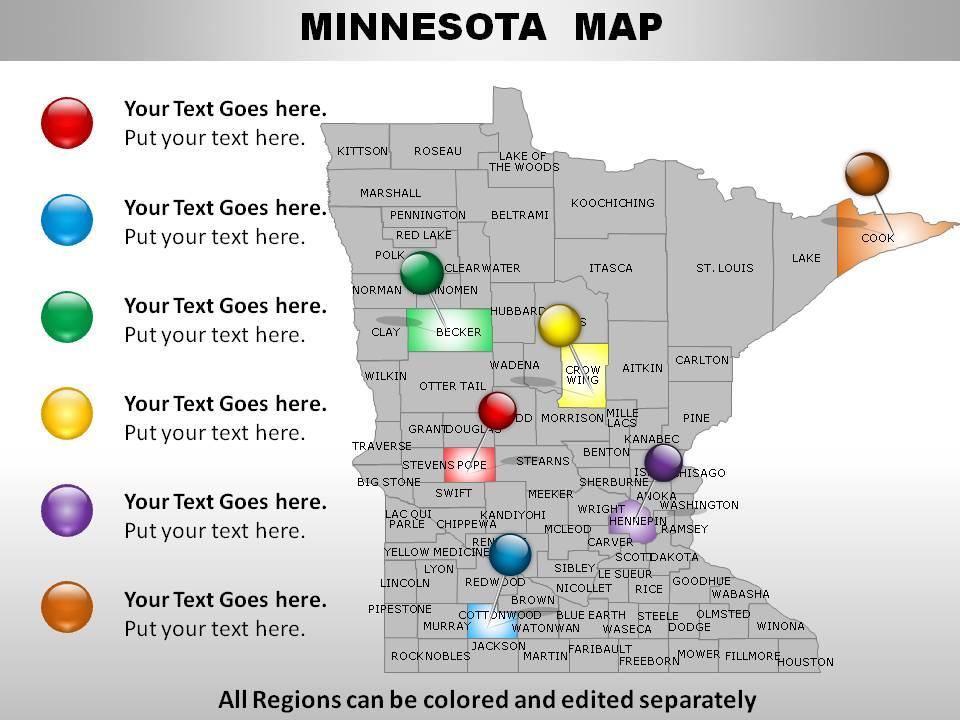
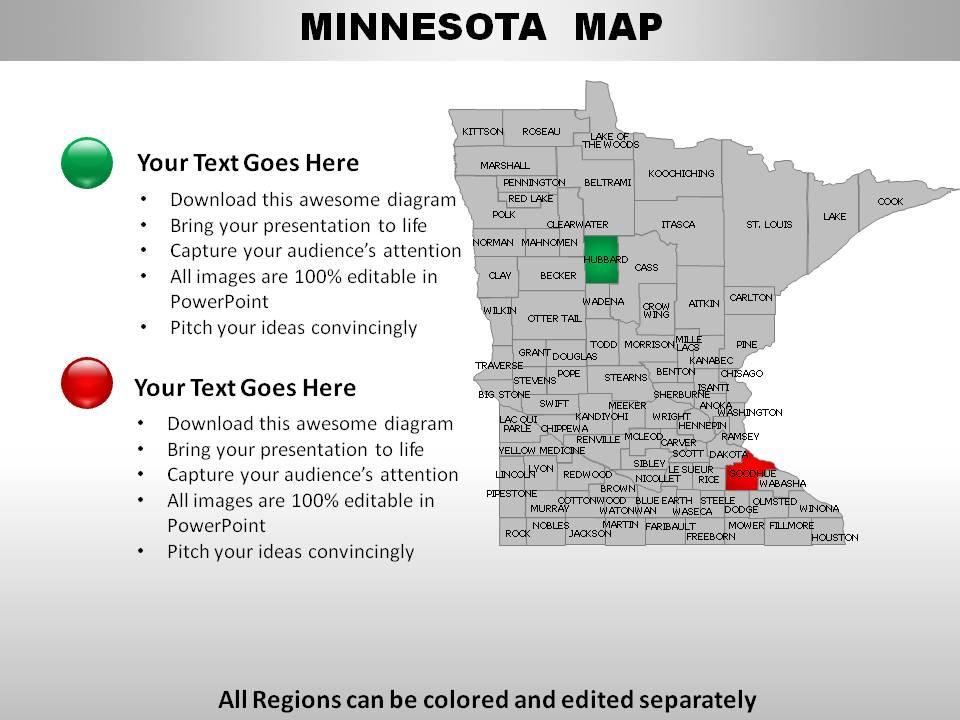
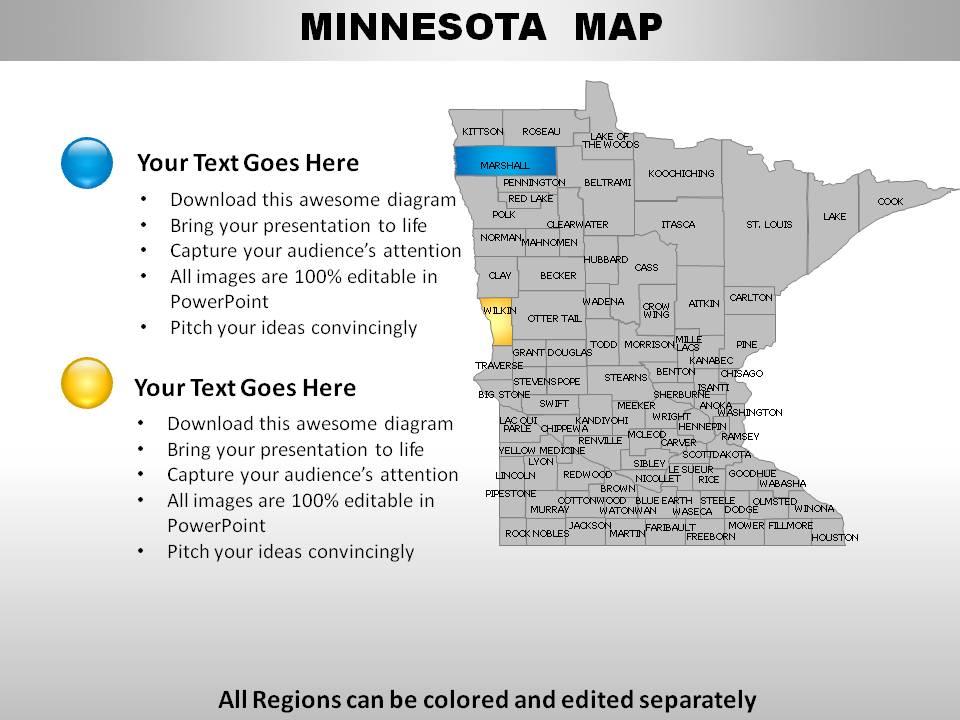
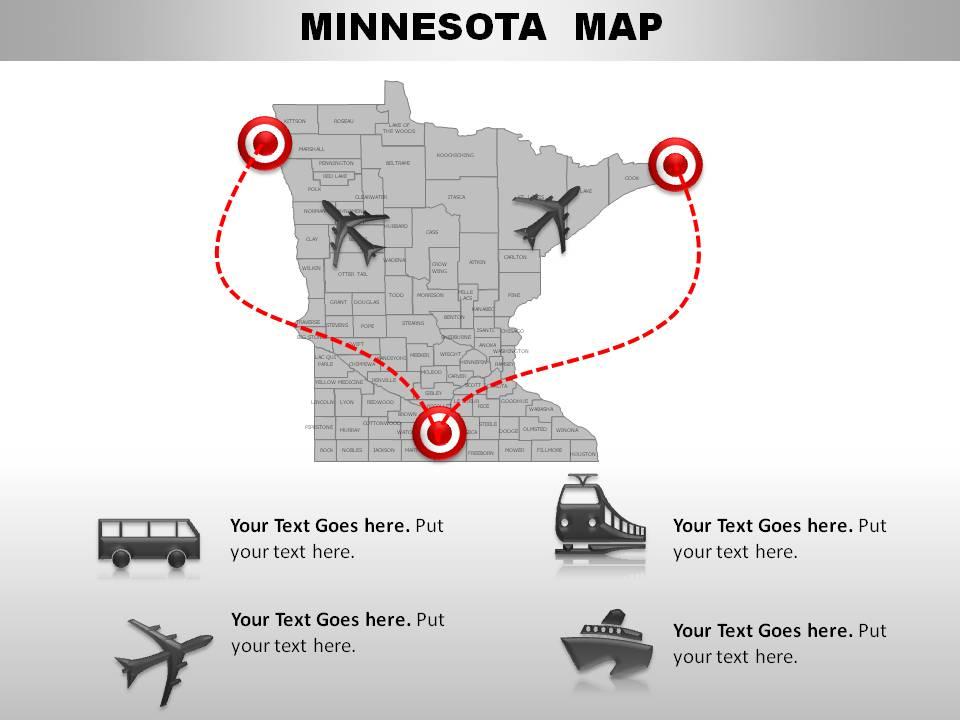
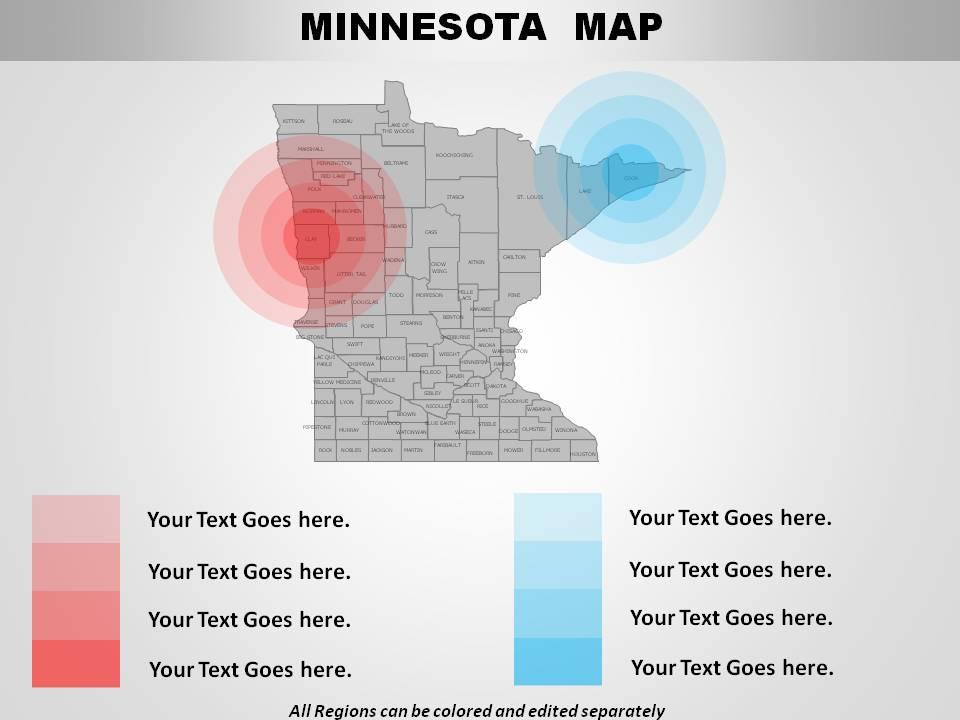
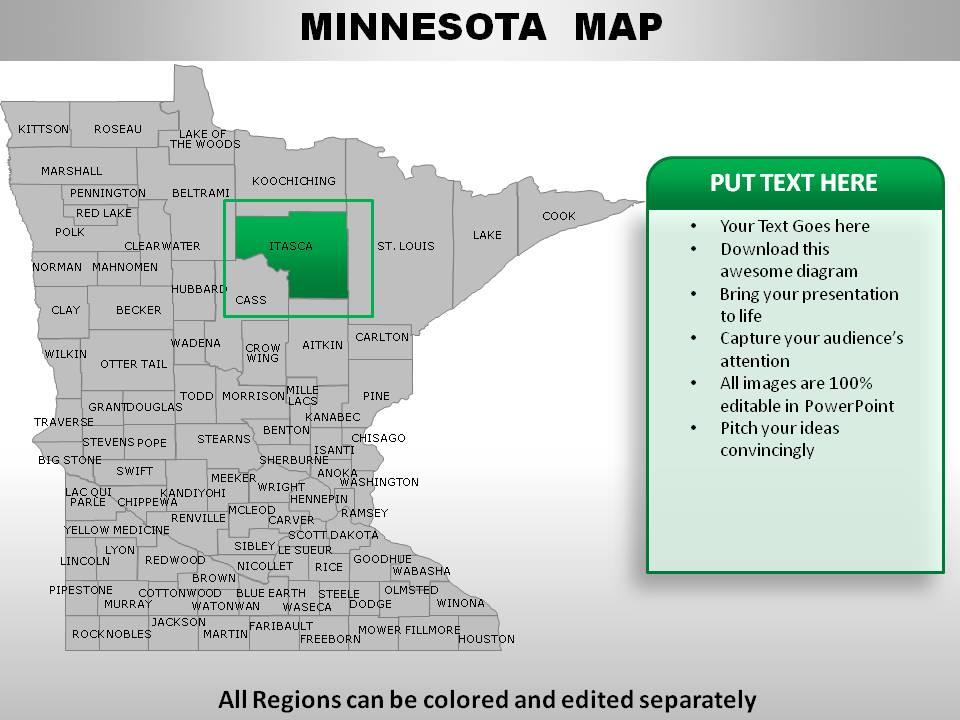
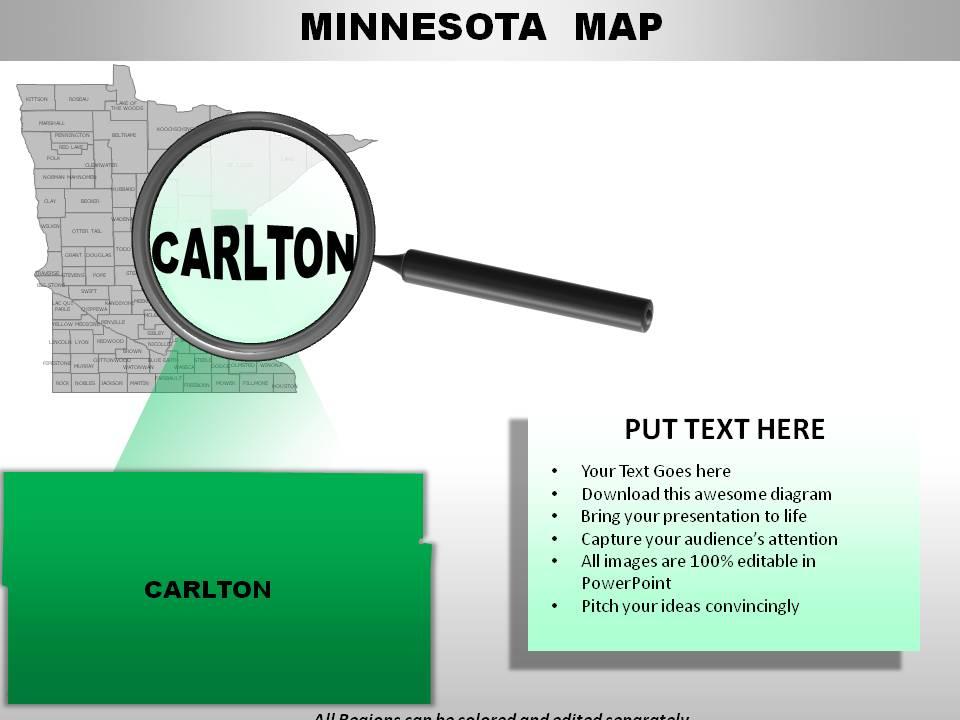
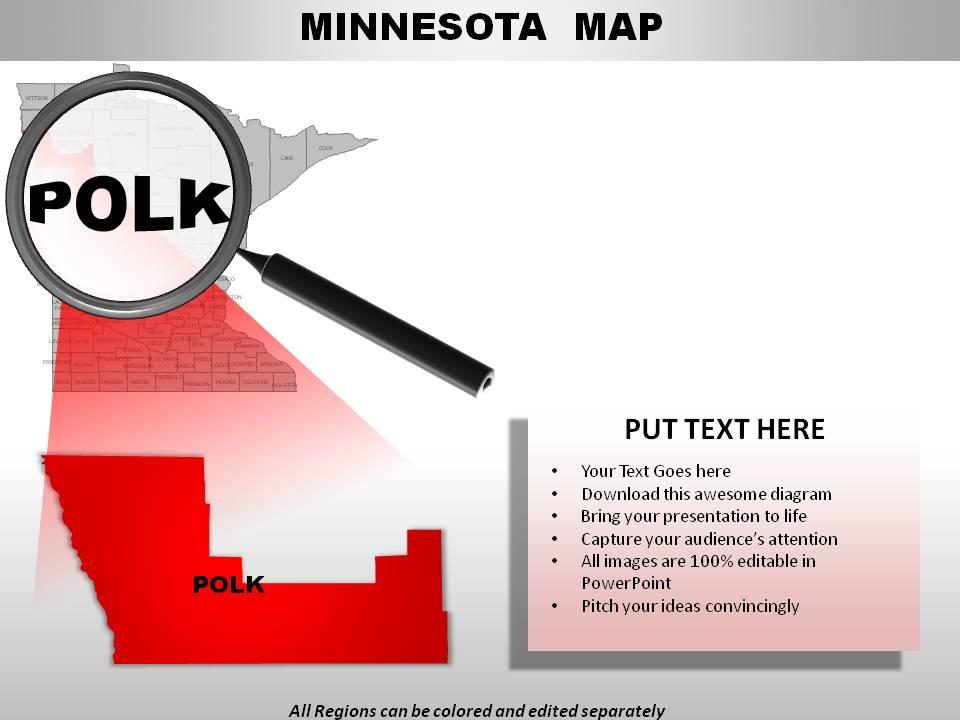
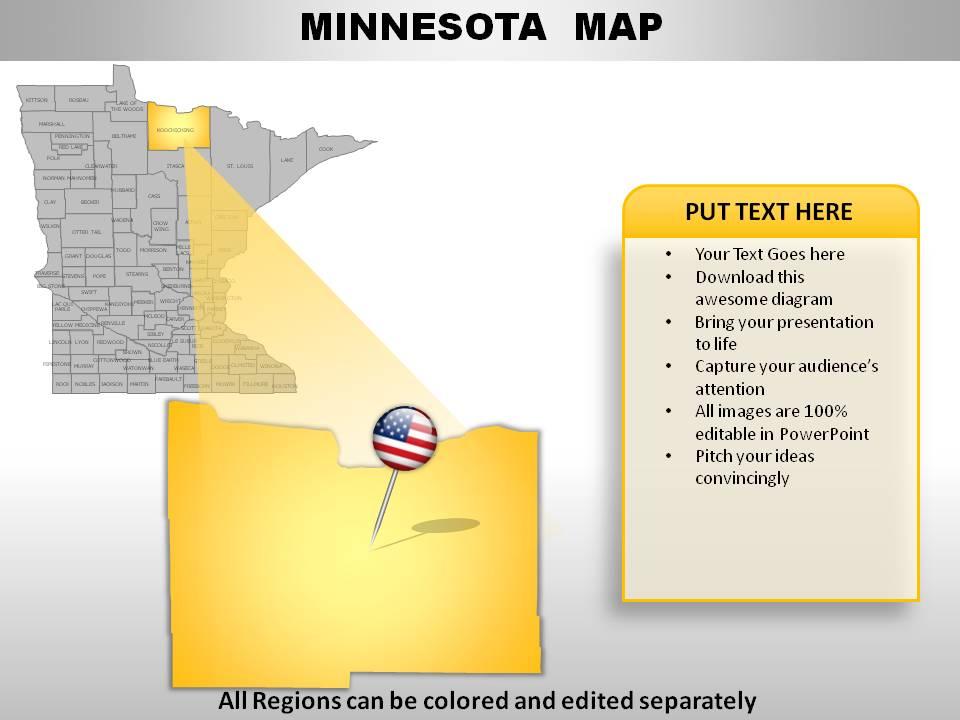
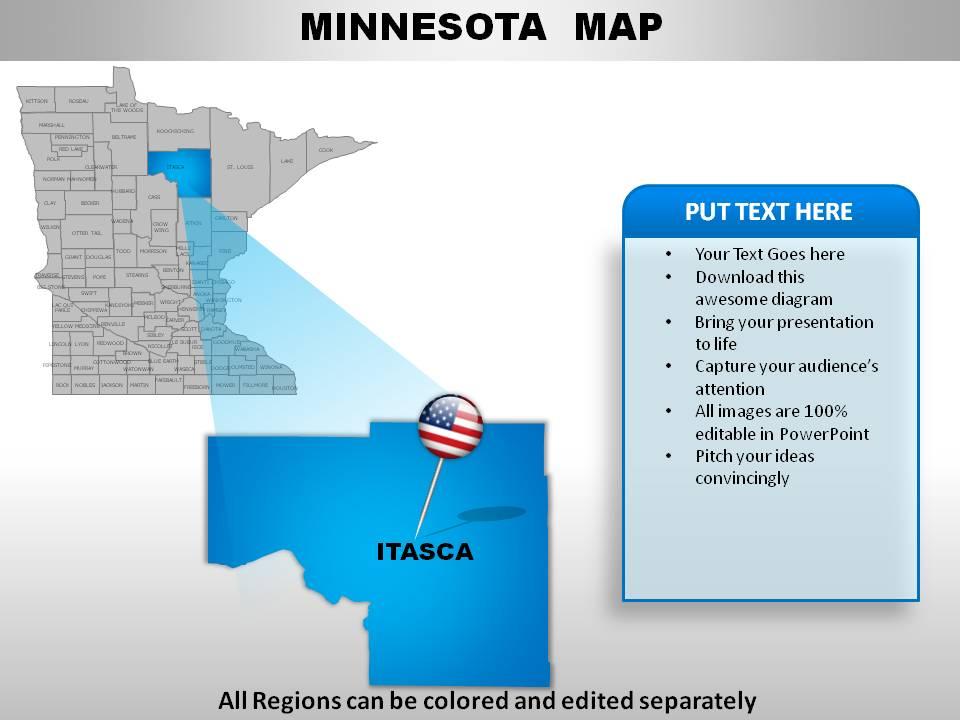
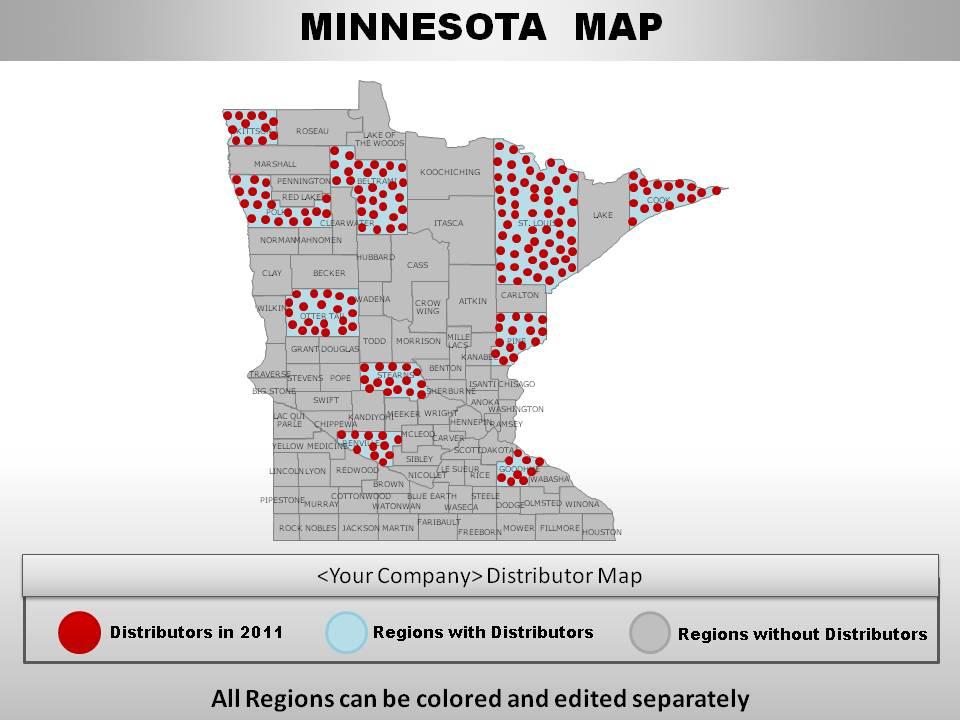
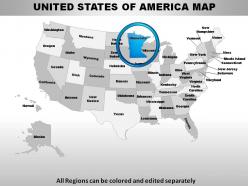
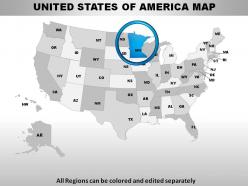
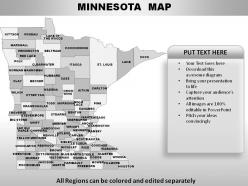
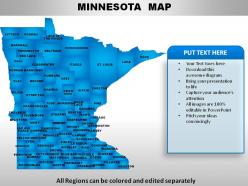
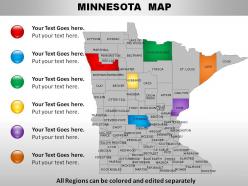
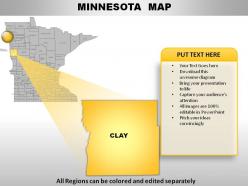
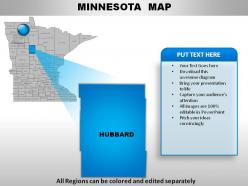
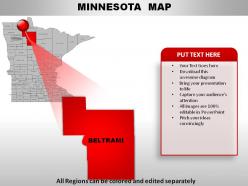
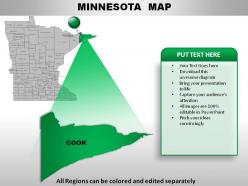
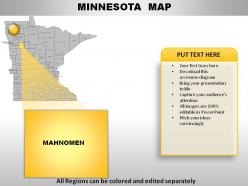
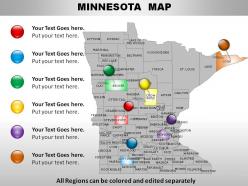
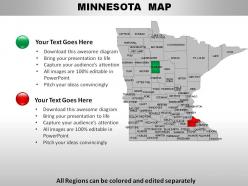
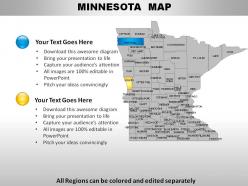
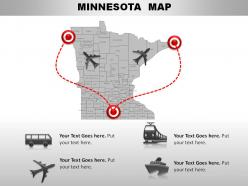
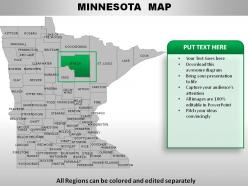
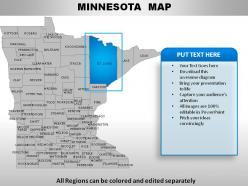
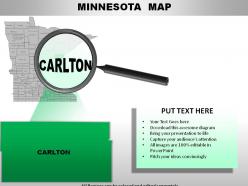
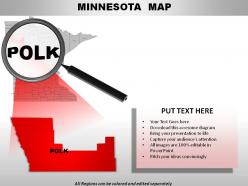
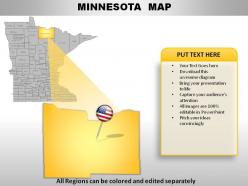
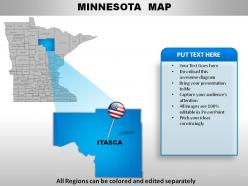
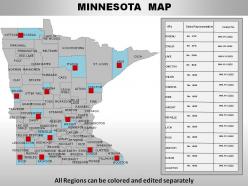
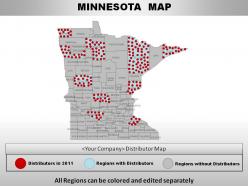
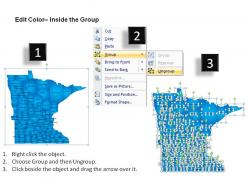
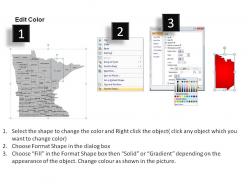
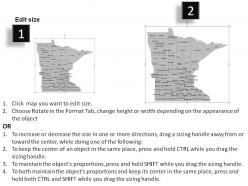
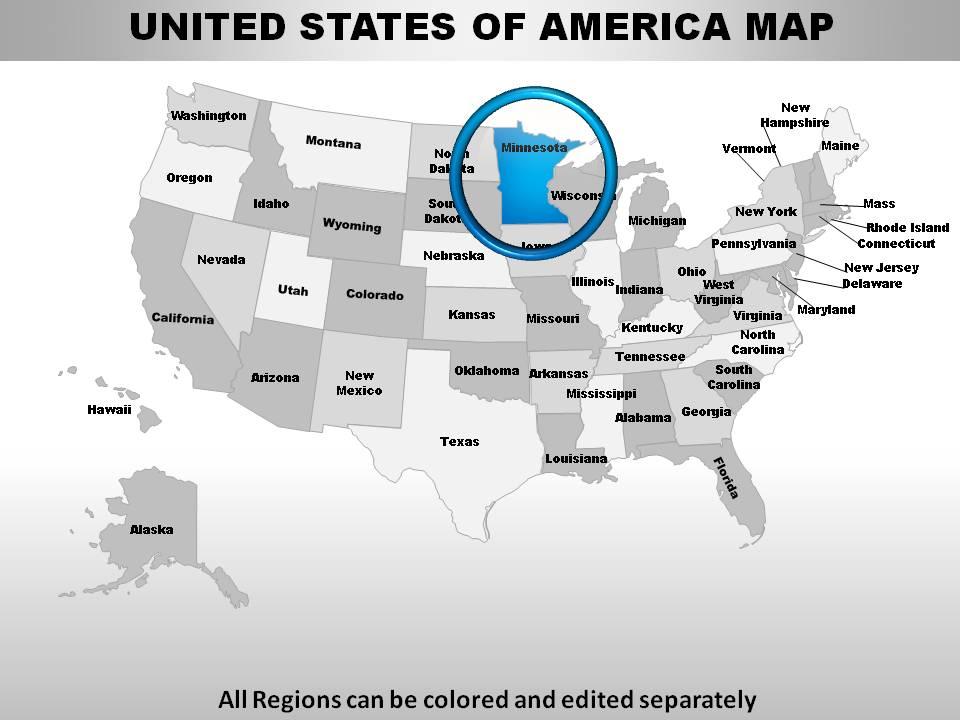
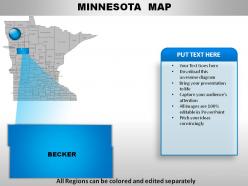
Usa minnesota state powerpoint maps
Try Before you Buy Download Free Sample Product
Audience
Editable
of Time
Whatever your calling our USA Minnesota State Powerpoint Maps will be handy. They cater for every vocation.
People who downloaded this PowerPoint presentation also viewed the following :
Usa minnesota state powerpoint maps with all 28 slides:
Our USA Minnesota State Powerpoint Maps team are a cooperative lot. They will respond to all your specifications.
FAQs for Usa minnesota
Minnesota state map presentations should highlight the Twin Cities metropolitan area, major lakes including Lake Superior and Mille Lacs, the Mississippi River headwaters, key industrial centers like Duluth and Rochester, and agricultural regions. These geographic and economic features enable organizations to showcase Minnesota's diverse landscape, strategic transportation corridors, and economic zones, with many businesses finding that highlighting these elements enhances regional planning and market analysis presentations.
Thematic maps of Minnesota enhance understanding by visualizing population density, age distributions, economic indicators, agricultural zones, and climate patterns across distinct regions. These specialized visualizations enable researchers, policymakers, and businesses to identify demographic trends, resource allocation opportunities, and regional variations, with urban planners and economic development agencies finding that geographic data visualization streamlines strategic decision-making processes.
Minnesota's boundary changes include territorial establishment in 1849, statehood borders in 1858, northeastern boundary disputes with Canada resolved in 1842, and internal county formations throughout the 19th century. These cartographic transitions illustrate territorial expansion, surveying corrections, and administrative reorganization, with many historical societies and educational institutions finding that boundary evolution maps effectively demonstrate Minnesota's transformation from wilderness territory to modern state.
Minnesota's abundant natural resources significantly influence state map design through the prominent display of iron ore deposits, extensive forest coverage, agricultural zones, and the state's 11,842 lakes. These maps strategically highlight resource distribution patterns, mining regions, and water systems to support economic planning, environmental management, and tourism development, with many industries and government agencies finding that detailed resource mapping enhances operational efficiency and strategic decision-making.
Minnesota's transportation networks are crucial for mapping as they reveal economic corridors, population distribution patterns, and regional connectivity across the state's diverse geography. These networks enable businesses and government agencies to optimize logistics planning, infrastructure development, and resource allocation, with many organizations finding that detailed transportation mapping ultimately delivers improved supply chain efficiency and strategic competitive advantage.
Interactive maps can engage audiences by allowing real-time exploration of Minnesota's regions, demographics, economic data, and geographic features through clickable elements, zoom functionality, and layered information displays. These dynamic presentations enable viewers to discover specific county statistics, tourism highlights, and business opportunities at their own pace, while presenters can seamlessly navigate between statewide overviews and detailed local insights, ultimately delivering more memorable and participatory experiences than static maps.
Geographical landmarks serve as narrative anchors in Minnesota maps, providing context through the Mississippi River headwaters, Boundary Waters, Iron Range, and North Shore coastline. These features tell Minnesota's story of natural resources, trade routes, and settlement patterns, with many cartographers finding that landmarks like Lake Superior and the Twin Cities metro help readers understand the state's economic development, recreational opportunities, and cultural identity within broader regional geography.
Satellite imagery enhances traditional Minnesota maps by overlaying real-time environmental data, land use patterns, vegetation indices, and infrastructure changes onto established geographic frameworks. This integration enables agricultural organizations, urban planners, and environmental agencies to monitor crop health, track seasonal changes, and analyze development patterns, ultimately delivering more accurate resource management and strategic planning capabilities.
Data visualizations that complement Minnesota state maps include demographic charts, economic trend graphs, regional comparison tables, industry distribution pie charts, and population density heat maps. These visualizations enhance geographic presentations by providing statistical context, highlighting regional disparities, and supporting location-based insights, with many organizations finding that combining spatial and analytical data delivers more compelling stakeholder presentations and strategic decision-making capabilities.
Weather patterns significantly influence Minnesota map design through seasonal overlays, winter road conditions, lake ice coverage indicators, and temperature zone markings that adapt throughout the year. These specialized cartographic features enable outdoor enthusiasts, transportation planners, and emergency services to navigate Minnesota's dramatic seasonal transitions, from frozen lake crossings to flood zone monitoring, ultimately delivering safer travel routes and enhanced recreational planning across the state's diverse climate conditions.
Cultural maps focus on Minnesota's demographics, languages, ethnic communities, religious distributions, and historical settlements, while political maps display governmental boundaries, voting districts, legislative zones, and administrative divisions. These complementary approaches can be strategically combined in presentations through layered visualizations, side-by-side comparisons, and interactive formats, with many organizations finding that dual-perspective mapping enhances understanding of Minnesota's societal complexity.
Minnesota's indigenous history can be respectfully represented through tribal territory boundaries, traditional place names in native languages, sacred site acknowledgments, and historical timeline overlays. These mapping approaches enable educational institutions, government agencies, and cultural organizations to honor Dakota and Ojibwe heritage while providing comprehensive geographical context, ultimately delivering culturally sensitive resources that enhance understanding and preserve indigenous narratives for future generations.
**INPUT**: What tools and software are best for creating compelling Minnesota state maps? **OUTPUT**: Top tools for creating compelling Minnesota state maps include ArcGIS, QGIS, Mapbox, Adobe Illustrator, and Tableau, each offering specialized mapping capabilities and visualization features. These platforms enable organizations to streamline geographic analysis, enhance data presentation through interactive elements, and deliver professional cartographic outputs, with many government agencies, educational institutions, and businesses finding that strategic mapping tools ultimately provide competitive advantages in regional planning and decision-making processes. [Word count: 60 words]
Maps illustrate Minnesota's tourism hotspots by incorporating visual markers, color-coded regions, interactive elements, themed overlays, and geographic clustering of attractions. Through strategic design, tourism boards and travel companies highlight destinations like the Boundary Waters, Twin Cities attractions, and North Shore scenic routes, while providing visitors with clear navigation paths, ultimately enhancing travel planning and boosting regional tourism engagement.
Minnesota map presentations can incorporate the legend of Paul Bunyan and Babe the Blue Ox, Wendigo folklore from Ojibwe traditions, the Ghost of Split Rock Lighthouse, and tales of buried treasure on Lake Superior's shores. These cultural narratives enhance audience engagement by connecting geographic locations with storytelling elements, while educational institutions and tourism organizations find that folklore integration creates more memorable presentations, ultimately delivering enhanced cultural understanding and stronger emotional connections to Minnesota's diverse regional heritage.
-
Unique design & color.
-
Wonderful templates design to use in business meetings.