


Usage Of Technology Ethically Powerpoint Presentation Slides





Try Before you Buy Download Free Sample Product
 Impress Your
 Audience
 100%
100% Editable
 Save Hours
 of Time


Gain instant access to our fully developed Usage of Technology Ethically template, which offers a comprehensive guide encompassing tools, methods, and frameworks to facilitate informed technological decision-making for firms. This Technological Transformation deck aims to mitigate software and product development risks while actively managing technologys impact on society and the community. Additionally, the Ethical Explorer presentation includes summaries of various technologies used, each featuring slides outlining their goals, aims, durations, and stakeholders involved. Furthermore, our Technology Governance PowerPoint emphasizes essential methods such as Agile Threat Modeling, Data Ethics Canvas, Consequence Scanning, Unintended and Intended Consequence Scanning, and Ethical OS. Also, Consequence scanning PPT provides insights into FMEA, interprets ML, Materiality Matrix Assessment, Tarot Cards of Tech, Responsibility Strategy, and Humane Design Guide. Lastly, our Business Ethics module explores different approaches related to responsible technology, encompassing Polarity Thinking, Participatory Design, Speculative Design Provocations, and Bracketing. Embrace the growing significance of ESG principles and revolutionize your organizations technology-related decisions. Get immediate access to these invaluable resources and pave the way for ethical, sustainable, and responsible technological advancements in your firm.
People who downloaded this PowerPoint presentation also viewed the following :
Content of this Powerpoint Presentation
Slide 1: This slide introduces Usage of technology ethically.
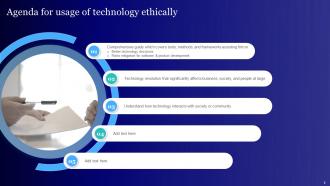
Slide 2: This slide depicts the Agenda of the presentation.
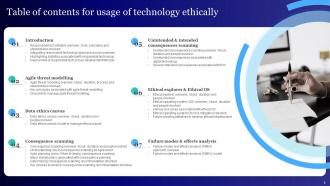
Slide 3: This slide incorporates the Table of contents.
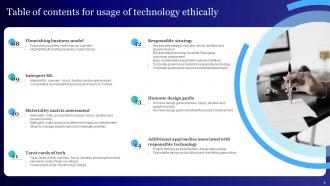
Slide 4: This slide continues the Table Of Contents.
Slide 5: This slide highlights the Title for the Topics to be covered further.
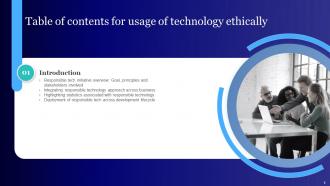
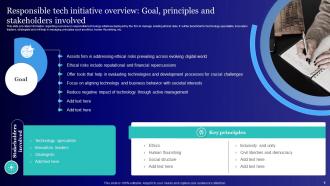
Slide 6: This slide provides information regarding overview or responsible technology initiatives deployed by the firm to manage existing ethical risks.
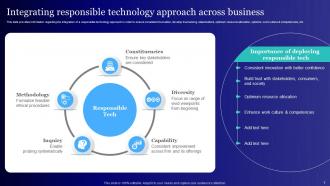
Slide 7: This slide talks about Integrating responsible technology approach across business.
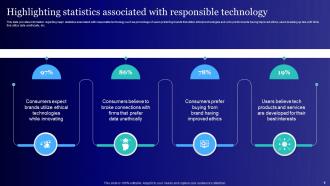
Slide 8: This slide deals with Highlighting statistics associated with responsible technology.
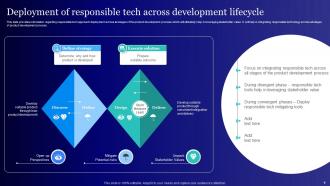
Slide 9: This slide focuses on Deployment of responsible tech across development lifecycle.
Slide 10: This slide elucidates the Heading for the Components to be discussed next.
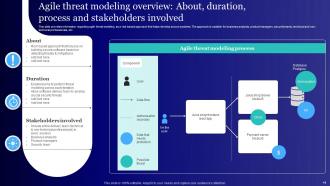
Slide 11: This slide provides information about Agile threat modeling overview.
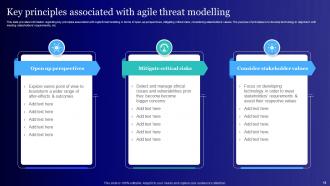
Slide 12: This slide focuses on Key principles associated with agile threat modelling.
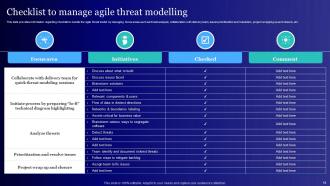
Slide 13: This slide mentions the Checklist to manage agile threat modelling.
Slide 14: This slide displays the Title for the Ideas to be covered further.
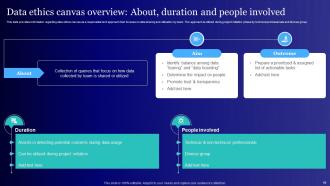
Slide 15: This slide provides information regarding data ethics canvas as a responsible tech approach that focuses on data sharing and utilization by team.
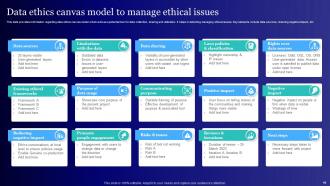
Slide 16: This slide shows Data ethics canvas model to manage ethical issues.
Slide 17: This slide incorporates the Heading for the Ideas to be discussed in the following template.
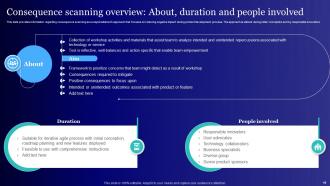
Slide 18: This slide provides information about consequence scanning as a responsible tech approach.
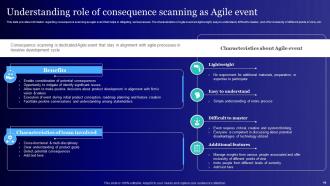
Slide 19: This slide deals with Understanding role of consequence scanning as Agile event.
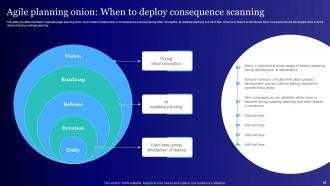
Slide 20: This slide provides information regarding agile planning onion which helps in deployment of consequence scanning.
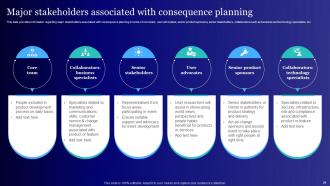
Slide 21: This slide showcases the Major stakeholders associated with consequence planning.
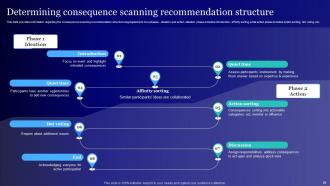
Slide 22: This slide emphasizes on Determining consequence scanning recommendation structure.
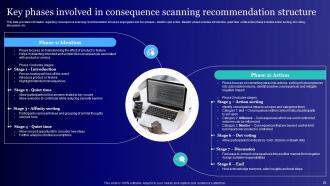
Slide 23: This slide depicts the Key phases involved in consequence scanning recommendation structure.
Slide 24: This slide reveals the Title for the Components to be covered in the following template.
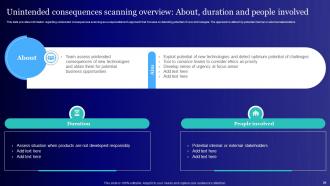
Slide 25: This slide represents the Unintended consequences scanning overview.
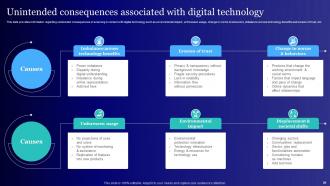
Slide 26: This slide showcases the Unintended consequences associated with digital technology.
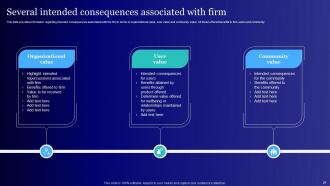
Slide 27: This slide displays the Several intended consequences associated with firm.
Slide 28: This slide elucidates the Heading for the Topics to be discussed next.
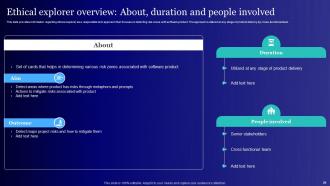
Slide 29: This slide provides information regarding ethical explorer as a responsible tech approach.
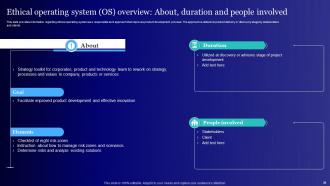
Slide 30: This slide provides information regarding ethical operating system as a responsible tech approach that improves product development process.
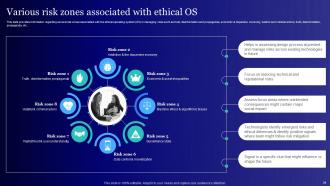
Slide 31: This slide reveals the Various risk zones associated with ethical OS.
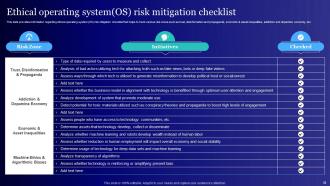
Slide 32: This slide focuses on Ethical operating system(OS) risk mitigation checklist.
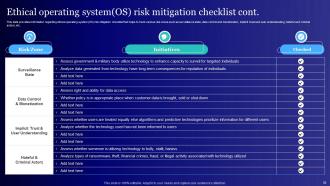
Slide 33: This slide continues the Ethical operating system(OS) risk mitigation checklist.
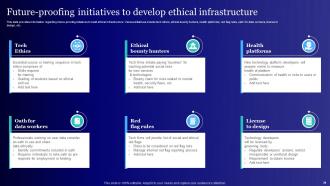
Slide 34: This slide provides information regarding future-proofing initiatives to build ethical infrastructure.
Slide 35: This slide presents the Title for the Topics to be covered in the following template.
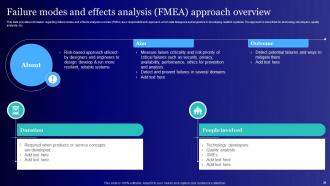
Slide 36: This slide showcases the Failure modes and effects analysis (FMEA) approach overview.
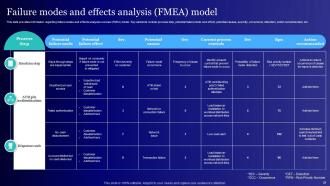
Slide 37: This slide talks about the Failure modes and effects analysis (FMEA) model.
Slide 38: This slide mentions the Heading for the Components to be discussed next.
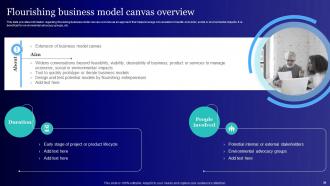
Slide 39: This slide portrays the Flourishing business model canvas overview.
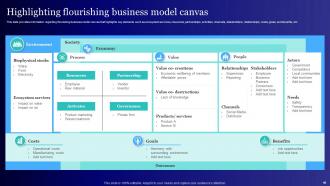
Slide 40: This slide Highlights the flourishing business model canvas.
Slide 41: This slide displays the Title for the Ideas to be covered in the following template.
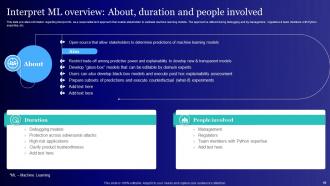
Slide 42: This slide provides information regarding Interpret ML as a responsible tech approach.
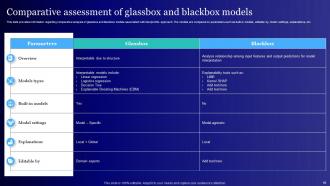
Slide 43: This slide deals with Comparative assessment of glassbox and blackbox models.
Slide 44: This slide displays the Heading for the Ideas to be discussed further.
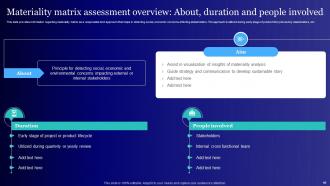
Slide 45: This slide portrays information regarding materiality matrix as a responsible tech approach.
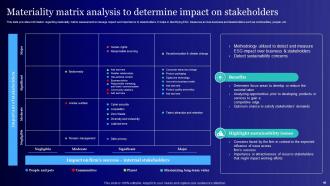
Slide 46: This slide illustrates the Materiality matrix analysis to determine impact on stakeholders.
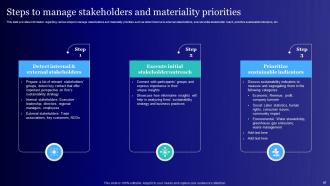
Slide 47: This slide states the Steps to manage stakeholders and materiality priorities.
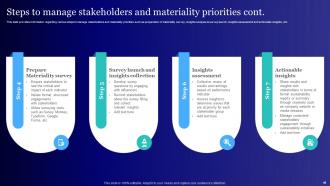
Slide 48: This slide continues the Steps to manage stakeholders and materiality priorities.
Slide 49: This slide includes the Title for the Topics to be covered in the forth-coming template.
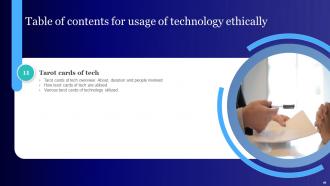
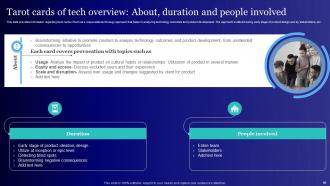
Slide 50: This slide provides information regarding tarot cards of tech as a responsible technology approach.
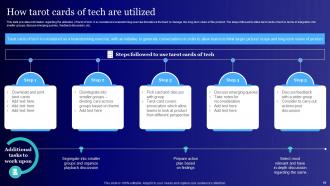
Slide 51: This slide presents the utilization of tarot of tech.
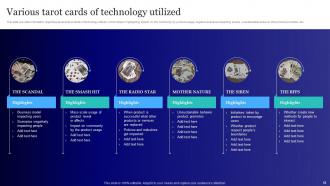
Slide 52: This slide exhibits the Various tarot cards of technology utilized.
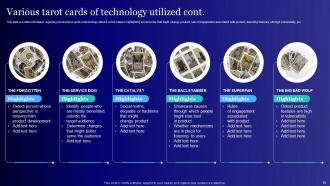
Slide 53: This slide continues the Various tarot cards of technology utilized.
Slide 54: This slide displays the Heading for the Components to be discussed next.
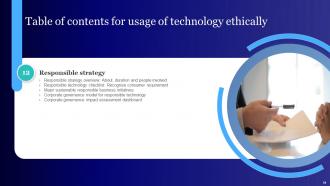
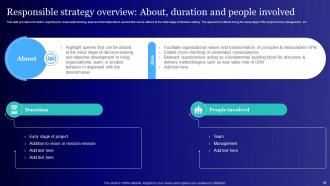
Slide 55: This slide provides information regarding the responsible strategy approach.
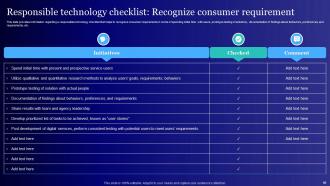
Slide 56: This slide showcases the responsible technology checklist.
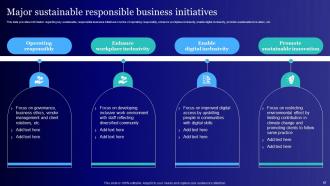
Slide 57: This slide exhibits the Major sustainable responsible business initiatives.
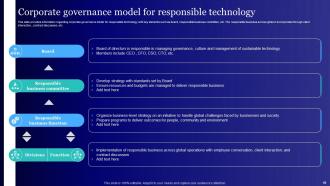
Slide 58: This slide highlights the corporate governance model for responsible technology with key elements.
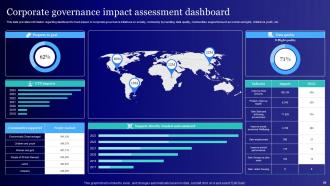
Slide 59: This slide reveals the Corporate governance impact assessment dashboard.
Slide 60: This slide mentions the Title for the Topics to be covered further.
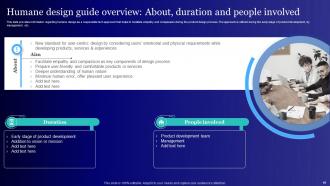
Slide 61: This slide provides information regarding humane design as a responsible tech approach.
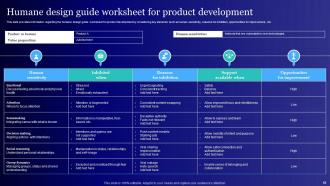
Slide 62: This slide presents the Humane design guide worksheet for product development.
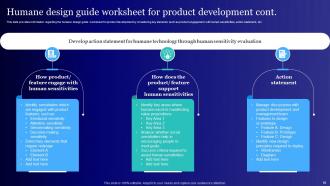
Slide 63: This slide continues the Humane design guide worksheet for product development.
Slide 64: This slide incorporates the Heading for the Components to be discussed in the following template.
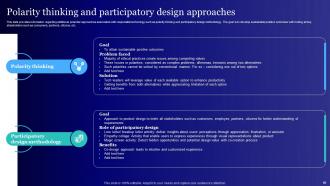
Slide 65: This slide deals with the Polarity thinking and participatory design approaches.
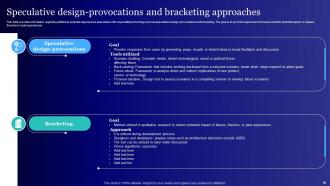
Slide 66: This slide talks about the Speculative design-provocations and bracketing approaches.
Slide 67: This is the Icons Slide containing all the Icons used in the plan.
Slide 68: This slide is used for showcasing some Additional information.
Slide 69: This is the About us slide. State your company-related information here.
Slide 70: This is Our Team slide. State your team-related information here.
Slide 71: This slide contains the Post it notes for reminders and deadlines.
Slide 72: This is the Venn diagram slide.
Slide 73: This is the 30 60 90 days plan sldie for effective planning.
Slide 74: This slide elucidates the company Timeline.
Slide 75: This is the Idea Generation slide for encouraging new ideas.
Slide 76: This is the Thank You slide for acknowledgement.
Usage Of Technology Ethically Powerpoint Presentation Slides with all 81 slides:
Use our Usage Of Technology Ethically Powerpoint Presentation Slides to effectively help you save your valuable time. They are readymade to fit into any presentation structure.









FAQs for Usage Of Technology Ethically
Ethical technology usage principles include transparency in data collection, user consent and privacy protection, algorithmic fairness and bias mitigation, accountability in automated decisions, and responsible innovation practices. These frameworks enable organizations across healthcare, finance, and retail to build consumer trust, ensure regulatory compliance, and deliver equitable digital experiences, ultimately creating sustainable competitive advantages in increasingly scrutinized markets.
Organizations can ensure ethical technology use by implementing robust data encryption, transparent privacy policies, regular security audits, user consent mechanisms, and data minimization practices. Through strategic privacy frameworks, companies across sectors like healthcare, finance, and retail enhance customer trust, reduce compliance risks, and maintain competitive advantage, ultimately delivering stronger user relationships while meeting increasingly stringent regulatory requirements.
Technology can promote social good through AI-powered healthcare diagnostics, blockchain for transparent charitable donations, renewable energy management systems, educational accessibility platforms, and data-driven poverty reduction initiatives. These applications enhance community welfare by improving medical outcomes, ensuring donation accountability, and expanding educational access, while ethical frameworks around privacy protection, algorithmic fairness, and inclusive design ultimately deliver sustainable social impact.
Tech companies play crucial roles in ethical education through transparent privacy policies, user-friendly consent mechanisms, regular security updates, educational content about data usage, and clear communication about algorithmic decision-making processes. Through dedicated ethics teams and user education initiatives, companies like Google, Apple, and Microsoft increasingly provide comprehensive resources about digital privacy, data protection, and responsible technology use, ultimately building trust while empowering users to make informed decisions about their digital interactions.
Individuals can assess technology companies' ethical practices by reviewing their privacy policies, data handling procedures, transparency reports, and third-party audits, while examining their track record on user rights and regulatory compliance. Many consumers increasingly research companies' stances on data protection, algorithmic bias, and social responsibility, ultimately choosing services that align with their values and deliver transparency alongside functionality.
Unethical AI usage presents risks including algorithmic bias, privacy violations, job displacement, autonomous weapon development, and lack of accountability in decision-making processes. These risks can be mitigated through transparent development practices, diverse training datasets, robust regulatory frameworks, and continuous monitoring systems, with many organizations finding that ethical AI committees and stakeholder involvement ultimately deliver sustainable innovation while maintaining public trust.
Cultural perceptions of ethical technology use vary significantly, with Western cultures emphasizing individual privacy rights, Asian societies prioritizing collective harmony and social stability, and developing nations focusing on access and economic development. These differences create challenges in establishing global technology standards, cross-border data governance, and international AI regulations, with many multinational organizations finding that successful technology deployment requires culturally adaptive ethical frameworks that balance universal principles with local values.
Ethical considerations include informed consent, data minimization, purpose limitation, transparency in algorithmic decision-making, and protection against discriminatory profiling. While these technologies enable enhanced security and personalized services in sectors like healthcare and finance, organizations must balance operational benefits with privacy rights, implementing robust governance frameworks that ensure responsible data stewardship and maintain customer trust.
Technology can be used responsibly in education through robust data encryption, transparent privacy policies, secure learning management systems, regular security audits, and age-appropriate digital literacy training. Educational institutions increasingly implement zero-trust security frameworks and FERPA-compliant platforms, with many schools finding that ethical technology integration enhances personalized learning experiences while building student trust and ensuring regulatory compliance.
Guidelines for blockchain and cryptocurrency should include transparent governance frameworks, robust security protocols, environmental sustainability standards, consumer protection measures, and clear regulatory compliance requirements. These ethical foundations enable financial institutions, healthcare organizations, and supply chain companies to leverage these technologies responsibly, ultimately delivering enhanced trust, reduced fraud, and improved operational efficiency while minimizing risks to stakeholders.
Ethical dilemmas in technology significantly impact corporate social responsibility initiatives by creating tensions between profit maximization and stakeholder welfare, forcing companies to balance innovation speed with responsible deployment. These challenges compel organizations to develop comprehensive ethical frameworks, transparent governance structures, and stakeholder engagement protocols, with many financial services and healthcare companies finding that proactive ethical positioning ultimately enhances brand trust and competitive advantage.
Transparency in algorithmic processes builds trust, ensures accountability, reduces bias, enables regulatory compliance, and enhances user confidence in automated decisions. Companies achieve this through clear documentation, regular audits, explainable AI models, stakeholder communication, and open reporting practices, with many financial services and healthcare organizations finding that transparent algorithms ultimately deliver stronger customer relationships and competitive advantage.
The tech industry can collaborate with policymakers through joint advisory committees, transparent data sharing protocols, co-developed regulatory frameworks, standardized ethics certifications, and regular stakeholder consultations. These partnerships enable proactive compliance strategies, balanced innovation policies, and industry-wide accountability measures, with many organizations finding that early collaboration reduces regulatory uncertainty while enhancing public trust and competitive positioning.
Ethical technology usage contributes to sustainable development goals by promoting responsible innovation, ensuring equitable access to digital resources, and minimizing environmental impact through efficient systems. These practices enable organizations to deliver social value while reducing carbon footprints, with many healthcare institutions, educational systems, and financial services finding that ethical frameworks ultimately enhance community trust and long-term operational sustainability.
Consumers can advocate for ethical technology practices by supporting companies with transparent data policies, participating in digital rights organizations, choosing privacy-focused alternatives, and demanding accountability through feedback channels. By voting with their wallets, engaging in public discourse, and supporting regulatory initiatives, consumers increasingly influence corporate behavior, with many technology providers finding that ethical practices become competitive advantages in building customer trust and loyalty.
-
I discovered this website through a google search, the services matched my needs perfectly and the pricing was very reasonable. I was thrilled with the product and the customer service. I will definitely use their slides again for my presentations and recommend them to other colleagues.
-
“Immediate response, professional support, and effective solutions that were customized and immediately provided. Well done- Thank you!”