Value proposition powerpoint presentation slide template

Rating:
90%
Value proposition powerpoint presentation slide template
Slide 1 of 5
Favourites Favourites

Try Before you Buy Download Free Sample Product

Audience Impress Your
Audience
Editable 100%
Editable
Time Save Hours
of Time
The Biggest Sale is ending soon in
0
0
:
0
0
:
0
0
Rating:
90%
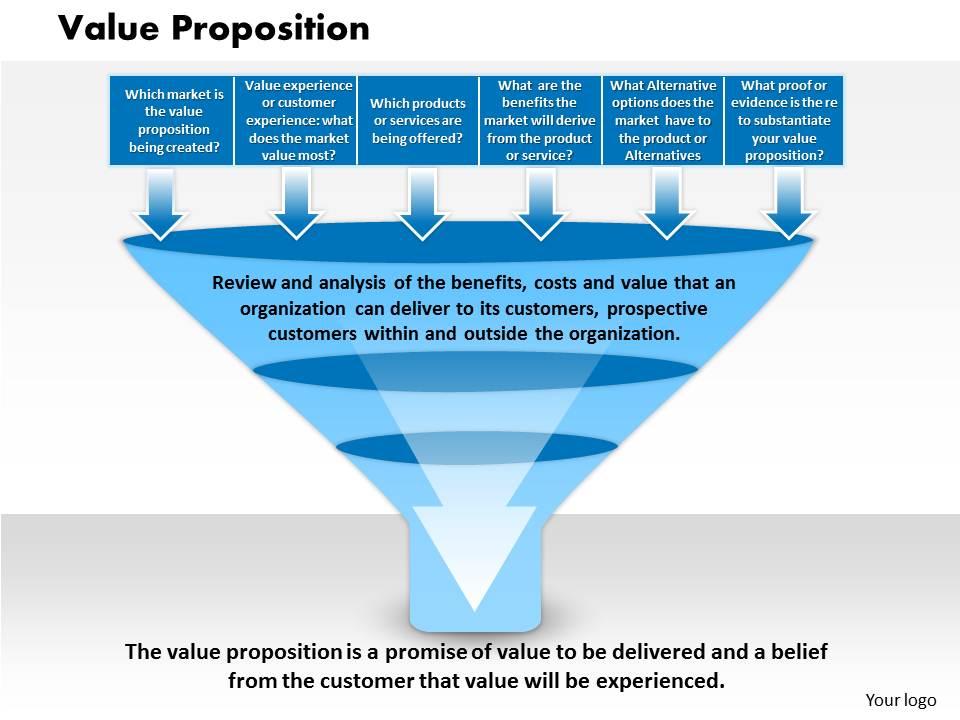
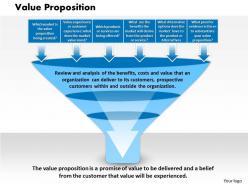
We are proud to present our value proposition powerpoint presentation slide template. Put The Wind In Your Sails With Our Value Proposition Powerpoint Presentation Slide Template Power Point Templates. Skim Smoothly Over The Choppy Waters Of The Market. Let Our Value Proposition Powerpoint Presentation Slide Template Power Point Templates Give The Updraft To Your Ideas. See Them Soar To Great Heights With Ease. This template is perfect for presentations on Value proposition, which market is the value proposition being created, which products or services are being offered, review and analysis of the benefits, costs and value that an organization can deliver to its customers, prospective customers within and outside the organization, the value proposition is a promise of value to be delivered and a belief from the customer that value will be experienced.

People who downloaded this PowerPoint presentation also viewed the following :

FAQs for Value proposition powerpoint

A value proposition template should include target customer identification, specific problem addressed, unique solution offering, key benefits delivered, and competitive differentiation factors. These elements work together by clearly articulating customer pain points, demonstrating measurable outcomes like cost savings or efficiency gains, and positioning your offering strategically, with many organizations finding that structured templates significantly enhance their market positioning and sales effectiveness.

Tailoring value proposition templates involves adjusting messaging focus, benefits emphasis, language complexity, and supporting evidence based on each audience's priorities, pain points, and decision-making criteria. Different stakeholders like executives, technical teams, and end-users require distinct approaches, with C-suite audiences focusing on strategic outcomes and ROI, while technical audiences need detailed functionality and implementation specifics, ultimately ensuring your proposition resonates meaningfully.

Common value proposition mistakes include being too generic, focusing on features rather than customer benefits, using vague language without specific outcomes, failing to address target audience pain points, and making unsubstantiated claims. These errors dilute messaging effectiveness and reduce conversion potential, with successful companies finding that specific, benefit-focused propositions highlighting measurable results ultimately deliver stronger market positioning and competitive advantage.

Visual elements enhance value proposition presentations by transforming complex concepts into digestible graphics, using charts and infographics to highlight key benefits, and incorporating compelling imagery that resonates emotionally with audiences. These design components streamline communication, increase retention rates, and create memorable impressions, with many organizations finding that well-designed visual presentations significantly boost stakeholder engagement and accelerate decision-making processes.

Market research enables businesses to identify customer pain points, analyze competitor positioning, understand target audience preferences, and validate messaging effectiveness before launch. Through surveys, focus groups, and competitive analysis, companies can craft value propositions that resonate with specific market segments, ultimately delivering higher conversion rates and stronger market differentiation.

Measure value proposition effectiveness through conversion rates, customer acquisition costs, A/B testing results, customer feedback scores, and sales cycle length. These metrics reveal how well your proposition resonates, with many companies finding that clear messaging reduces acquisition costs by 20-30% while accelerating purchase decisions, ultimately delivering stronger market positioning and competitive advantage.

Industries with complex offerings or intense competition benefit most from well-defined value propositions, including technology, financial services, healthcare, SaaS platforms, and professional consulting. These sectors leverage clear value messaging to differentiate crowded markets, communicate complex benefits effectively, and accelerate sales cycles, with many organizations finding that strategic positioning ultimately delivers stronger customer acquisition and premium pricing power.

Aligning your value proposition with business strategy involves ensuring your core value promise directly supports strategic objectives, target market positioning, and competitive differentiation goals. This strategic alignment enables consistent messaging across all business functions, from product development to marketing campaigns, with many successful organizations finding that integrated value propositions ultimately drive stronger market penetration and sustainable competitive advantage.

Tools that assist in creating compelling value proposition templates include customer survey platforms like SurveyMonkey, analytics tools such as Google Analytics, competitor analysis software like SEMrush, design platforms including Canva, and presentation tools like SlideTeam's templates. These resources streamline research, design, and presentation processes by gathering customer insights, analyzing market data, and creating professional layouts, with many organizations finding that combining multiple tools delivers more comprehensive and persuasive value propositions.

Storytelling techniques enhance value proposition presentations by incorporating customer journey narratives, problem-solution arcs, and real-world case studies that demonstrate tangible outcomes. Through structured narratives, organizations create emotional connections while showcasing quantifiable results, with many businesses finding that story-driven presentations increase stakeholder engagement and accelerate decision-making processes.

A value proposition should evolve from specific features to broader strategic benefits, expanding target audiences, and addressing complex market needs as companies scale. Initially focused on core functionality, mature businesses refine messaging around competitive differentiation, operational efficiency, and comprehensive solutions, with many organizations finding that strategic positioning ultimately delivers greater market penetration and sustained growth.

Successful value propositions include Uber's "Your ride, on demand," Slack's "Where work happens," Netflix's "See what's next," Amazon Prime's "Fast, free delivery," and Zoom's "Video communications transcending space and time." These companies streamline complex services into clear benefits, with many organizations finding that simple, outcome-focused messaging resonates better than feature-heavy descriptions, ultimately delivering stronger market positioning.

Customer feedback informs value proposition development by revealing actual pain points, preferred benefits, and language that resonates with target audiences. Through surveys, interviews, and behavioral data, businesses can identify which features matter most, refine messaging to match customer vocabulary, and validate assumptions, ultimately creating propositions that address real needs rather than perceived ones.

A value proposition encompasses the complete customer benefit package, including problem-solving capabilities, outcomes delivered, and overall value created, while a unique selling proposition specifically identifies the singular differentiator that sets you apart from competitors. Value propositions address broader customer needs through multiple benefits, whereas USPs focus on one distinctive advantage, with many organizations finding that strong value propositions incorporate their USP while delivering comprehensive market positioning.

**INPUT**: How can I effectively communicate my value proposition in a networking situation? **OUTPUT**: Effectively communicate your value proposition through a concise elevator pitch that highlights your unique solution, target audience, and measurable outcomes within 30-60 seconds. Practice storytelling techniques that connect your expertise to specific industry challenges, use concrete examples from past successes, and tailor your message to each listener's sector, ultimately creating memorable conversations that position you as a strategic problem-solver.

Ratings and Reviews

90% of 100
Write a review
Most Relevant Reviews
  1. 100%

    by Miller Rogers

    Appreciate the research and its presentable format.
  2. 80%

    by Cletus Ross

    Thanks for all your great templates they have saved me lots of time and accelerate my presentations. Great product, keep them up!

2 Item(s)

per page: