

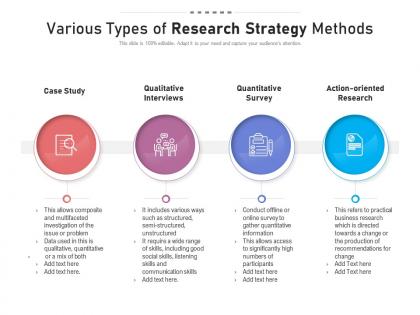
Various types of research strategy methods




Try Before you Buy Download Free Sample Product
 Impress Your
Audience
 100%
Editable
 Save Hours
of Time


Our Various Types Of Research Strategy Methods are topically designed to provide an attractive backdrop to any subject. Use them to look like a presentation pro.
People who downloaded this PowerPoint presentation also viewed the following :
Various types of research strategy methods with all 2 slides:
Use our Various Types Of Research Strategy Methods to effectively help you save your valuable time. They are readymade to fit into any presentation structure.


FAQs for Various types of
First things first - nail down your research question and figure out who you're trying to reach. Then pick your methods based on what you can actually afford and how much time you've got. Surveys are great but interviews give you way better insights, just saying. Plan everything out beforehand because trust me, winging it never works. Stay flexible though - sometimes you'll stumble onto something totally unexpected that changes everything. Oh, and write stuff down as you go! You'll forget half the good stuff otherwise. Don't rush the analysis part either.
JSTOR and Google Scholar are your best friends for this stuff. Your university library portal works too. I always go for peer-reviewed journals and anything from university presses - government sites (.gov) are solid gold. Don't sleep on Wikipedia though! I know, I know, but their reference sections are actually treasure troves of legit sources. Check if the author has real credentials and isn't just some random blogger. Cross-check everything across different sources because people lie or get things wrong. Oh, and librarians are literally research gods - they know about databases you've probably never heard of.
So quantitative research is your hard numbers - market size, performance data, all that stuff execs want to see. Qualitative digs into the "why" through interviews and observations. Here's the thing though - most strategies crash when you only focus on data without context. I've seen it happen way too many times. You really need both: numbers prove your idea can scale, but qualitative helps you understand what's actually going on. My approach? Start with qualitative to figure out the right questions, then use quantitative to back up your bets.
Okay so first thing - make a simple matrix that maps your findings to your actual research questions. Trust me, you'll thank yourself later when you're buried in data. Look for patterns and weird contradictions across everything you've collected. Color-coding themes is honestly a game changer for spotting connections. Focus on what directly answers your questions first, then maybe jot down the random interesting stuff for later. Don't try to cram every cool finding into your analysis though. Being picky about relevance is hard but necessary. Oh, and always note the gaps - they're just as important as what you found.
Boolean operators are clutch for database searches - way better than just throwing random keywords at PubMed. Set up alerts in Google Scholar too so new stuff comes to you. Citation chaining is honestly where the magic happens though. Find one solid paper and trace backwards through their references, then forwards to see who cited them. It's like following breadcrumbs but for research. Oh, and use Zotero from day one, not when you already have 50 tabs open (learned that the hard way). Make your inclusion criteria super clear upfront or you'll end up reading everything remotely related.
Oh totally, your research questions are gonna change - mine definitely did! Don't stress about getting them perfect upfront because honestly, that's impossible. Once you start digging into the actual data and see what's out there (or what's missing), you'll naturally shift focus. I spent way too much time obsessing over my initial questions when I should've just started researching. Short ones work better than these massive, complicated things anyway. Just keep track of how your questions evolve so you can explain the changes later. It's more like detective work - you follow where the evidence leads you, not some rigid plan you made months ago.
Hey! So ethics aren't just some annoying hoop to jump through at the end - they'll actually shape your entire study design. Start thinking about consent, data privacy, and potential harm early because that stuff influences everything from your methods to who you can recruit. Ethics committees can seem like a pain (trust me), but they catch issues you might miss. Your research questions might shift a bit, and definitely pad your timeline for approval delays. Oh, and build safeguards throughout the whole process. Basically, weave ethics into your planning from the beginning or you'll regret it later.
Honestly, the right tech tools can cut your data collection time in half. Survey platforms like Qualtrics or Google Forms automatically gather responses, then you just dump that data into R, SPSS, or Excel for analysis. APIs and online databases are lifesavers too – no more manual data entry nightmare. Oh, and if you're doing qualitative stuff, NVivo or Atlas.ti will help you spot patterns way faster than coding everything by hand (trust me on this one). Don't try to use everything at once though. Pick whatever fixes your biggest current problem first.
Honestly, just hash out who's doing what before you even start - trust me on this one. Pick whatever communication works for your group (Slack's pretty solid but email's fine too) and actually stick to regular check-ins. Don't wait until your part is perfect to share it; send drafts early so people can give feedback. Set up shared docs where everyone can see what's happening and drop comments. Oh, and be upfront about your timeline from day one. Nobody wants surprises when deadlines hit. Maybe start with a quick 30-minute meeting to figure out the basics?
Look, whatever research method you pick basically controls your whole strategy outcome. Numbers give you the hard facts for decisions. But qualitative stuff? That's where you actually learn why people do what they do. Honestly, mixing both approaches works best - though it's more work. Just match your method to what you're actually trying to figure out. Market size questions need data and surveys. Customer churn though - that needs interviews and deeper digging. Get this wrong and you're building strategy on quicksand, which I've seen happen way too often.
Honestly, you NEED a timeline or you'll be scrambling last minute like I always do. Work backwards from your due date - figure out when you need to finish writing, then analysis, then collecting data, etc. Give yourself way more time than you think for each step because research always takes forever. I'm serious about adding buffer days between phases too. Make it visual somehow - I use a calendar with actual dates written out. Then actually follow the damn thing! Check in every week to see if you're on track. Trust me, it beats those 3am panic sessions in the library.
Drop the jargon first - seriously, just cut it all. Your audience needs to know why they should care, not decode fancy terms. I always tell people to use analogies from stuff everyone knows. Turn your data into an actual story instead of dumping numbers on people. Charts and visuals will save you here because nobody wants to stare at text blocks. Here's what works: practice explaining your main point in one sentence, then expand from there. Test it on someone who has zero clue about your field first. Trust me on this one.
Track both the hard numbers and the fuzzy stuff. Hard numbers = studies completed, time-to-insight, ROI vs budget. But honestly? The fuzzy metrics matter more - like whether people actually use your research or just let it collect dust. Survey your stakeholders, see if decisions happen faster, count how often teams mention your insights in meetings. I'd set up some kind of dashboard (doesn't have to be fancy) that answers "did we deliver?" and "did anyone care?" That second question is brutal but it's what separates useful research from expensive busy work.
Honestly, you can't just slap a translation on your Western survey and expect it to work everywhere. Different cultures have totally different approaches - some focus on group input instead of individual responses. Time concepts vary, privacy expectations are different, and don't even get me started on how social hierarchies mess with who's willing to participate. Religious holidays will throw off your timeline too. The language thing goes way beyond just translating words - it's about how people actually communicate in that culture. My advice? Find local researchers to partner with from the start. They'll catch stuff you'd never think of and save you from looking like an idiot.
Honestly, the worst thing you can do is make your research question way too broad - you'll just get buried in random stuff that doesn't help. I learned that the hard way lol. Don't fall into the trap of only finding sources that agree with you either (guilty as charged). Mix up your sources too - primary, secondary, whatever you can get. Oh and here's the big one: research ALWAYS takes forever. Like, way longer than you think it will. So give yourself extra time or you'll be stressed. Start focused, use different types of sources, and write down what you're doing as you go. Trust me on that last part.
-
Best way of representation of the topic.
-
It saves your time and decrease your efforts in half.
-
Very unique and reliable designs.
-
Informative presentations that are easily editable.
-
Unique research projects to present in meeting.