

Vendor Selection Prioritization Matrix And RFP Evaluation




Try Before you Buy Download Free Sample Product
 Impress Your
 Audience
 100%
100% Editable
 Save Hours
 of Time


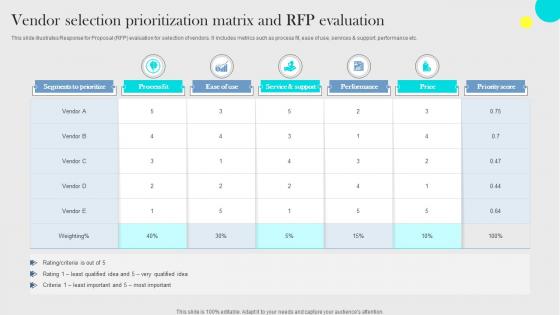
This slide illustrates Response for Proposal RFP evaluation for selection of vendors. It includes metrics such as process fit, ease of use, services and support, performance etc.
People who downloaded this PowerPoint presentation also viewed the following :
Vendor Selection Prioritization Matrix And RFP Evaluation with all 6 slides:
Use our Vendor Selection Prioritization Matrix And RFP Evaluation to effectively help you save your valuable time. They are readymade to fit into any presentation structure.





FAQs for Vendor Selection Prioritization Matrix
Honestly, I'd look at five key things: their tech skills and past work, financial health, pricing, whether they'll mesh with your team, and how good their support is. Made the mistake once of going with the cheapest vendor - total disaster. Security and compliance matter too if you're in a regulated industry. Don't just chase the lowest price, trust me. Create a simple scoring sheet with these factors ranked by what matters most to your project. Oh, and definitely call their references - people are surprisingly honest when you actually ask.
Ask for their financial statements first - you want 2-3 years to see revenue trends and cash flow patterns. Get their credit rating from D&B or ask for bank references. Some companies act sketchy about sharing this info, which is honestly a red flag in itself. Look at their client list too. Are they totally dependent on one big customer? That's risky. I'd also google them for any recent drama - layoffs, lawsuits, whatever. Oh, and make a simple spreadsheet to score everyone the same way so you're not just going with your gut.
Honestly, start with tracking the basics - delivery times, quality scores, and whether they're hitting their SLAs. Most ERP systems have decent vendor dashboards for this stuff. Quarterly reviews are where the magic happens though, way better than just staring at spreadsheets all day. Get your team to actually rate how responsive vendors are since they're the ones dealing with them daily. Maybe do annual audits for your big suppliers if you're feeling thorough. Oh, and don't go crazy with metrics at first - pick 3 or 4 that actually matter to your business and expand later.
Dude, vendor flexibility is huge right now. Markets are moving so fast that you'll get stuck with dead weight if your vendors can't pivot. I learned this the hard way watching companies struggle when their vendors couldn't handle sudden volume spikes or new compliance stuff. You want partners who can scale without making it your problem. Here's what I'd do - ask them straight up how they've dealt with curveballs from other clients. Their response tells you everything about whether they'll actually adapt or just give you excuses when things get messy.
Honestly, vendor reputation is your best safety net when stuff inevitably goes sideways. Check their track record with similar companies and see how they actually handle problems - not just the happy path scenarios. Don't just read those cherry-picked testimonials either. Call their real customers and dig into industry forums for any drama. I learned this the hard way once with a vendor who looked amazing until they completely ghosted us during a critical issue. Trust me, a vendor with solid rep will probably treat you right too.
Reviews are your best friend when picking vendors - they cut through all the marketing BS. Look for patterns in what people actually say about reliability and how they handle problems. Don't just read the testimonials on their website (obviously those are cherry-picked). Hit up third-party sites and ask for real references you can call. Check if the reviews are recent and from companies like yours - that matters way more than you'd think. I always use reviews to either confirm my gut feeling or totally flip my opinion. Then based on what I find, I ask pointed questions about the stuff that keeps coming up.
Certification status is huge - SOC 2, ISO 27001, whatever fits your industry. Also track their audit scores and how fast they respond to incidents. Honestly, breaches happen to everyone eventually, so you really want someone who won't panic and actually follows proper notification timelines. Policy updates are worth watching too since security standards change constantly. Don't just take their word for everything either - get third-party assessment data when you can. I'd say quarterly reviews work well for staying on top of this stuff without it becoming a full-time job.
Don't just go for the cheapest option upfront - you'll probably regret it later. Think about the whole picture instead. A vendor that costs a bit more might actually save you money if their quality is solid and they don't create endless support issues. I've watched teams pick the lowest bidder and then spend forever dealing with problems (not fun). Make a simple scoring system that balances cost against quality based on what actually matters for your project. Figure out your bare minimum quality standards first, then compare prices only among the vendors who can actually meet them.
Dude, definitely avoid vendors who won't give you solid references or dodge questions about their finances. Red flag if their pricing is all over the place too. Honestly, if they're being weird and unresponsive during the sales process, they'll probably suck even more when you actually need help later. Don't fall for companies promising crazy fast timelines - that's usually BS. Missing industry certifications? Hard pass. Also watch for vague contract terms and overselling what they can actually do. I learned this the hard way once. Trust your instincts if something feels sketchy during demos, and don't let them pressure you into rushing.
Dude, vendor management platforms are game-changers for this stuff. They'll automate all the scoring and pull in financial data, certifications, performance metrics - basically everything you need without the manual work. No more drowning in spreadsheets (thank god). The approval workflows are pretty slick too, and you get instant comparison reports. Here's the thing though - you've gotta set up your evaluation templates right from the start or you'll just create more work for yourself. I'd honestly just look at whatever's eating up most of your time now and find tools that fix those specific headaches first.
Dude, industry-specific experience is everything. Like, a healthcare vendor already knows HIPAA backwards - they won't be googling regulations while working on your stuff. General tech vendors? Good luck with that mess. You'll save tons of time on implementation since they actually get your workflows. They can spot issues before they happen and share what worked for their other clients in your space. Honestly, I'd never pick someone without relevant experience anymore. Ask for case studies from companies like yours - if they can't provide them, that's your answer right there.
At minimum, do it yearly. But honestly? Your critical vendors need way more attention - I'm talking quarterly check-ins for payment processors, main suppliers, that kind of stuff. The smaller players can wait for annual reviews. Don't just mark your calendar and call it done though. Watch for warning signs between meetings: weird service hiccups, surprise price hikes, contracts about to expire. I learned this the hard way when our old payment provider suddenly jacked up fees with zero notice. Sort your vendors by how much you'd panic if they disappeared tomorrow, then set reminders accordingly.
Honestly, ditch the generic "tell us about your capabilities" questions - you'll just get their rehearsed pitch. Instead, come with specific scenarios from your actual project and see how they'd handle them. Definitely bring a few people from your team since you'll all notice different things. Push to see their real workspace and meet who'd actually work on your stuff, not just the sales guy. I'm big on asking for similar work examples (even if you have to sign an NDA) and getting them to share their screwup stories. That's where you learn how they really operate. Oh, and make a simple scoring sheet beforehand - trust me, you'll forget half the details otherwise.
Oh man, definitely check out their supply chain situation - it's way more important than most people realize. Map out who their key suppliers are and look for any obvious weak spots. Like, are they totally dependent on one supplier in a sketchy location? That's a red flag. Ask them about their backup plans and how they handle supplier drama. Trust me, I've seen projects completely implode because a vendor's supplier went belly-up. Their supply chain problems will become your headache real fast. Get their risk assessment docs if you can - it'll tell you everything you need to know.
Cultural fit is huge when picking vendors - I learned this the hard way. You want someone who gets how you work and communicate. Like if you're super direct but they take forever to respond or beat around the bush, it's gonna be painful. Good alignment means fewer headaches and your teams actually gel together. I always throw in a couple culture questions during vendor calls now - saves so much drama later. Oh and if they share your values around stuff like deadlines and transparency, projects just run smoother. Trust me on this one.
-
Fantastic collection of visually appealing PowerPoint templates. They certainly uplift the look of the presentation.
-
It saves your time and decrease your efforts in half.