


Vulnerability Management Whitepaper Powerpoint Presentation Slides
Address technical vulnerabilities using the phenomenal design and concise layout of Vulnerability Management Whitepaper PowerPoint Presentation Slides. Regardless of size, every firm suffers technical vulnerabilities, our application security PPT theme gives you tools to showcase the same. Present an overview, identify the need, and create a vulnerability model with easy-to-follow, impactful visuals of network vulnerability PowerPoint slideshow. Further, this IT vulnerability PPT template assists you to depict the vulnerability management level associated with your organization. Ascertain the scope and appropriate assessment methods of vulnerability management using the layouts of our technological threat management PPT slide. Use this network security PowerPoint theme to present a framework for IT professionals and users to outline the vulnerability plan. Next, users can reap the benefits of application security PPT slideshow by demonstrating the implementation of vulnerability analysis. So download this IT risk management PPT template deck to showcase the network vulnerabilities faced by your company and how to overcome them.












-

- Google Slides is a new FREE Presentation software from Google.
- All our content is 100% compatible with Google Slides.
- Just download our designs, and upload them to Google Slides and they will work automatically.
- Amaze your audience with SlideTeam and Google Slides.
-

Want Changes to This PPT Slide? Check out our Presentation Design Services
-

- WideScreen Aspect ratio is becoming a very popular format. When you download this product, the downloaded ZIP will contain this product in both standard and widescreen format.
-

- Some older products that we have may only be in standard format, but they can easily be converted to widescreen.
- To do this, please open the SlideTeam product in Powerpoint, and go to
- Design ( On the top bar) -> Page Setup -> and select "On-screen Show (16:9)” in the drop down for "Slides Sized for".
- The slide or theme will change to widescreen, and all graphics will adjust automatically. You can similarly convert our content to any other desired screen aspect ratio.
Compatible With Google Slides

Get This In WideScreen
You must be logged in to download this presentation.


Do you want to remove this product from your favourites?
PowerPoint presentation slides
Introducing Vulnerability Management Whitepaper PowerPoint Presentation Slides. By downloading this complete PPT deck you will get access to 46 professional slides. Since they feature 100% customizability, you can edit any element including font, text, and color as per your choice. This PowerPoint slideshow can be viewed on Google Slides and converted to file formats like PDF, PNG, and JPG. Our PPT template deck is also available in dual screen formats, standard and widescreen.

People who downloaded this PowerPoint presentation also viewed the following :
Content of this Powerpoint Presentation
Slide 1: This slide introduces Vulnerability Management. State Your Company name and begin.
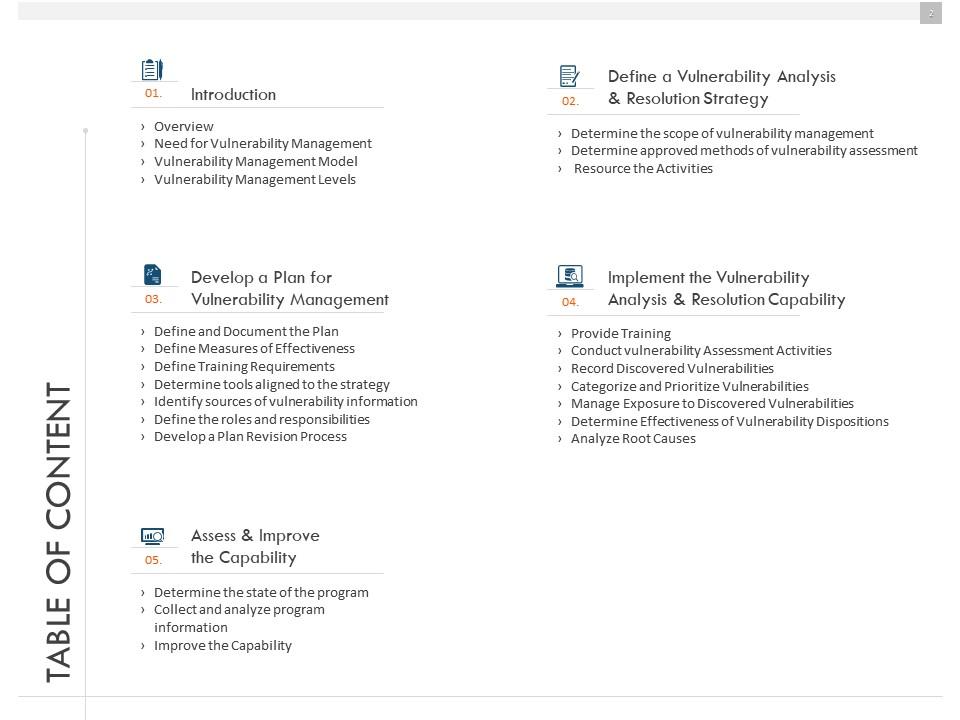
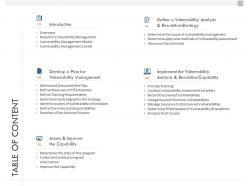
Slide 2: This slide displays Table of Content of the presentation.
Slide 3: This slide displays Introduction of the presentation.
Slide 4: This slide displays the Overview of the Company.
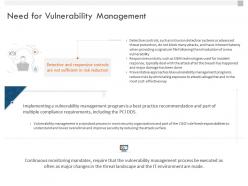
Slide 5: This slide displays Need for Vulnerability Management.
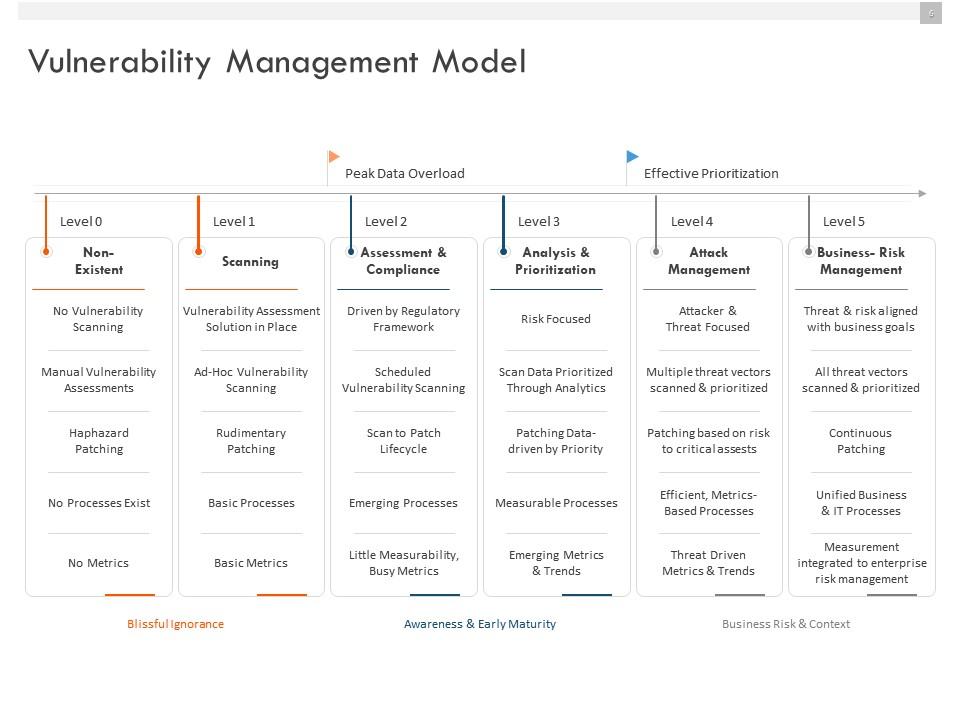
Slide 6: This slide showcases Vulnerability Management Model
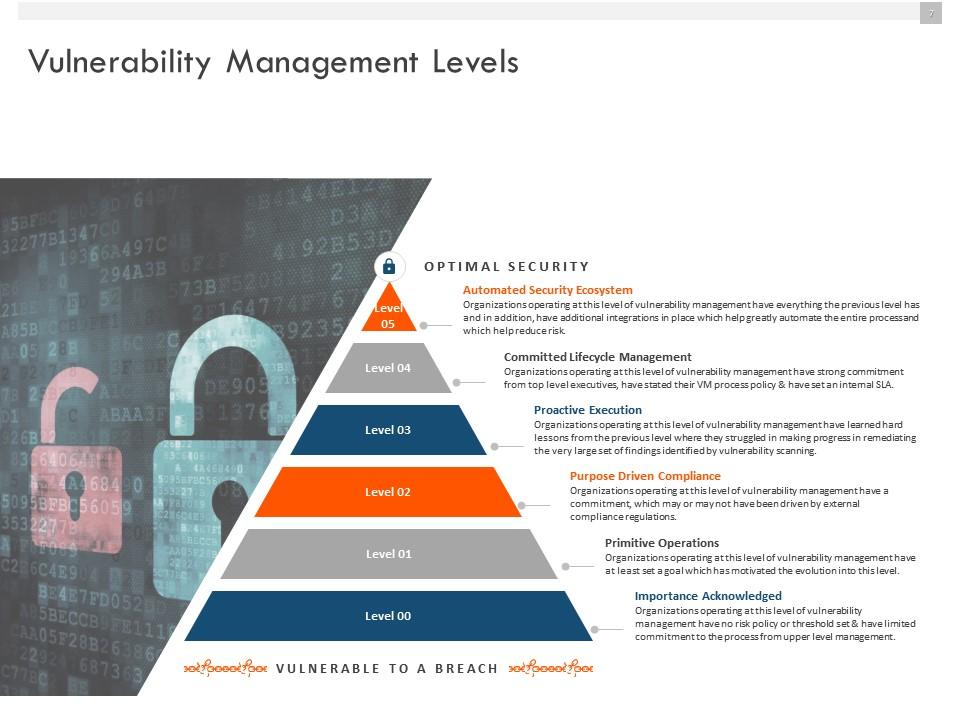
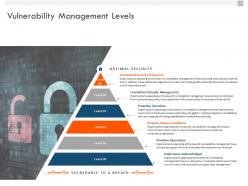
Slide 7: This slide depicts Vulnerability Management Levels.
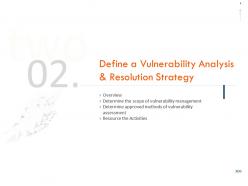
Slide 8: This slide showcases Defining a Vulnerability Analysis & Resolution Strategy
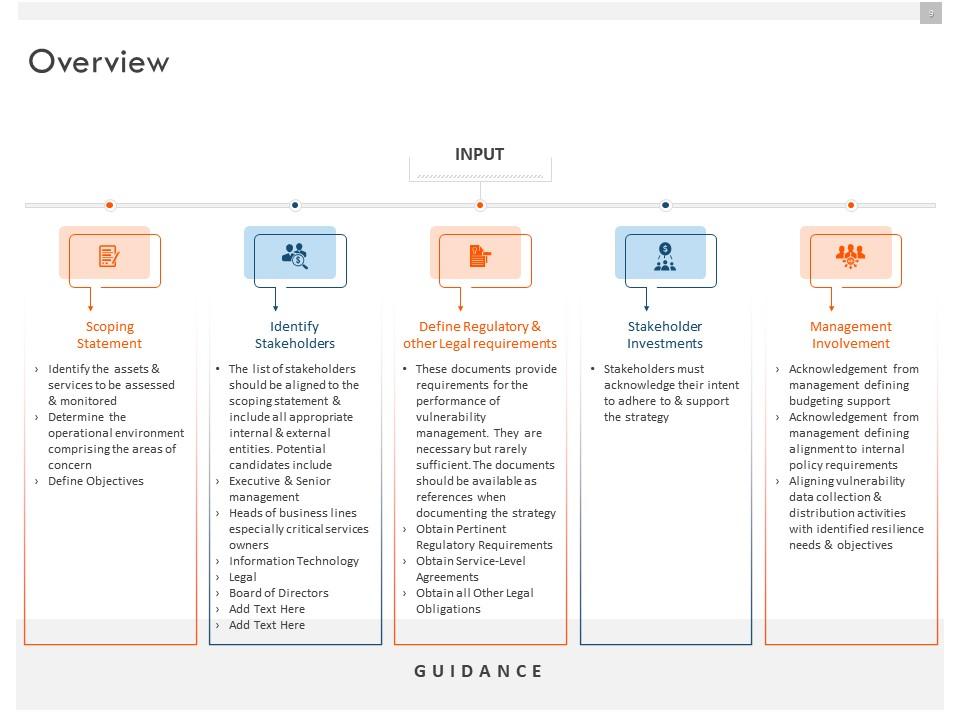
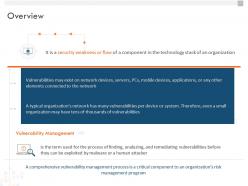
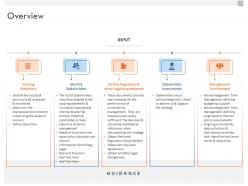
Slide 9: This slide showcases Overview.
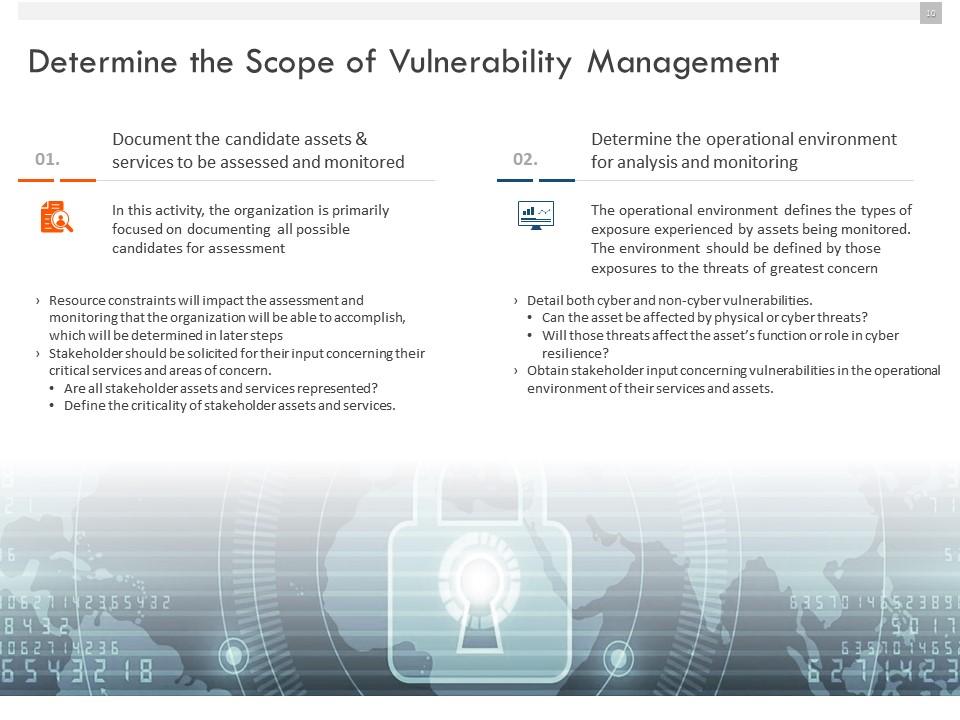
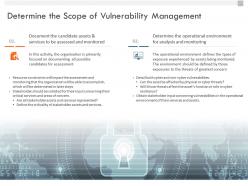
Slide 10: This slide depicts Determining the Scope of Vulnerability Management.
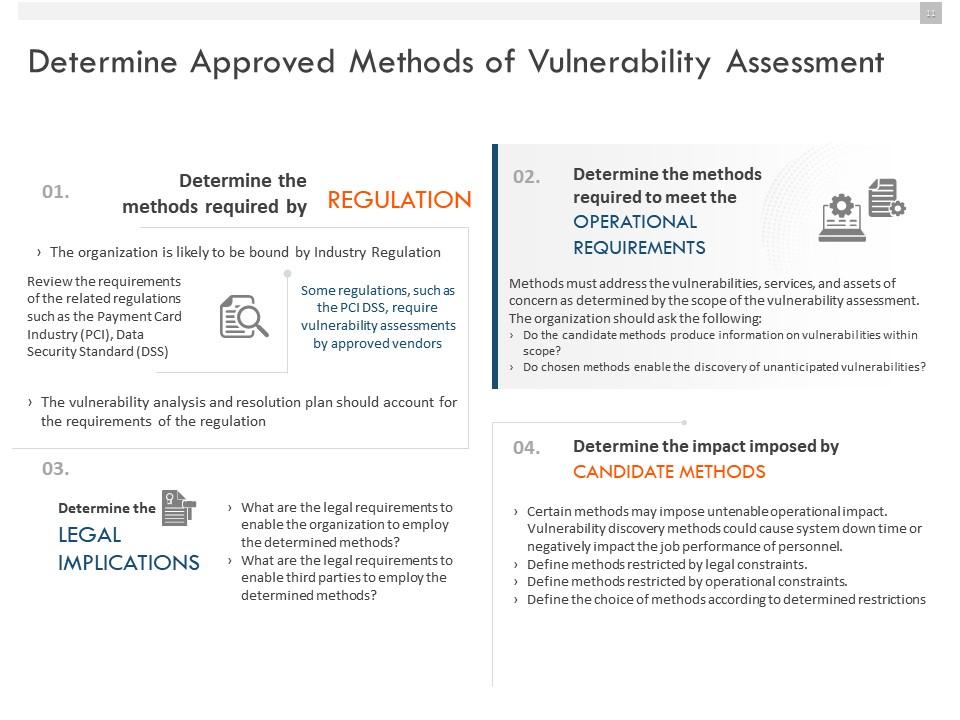
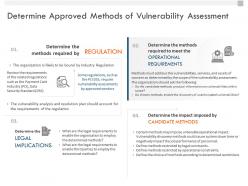
Slide 11: This slide depicts Determining Approved Methods of Vulnerability Assessment.
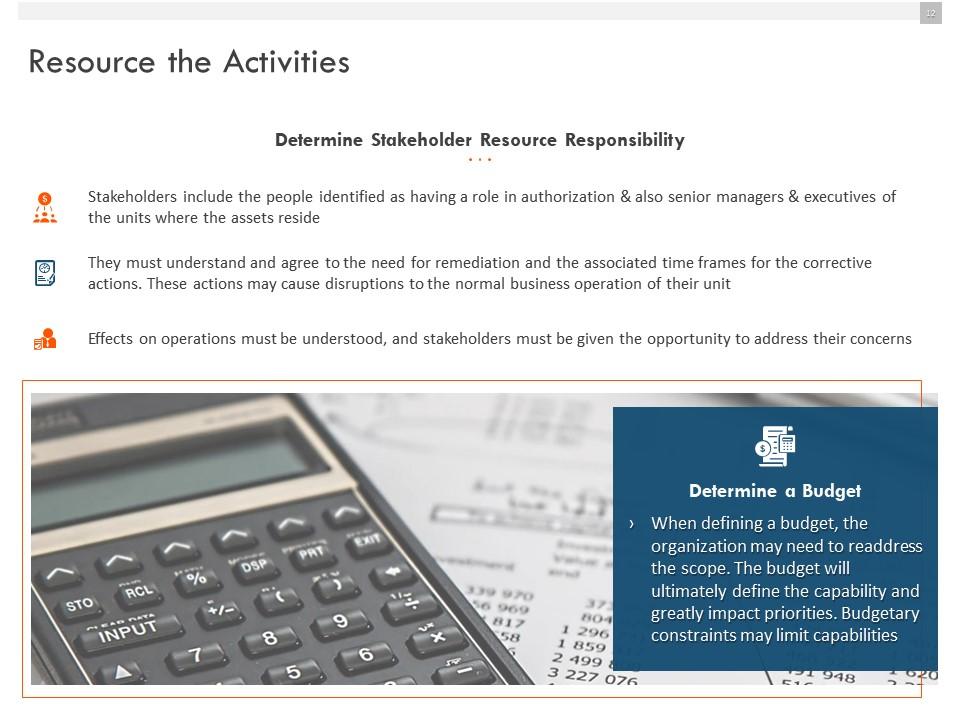
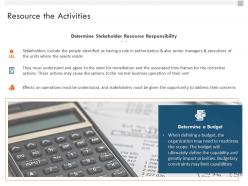
Slide 12: This slide showcases Resource the Activities.
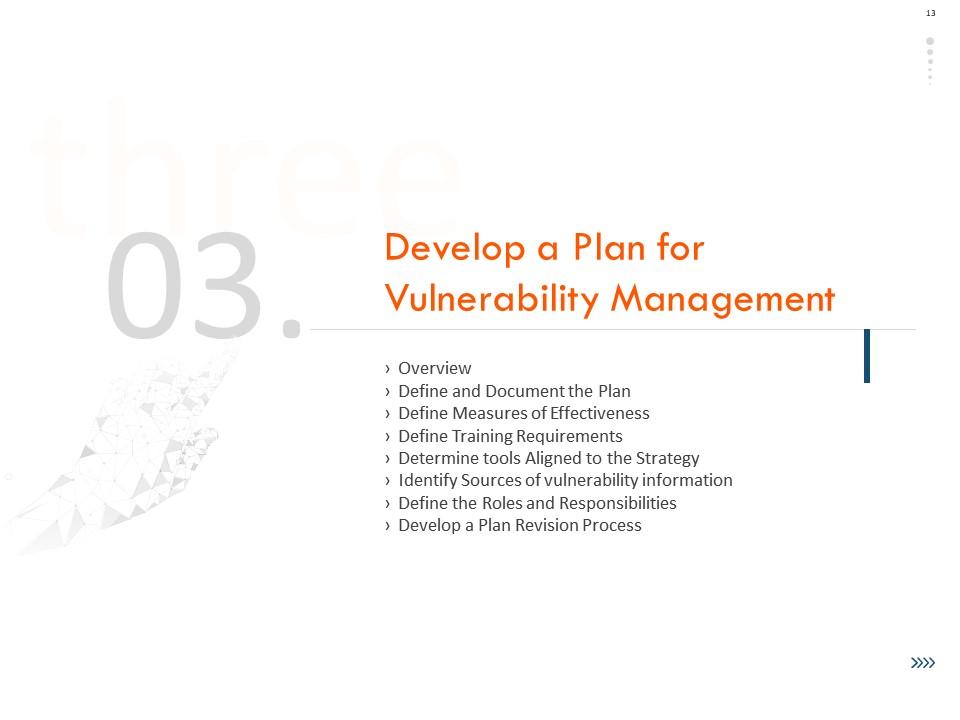
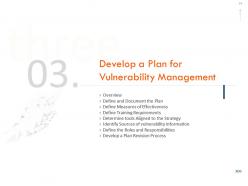
Slide 13: This slide showcases Developing a Plan for Vulnerability Management
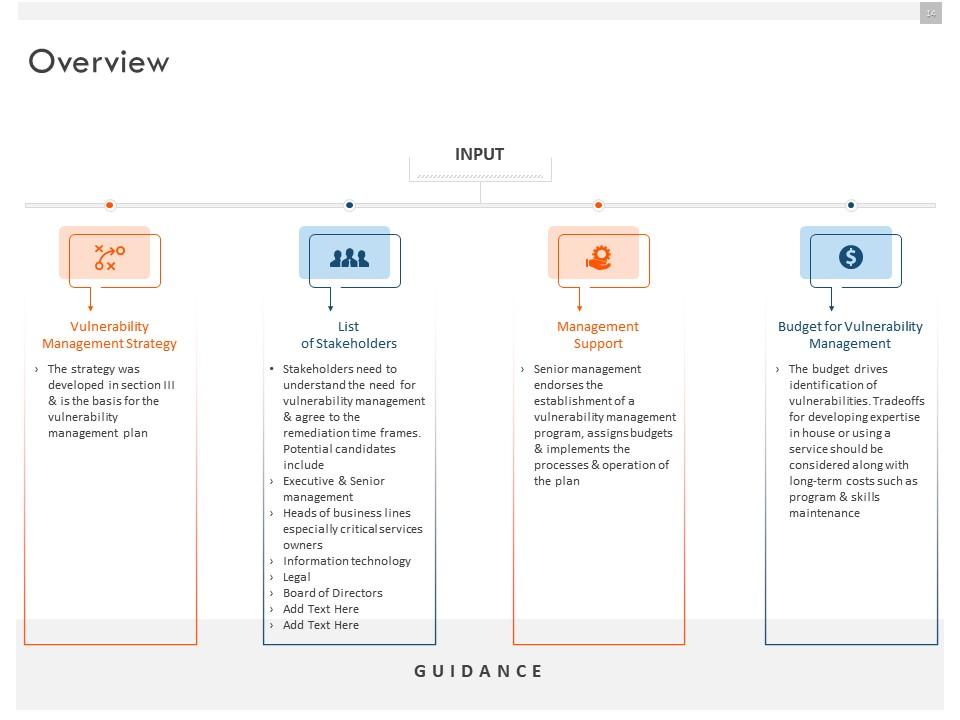
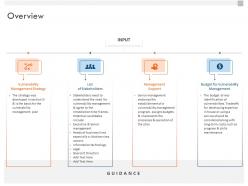
Slide 14: This slide depicts the Overview.
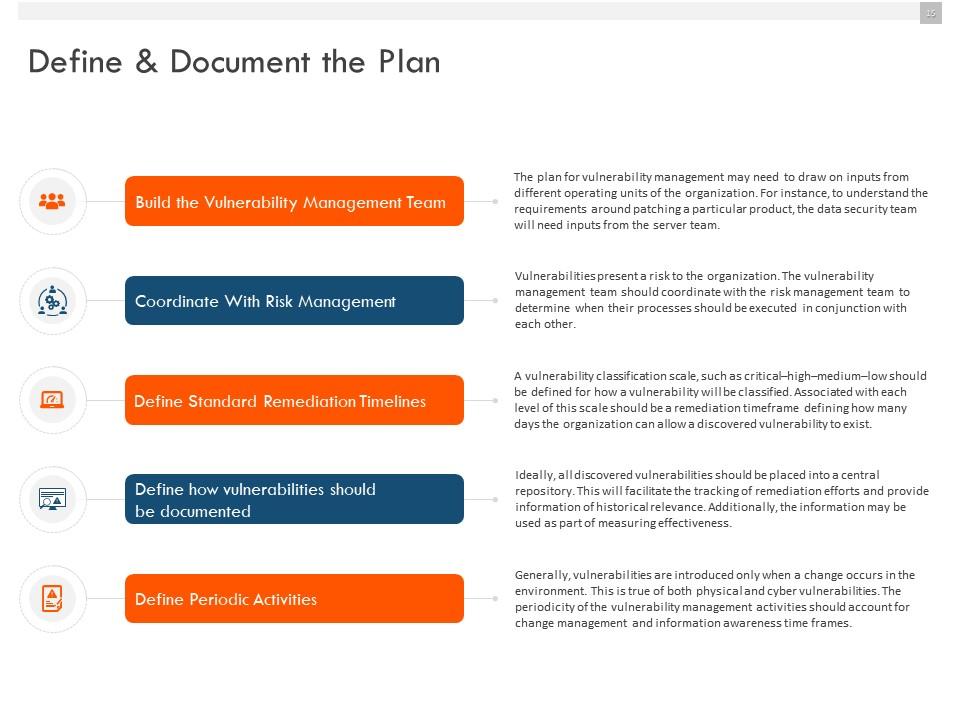
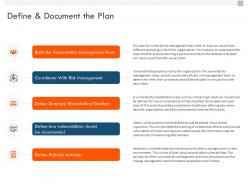
Slide 15: This slide showcases Defining & Document the Plan
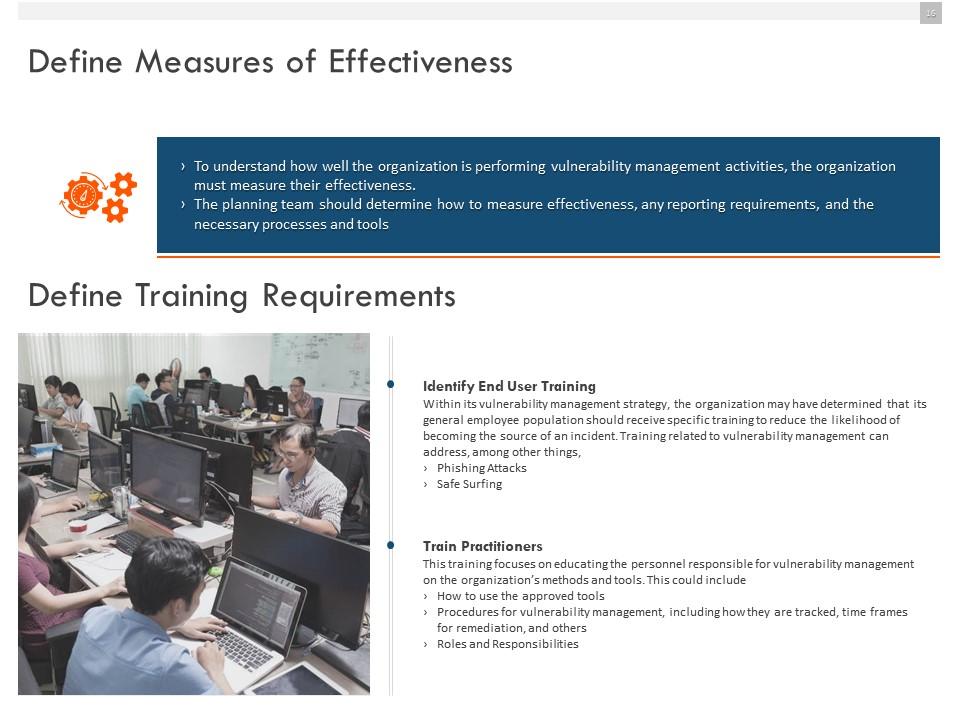
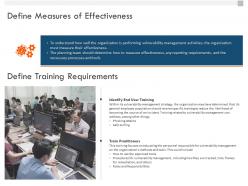
Slide 16: This slide showcases Defining Measures of Effectiveness
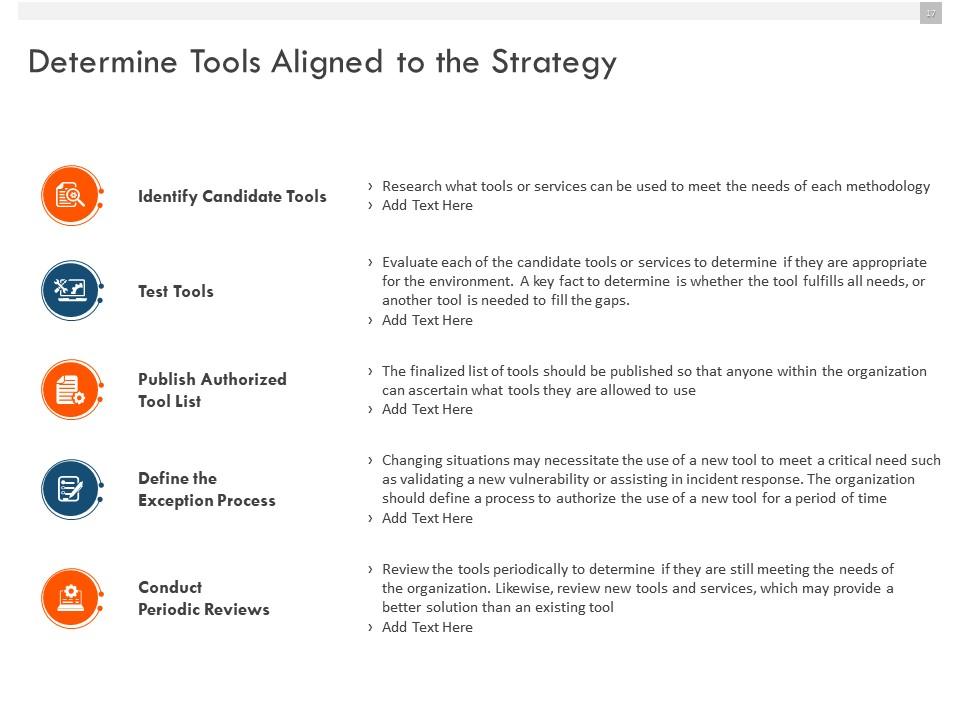
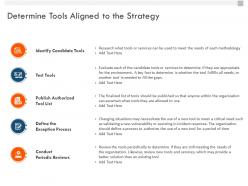
Slide 17: This slide showcases Determining Tools Aligned to the Strategy.
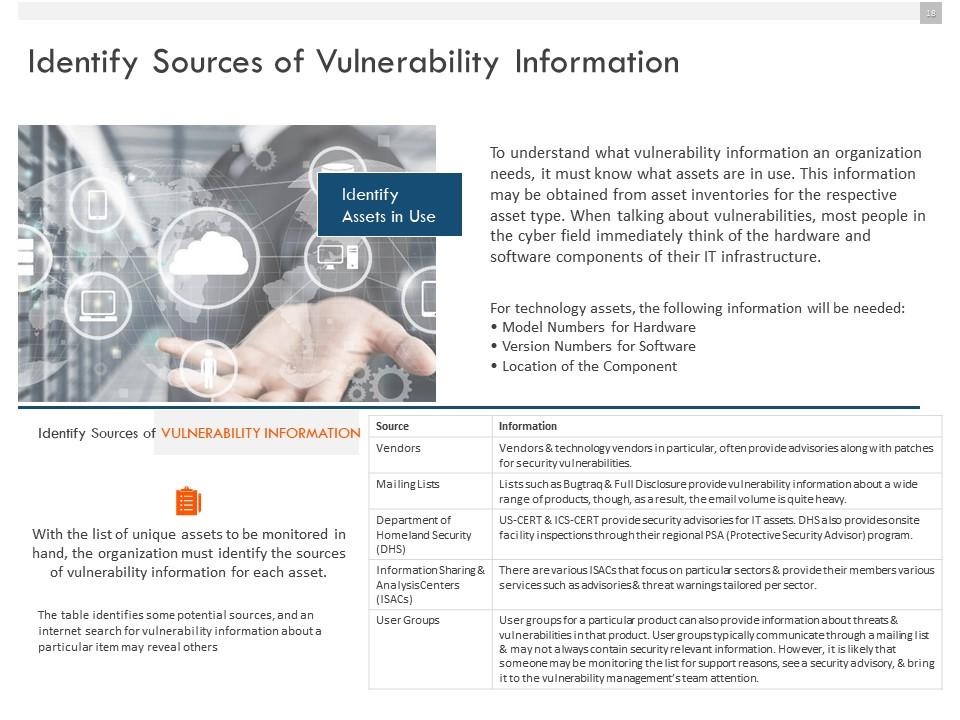
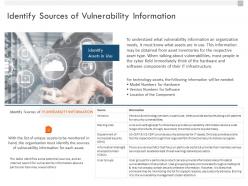
Slide 18: This slide represents Identifying Sources of Vulnerability Information.
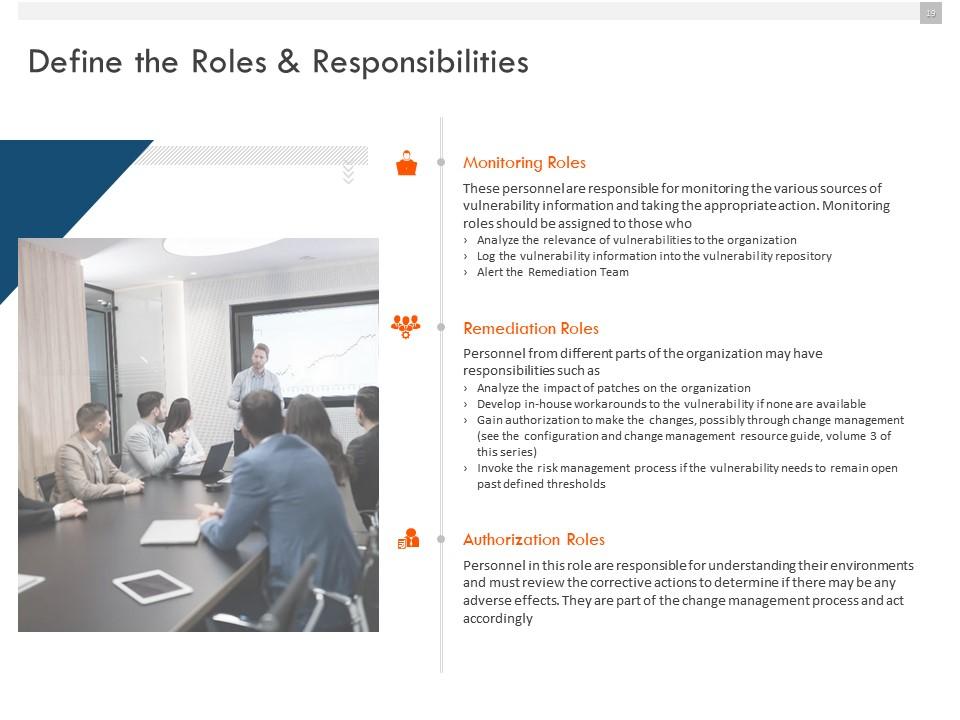
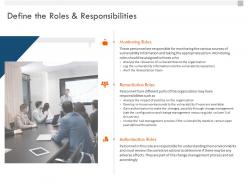
Slide 19: This slide showcases Defining the Roles & Responsibilities.
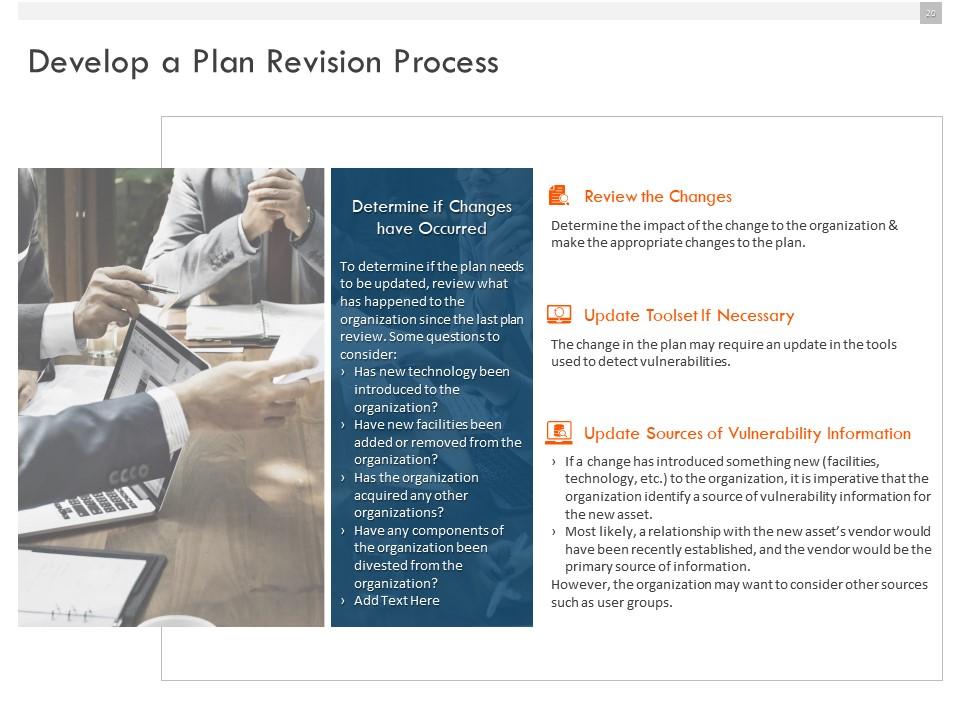
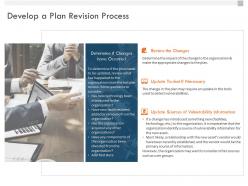
Slide 20: This slide showcases Developing a Plan Revision Process.
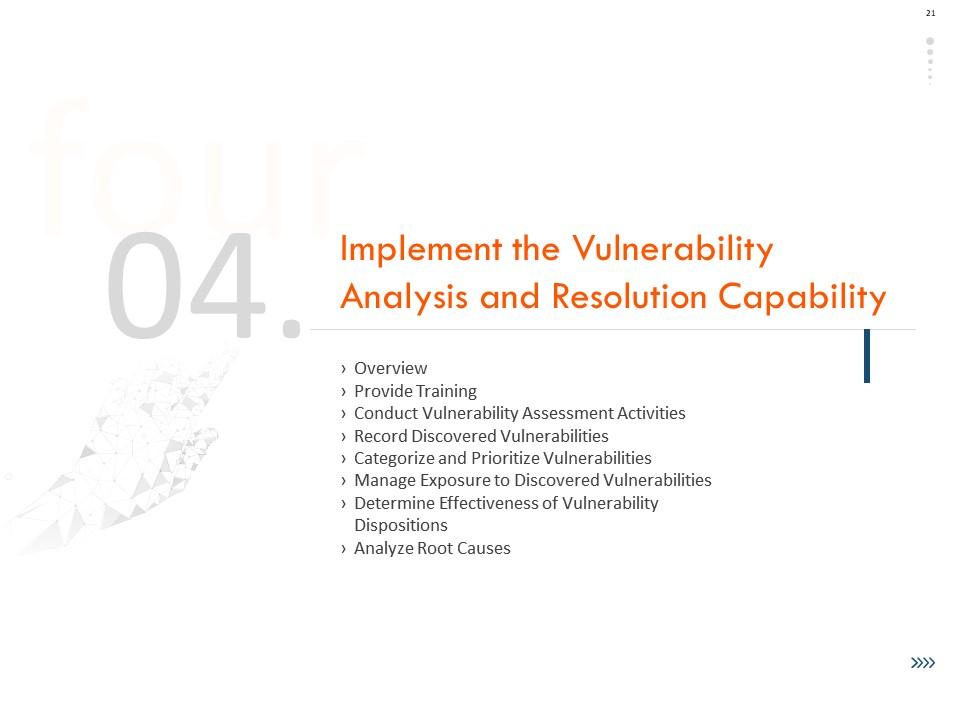
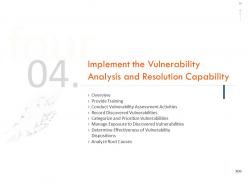
Slide 21: This slide describes Implementing the Vulnerability Analysis and Resolution Capability.
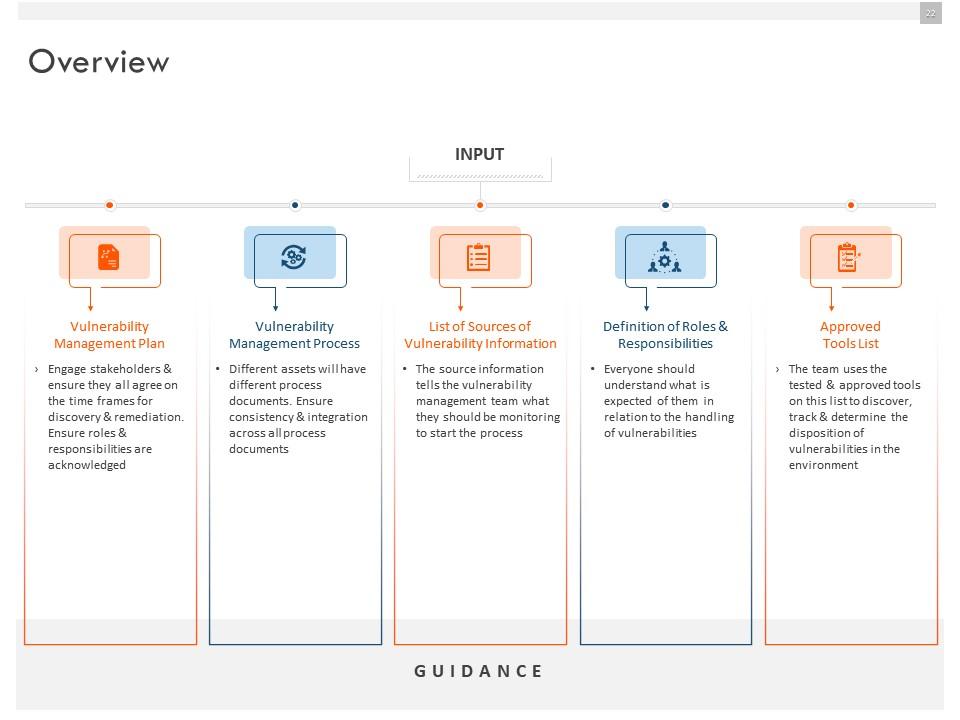
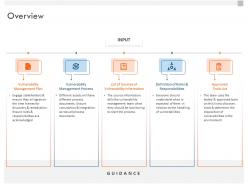
Slide 22: This slide showcases Overview.
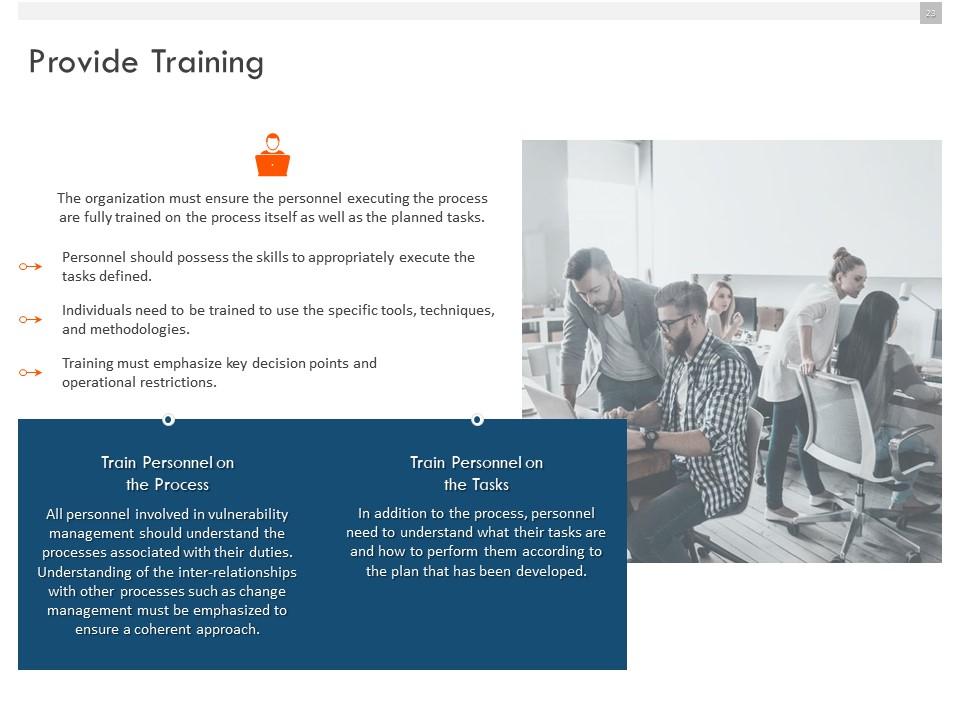
Slide 23: This slide depicts Provide Training. The organization must ensure the personnel executing the process are fully trained on the process itself as well as the planned tasks.
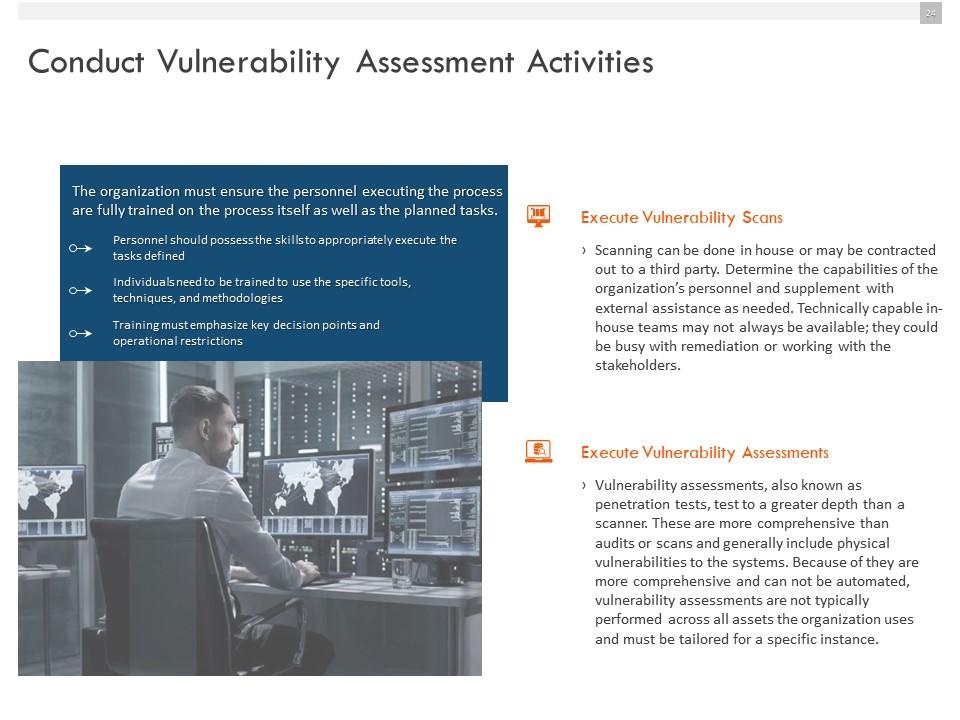
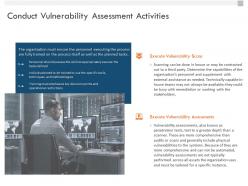
Slide 24: This slide showcases Conduct Vulnerability Assessment Activities
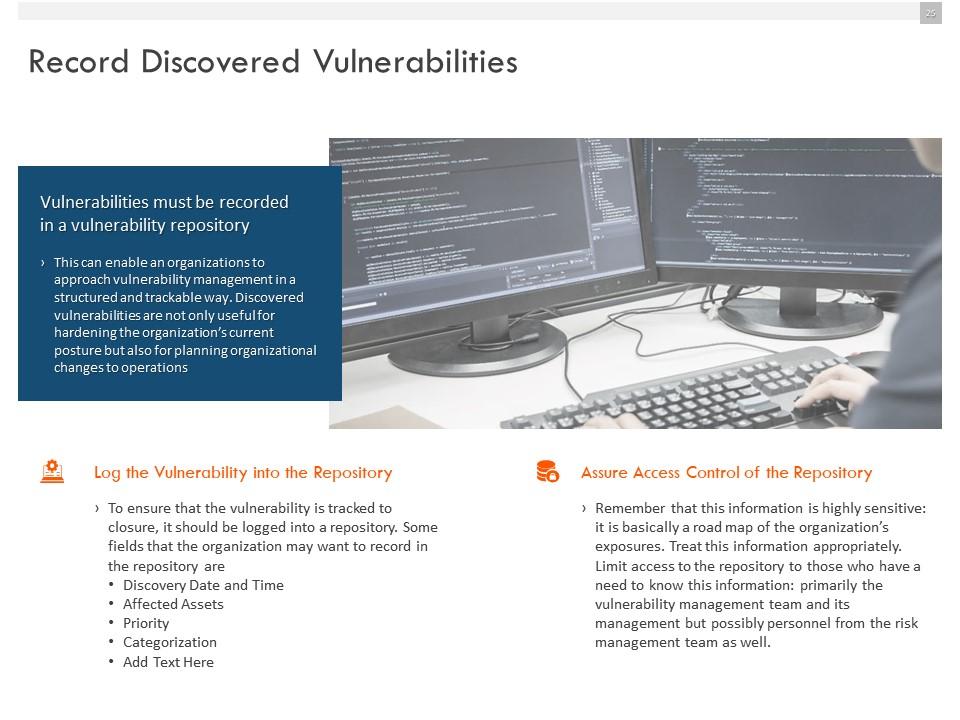
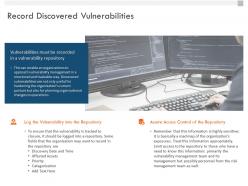
Slide 25: This slide showcases Record Discovered Vulnerabilities.
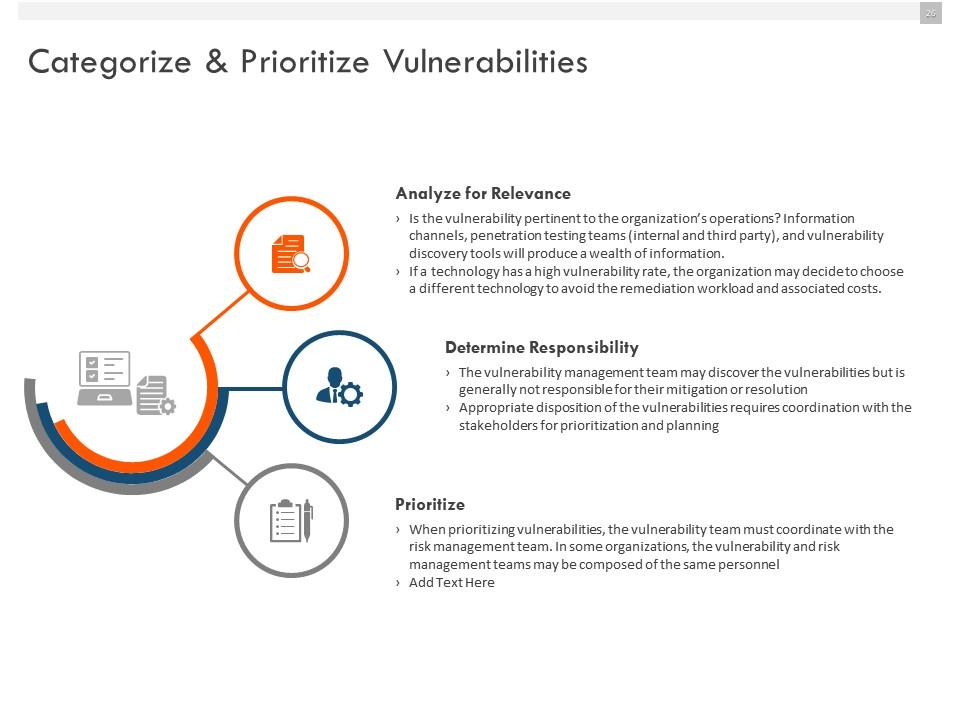
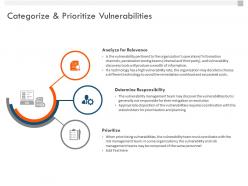
Slide 26: This slide showcases Categorize & Prioritize Vulnerabilities.
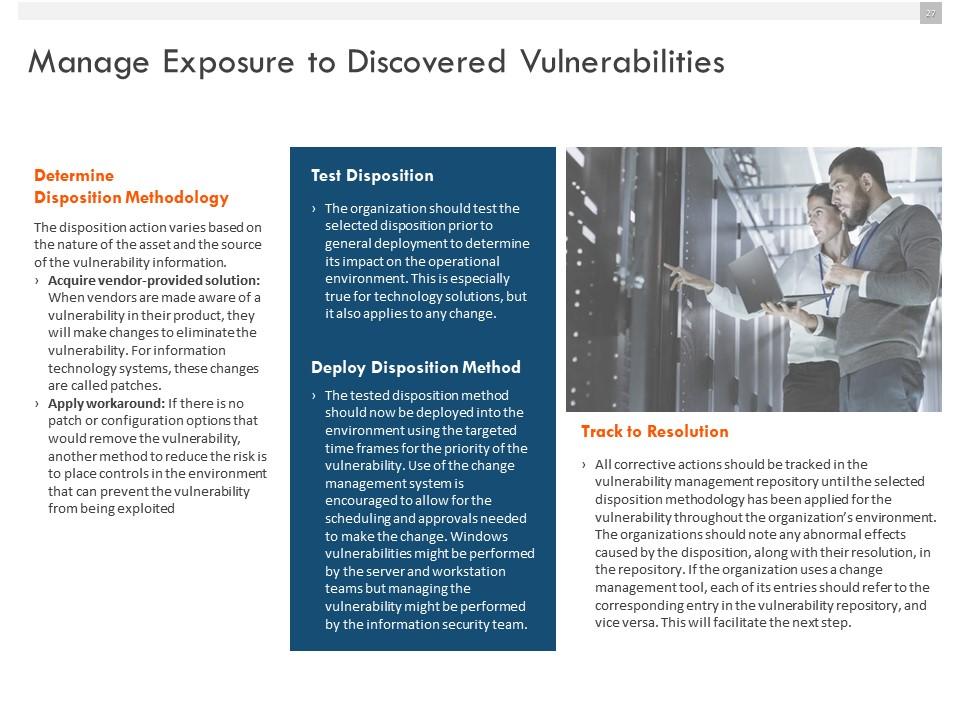
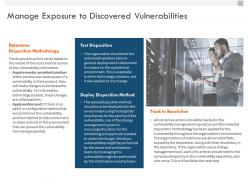
Slide 27: This slide depicts Managing Exposure to Discovered Vulnerabilities.
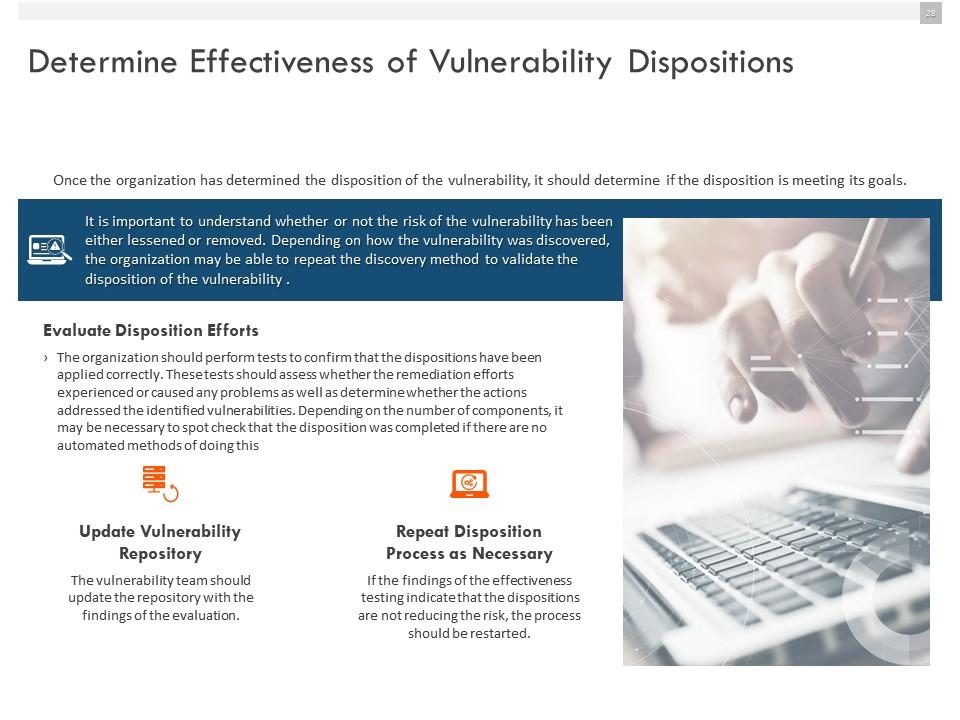
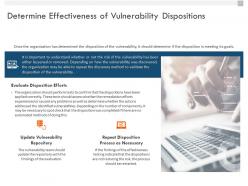
Slide 28: This slide showcases Determining Effectiveness of Vulnerability Dispositions.
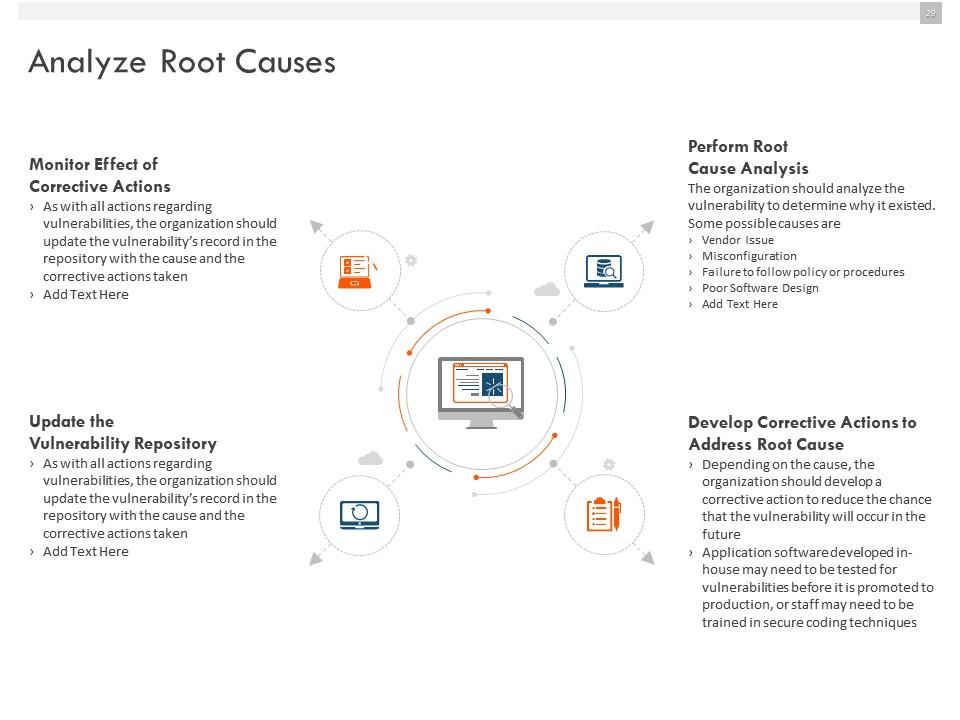
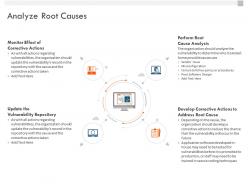
Slide 29: This slide showcases Analyzing Root Causes.
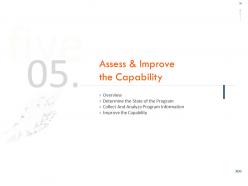
Slide 30: This slide depicts Assess & Improve the Capability with- Overview, Determine the State of the Program, Collect And Analyze Program Information, Improve the Capability.
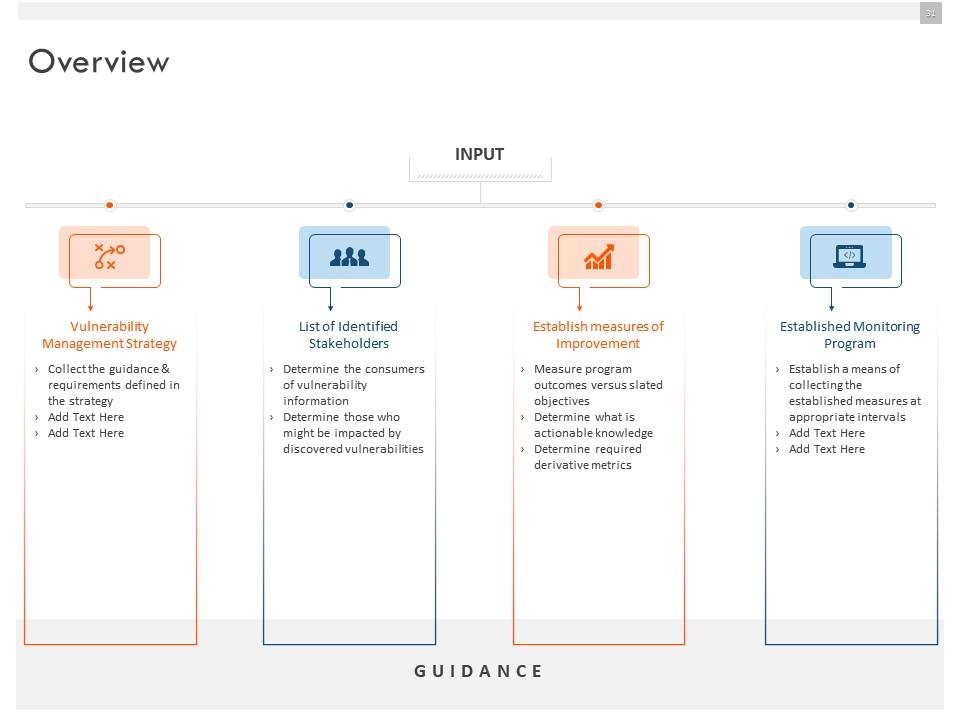
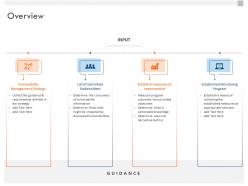
Slide 31: This slide showcases the Overview.
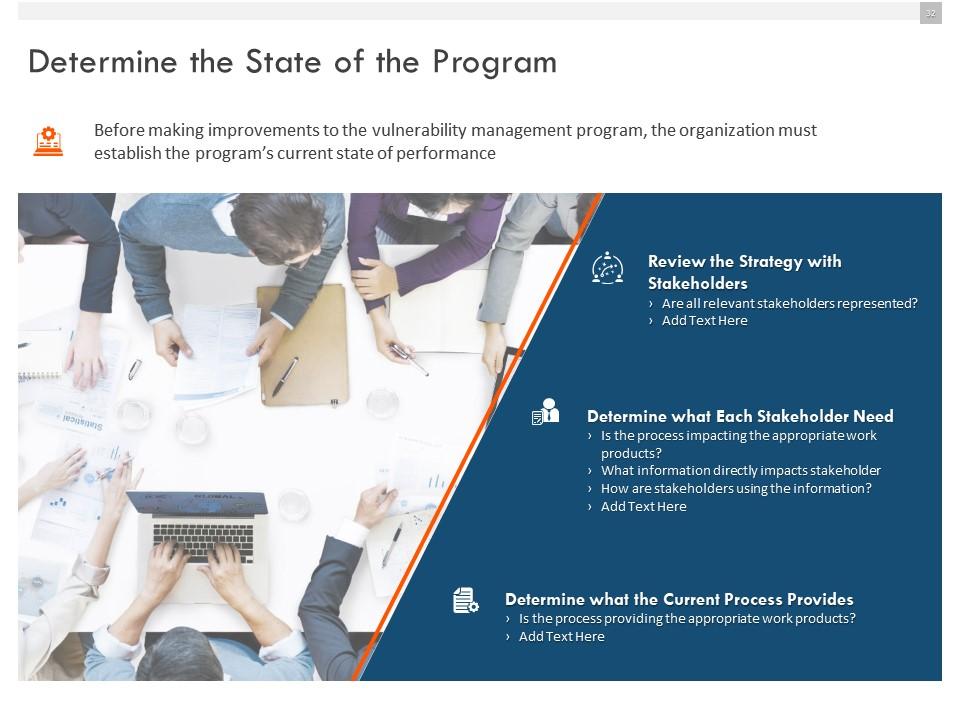
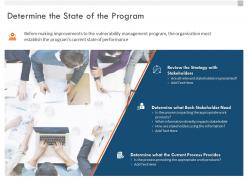
Slide 32: This slide showcases Determining the State of the Program.
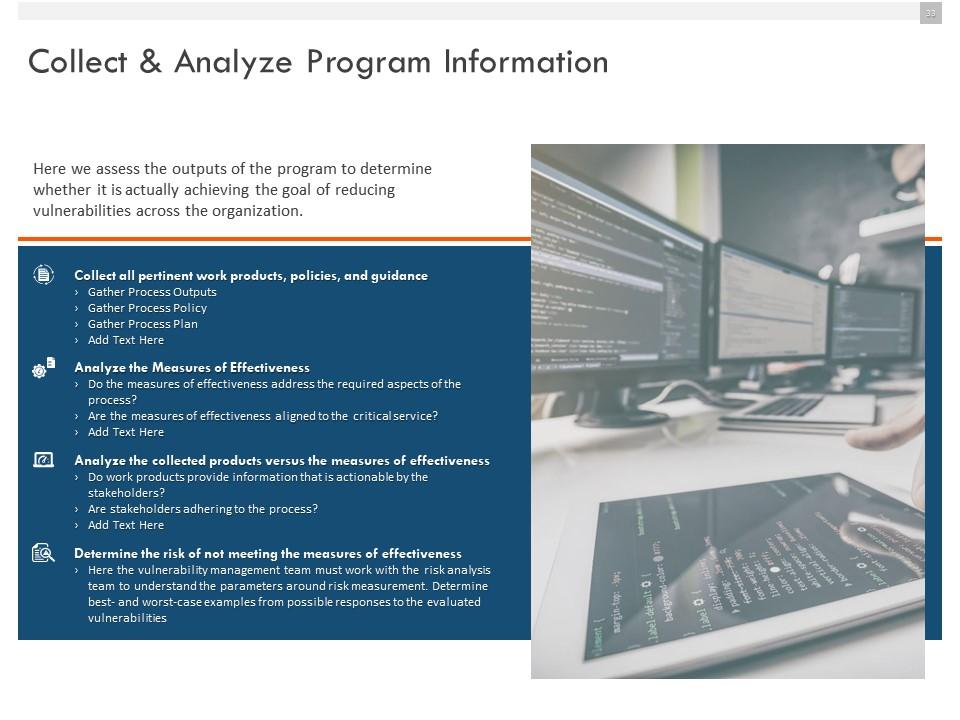
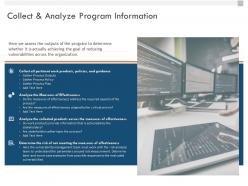
Slide 33: This slide depicts Collecting all pertinent work products, policies, and guidance.
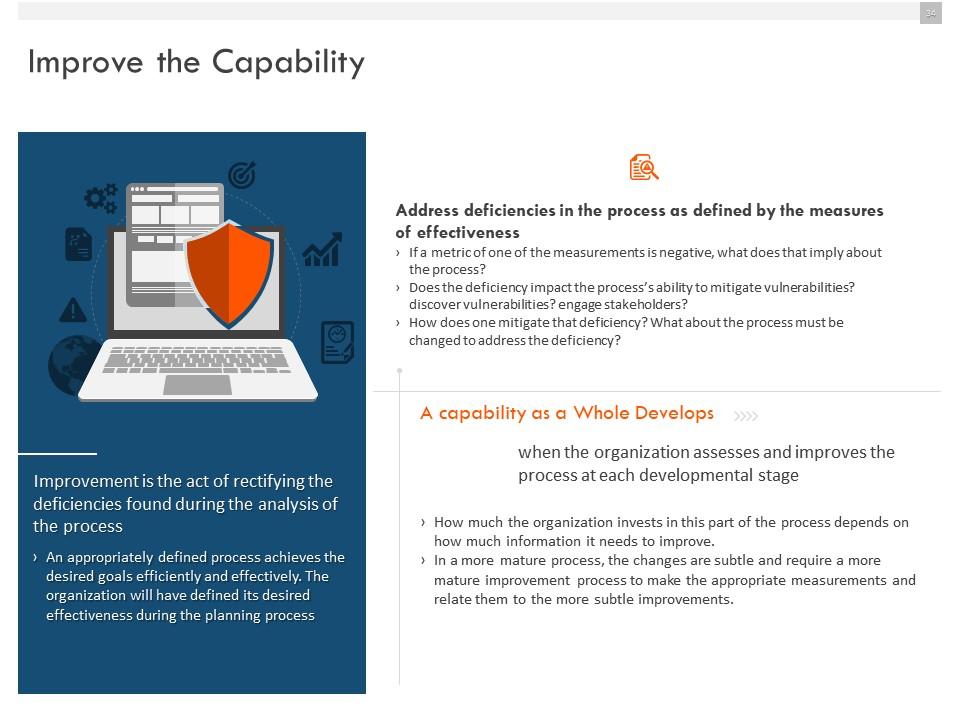
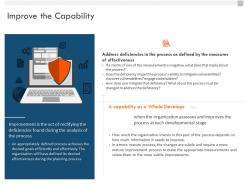
Slide 34: This slide showcases Improving the Capability
Slide 35: This is Vulnerability Management Icons Slide.
Slide 36: This slide is titled as Additional Slides for moving forward.
Slide 37: This is Our Team slide with names and designations.
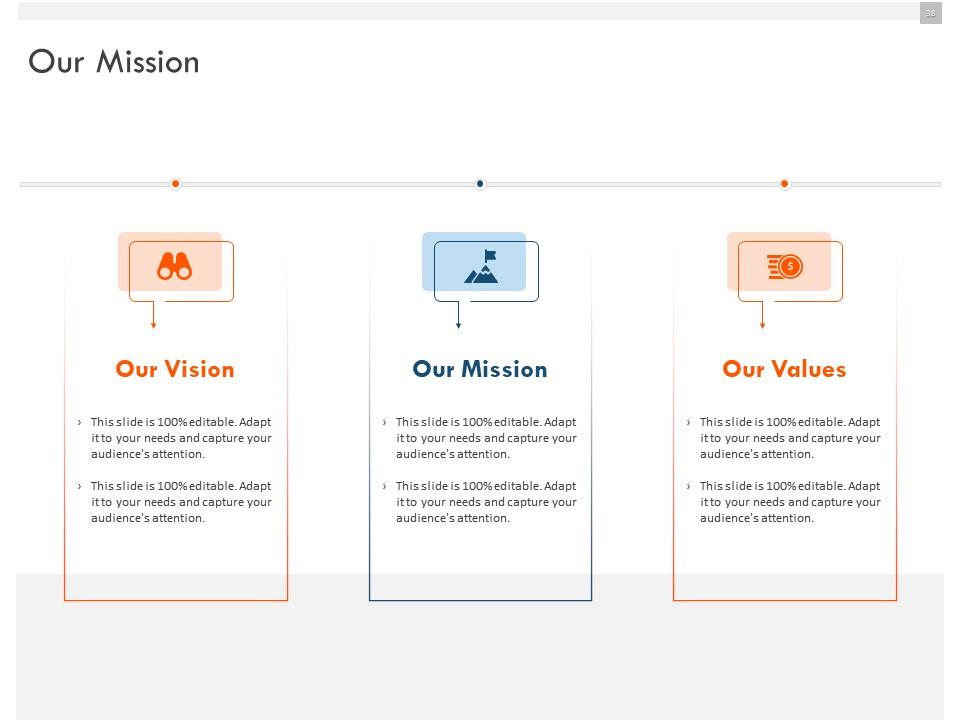
Slide 38: This is Our Mission slide with Vision, Mission and Goal.
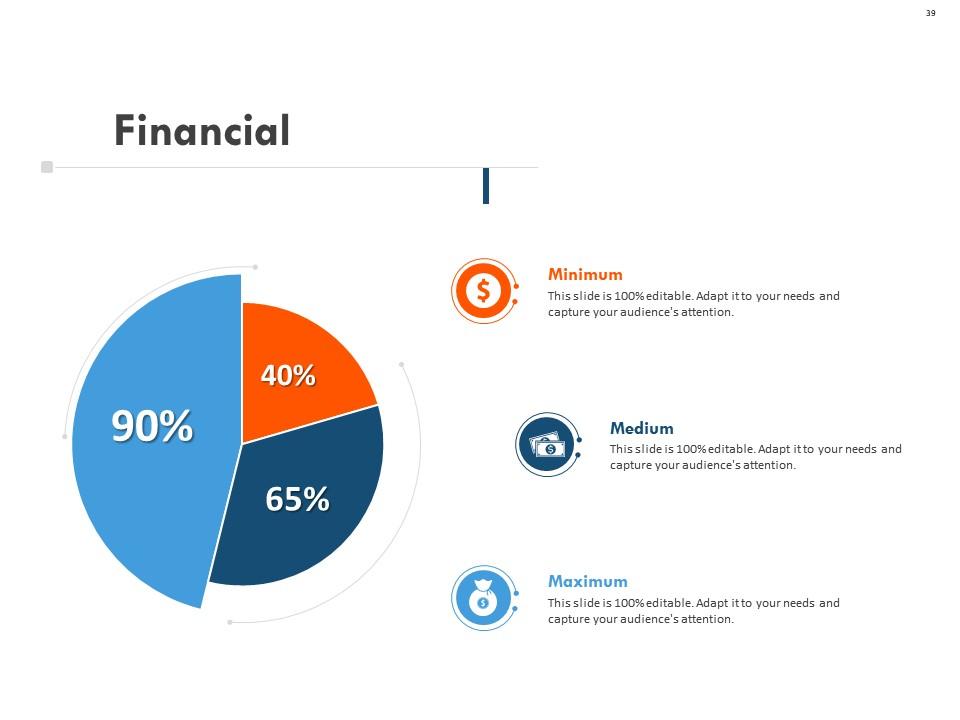
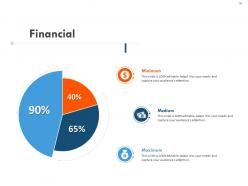
Slide 39: This is Financial slide. Showcase finance related stuff here.
Slide 40: This is Idea Generation slide to highlight ideas and beliefs.
Slide 41: This slide displays Quotes to convey message, beliefs.
Slide 42: This is About Us slide to showcase company specifications.
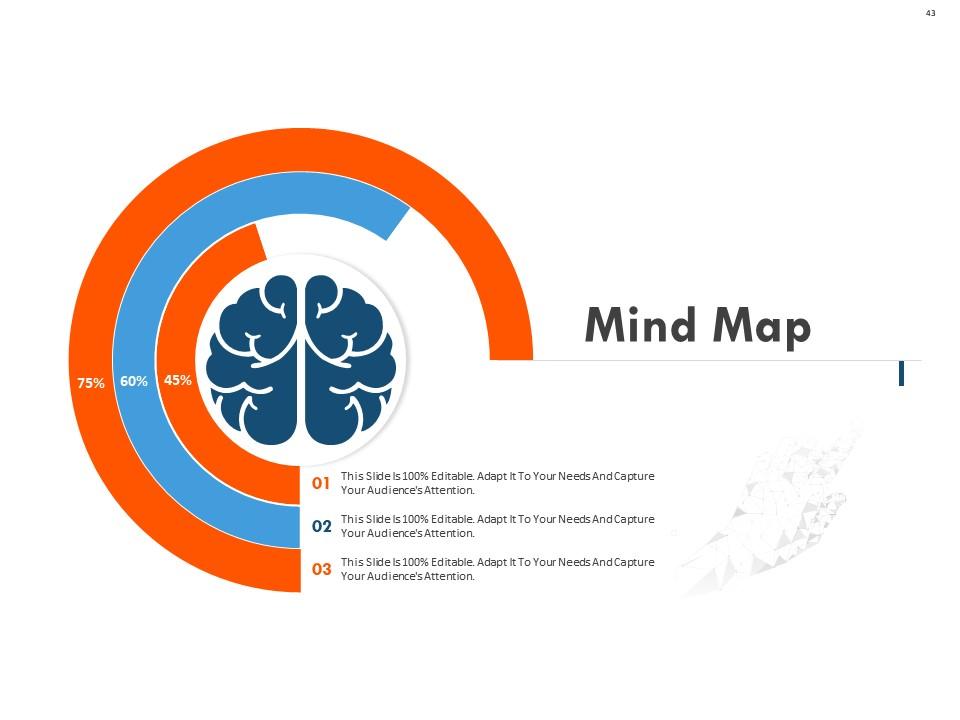
Slide 43: This is Mind Map slide for representing entities.
Slide 44: This slide is titled as Post It Notes. Post your important notes.
Slide 45: This is Our Target slide. Showcase your targets.
Slide 46: This is Thanks for Watching slide with Address, Email Address and Contact.
Vulnerability Management Whitepaper Powerpoint Presentation Slides with all 46 slides:
Use our Vulnerability Management Whitepaper Powerpoint Presentation Slides to effectively help you save your valuable time. They are readymade to fit into any presentation structure.
-
Editable templates with innovative design and color combination.
-
Great quality product.
-
Topic best represented with attractive design.
-
Thanks for all your great templates they have saved me lots of time and accelerate my presentations. Great product, keep them up!
