

Water Sustainability Powerpoint Ppt Template Bundles





Try Before you Buy Download Free Sample Product
 Impress Your
Audience
 100%
Editable
 Save Hours
of Time


Our Water Sustainability Powerpoint Ppt Template Bundles are topically designed to provide an attractive backdrop to any subject. Use them to look like a presentation pro.
People who downloaded this PowerPoint presentation also viewed the following :
Water Sustainability Powerpoint Ppt Template Bundles with all 21 slides:
Use our Water Sustainability Powerpoint Ppt Template Bundles to effectively help you save your valuable time. They are readymade to fit into any presentation structure.







FAQs for Water Sustainability Powerpoint
Urban water sustainability faces challenges including aging infrastructure, population growth exceeding supply capacity, pollution from industrial runoff, climate change impacts, and inefficient distribution systems. These factors create resource scarcity and operational strain, with many cities finding that strategic water management technologies and conservation policies ultimately deliver cost savings, improved service reliability, and enhanced environmental resilience.
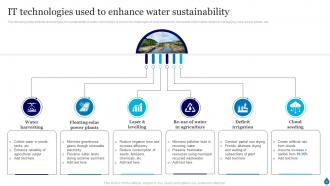
Technology enhances agricultural water conservation through precision irrigation systems, soil moisture sensors, drone monitoring, satellite imagery, and AI-driven analytics. These innovations enable farmers to optimize water usage by delivering precise amounts when needed, reducing waste by up to 30%, and improving crop yields, with many agricultural operations finding that smart irrigation ultimately delivers significant cost savings and enhanced sustainability.
Policymakers drive sustainable water management through regulatory frameworks, funding allocation, infrastructure investments, and cross-sector collaboration initiatives. Through strategic legislation and incentive programs, governments enable water utilities, agricultural sectors, and manufacturing industries to adopt conservation technologies, implement efficiency measures, and develop resilient systems, ultimately delivering improved resource security and long-term environmental sustainability.
Climate change significantly impacts freshwater resources through altered precipitation patterns, increased evaporation rates, melting glaciers, and more frequent extreme weather events like droughts and floods. These changes create water scarcity challenges for agriculture, manufacturing, and urban areas, while many organizations are finding that strategic water management and conservation technologies ultimately deliver operational resilience and competitive advantage.
Rainwater harvesting benefits include reduced municipal water dependency, lower utility costs, groundwater recharge, flood mitigation, and enhanced water security during droughts. This sustainable approach enables businesses, municipalities, and institutions to streamline resource management while delivering operational savings, ultimately providing competitive advantage in an increasingly resource-conscious landscape.
Community engagement enhances water sustainability initiatives by building local ownership, increasing participation in conservation programs, and leveraging grassroots knowledge for effective solutions. Through collaborative approaches, neighborhoods develop tailored water-saving strategies, educational campaigns, and monitoring systems, with many municipalities finding that engaged communities achieve significantly higher conservation rates and long-term behavioral changes.
Innovative wastewater treatment solutions include membrane bioreactors, advanced oxidation processes, constructed wetlands, nutrient recovery systems, and AI-powered monitoring technologies. These approaches enhance water quality by removing contaminants, recovering valuable resources, and optimizing treatment efficiency, with many municipalities and industries finding that integrated systems deliver significant cost savings while meeting increasingly stringent environmental standards.
Over-extraction of groundwater creates significant water sustainability challenges including aquifer depletion, land subsidence, reduced water quality, ecosystem disruption, and increased extraction costs. These impacts affect agricultural productivity, urban water supplies, and industrial operations, with many regions finding that strategic water management, alternative sourcing, and conservation technologies ultimately deliver long-term resource security.
Cultural attitudes towards water significantly influence conservation success by shaping daily behaviors, community engagement, and policy acceptance across different societies. In regions where water holds spiritual significance, like many Indigenous communities, conservation efforts often achieve greater participation rates, while cultures viewing water as abundant may resist restrictions, ultimately requiring tailored approaches that respect local values and deliver measurable environmental outcomes.
Industrial pollution significantly degrades water resources through chemical discharge, thermal pollution, heavy metal contamination, and nutrient runoff, ultimately compromising both ecosystem health and long-term water availability. Manufacturing facilities, power plants, and processing industries increasingly face regulatory pressure and operational costs, with many organizations finding that sustainable water management delivers competitive advantage while reducing environmental liability.
Education and awareness campaigns promote water conservation by demonstrating practical techniques, showcasing successful case studies, and highlighting economic benefits of reduced consumption. Through targeted messaging across schools, communities, and workplaces, these initiatives enable behavior change, enhance resource management practices, and ultimately deliver cost savings while building environmental stewardship, with many organizations finding measurable reductions in water usage.
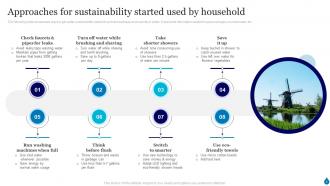
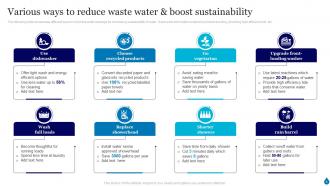
Household water waste reduction strategies include low-flow fixtures, smart irrigation systems, greywater recycling, leak detection technology, and behavioral monitoring apps. These approaches streamline conservation by minimizing consumption, automating efficient usage, and enabling real-time tracking, with many homeowners finding that strategic combinations deliver significant utility cost reductions while enhancing environmental sustainability.
Biodiversity strengthens aquatic ecosystems by maintaining food web stability, enhancing nutrient cycling, improving water filtration, and increasing resilience to environmental changes. Through diverse species interactions, watersheds deliver cleaner water supplies, support fisheries production, and reduce ecosystem management costs, with many municipalities finding that protecting biodiversity ultimately streamlines water treatment processes and ensures long-term resource availability.
Countries with successful water sustainability practices demonstrate that integrated water management, stringent conservation policies, advanced recycling technologies, public-private partnerships, and community engagement deliver measurable results. Singapore's NEWater program, Israel's desalination infrastructure, and Australia's drought management strategies showcase how strategic investments in technology and policy ultimately enhance water security, reduce dependency on natural sources, and create resilient systems for growing populations.
Wetlands serve as natural water filters, flood controllers, groundwater rechargers, and biodiversity sanctuaries, making them critical infrastructure for water sustainability. These ecosystems deliver cost-effective water purification, storm protection, and drought resilience, with many municipalities finding that wetland preservation provides more affordable water management than engineered alternatives, ultimately enhancing long-term water security.
-
Time saving slide with creative ideas. Help a lot in quick presentations..
-
Editable, diversified, compatible with MS PPT and Google Slides, and on top of that finest graphics!! I mean in the words of the famous Ross Geller, “What more do you want!”