


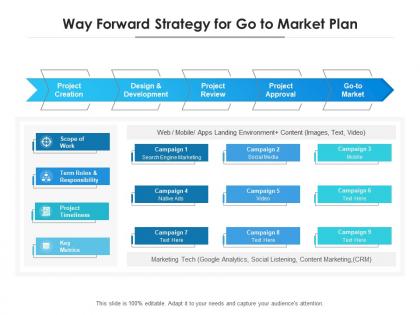
Way forward strategy for go to market plan




Try Before you Buy Download Free Sample Product
 Impress Your
 Audience
 100%
100% Editable
 Save Hours
 of Time


Our Way Forward Strategy For Go To Market Plan are topically designed to provide an attractive backdrop to any subject. Use them to look like a presentation pro.
People who downloaded this PowerPoint presentation also viewed the following :
Way forward strategy for go to market plan with all 2 slides:
Use our Way Forward Strategy For Go To Market Plan to effectively help you save your valuable time. They are readymade to fit into any presentation structure.
FAQs for Way forward strategy for go
Look, you need five main things: who you're targeting, what makes you different, how you'll price it, where you'll sell, and your actual sales plan. Most people way overcomplicate this at the start - I did too. Really dig into who your perfect customer is first and what specific problem you fix for them. Then work backwards on how to reach them. Could be direct sales, partnerships, social media, whatever clicks with your people. Your messaging has to be dead simple about why they should give a damn. Oh, and set your launch dates and metrics early so you'll know if it's actually working.
You know how everyone says "don't try to please everyone"? Same thing here. Pick 2-3 customer groups and really focus on them instead of spreading yourself thin. Your messaging hits way harder when it's targeted - like, night and day difference. Plus you're not burning cash on generic ads that nobody cares about. I'd honestly start small and figure out which segments actually make you money first. You can always branch out later, but nailing those core groups is where the magic happens. Way better than that spray-and-pray approach most people do.
Track both your leading and lagging indicators - stuff like CAC, conversion rates, and how long your sales cycles take. MRR and LTV are obviously big ones too. For product-market fit, watch your NPS, churn, and organic referrals. Honestly? I've seen way too many teams get obsessed with vanity metrics (hello, website traffic) instead of focusing on actual pipeline quality. Just pick 5-7 metrics that matter and stick them on a simple dashboard. Review weekly with the team - that's it. Don't overthink this one.
Personas are honestly everything for your go-to-market plan. They show you exactly who you're talking to and how their brain works. Like, you'd never pitch a CFO the same way you would some product manager, right? Different people care about totally different stuff. Your messaging changes, your channels change, even pricing shifts based on who you're targeting. I always think about it this way - would you sell enterprise security like it's a fun consumer app? Hell no. The more specific you get with personas, the better your whole strategy gets. Map each one to different marketing channels and see what happens.
Look, competitive analysis is basically your sanity check before launching anything. Map out 3-5 direct competitors first. Dig into their customer reviews - that's where you'll find the real goldmine of complaints you can fix. Honestly, I've watched so many teams crash because they thought their idea was totally unique when it wasn't. This research shows you the actual gaps in the market and helps you price realistically. Plus you'll figure out how to position yourself as the better option. Oh, and don't forget to check what messaging everyone else is using so yours doesn't sound like a copy-paste job.
Honestly, digital marketing is perfect for startups - you can actually see what's working and it won't destroy your budget. Content marketing builds credibility over time. Social media lets you talk directly to customers, which is huge. Targeted ads work great if you know where your people hang out online. SEO is painfully slow but totally worth it for the free traffic later. Don't ignore email marketing either - it's still amazing for turning leads into customers. Here's the thing though: pick maybe 2-3 channels max at first. You'll spread yourself way too thin otherwise. Test what works, then go all-in on those winners.
Honestly, you've gotta nail down who your ideal customer actually is first - both teams need to be hunting the same person. Meet regularly so sales can tell marketing what's really happening out there, and marketing can share what's working campaign-wise. Here's the thing though: tie your KPIs together instead of having separate goals that make you compete against each other. Same CRM, same lead scoring. Oh, and this is huge - get sales involved when you're building messaging and content. When they help create it, they won't ditch it for their own random pitch decks later.
Honestly, pricing can totally make or break your launch - I've seen it happen so many times. If you go too high, nobody buys. Too low and people think your product sucks (plus you're bleeding money). What works is figuring out what your customers will actually pay and where you fit against competitors. Try testing different prices during beta if you can swing it. Don't be stubborn about changing it later either - sometimes the market tells you stuff you didn't expect. Your price should back up whatever story you're telling about your product, not work against it.
Get your messaging tight across everything - website, sales calls, demos, all of it. Write your value prop so simply that a kid could get it (cuts through all the business BS). Then tweak it for different people because what clicks with a CFO totally bombs with actual users. Test constantly. A/B test your copy, interview customers, track what phrases actually work. Oh and make sure your whole team tells the same story - nothing kills deals faster than prospects hearing three different versions of what you do from three different people.
Ugh, the classic mistake is trying to be everything to everyone right off the bat. You'll burn through your budget so fast. Most teams I know also skip the boring stuff like actually researching competitors or testing their pricing - huge mistake. Your sales and marketing people need to be on the same page too, otherwise you're just confusing potential customers. Oh and here's something that drives me nuts: launching without knowing what success even looks like. How are you supposed to fix things if you don't know what's broken? Honestly, just pick a narrow audience first, test your assumptions, and get everyone aligned before you go big.
Honestly, you can't just copy what works at home - I made that mistake big time when we expanded to Asia. Each market buys differently, so dig into how people actually discover products there. Some places are all about word-of-mouth, others live on social media. Research local competitors too since they'll show you what messaging actually lands. Pricing sensitivity varies wildly between regions (learned that one the expensive way). Cultural stuff matters more than you'd think for your marketing copy. Oh, and definitely look into local partnerships - they can fast-track everything. Start small with tests, get real feedback from people there, then double down on what clicks.
Honestly, early adopter feedback is like a gut check for your whole go-to-market plan. Sure, you can strategize forever, but these people will straight up tell you if your messaging sucks or your pricing is way off. They don't sugarcoat anything - which is actually perfect. Use surveys, interviews, whatever gets them talking. Their input helps you figure out if you're targeting the right people and fix major issues before things get crazy. The trick is moving fast once you get their feedback. I learned this the hard way with my last project.
Dude, timing is everything with launches - I've watched amazing products completely bomb just because they picked the wrong moment. You gotta look at what competitors are doing, whether the market's actually ready for your thing, and honestly assess if YOU'RE ready too. Go too early? Market might not get it or your product feels half-baked. Wait too long and someone else swoops in first. Seasonal stuff matters more than people think. Do some digging on competitors and talk to potential customers before you lock in dates. That sweet spot where demand meets your readiness? That's gold.
Okay so for market research, Ahrefs and SEMrush are clutch for checking out competitors and finding good keywords. HubSpot or Salesforce will save your sanity when tracking leads - trust me on this one. You'll want something like Asana for project management because launches get messy fast. Buffer's great for scheduling social posts, though I actually prefer Hootsuite's interface. Oh and obviously Google Analytics for tracking everything, plus Mixpanel if you need deeper user insights. Don't try to implement everything at once though - pick one tool per area and add more later.
Partnerships are honestly a game-changer for getting to market faster. You get instant access to their customer base and credibility instead of building everything from zero. Why reinvent the wheel, right? Look for companies that share your target audience but aren't competing directly with you. Then you can co-create content, cross-promote stuff, or even integrate products together. I'd start small though - maybe map out 3-5 potential partners first. When you reach out, come with specific ideas, not some vague "let's partner" pitch that screams desperation.
-
Excellent Designs.